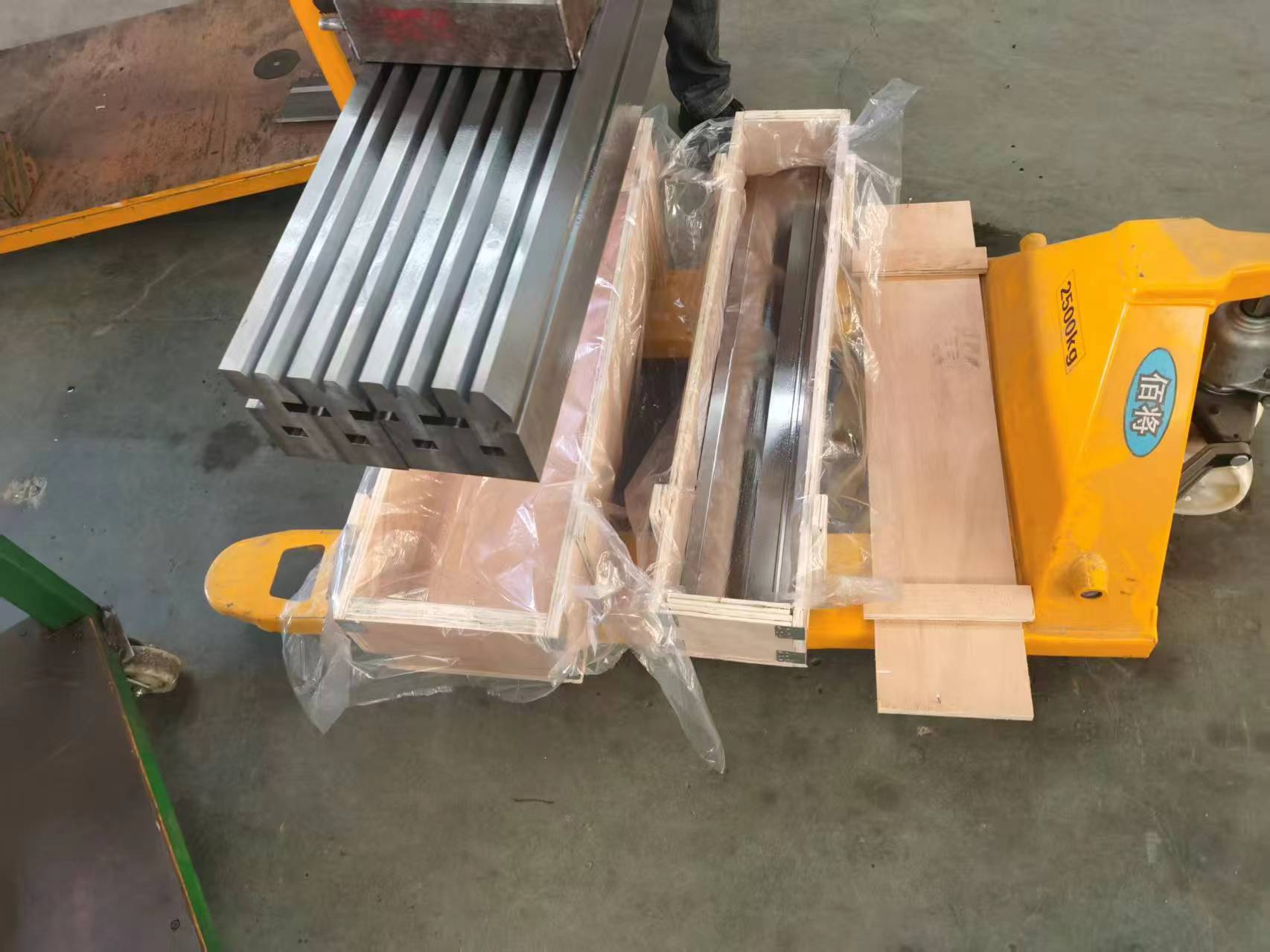
Custom Press Brake Tooling: For Complex Bending
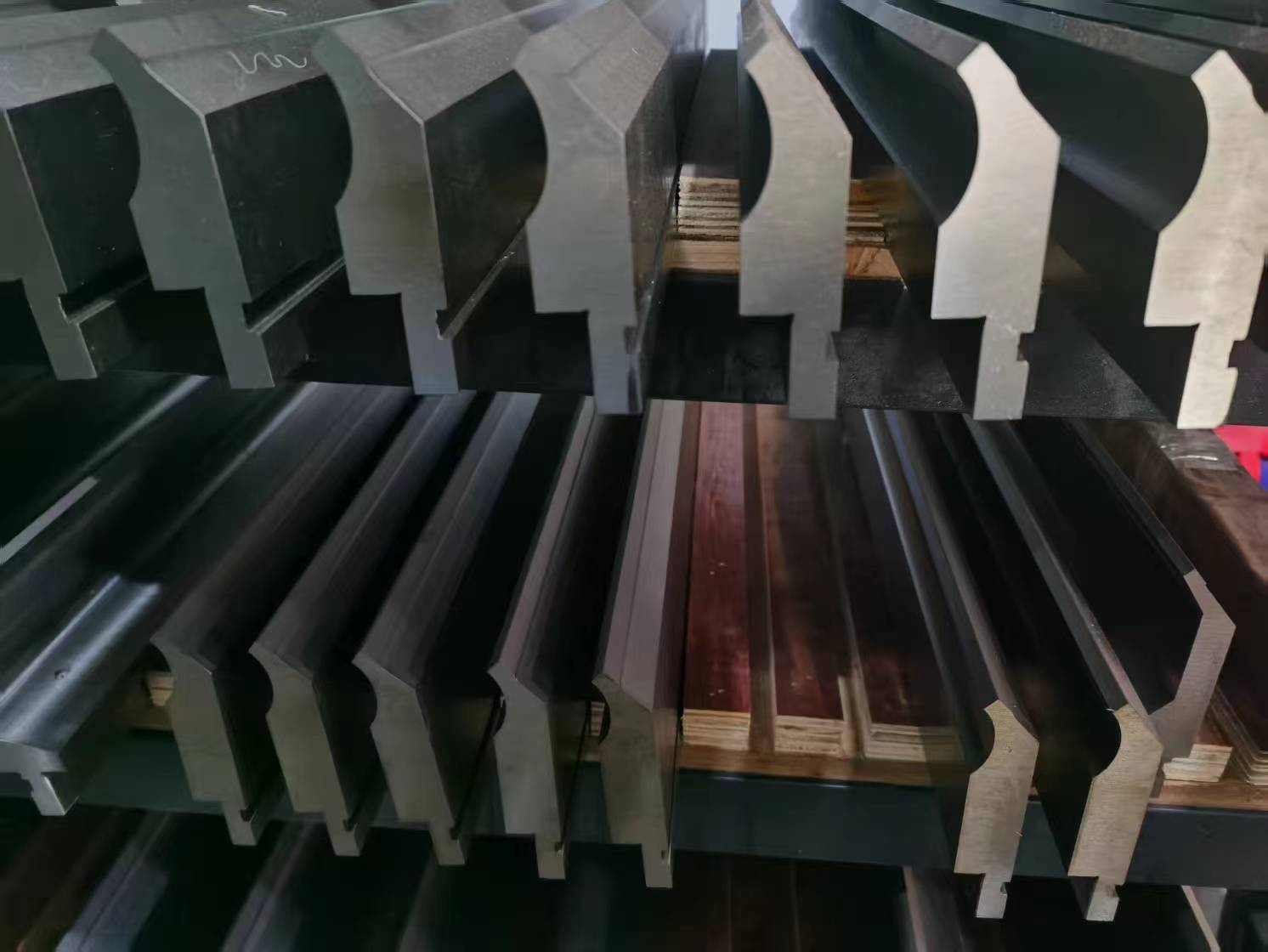
Standard tools often can’t meet complex metal bending needs. Custom press brake tooling helps get precise angles, unique shapes, and consistent results. It’s a smart choice to improve your shop’s work ability.
Tailored Custom Solutions
Every project has unique challenges (e.g., tight radii, deep box bending).
We use advanced CAD/CAM technology to make tooling that fits your machine perfectly.
This reduces setup time and ensures smooth use.
We make custom tooling based on your drawings, for special bending needs.
Core Parts & How It Works
Upper Die
Installed on the machine’s moving slider (applies pressure).
Its shape (straight, sharp, gooseneck, arc) decides the workpiece’s outer shape.
Lower Die
Fixed on the machine’s workbench (supports the workpiece).
It usually has a V-shaped groove.
Groove width affects bending force, fillet size, and forming effect.
Working Principle
Place the metal sheet on the lower die.
The slider drives the upper die down to press the sheet.
The sheet bends to match the dies (permanent shape change).
After reaching the set pressure/stroke, the upper die moves back.
Take out the finished workpiece.
Key Features of Press Brake Tooling
Strong & Wear-Resistant: Made of alloy steel (e.g., 42CrMo). Heat-treated to be hard (HRC45-HRC50) and durable.
Customizable: Make punches/dies in special shapes (arc, gooseneck) or V-grooves (8mm, 16mm, 24mm) for your needs.
Good Compatibility: Tooling fits your machine and workpiece perfectly (size, shape, requirements).
Standard Options: Conventional tooling fits common machines (Amada, Trumpf, Wille). Special tooling can be customized.
Common Types of Press Brake Tooling
By Forming Shape
Standard Straight Edge: For regular straight bending (most common).
Sharp Angle: For small angles or springback correction (high precision).
Gooseneck: For U-shaped/deep channel workpieces (avoids interference).
Arc: For curved or rounded workpieces.
Irregular: Custom-made for special workpiece drawings.
By Application
Standard Sheet Metal: For mild steel, galvanized steel (cost-effective).
High-Strength Steel: Thick, hard material for stainless steel/alloy plates.
Thin Material: Precision-made to prevent warping, damage, or scratches.
By Installation Interface
Amada/Promecam: Fits Amada machines.
Trumpf/Wila: Fits Trumpf and Wila machines.
New Standard: Universal (fits most domestic machines).
How to Choose Press Brake Tooling
Choose tooling that matches your material, bending process, workpiece, and machine. Follow these 5 key points:
1. Match Material Characteristics
Different metals have different springback (mild steel = little springback; stainless steel = more springback).
Use the right punch angle to fix springback (e.g., 86°~88° for mild steel; 85° for stainless steel).
Tooling material: 42CrMo (hardness HRC45-HRC50, strong and tough).
2. Follow the "8x Principle" (Lower Die V-Groove Width)
Core rule: V (groove width) = 8 × T (material thickness) – best for 3-8mm plates.
Adjust for thin plates (T<3mm): V=6T (smaller fillet).
Adjust for thick plates (T>8mm): V=10T~12T (reduces bending force).
3. Check Pressure Tonnage
Tooling must handle the machine’s pressure (no overloading – it breaks tooling/machines).
Calculate pressure using material thickness, tensile strength, and V-groove width.
Machine tonnage must be 10%-15% less than tooling’s maximum capacity.
4. Choose the Right Punch Shape
Standard punch: Regular straight bending.
Sharp punch: Small angles or springback correction.
Gooseneck punch: U-shaped/deep channel workpieces (avoids interference).
Custom punches: For circular/irregular workpieces (match drawings).
5. Ensure Machine Compatibility
Punch shank must fit the machine’s clamping system (Amada, Trumpf, etc.).
Tooling height must match the machine’s slider stroke and worktable height.
Important Notes
Don’t ignore springback (causes wrong angles).
Follow the "8x rule" (prevents workpiece cracking and tooling damage).
Check machine compatibility (prevents installation failure).
42CrMo International Standard Comparison Table (Essential for Selection)
Country/Standard Organization | Standard Code | Corresponding Grade |
China (GB) | GB/T 3077 | 42CrMo or 42CrMo4 |
USA (AISI/ASTM) | ASTM A29 | 4140 |
International Organization for Standardization (ISO) | ISO 683-1 | 42CrMo4 |
Germany (DIN) | DIN EN 10083 | 1.7225 (or 42CrMo4) |
Japan (JIS) | JIS G4105 | SCM440 |
UK (BS) | BS 970 | 708M40 (EN19) |
Why 42CrMo Is More Durable Than Ordinary Carbon Steel?
42CrMo alloy steel offers significantly higher durability compared with ordinary carbon steel, thanks to its alloy composition, heat treatment performance, and mechanical properties.
It contains chromium(Cr), molybdenum(Mo) and manganese, which greatly improve:
Higher hardness and wear resistance
Better strength and toughness
Higher tensile and yield strength
Excellent performance under high pressure and heavy load
Longer service life in industrial applications
Ordinary carbon steel is soft, wears out quickly, and deforms easily under pressure.42CrMo maintains shape, stability even under long-term heavy working conditions, making it the ideal material for press brake toolingand molds.
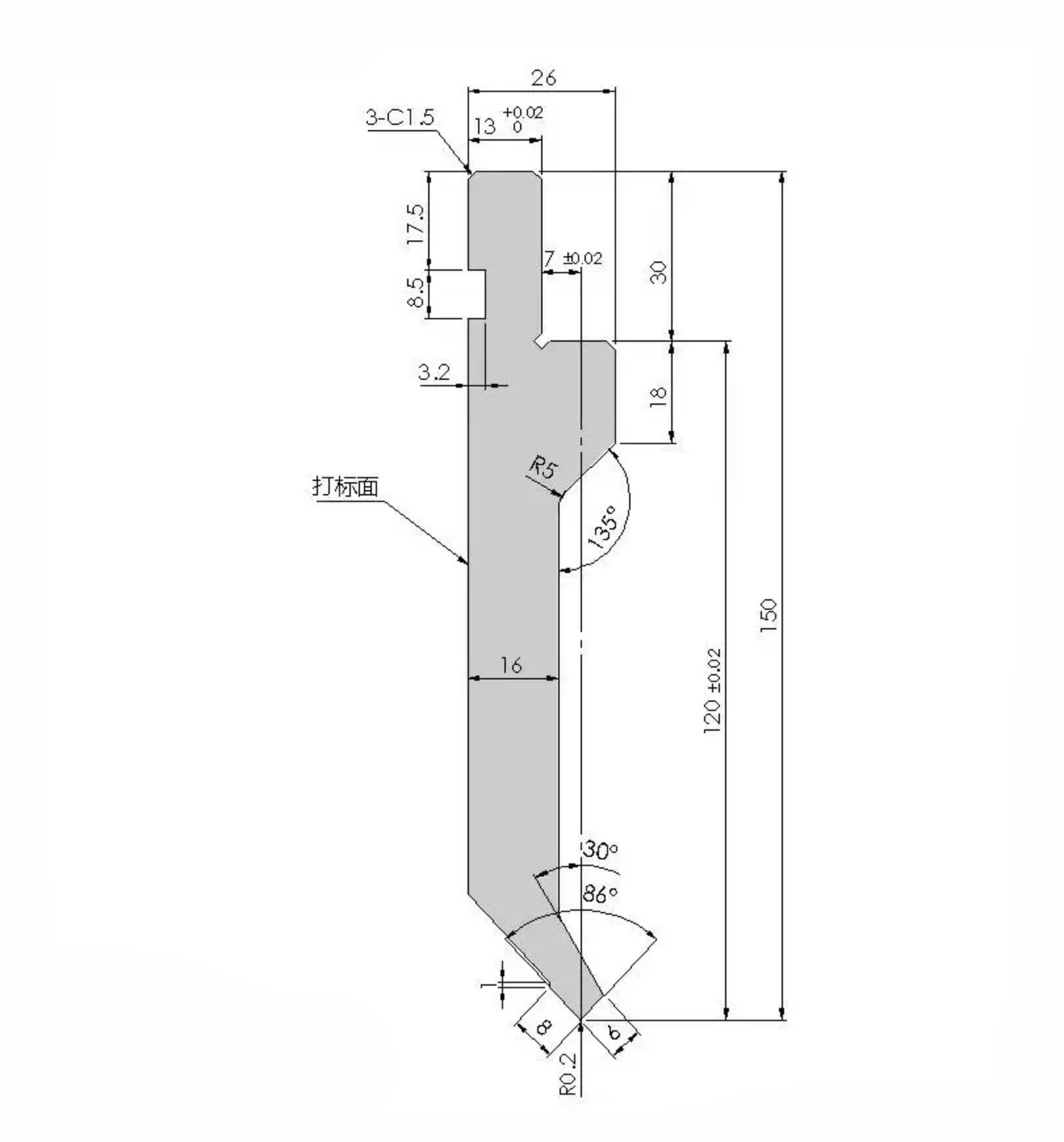
press brake upper die drawing
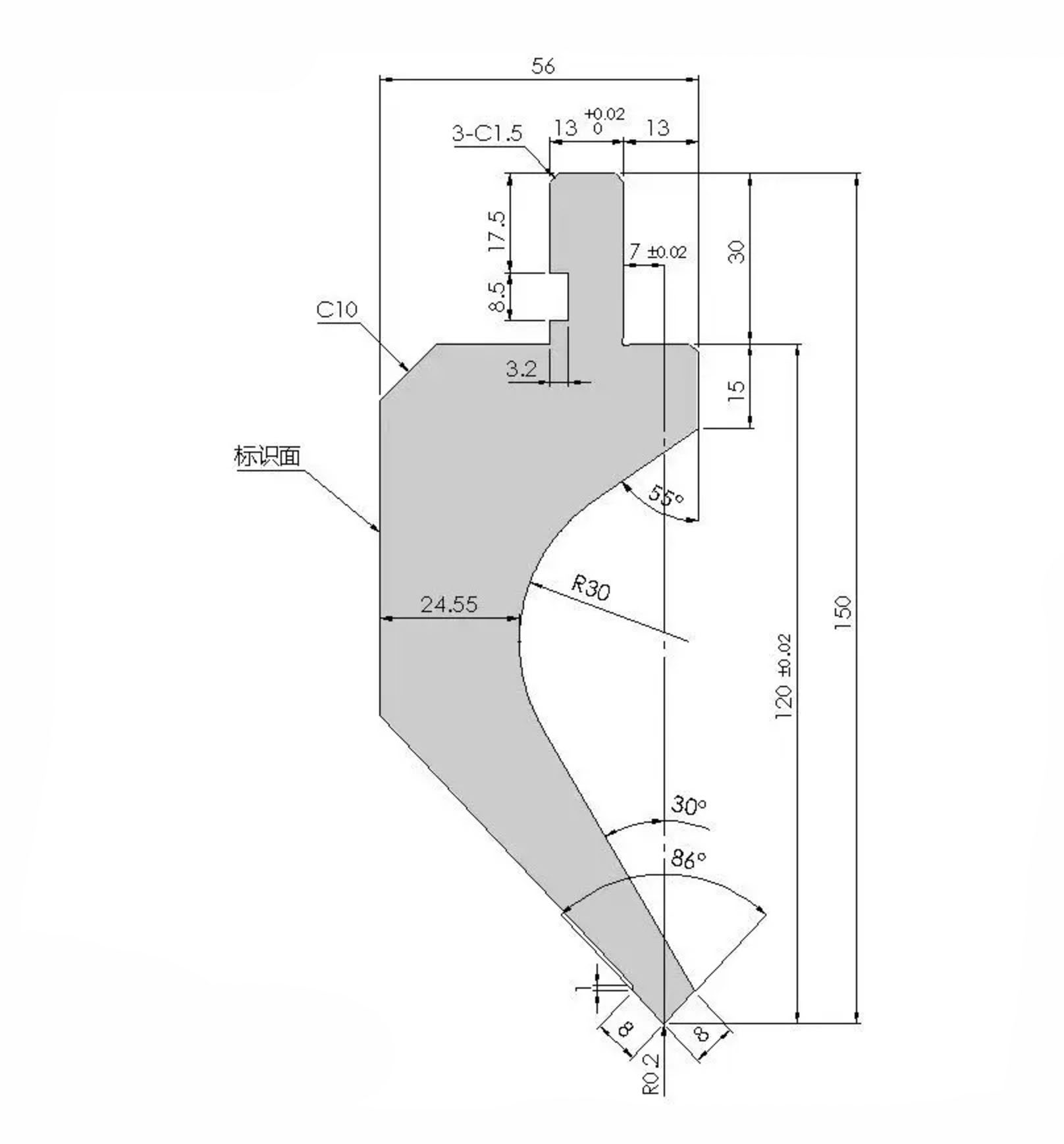
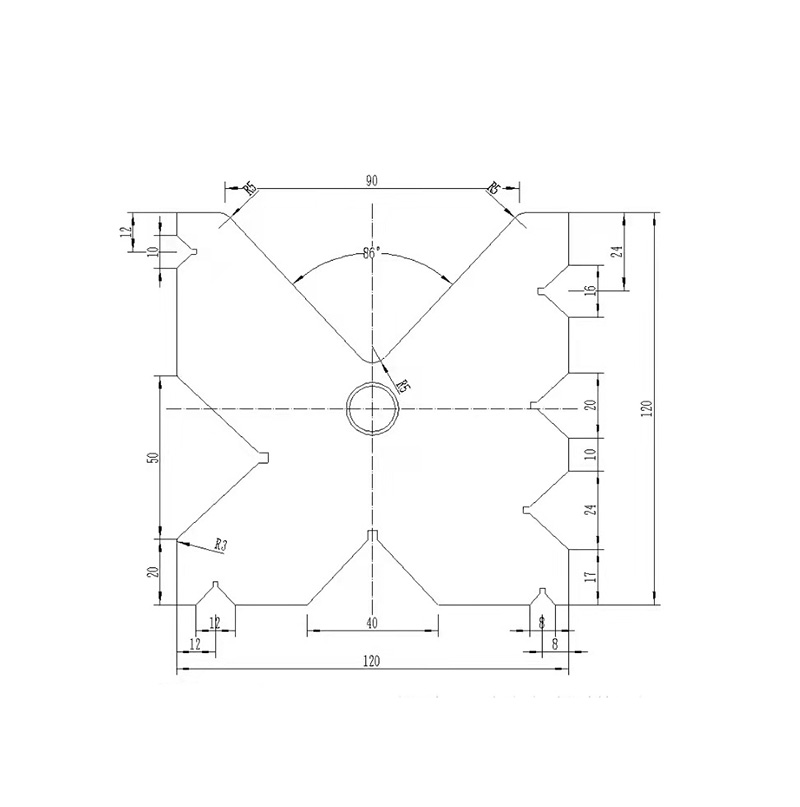
press brake lower die drawing
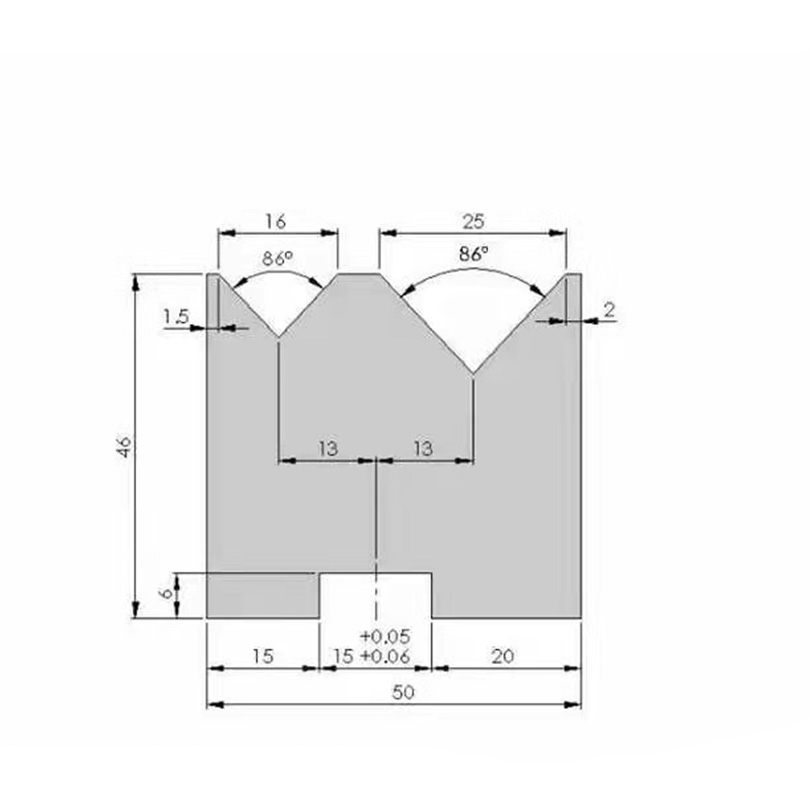
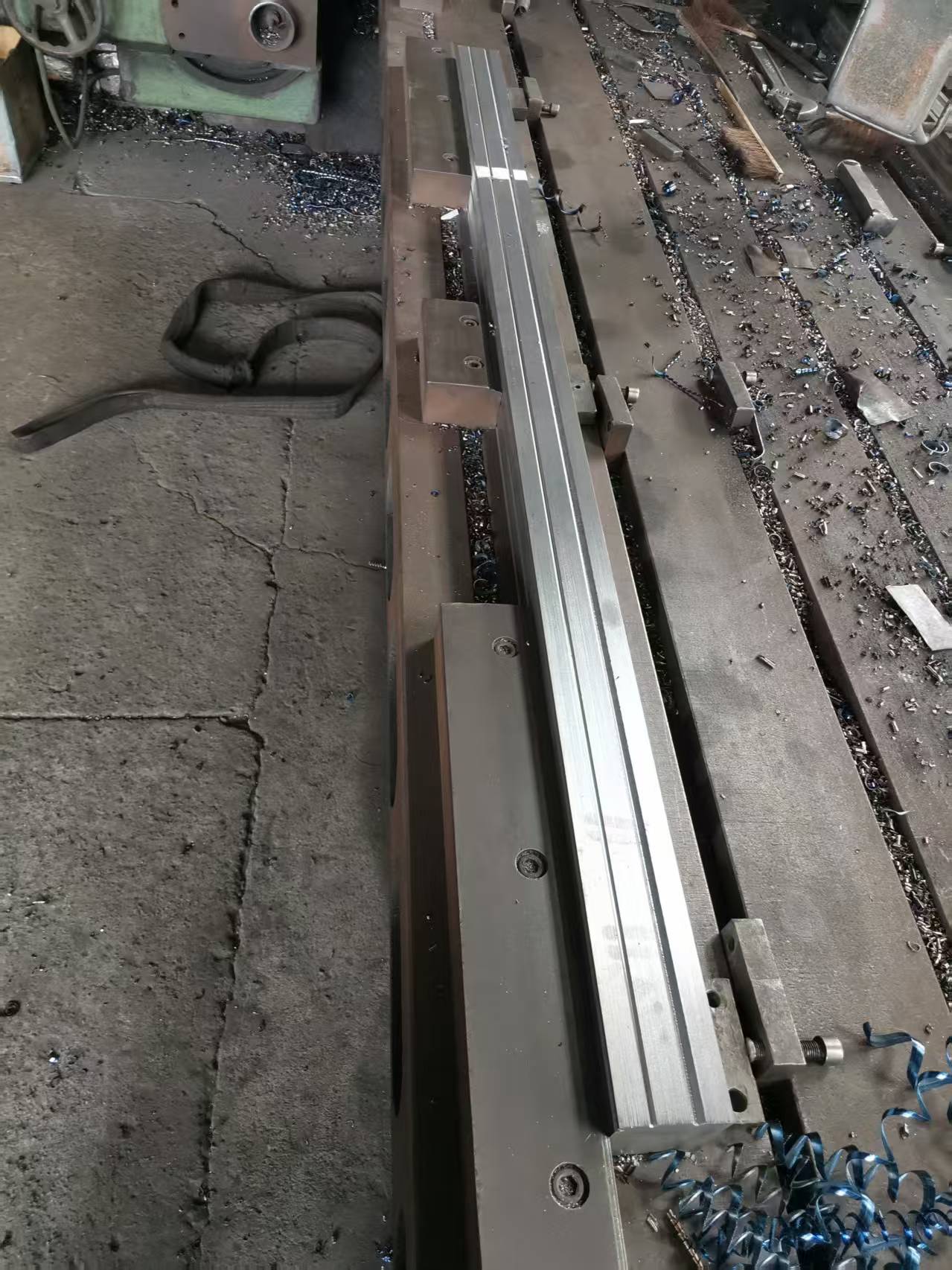
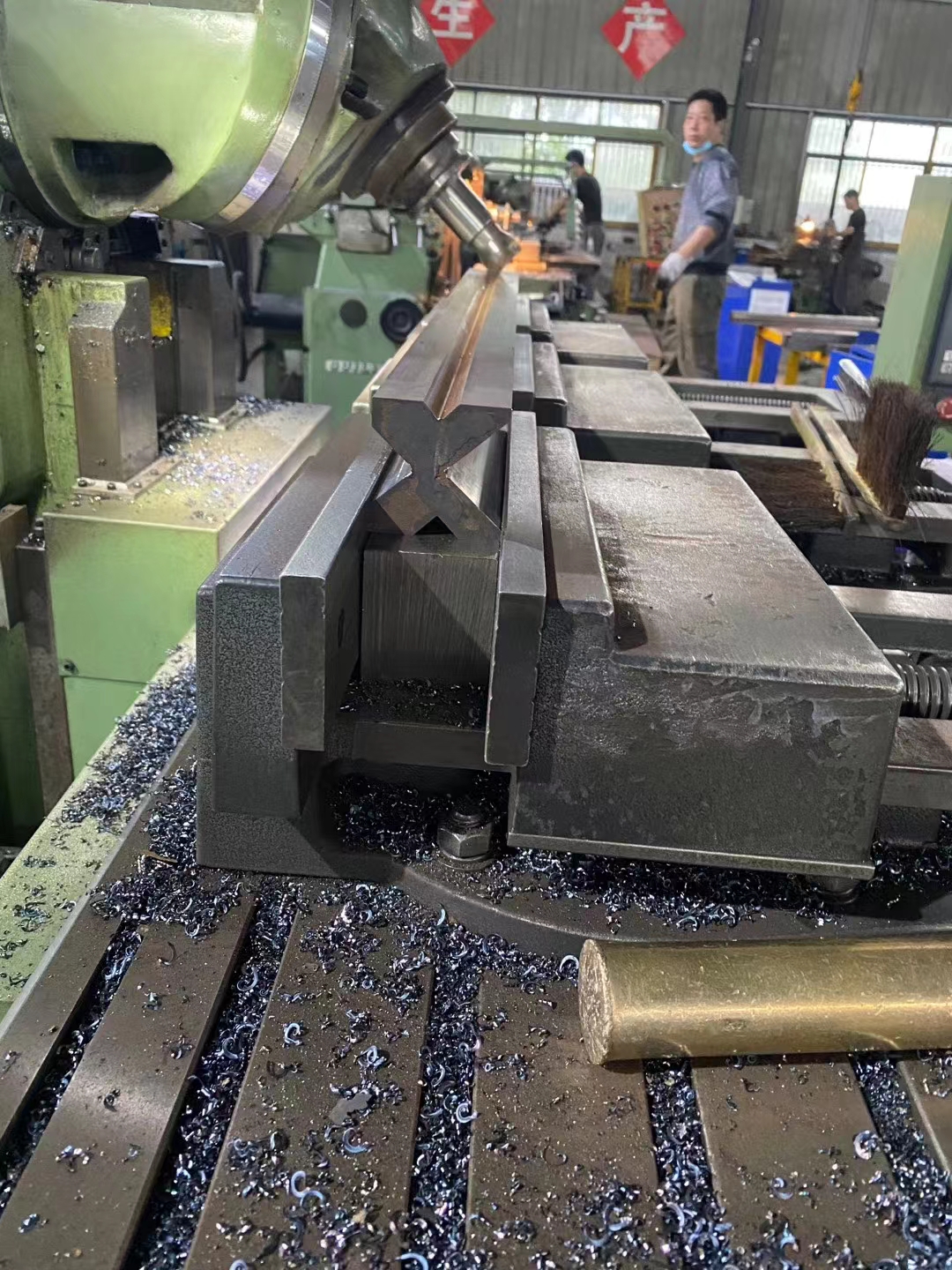
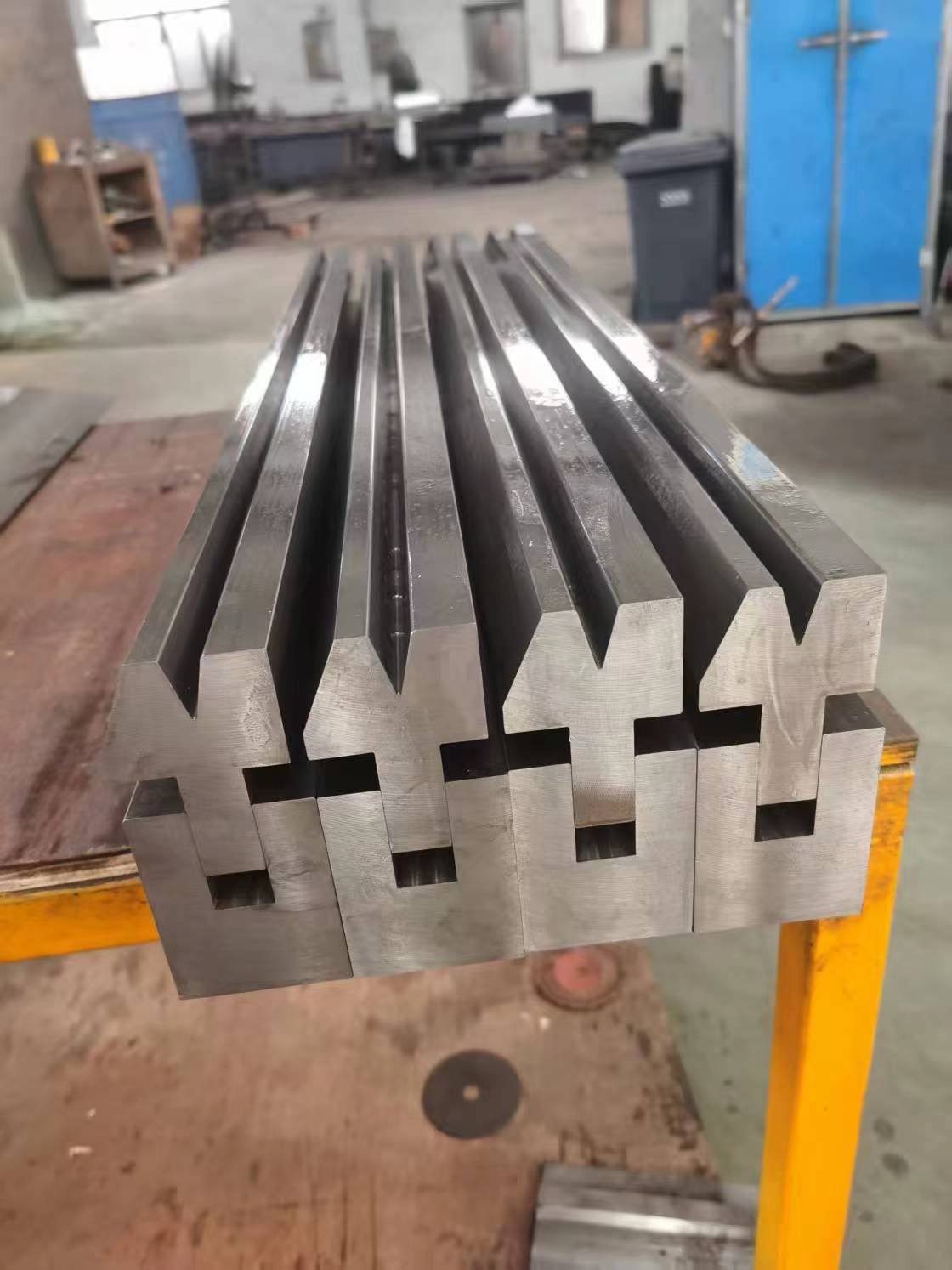
Global Supply: High-Precision Custom Press Brake Tooling
We specialize in the design and manufacture of Custom Press Brake Tooling (Material: 42CrMo) for complex bending challenges. From special offset dies and radius tools to large-scale gooseneck punches, our engineering team provides tailored solutions for all major press brake brands (Amada, Trumpf, LVD, Durma).
Core Market Sourcing Index:
English: Custom Press Brake Tooling | Special Bending Dies
French (Français): Outillage de pliage sur mesure | Matrices de pliage spéciales
Portuguese (Português): Ferramental de dobra personalizado | Matrizes de dobra especiais
Polish (Polski): Narzędzia do gięcia na zamówienie | Specjalne matryce gnące
Turkish (Türkçe): Özel Abkant Kalıpları | Özel Bükme Kalıpları
Vietnamese (Tiếng Việt): Khuôn uốn theo yêu cầu | Khuôn chấn tôn đặc biệt
Thai (ภาษาไทย): แม่พิมพ์ดัดสั่งทำพิเศษ | แม่พิมพ์พับเหล็กตามแบบ
Filipino: Custom na Tooling sa Pag-bend | Espesyal na Hulma sa Pag-fold
Arabic (العربية): أدوات ثني مخصصة | قوالب ثني خاصة
Hindi (हिन्दी): कस्टम बेंडिंग टूलिंग | विशेष झुकने वाली डाई
Indonesian (Bahasa Indonesia): Cetakan Tekuk Custom | Matras Bending Khusus
Malay (Bahasa Melayu): Perkakas Bending Custom | Acuan Melipat Khas
Dutch (Nederlands): Maatwerk zetgereedschap | Speciale buigmatrijzen
Swedish (Svenska): Anpassade kantpressverktyg | Specialbockningsverktyg
Hungarian (Magyar): Egyedi hajlítószerszámok | Speciális élhajlító matracok
Greek (Ελληνικά): Εξατομικευμένα εργαλεία κάμψης | Ειδικές μήτρες κάμψης
Czech (Čeština): Zakázkové ohýbací nástroje | Speciální ohraňovací nástroje
Romanian (Română): Scule de îndoire la comandă | Matrițe speciale de îndoire
Ukrainian (Українська): Індивідуальний згинальний інструмент | Спеціальні матриці
Azerbaijani (Azərbaycan dili): Xüsusi bükmə alətləri | Fərdi qəliblərin hazırlanması
Hebrew (עברית): כלי כיפוף בהתאמה אישית | מטריצות כיפוף מיוחדות