

Phone:
86-15852949220


Views: 243 Author: ALAS-MT Publish Time: 2025-03-05 Origin: Site
In industrial shearing, blade life is dictated by a critical tradeoff: Wear Resistance vs. Shock Toughness. Selecting the incorrect alloy results in either rapid edge dulling or catastrophic chipping. At ALAS Machinery, we engineer our replacement hydraulic guillotine and scrap shear knives using premium tool steels optimized for specific mechanical stress profiles.
| Steel Grade | Material Classification | Recommended Hardness | Primary Target Application | Failure Mode Prevented |
|---|---|---|---|---|
| 9CrSi | Low-Alloy Tool Steel | HRC 56–58 | Thin cold-rolled sheet, galvanized iron, copper/aluminum (≤2mm), manual shears. | Elastic deformation and localized bending. |
| 6CrW2Si | Tungsten-Shock Steel | HRC 54–57 | Medium-to-thick carbon steel plates, structural light scrap shearing. | Impact-induced structural cracking. |
| Cr12MoV / SKD11 | High-Carbon High-Chromium | HRC 58–60 | High-silicon steel, continuous stainless steel slitting, high-tensile light gauges. | Abrasive edge wear and micro-galling. |
| DC53 | High-Toughness Cold Work | HRC 58–62 | High-frequency stainless steel cutting, high-tensile sheet, heavy-load precision slitting. | Edge micro-chipping under high-yield stress. |
| D2 (AISI) | Premium High-Cr Cold Work | HRC 58–61 | High-volume production lines, thin stainless steel cutting, abrasive non-ferrous alloys. | Edge dulling; maximizes regrind intervals. |
| H13 (SKD61) | Cr-Mo Hot/Cold Tool Steel | HRC 50–55 | High-temperature flying shears, heavy hot-rolled strip; Heavy cold plate shearing & scrap demolition. | Thermal fatigue softening; Catastrophic blade fractures under heavy tonnage. |
| LD (7Cr7Mo2V2Si) | Advanced Matrix Steel | HRC 57–60 | Heavy hydraulic heavy-plate shearing, high-strength structural steels. | Catastrophic edge chipping under high tonnage. |
| X45 (1.2767) | High-Toughness Matrix Steel | HRC 52–56 | High-frequency heavy slitting, heavy shock multi-gauge cutting, demanding industrial lines. | Catastrophic corner fracturing and fatigue-induced blade failure. |
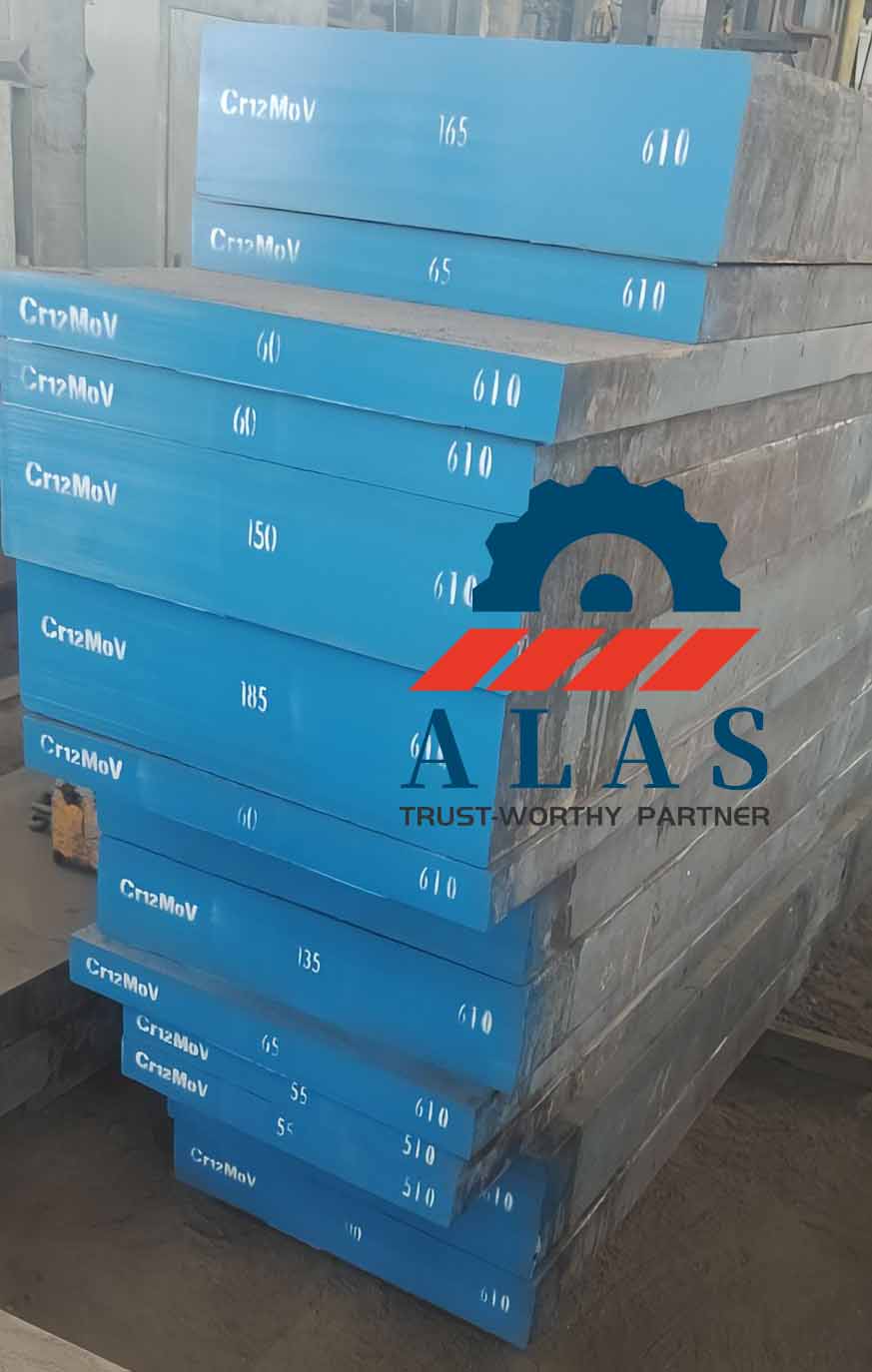

For ambient-temperature processing of thin to medium gauges, edge retention is paramount. Materials like D2 and SKD11 rely on a high volume of primary chromium carbides to deliver exceptional resistance against sliding abrasion. However, their high carbon concentration introduces inherent micro-brittleness when facing tough, work-hardening materials like stainless steel or high-tensile structural coils. To overcome this failure mode under high-stress conditions, advanced alloy selections are required based on the specific mechanical load:
DC53 & X45: DC53 modifies the conventional SKD11 structure by refining carbide distribution and upgrading structural toughness. It retains a high hardness of HRC 58–61 but offers double the impact resistance, making it the industry benchmark for high-stress stainless steel slitting without premature edge failure. Where micro-chipping or corner fracturing occurs under high-frequency cycling, X45 provides a superior matrix structure that optimizes the grain boundaries, absorbing cyclic fatigue where brittle high-chromium steels fail.
H13 (Cold Thick-Plate Application): While traditionally recognized for high-temperature service, H13 tempered to HRC 50–55 functions as a highly effective heavy-duty cold-work alloy. Due to its low carbon and balanced chromium-molybdenum-vanadium matrix, it lacks the brittle primary carbides found in D2. This unique chemistry allows H13 to deliver superior shock resistance, acting as a ductile cushion capable of shearing thick carbon steel plates, heavy structural beams, and contaminated scrap metal without catastrophic blade splitting or fracturing.
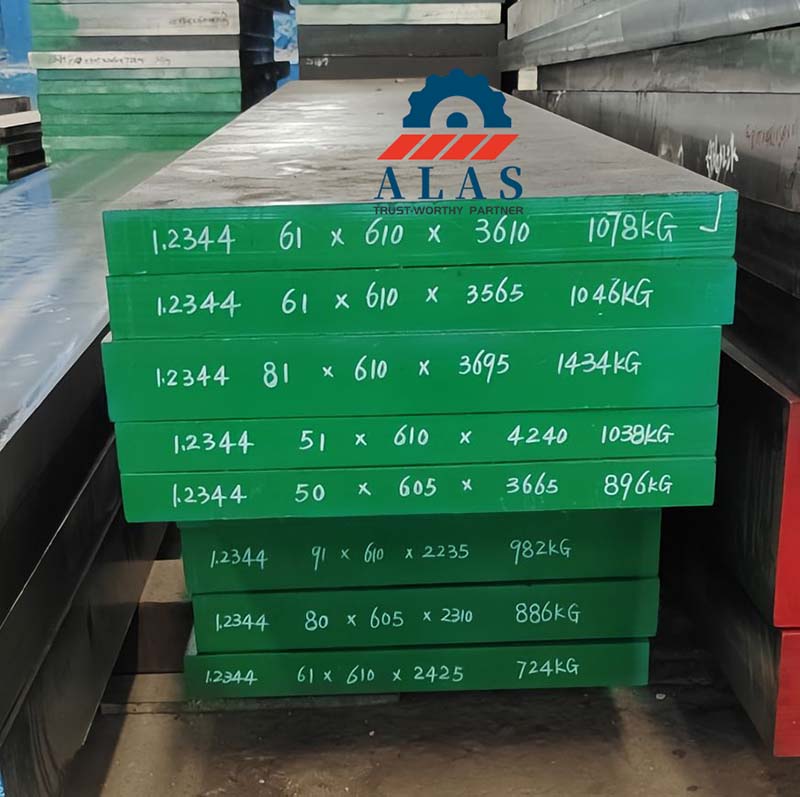
H13 (4Cr5MoSiV1) features a robust alloy matrix of chromium, molybdenum, and vanadium. When heat-treated to HRC 52–55, it provides an exceptional toughness reserve that allows it to act as a ductile cushion. This specific profile enables H13 to perform dual roles: it functions as a hot-work steel resisting heat fatigue up to 600°C in flying shears, and as a high-shock cold-work steel capable of cutting through thick structural plates and heavy steel beams without structural cracking.
| China (GB) | USA (ASTM/AISI) | Japan (JIS) | Germany (DIN) | Germany (W-Nr.) | France (NF) | Russia (GOCT) | U.K. (BS) |
|---|---|---|---|---|---|---|---|
| 9CrSi | — | — | 90CrSi5 | 1.2108 | — | 9XC | — |
| 6CrW2Si | — | — | 60WCrV7 | 1.2555 | 55WC20 | 6XB2C | — |
| Cr12MoV | — | SKD11 | X165CrMoV12 | 1.2601 | — | X12M | — |
| Cr12Mo1V1 | D2 | — | X155Cr12Mo12 | 1.2379 | X160CrMoV12 | — | BD4 |
| 4Cr5MoSiV1 | H13 | SKD61 | X40CrMoV5-1 | 1.2344 | X40CrMoV5 | 4X5M1FSB | H13 |
| 5CrNi4Mo | L6 / 6F7 | — | X45NiCrMo4 | 1.2767 (X45) | — | 5XNM | — |
| LD | — | — | — | — | — | — | — |
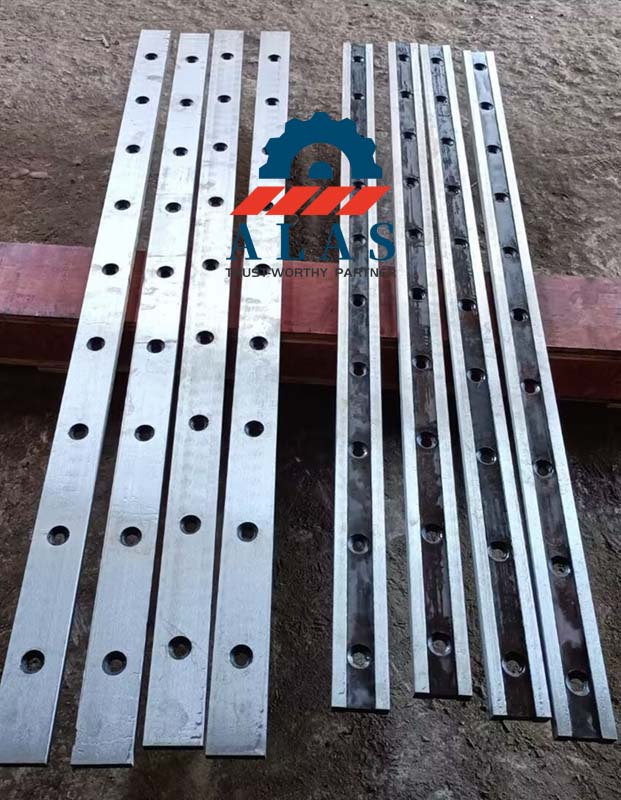
A: Selection depends entirely on your primary wear mode and feedstock thickness:
D2 (AISI): Maximum abrasive wear resistance for high-volume, thin-gauge cold slitting (≤6mm).
SKD11 (JIS): Standard alloy choice providing a balanced baseline of hardness and wear resistance.
DC53 (Modified SKD11): Doubles the impact toughness of SKD11 while maintaining HRC 58–61 hardness. It is the premier choice for high-strength steels and stainless sheet fabrication to eliminate micro-chipping.
X45 (1.2767): Features a superior matrix structure heavily alloyed with nickel. It absorbs heavy cyclic mechanical shock, effectively eliminating corner fracturing and structural fatigue cracks under high-frequency cycling.
LD (7Cr7Mo2V2Si): Provides the highest cross-sectional shock resistance among cold-work steels, preventing large-scale blade cracking during high-tonnage plate processing.
A: No. While H13 is renowned for its hot hardness in high-temperature environments, its specific alloy matrix provides exceptional structural ductility when tempered to HRC 52–55. This makes it highly effective for heavy cold shearing of thick plates, H-beams, and heavy scrap structures where absorbing extreme mechanical shock is critical.
Q: Is maximizing blade hardness always the best way to extend service life?
A: No. Industrial shearing requires a strict balance between hardness and toughness. Running cold-work blades above HRC 60 makes them highly brittle. Under heavy impact loads or when cutting work-hardening materials like stainless steel, ultra-hard edges will fracture or chip catastrophically. The optimal operational window for most cold shearing applications is HRC 56–60.
A: This failure stems from over-hardened, brittle tool steel running with tight blade clearance. Stainless steel work-hardens rapidly during the shearing stroke. If the alloy lacks toughness and the gap is too narrow, the feedstock will adhesively gall (stick) to the knife edge, generating immense lateral forces that snap out segments of the blade.
The Fix: Increase your single-sided clearance to 7%–12% of the plate thickness and upgrade to DC53, X45, or LD steel (or adjust your existing tool hardness to HRC 56–58) to provide the required structural ductility.
A: This is driven by localized micro-thermal overtempering. When utilizing cold-work alloys like 9CrSi on hot-rolled plates or high-speed lines, intense friction heat at the cutting edge exceeds the steel’s original tempering threshold. This causes the microstructure to anneal and softens the edge below its functional wear limit.
The Fix: Transition to H13 or H13K hot-work steel, processed through a dual vacuum-tempering treatment to ensure structural stability up to 600°C.
A: You can analyze your setup by inspecting the sheared material edge: Gap Too Narrow: Manifests as shiny, heavily compressed, or white extruded burrs. The material is being plastically extruded rather than sheared, accelerating edge wear and increasing machine load. Gap Too Wide: Manifests as tall, rough, or rolled-over tearing burrs, indicating the sheet is bending between the knives.
Action Plan: Adjust blade clearance in precise 0.01–0.02mm increments and run tests on scrap before production.
A: Rotate your knives every 40 to 80 operational hours, or immediately when the cutting edge rounds to a 3mm radius. Always rotate one blade at a time to maintain correct mechanical alignment and facilitate consistent shimming across all four usable edges.
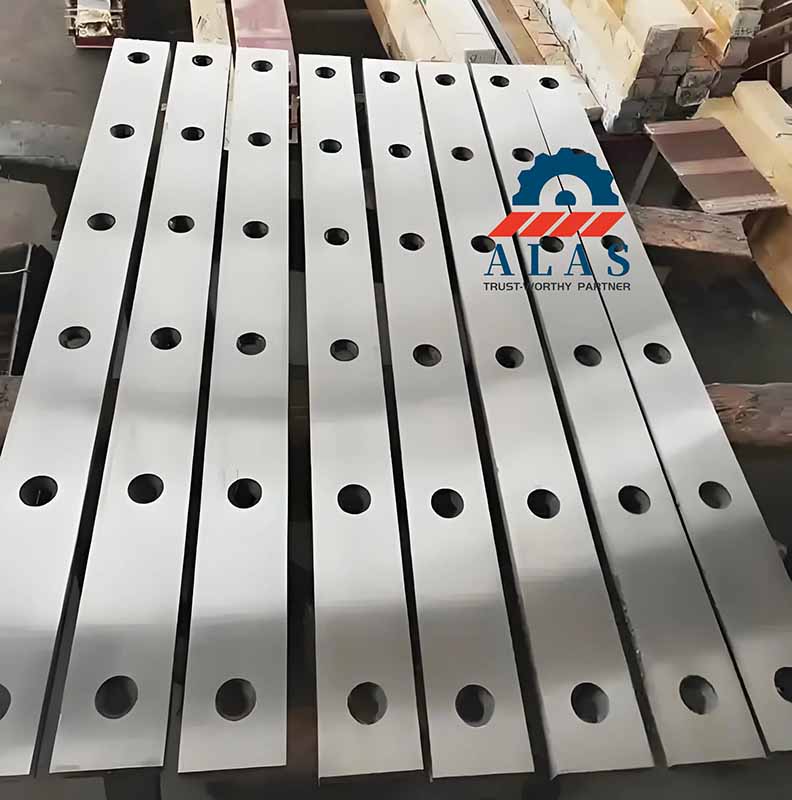
Operating with compromised shear blades or mismatched steel chemistry accelerates machine wear and induces unwanted equipment downtime. At ALAS Machinery, we deliver more than generic catalog replacements — we design verified, application-specific metallurgy to optimize your plant’s cumulative operating expenditure (OPEX).
Direct Blueprint Manufacturing: 100% compliance with your CAD drawings, specialized bolt-hole configurations, and bespoke edge dimensional tolerances.
Precision Finishing: Secondary vacuum temper optimization and micro-mirror face grinding to eliminate shearing burrs.
Guaranteed Export Logistics: Heavy-duty anti-rust oil coating and reinforced multi-layer seaworthy wooden case packaging for secure global shipping.
Email: mt@alasmachinery.com
WhatsApp / Phone: +86-15852949220
Nanjing Alas International Co., Ltd. is a professional industrial tooling manufacturer focused on shear blades, bending dies, shredder blades, and custom wear parts. We offer full application engineering, material selection, setup guidance, and after-sales support to global customers.
Tell us your requirements, and our engineering team will provide professional solutions for blade specification, tool life optimization, and cost-effective production.