

Phone:
86-15852949220


 |


ALAS
Nanjing, China
L/C, T/T, Paypal, Money Gram
1
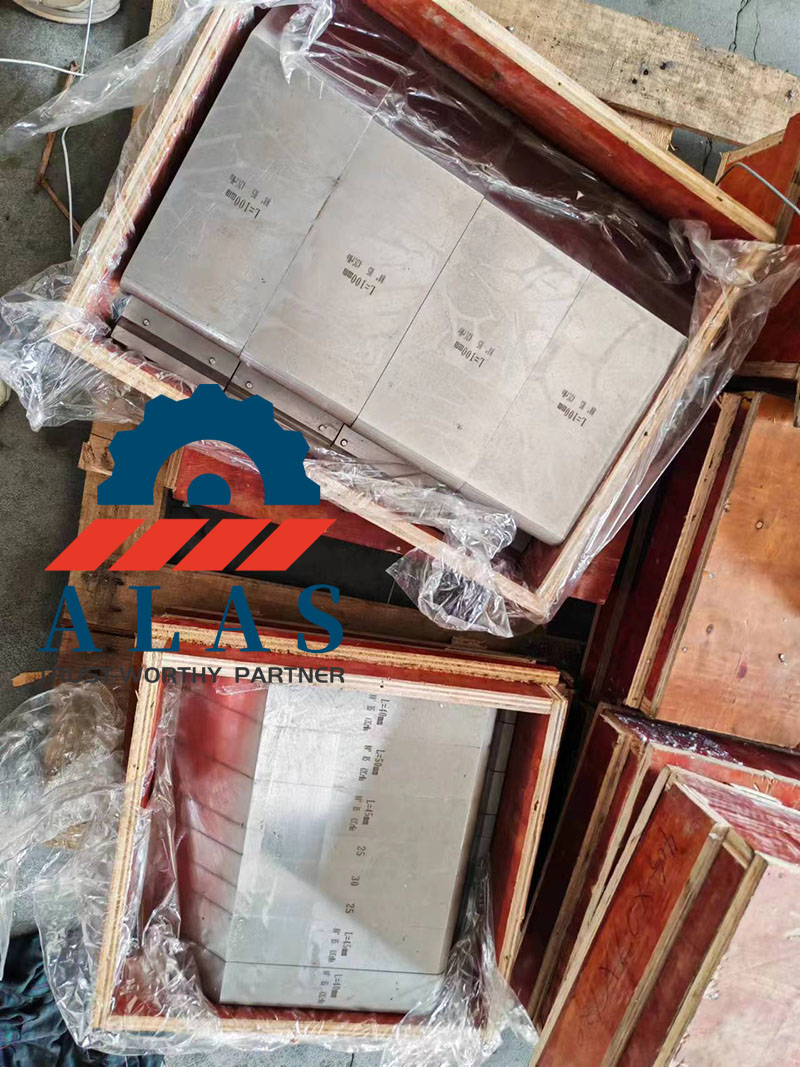
Wooden Crate Packaging
| Quantity: | |
|---|---|
Press Brake Tooling: Definition & Core Components
Working Principle & Bending Process of Punch and Die Sets
42CrMo Material Benefits & Industry Comparison
Standard vs Custom Press Brake Tooling: Differences & Application Scenarios
V-Die Opening Selection Rules & Size Chart
Material Springback & Professional Compensation Solutions
Tooling Compatibility with Mainstream Press Brake Brands
Optimal Tool Hardness Range (Why Harder Is Not Better)
Common Punch Shapes & Practical Applications
Common Bending Defects, Causes & Complete Solutions
ALAS Machinery: Company Overview & Service Advantages
Upper Punch (Upper Die): Mounted on the machine ram. It delivers downward pressing force and defines the bending angle and outer contour of workpieces. Common types include straight, sharp-angle, gooseneck, and arc punches.
Lower Die (V Die): Fixed on the machine table. It supports metal sheets during bending. The internal V-groove controls bending radius and forming accuracy, with single-V and multi-V structures available.
Clamping System: Secures punches and dies firmly to avoid displacement. It ensures stable and consistent bending dimensions for batch production, including mechanical, hydraulic, and quick-change clamping types.
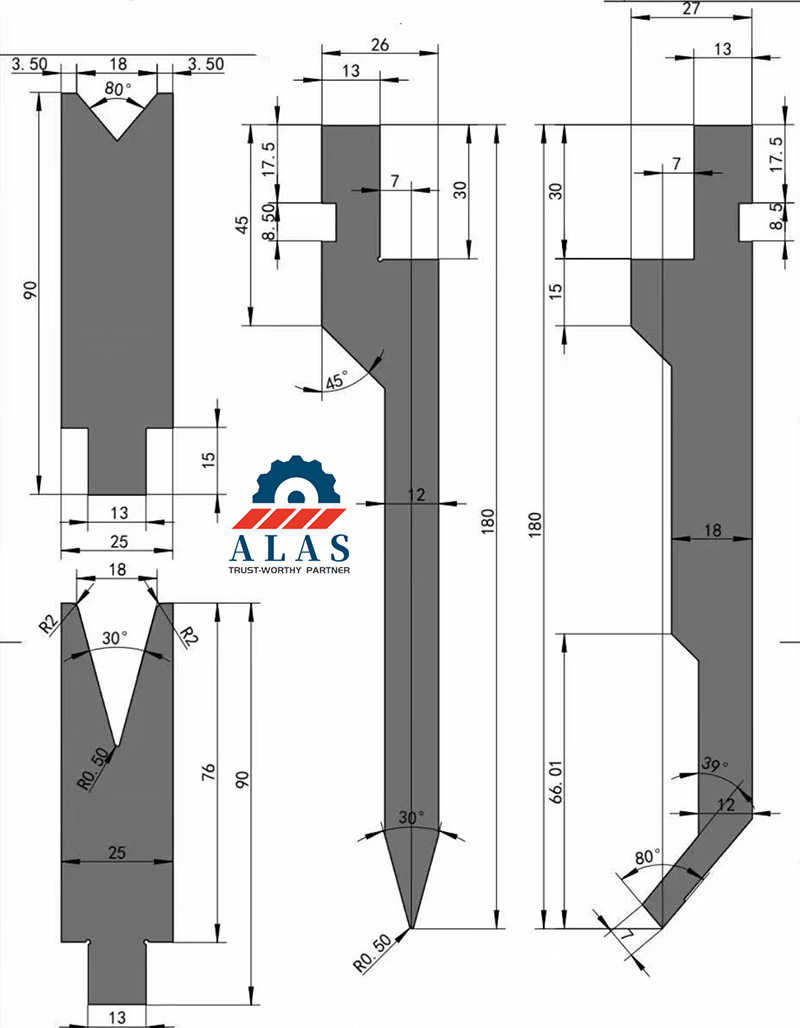
Straight-Edge Dies: Universal for routine flat straight bending.
Sharp-Angle Dies: Designed for acute-angle bending and springback correction.
Gooseneck Dies: Feature reserved clearance to avoid collision during deep channel and U-shaped part bending.
Arc Dies: Used for curved and rounded workpiece forming.
Custom Dies: Tailored for non-standard and special structural workpieces.
Standard Sheet Metal Dies: Suitable for mild steel and galvanized steel.
High-Strength Steel Dies: Reinforced high-hardness tooling for stainless steel and high-tensile alloy plates.
Thin-Sheet Precision Dies: Precisely polished to prevent warping, deformation, and surface scratches on ultra-thin sheets.
Watch how ALAS Machinery precision-mills heavy-duty 42CrMo steel into industrial press brake punches and custom brake dies. We implement integrated CNC grinding and full-body vacuum heat treatment to ensure excellent accuracy and extended service life for your punch press brake setup. Contact us with your drawings for a quick quote!
Press brake bending relies on the cooperation of upper punches and lower dies. The machine applies mechanical pressure to break the material’s elastic limit, creating permanent plastic deformation to achieve the target bending shape.
Material Positioning: Place the sheet metal flat on the V-die and adjust the back gauge to locate the bending line accurately.
Downward Pressing: The machine ram drives the upper punch down to press the sheet into the V-groove.
Plastic Deformation: Continuous extrusion makes the material exceed its yield strength and form a stable bent structure.
Pressure Holding & Retraction: Hold pressure briefly to finalize the shape, then retract the punch.
Workpiece Unloading: Remove the finished part to complete one bending cycle.
| Technical Features | 42CrMo Alloy Steel | Ordinary Carbon Steel |
|---|---|---|
| Heat Treatment | Full-body vacuum integral quenching | Only surface hardening |
| Hardness | 47–52 HRC (full uniform) | 40–45 HRC (surface only, soft core) |
| Wear Resistance | Excellent for continuous operation | Average, easy to wear out |
| Toughness & Stability | Resistant to cracking and deformation | Brittle, easy to chip under pressure |
| Load Resistance | Stable under heavy bending loads | Weak, easy to deform or collapse |
| Service Life | 3–5 times longer | Short lifespan, frequent replacement |
| Cost Performance | Higher upfront cost, excellent long-term ROI | Low initial cost, high maintenance cost |
China (GB): 42CrMo
USA (AISI/ASTM): 4140
ISO: 42CrMo4
Germany (DIN/EN): 1.7225
Japan (JIS): SCM440
UK (BS): 708M40 / EN19
| Item | Standard Tooling | Custom Tooling |
|---|---|---|
| Application | Regular straight bending, mass standard parts | Non-standard shapes, arcs, deep channels |
| Design Basis | Industry standard specifications | Customer drawings & physical samples |
| Delivery | In stock, fast delivery | Custom design & manufacturing lead time |
| Cost | Low unit cost for standard production | Higher initial cost for special profiles |
| Functions | No personalized features | Anti-marking, anti-crack, clearance optimization |
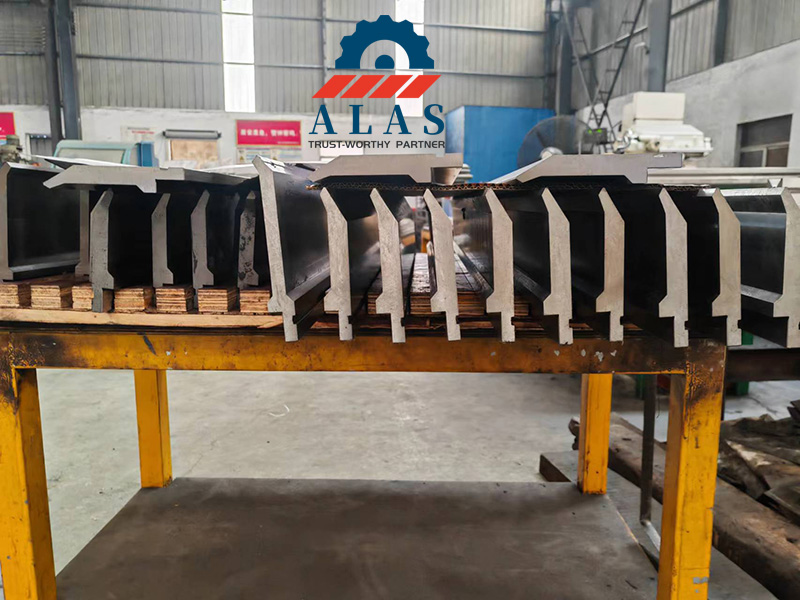
U-shaped, box and deep channel parts → Custom gooseneck punches
Fixed special radius bending → Custom arc dies
Stainless steel & high-strength steel (severe springback) → Angle-compensated dies
Mirror stainless steel & high-finish materials → Polished scratch-free dies
Non-standard machine interfaces & tool sizes → Custom shank & structure
Thin sheets (<3 mm): 6T (ensure precision)
Medium sheets (3–8 mm): 8T (industry standard)
Thick sheets (>8 mm): 10T–12T (protect tools, reduce tonnage)
| Sheet Thickness (T) | Recommended V-Opening | Application Effect |
|---|---|---|
| 0.5–1.0 mm (Ultra-thin) | 4–6 mm | Precise micro-bending, no deformation |
| 1.0–2.0 mm (Thin) | 6–12 mm | Balanced precision & efficiency |
| 2.0–3.0 mm (Medium-thin) | 12–18 mm | Stable conventional bending results |
| 3.0–6.0 mm (Medium-thick) | 24–48 mm | Standard 8T rule for thick plates |
| 6.0–10.0 mm (Extra-thick) | 60–120 mm | Lower tonnage, avoid tool cracking |
Too small: Higher tonnage, workpiece cracking, tool fracture
Too large: Excessive bending radius, reduced forming accuracy
| Material | Springback Range | Recommended Tool Angle |
|---|---|---|
| Mild Steel / Galvanized Steel | 1°–2° | 86°–88° |
| Aluminum Alloy | 1°–3° | 85°–88° |
| 304 Stainless Steel | 3°–5° | 82°–85° |
| High-Strength Steel (>600MPa) | 5°–8° | 78°–82° |
Angle-Preset Punches: Best for mass production with stable precision.
Over-Bending Adjustment: Simple and effective for general bending.
Bottoming & Coining: Eliminates elasticity for high-precision thick plate bending.
Adjustable Tooling Trial: Ideal for new product trials and small-batch customization.
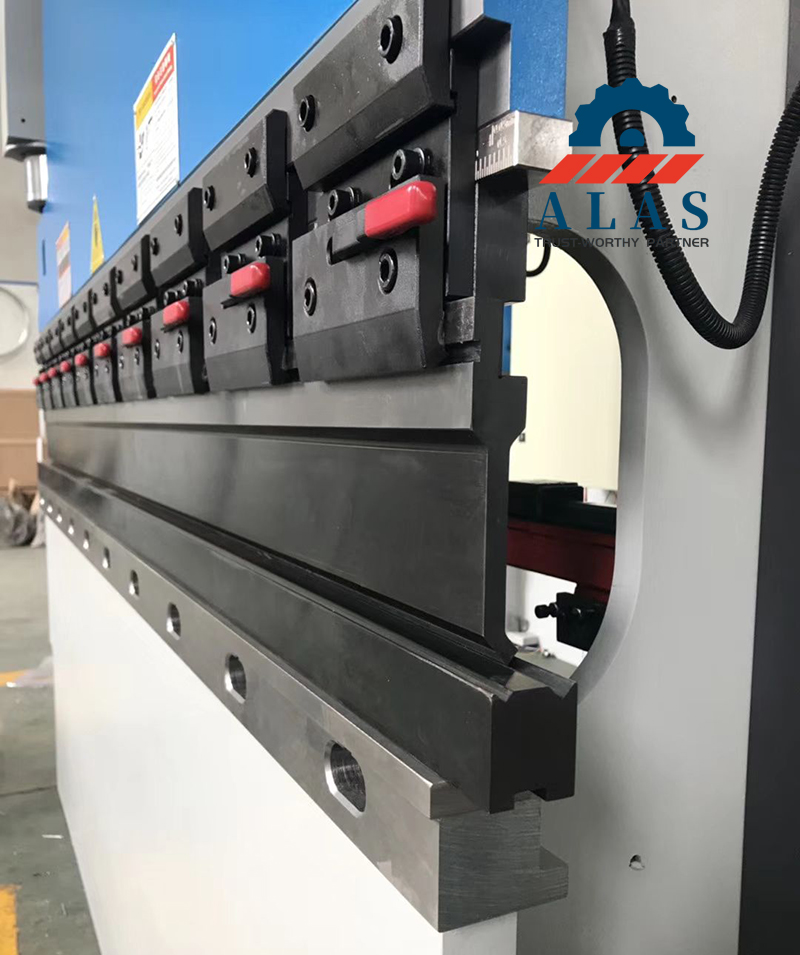
Amada / Promecam: Grooved shank, high versatility for Japanese machines.
Trumpf / Wila: High-precision positioning, quick-change for European machines.
Accurpress (USA): Heavy-duty structure for high-load American press brakes.
Wila Hydraulic Type: Optimized for hydraulic clamping systems.
Domestic Universal: Cost-effective for most Chinese press brakes.
Tool height matches machine ram stroke and table range.
Clamping mode matches machine mechanical/hydraulic/quick-change system.
Shank width, thickness and groove size fully fit machine slots.
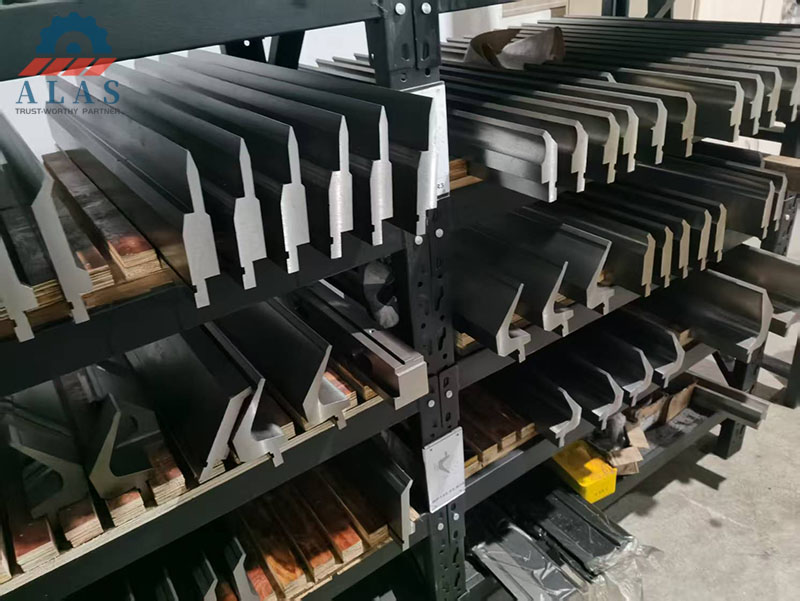
<45 HRC: Low wear resistance, only for temporary low-load use.
45–50 HRC: Best cost performance for daily regular bending.
50–52 HRC: Excellent wear resistance for high-volume heavy-load production.
>52 HRC: Brittle and risky, easy to crack under impact load (not recommended).
Full-body uniform vacuum heat treatment
High-precision surface polishing
Reasonable tonnage and V-die selection
Stable internal metallographic structure
Straight Punch: Universal for standard straight bending of cabinets and general sheet metal parts.
Sharp-Angle Punch: For acute-angle bending and precise springback compensation.
Gooseneck Punch: Prevents collision during deep U-channel and box part bending.
Arc Punch: Creates smooth curved profiles and rounded bending radii.
Custom Punch: Manufactured per drawings for special non-standard structures.
| Defect | Root Cause | Solution |
|---|---|---|
| Unstable bending angles | Uneven wear, unbalanced pressure, insufficient springback compensation | Regrind tools, calibrate machine pressure, adjust compensation parameters |
| Bend line cracking | Small V-opening, hard material | Use larger V-die; adopt high-strength dedicated tooling |
| Workpiece scratches | Rough tool surface | Polish tools or apply anti-scratch coating |
| Fast tool wear | Low-grade material, poor heat treatment, overload | Upgrade to 42CrMo full-quenched tooling; adjust bending tonnage |
| Overly large bending radius | Oversized V-opening | Replace with proper smaller V-die following thickness rules |
| Tool chipping & cracking | Excessive hardness, poor toughness | Adopt standard 47–52 HRC tooling |
| Left-right angle deviation | Tool non-parallelism, uneven gap pressure | Calibrate parallelism and balance die gap pressure |
Standard Tooling: Fully compatible with Amada, Trumpf, Accurpress and mainstream brands, in stock for fast delivery.
Custom Tooling Service: Develop exclusive tooling based on customer CAD drawings, samples and special process needs.
Premium Material Guarantee: 42CrMo / SCM440 / Cr12MoV with full vacuum quenching, stable 47–52 HRC hardness.
High Precision Machining: CNC grinding, straightness controlled within 0.02mm per meter.
Custom Surface Treatment: Anti-rust oil, black oxide, nitriding and other finishes available.
Nanjing Alas International Co., Ltd. is a professional industrial tooling manufacturer focused on shear blades, bending dies, shredder blades, and custom wear parts. We offer full application engineering, material selection, setup guidance, and after-sales support to global customers.
Tell us your requirements, and our engineering team will provide professional solutions for blade specification, tool life optimization, and cost-effective production.