

Phone:
86-15852949220


 |


ALAS
Nanjing, China
L/C, T/T, Paypal, Money Gram
10
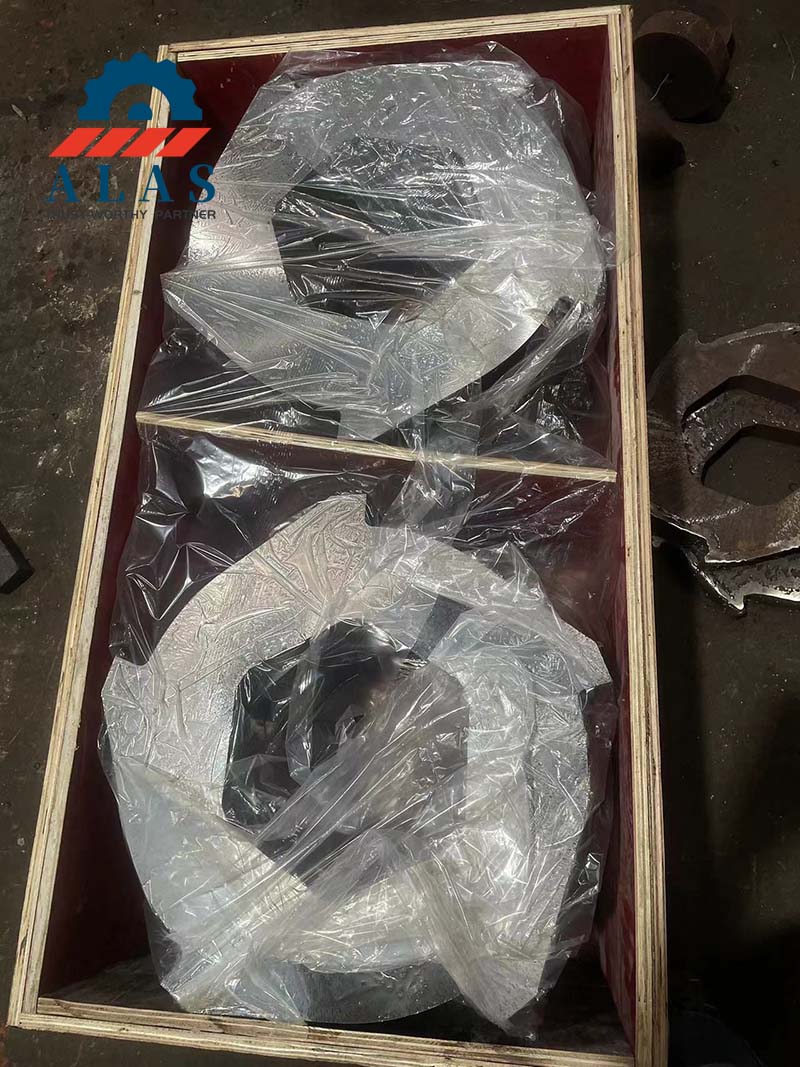
Wooden Crate Packaging
| Quantity: | |
|---|---|
ALAS aftermarket metal shredder blades are premium alloy core components engineered for 5.5–15 RPM low-speed, high-torque dual-shaft metal shredders. With standardized hardness profiles, customizable claw geometries, and graded blade thicknesses, our alternatives help recycling operations reduce frequent replacement expenditure and stabilize per-ton processing costs.
Engineering vs. Failure: Utilizing customized vacuum heat treatment tailored to your specific waste profile, ALAS cold-work and shock-resisting knives reduce premature brittle fracturing under peak kinetic loads.
Operational Security: Eliminates unnecessary mill downtime and protects your gearboxes and bearings by enforcing strict dimensional flatness and synchronized stack seating.
Professional metal shredder blade selection follows a strict working condition – material – hardness matching logic. Universal, one-size-fits-all knives fail under complex kinetic stress. To eliminate Technical recognition barriers for global procurement teams, ALAS utilizes unified international equivalent standards and locked-in tempering profiles.
Blade Grade | Hardness Range | International Equivalent | Best-Fit Waste Operating Conditions | Shop-Floor Reality / Anti-Failure Logic |
|---|---|---|---|---|
Graded H13 | 50–55 HRC | AISI H13 / DIN 1.2344 | 24/7 continuous processing of large heavy scraps, vehicle shells, and thick structural steel. | Impact Priority. Never run H13 at 54+ HRC here. Lower, tough tempering preserves maximum core ductility, ensuring the blade deforms marginally instead of snapping under heavy multi-ton shock loads. |
6CrW2Si / (AISI S1) | 54–56 HRC | AISI S1 / DIN 1.2550 | Heavy structural scrap, car bodies, engine parts, and intermittent high-torque shear loads. | Rigidity-Toughness Balance. Formulated with tungsten-silicon (W-Si) alloying. Must be held strictly at 54–56 HRC to provide heavy-load edge retention without edge rolling or premature brittle jaw cracking. |
AISI D2 / Cr12MoV | 58–60 HRC | AISI D2 / JIS SKD11 | Ordinary metal scraps, e-waste (WEEE), thin steel plates, and aluminum extrusions. | Standard Abrasive Wear Priority. High carbon-chromium matrix resists pure friction and non-ferrous abrasion. Prone to edge-chipping if slammed into thick structural steel beams or heavy aggregate. |
DC53 Matrix Steel | 58–61 HRC (Custom Low-Tempering) | DC53 (Matrix Steel Upgrade) | Dense polymers, high-velocity wire-reinforced tire shredding, and precision light-metal recycling. | Toughness-Upgraded Wear Priority. For unsegregated solid scrap lines, we deliberately drop the hardness to 58–61 HRC. This releases the base matrix toughness, delivering double the resistance to tooth-chipping compared to standard D2. |
High-Manganese Steel | 200–220 HBW (Hardens up to 500–550 HBW under impact) | ASTM A128 / DIN 1.3401 | Raw municipal waste, landfill screen rejects mixed with rocks, bricks, and heavy aggregate. | Self-Hardening Under Severe Loads. Base metal stays highly ductile to absorb shock while the shearing edge dynamically work-hardens. NOT recommended for clean polymers or light fiber friction, as the alloy remains unworked and suffers accelerated wear. |
Critical Reminder: Tungsten carbide hardfacing is NOT suitable for mixed metal scrap lines contaminated with thick steel profiles, concrete chunks, and large aggregates.
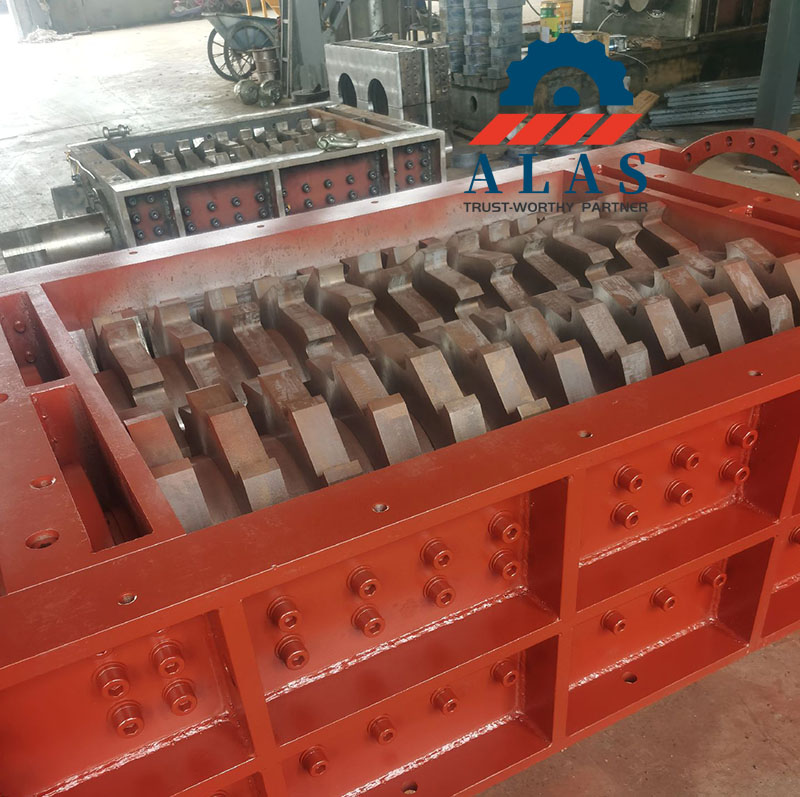
Blade structural configurations determine shredding fineness and machine operational stability through standardized claw quantities, variable thickness ranges, and high-precision split-tolerance seating interfaces.
2/3 Claws (Coarse Crushing): Ideal for complete car shells, heavy structural steel, and thick scrap plates. Delivers concentrated, high-impact tearing force for high-volume coarse recycling operations.
6/8 Claws (General-Purpose): Suitable for mixed metal scrap recycling. Produces consistent, uniform particle sizes and maintains stable daily throughput.
12 Claws (Fine Crushing): Customized for precision pre-shredding and processing electronic scrap (WEEE) or thin aluminum fractions.
10 / 20 mm (Light-Duty): sharper, lightweight profile designed for high-velocity cutting of thin sheets and aluminum cans.
30 / 40 mm (Medium-Duty): Balances shearing efficiency and structural stability for light mixed metal scraps and thin steel pipes.
50 / 75 mm (Heavy-Duty): Reinforced heavy-gauge gauge engineered to withstand continuous high-torque crushing of bulk scrap steel and automotive components.
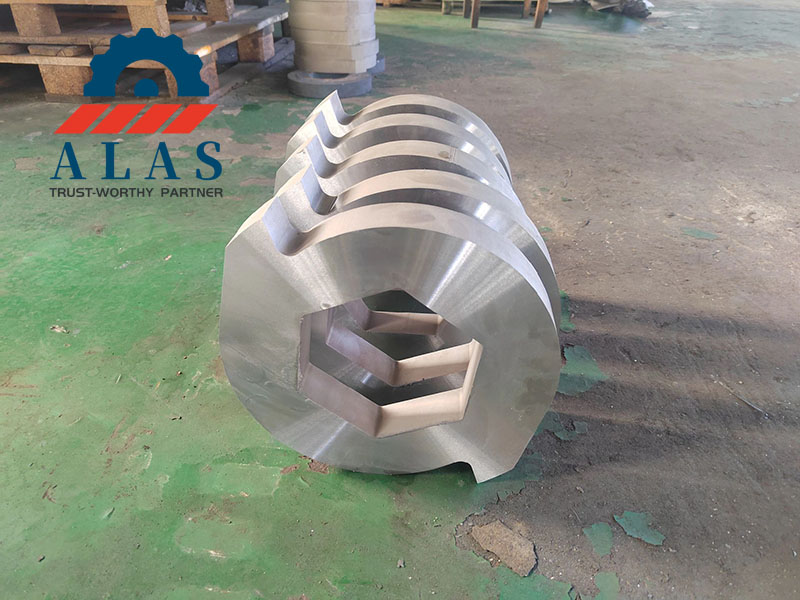
Modular Quick-Change System: Features a segmented layout allowing rapid individual tooth swap-outs directly on the drive shaft.
Precision Spline/Hexagon Bores: Inner bores achieve ISO H7 clearance fits to eliminate backlash, while keyed seats utilize ISO H9 tolerances.
Thermal Seizing Protection: Calculated assembly clearances absorb continuous high-temperature thermal expansion to prevent binding.
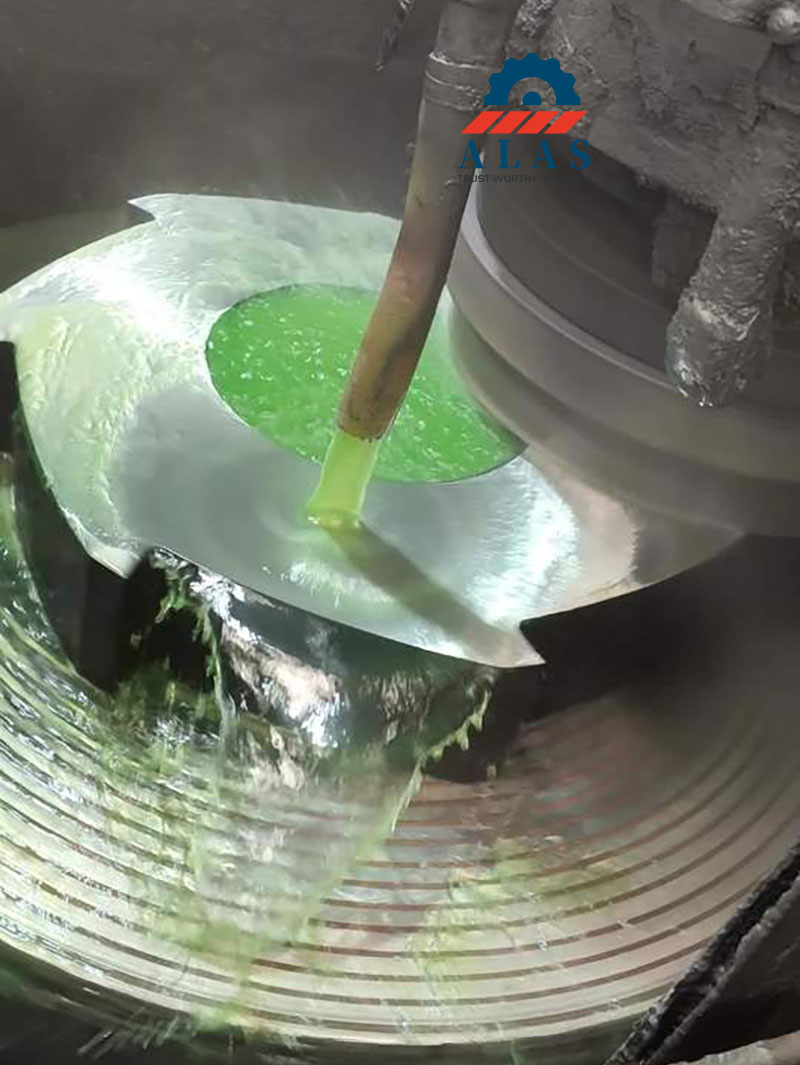
Refined Metallurgy: Direct-milled from certified tool steel plates with vacuum through-hardening for uniform hardness.
Precision Grind Checking: Strict flatness and parallelism controls ensure accurate stack build-up.
The R&D Department Reality: Impact toughness outweighs raw hardness in heavy-load shearing; ALAS optimizes 6CrW2Si at 54–56 HRC and graded H13 at 50–55 HRC.
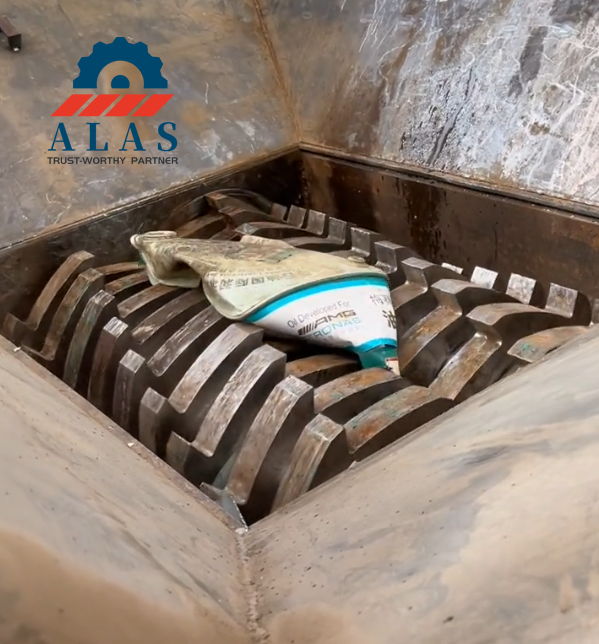
Regrind Limits: Supports up to 4 professional regrinds with sufficient hook margin.
The Wet-Grinding Mandate: Constant flood coolant is required during resharpening to prevent hazardous localized annealing.
Clearance Checks: Regular gap inspections prevent material wrapping and subsequent energy consumption spikes.
A: Impact toughness is prioritized over raw hardness through controlled vacuum through-hardening.
A: Premium Cold Work Die Steels suit thin aluminum, while 6CrW2Si and graded H13 address heavy and continuous structural steel operations.
A: Detailed processing metrics and full operational capacities can be found in the referenced technical documentation.
A: Localized hard surface coatings and optimized hook angles mitigate abrasive wear.
A: Yes, custom aftermarket interchangeables match original equipment specifications.
A: Yes, full accessory ranges maintain strict functional tolerance limits during assembly.
A: Match your daily volumes and specific scrap categories with appropriate tool steel grades and shaft configurations.
Frustrated with Tooth Fractures, Rapid Edge Rolling, or Sudden Chamber Jamming on Your Metal Shredders?
Don't let uncalibrated tolerances or brittle steel fracture your heavy hooks under peak crushing torque. Contact the ALAS engineering team today. Get your free material selection report (6CrW2Si/AISI S1/D2/H13), ISO H7/H9 split-clearance bore verifications, and a factory-direct wholesale quote!
Nanjing Alas International Co., Ltd. is a professional industrial tooling manufacturer focused on shear blades, bending dies, shredder blades, and custom wear parts. We offer full application engineering, material selection, setup guidance, and after-sales support to global customers.
Tell us your requirements, and our engineering team will provide professional solutions for blade specification, tool life optimization, and cost-effective production.