

Phone:
86-15852949220


Views: 10 Author: Site Editor Publish Time: 2024-02-08 Origin: Site
Selecting the right press brake tooling is crucial for ensuring bending accuracy, production efficiency, and die service life. It mainly consists of five key points:

The key points for selecting press brake tooling are matching material characteristics, bending processes, workpiece requirements, and equipment parameters—none of which can be dispensed with. The following five key points cover all critical technical aspects of the entire selection process, ensuring both bending accuracy and die life. Beginners can directly refer to them for precise selection.
The selection of press brake tooling must first match the tensile strength and springback characteristics of the processed material, which is the core of ensuring accurate bending angles. Ordinary mild steel has minimal springback; when bending to 90°, an 86°~88° punch can be used for compensation. Stainless steel and high-strength steel have significant springback, requiring an 85° punch or targeted adjustment of the punch angle to avoid angular deviations of the workpiece after bending.
Material thickness directly determines the force-bearing condition and bending effect of the die. Thin, medium-thick, and thick materials require corresponding die specifications to avoid die damage or workpiece forming defects, meeting the needs of long-tail keyword searches such as "matching of material thickness and press brake tooling" on Google. The commonly used material for press brake tooling is 42CrMo, After tempering and surface induction hardening, its hardness typically reaches HRC 45-50. It has excellent strength and toughness, effectively preventing fracture under high pressure.and the following is its international standard comparison table.
Country/Standard Organization | Standard Code | Corresponding Grade |
China (GB) | GB/T 3077 | 42CrMo or 42CrMo4 |
USA (AISI/ASTM) | ASTM A29 | 4140 |
International Organization for Standardization (ISO) | ISO 683-1 | 42CrMo4 |
Germany (DIN) | DIN EN 10083 | 1.7225 (or 42CrMo4) |
Japan (JIS) | JIS G4105 | SCM440 |
UK (BS) | BS 970 | 708M40 (EN19) |
During selection, it is imperative to ensure that the die can withstand the actual output pressure of the bending machine; overloading is strictly prohibited, as it will cause die bursting and equipment damage. The calculation of pressure tonnage needs to combine material thickness, material tensile strength, and lower die V-notch width, and the die with corresponding bearing capacity should be selected after accurate calculation.
The actual output tonnage of the bending machine must be less than the rated bearing capacity of the die, with a certain safety margin reserved (10%-15% is recommended). For bending thick plates and high-strength steel, thickened dies or segmented dies should be selected to disperse bending pressure and extend die service life.
The punch shape must perfectly match the final shape of the workpiece to avoid interference or forming defects. Different punches correspond to different bending needs: standard punches are suitable for conventional straight-edge bending and have the widest application; sharp-angle punches are suitable for small-angle bending or springback compensation; gooseneck punches are suitable for processing U-shaped grooves and deep channels, as they can avoid the already bent edges of the workpiece.
For workpieces with circular or irregular shapes, arc punches or customized irregular punches should be selected. Combined with accurate workpiece drawings, the die contour must be completely matched with the workpiece to ensure bending forming accuracy.
The die shank type must be fully compatible with the clamping system of the bending machine. Common shank types include Amada/Promecam, New Standard, and Trumpf/Wila. The equipment clamping method should be confirmed before selection to avoid problems such as insecure die installation and positioning deviation.
The die height must match the slide stroke and worktable opening height of the bending machine. An excessively high die will lead to insufficient slide stroke, making it impossible to complete bending; an excessively low die will affect workpiece loading and unloading and reduce production efficiency. At the same time, the compatibility between the die installation interface and the equipment should be confirmed to ensure convenient installation and accurate positioning.
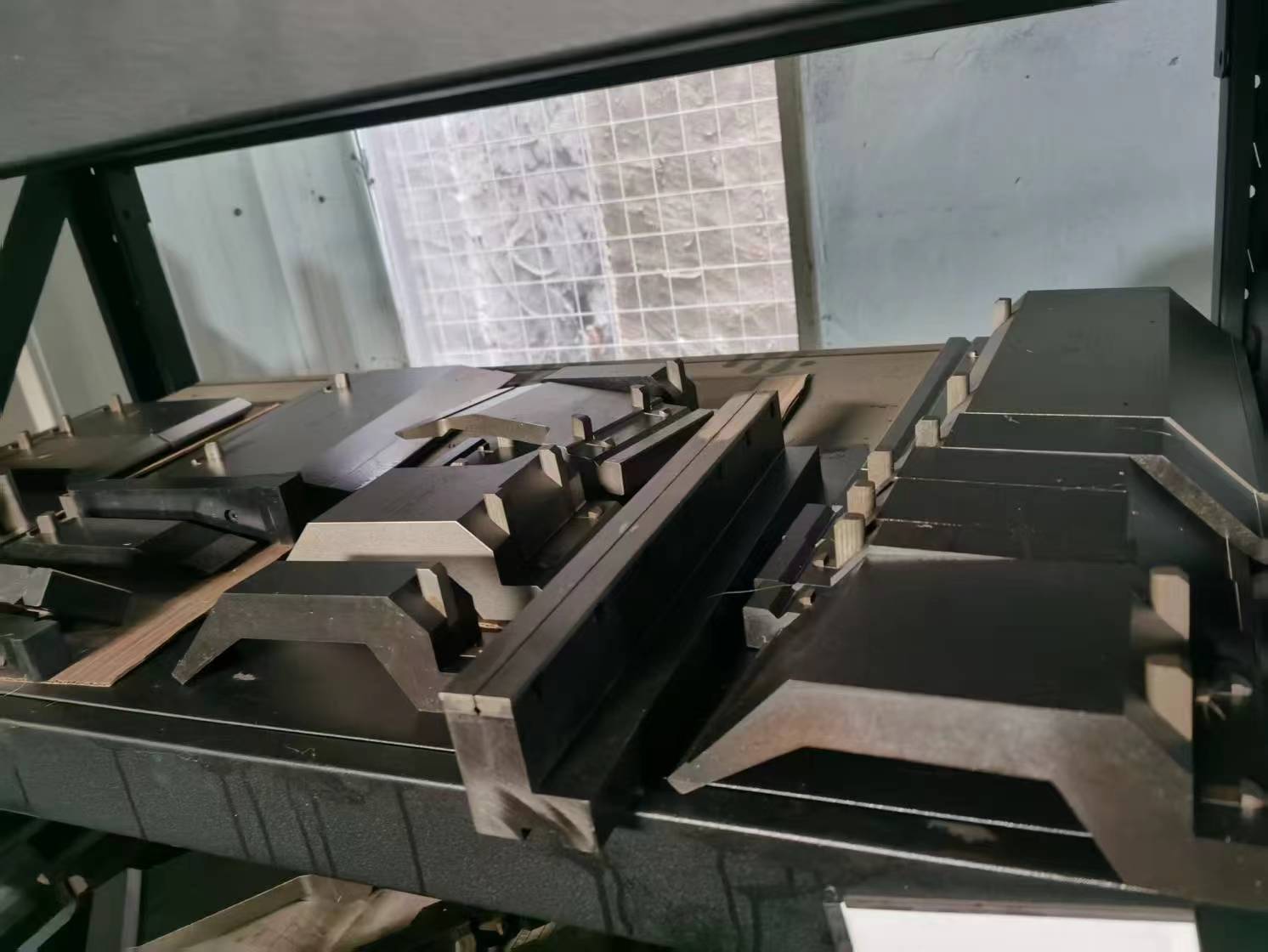
If you need custom press brake tooling, please contact us:
https://www.alasmachinery.com/Press-Brake-Tooling-pl46157186.html
Nanjing Alas International Co., Ltd. is a professional industrial tooling manufacturer focused on shear blades, bending dies, shredder blades, and custom wear parts. We offer full application engineering, material selection, setup guidance, and after-sales support to global customers.
Tell us your requirements, and our engineering team will provide professional solutions for blade specification, tool life optimization, and cost-effective production.