86-15852949220      mt@alasmachinery.com
NANJING ALAS INTERNATIONAL CO., LTD
You are here: Home » Products » Rebar Blade » Rebar Bender Parts & Replacement Components

Product Category

Contact Us

loading

Share to:
sharethis sharing button

Rebar Bender Parts & Replacement Components

Boost fabrication efficiency with high-quality rebar bender parts from ALAS
Made of premium 40Cr & Cr12MoV tool steels via vacuum heat treatment, our bending pins, center shafts and mandrels feature great toughness and wear resistance (45-50 HRC). Compatible with GW40, GW50 and mainstream rebar bender models, they cut downtime and extend service life for harsh construction and rebar processing work.
Premium alloy steel: Excellent anti-chipping property
Precise sizing: Full fit for standard & custom designs (OEM/ODM available)
Longer lifespan: Fewer replacements to lower operational costs
  • ALAS

  • Nanjing, China

  • L/C, T/T, Paypal, Money Gram

  • 10

  • Wooden Crate Packaging

Availability:
Quantity:

The Ultimate Guide to Sourcing ALAS Heavy-Duty Bar Bender Spare Parts

Rebar benders are indispensable equipment for construction sites, bridge projects and precast concrete factories. These machines operate continuously under heavy loads, and their core parts endure constant friction, bending pressure and torsional force throughout daily use. Long-term wear will easily trigger sudden machine faults, leading to unplanned downtime and costly project delays.
Using genuine ALAS bar bender spare parts and reliable machine accessories is the most practical solution to stabilize your equipment operation. Quality replacement parts effectively cut unnecessary downtime, reduce long-term maintenance expenses, and ensure all rebar bending work meets standard construction precision requirements.
This guide sorts out practical and targeted information for equipment purchasers and on-site maintenance teams, covering wearable core parts, material selection, model compatibility, daily maintenance skills and customized part solutions.

1. Fast-Wearing Rebar Bender Parts: Inspection & Replacement Standards

The following key components bear the main load during rebar bending. Any wear, deformation or bending will directly cause dimensional deviation and inaccurate bending radius, which may even lead to on-site inspection failure. Timely replacement is essential to keep the machine accurate and stable.
Part Name
Function
Wear Warning Signs
Hardened Steel Mandrel Sleeves
Provide fixed rotating support for rebars during bending operation
Tiny deformation will reduce bending accuracy and result in inconsistent rebar dimensions
Rebar Bender Bending Pins
Press and bend steel rebars to specified angles
Low-grade pins are prone to cracking and deformation, and may cause machine jams
Cr12MoV Steel Roller Bushings
Resist extreme continuous sliding friction, suitable for long-term high-frequency operation
Greatly slow down equipment abrasion, stabilize operation and achieve ultra-long service life under heavy working conditions

We supply various diameters of forming bushings to match different rebar bending pin sizes

2. Spare Part Materials: Practical Performance & Application Scenarios

The service life of rebar bender spare parts mainly depends on material grade and heat treatment process. Selecting the right material according to actual working conditions can avoid frequent part replacement and unexpected machine shutdowns. The following three steel materials are the most widely used and cost-effective options on the market.
45# Carbon SteelHardness: HRC 45–50 Features: Stable performance and cost-efficient Best for: Conventional construction projects and daily general rebar bending work
40Cr Alloy SteelFeatures: Excellent tensile and torsion resistance, high toughness and not easy to fracture Best for: Heavy-duty operation, thick rebar processing and customized part production
Cr12MoV Alloy SteelHardness: HRC 45–50 (vacuum quenched) Features: Outstanding wear resistance, longest service life among the three materials Best for: Factory assembly line continuous production and high-frequency bending tasks

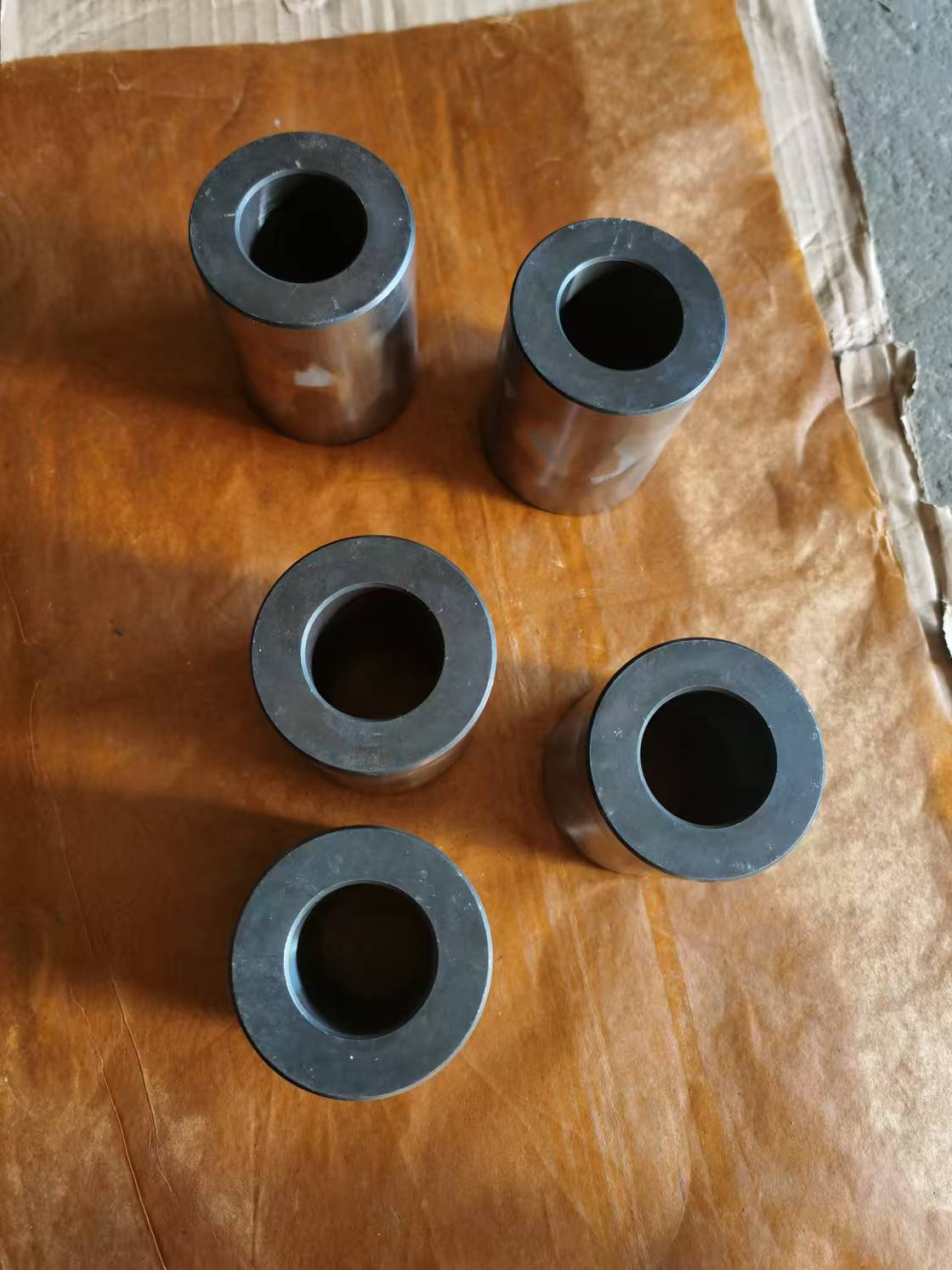
Heavy-duty hardened steel rebar bending machine bushings and forming sleeves on protective paper

3. Standard Size & Universal Machine Compatibility

All ALAS rebar bender accessories are precisely CNC machined with standard h6/h7 tolerance. Strict dimensional control ensures perfect fitting, zero vibration and smooth operation after installation.
Our spare parts are fully compatible with mainstream models including GW40, GW50 and GF20 series rebar benders, and also support matching installation for hydraulic bar cutters. The forming shaft size covers 20mm to 50mm, fully complying with international construction standards.
Regular replacement of worn pins and bushings can effectively reduce operating load on gears and motors, protecting the core equipment and extending the overall machine service life. As the direct manufacturer of ALAS brand, we cut out all middle links, helping customers save procurement costs and purchase genuine factory parts at competitive prices.

4. Cost-Saving Daily Maintenance Practices

Waiting for complete part failure will only bring higher maintenance costs and longer production stoppage time. Daily inspection and early replacement of worn parts can bring obvious practical benefits:
  • Reduce abrasion of core machine components

  • Lower repeated maintenance workload and long-term operational costs

  • Avoid project delay losses caused by sudden equipment failure

Pro Tip: Store a small quantity of bending pins and roller bushings on site. It is the most economical and effective way to avoid unexpected downtime.

5. Custom Spare Parts Service for Non-Standard Equipment

ALAS provides one-stop customized manufacturing service for outdated and non-standard rebar bender spare parts. To get an accurate quotation and production plan, please offer the following detailed parameters:
Requirement Item
Specific Details to Provide
Size & Tolerance
Diameter, length, h6/h7 fitting standard, keyway, taper, end type (flat, round, countersunk)
Heat Treatment
Hardening & tempering standards, target HRC hardness range, hardness testing positions
Material
45# carbon steel, 40Cr alloy steel, Cr12MoV alloy steel
Customized parts are well suited for old imported European machines, discontinued models and special bending process requirements.

6. Complete Product Line & Strict Quality Control

ALAS supports full-range production of high-precision spare parts for all common rebar processing equipment:
  • Rebar cutting blades: Professional heat treatment process, four-sided usable design, clean cutting effect and longer service cycle

  • Rebar bending accessories: Precise matching size, no rebound, no edge chipping during bending

  • General machine accessories: Rust-proof, wear-resistant and easy to install and replace

Every batch of ALAS products undergoes full-process strict inspection, including raw material screening, heat treatment detection and finished product dimensional calibration. Stable and reliable quality ensures consistent equipment operation and helps customers control overall maintenance costs.

Order & Custom Service Process

If you need standard or custom ALAS spare parts for GW40, GW50, GF20 and various hydraulic rebar benders, just provide your machine model, part name or technical drawings, as well as the required quantity and material. Our team will send you a formal quotation and exact lead time within 24 hours.

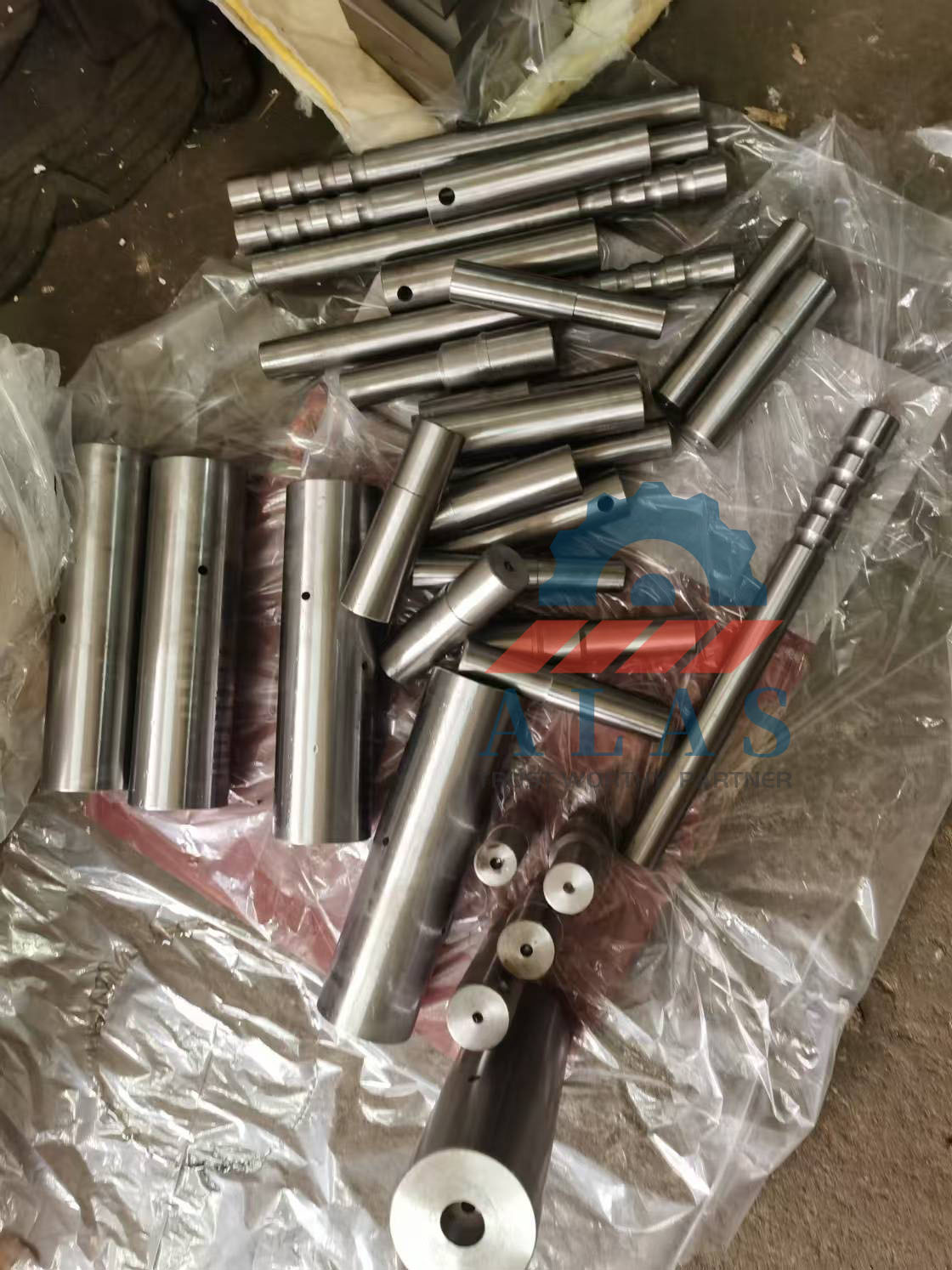
A collection of rebar bender replacement parts including center shafts, bending pins, and forming mandrels in various sizes

FAQ

Q: How often should bending pins be replaced?

A: For equipment with daily heavy-duty use, replacement every 3 to 6 months is recommended. Replace the parts immediately once you find obvious wear or inaccurate bending angles.

Q: Are 45# steel pins suitable for bending high-tensile rebar?

A: For Grade 60 and higher-strength rebar, please choose 40Cr or Cr12MoV pins to avoid cracking and deformation.

Q: Can you customize special sizes for old imported machines?

A: Yes. We can process all non-standard sizes according to your physical samples or technical drawings.

Q: What is the difference between h6 and h7 tolerance?

A: H7 tolerance is applicable to most standard bending work. H6 tolerance is used for high-precision installation scenarios that require ultra-tight fitting.

Q: What problems occur if spare parts lack proper heat treatment?

A: Parts without standard heat treatment wear out very fast on construction sites. Low-hardness bending pins easily bend, dent or snap under heavy load. This leads to machine jams, incorrect bending angles and failed project inspections.

All ALAS spare parts adopt vacuum quenching, reaching HRC 50–62 hardness. This effectively prevents edge chipping and unexpected machine downtime.

Q: Which steel is suitable for high-frequency hydraulic bar bender pins?

A: For heavy, frequent use in factory precast work and large bridge projects, Cr12MoV steel (SKD-11 / 1.2601) is the ideal option.
  • Daily construction: 45# steel and 40Cr steel work well and cost less for regular jobs

  • Heavy-duty work: Cr12MoV steel contains chromium and molybdenum, offering much better wear resistance

  • Core benefit: Vacuum-hardened Cr12MoV pins resist scratches under constant heavy pressure. They reduce replacement frequency and cut long-term operating costs

Q: What details do you need for custom bar bender accessories?

A: To make perfectly matched custom parts, please provide three key details:
  • Exact dimensions: Precise diameter, length and h6/h7 tolerance requirements

  • Special structures: Keyways, tapers, countersunk holes or flat end designs

  • Hardness standard: Normally HRC 45–50, matched to your rebar size

Q: What are the easy-to-wear parts on a bar bender?

A: These parts wear frequently and need regular inspection:
  • Bending dies & pins: Core parts for rebar shaping, quick to wear

  • Guide rollers & shafts: Support and guide rebars during bending operation

  • Belts & gears: Transfer machine power, prone to stretching and aging

  • Bearings: Reduce mechanical friction; easy to damage without regular lubrication

  • Hydraulic seals: Stop oil leakage on hydraulic bar benders

  • Motor carbon brushes: Directly affect motor power output

  • Switches & contactors: Control the machine’s electric circuit

Q: How to choose the correct die for different rebars?

A: Follow these practical rules on site:
  • Match die diameter exactly to rebar diameter (e.g. Φ16 die for Φ16 rebar)

  • Grade 60 rebar: Maximum bend diameter equals 6 times the rebar diameter

  • Grade 80 rebar: Maximum bend diameter equals 8 times the rebar diameter

  • Use original OEM dies to ensure stable bending accuracy and longer service life

Q: Why do bending angles go wrong? How to fix the issue?

A:
Common Causes
  • Worn, mismatched or incorrectly installed dies

  • Loose positioning pins and worn limit blocks

  • Slipping drive belts or worn gear sets

  • Unstable voltage causing inconsistent motor speed

  • Incorrect CNC parameter settings for CNC bending machines

Quick Fixes
  • Replace worn dies and reinstall them properly

  • Readjust and tighten all positioning components

  • Tighten loose belts or replace damaged belts and gears

  • Stabilize power supply and check motor working condition

  • Recalibrate CNC parameters to restore precise bending

Q: How often should I replace bar bender spare parts?

A: Follow this practical on-site replacement cycle:
  • Bending dies: Replace after 2,000–5,000 bends, or when wear exceeds 2mm

  • Rollers & shafts: Replace every 1–3 months, with weekly routine checks

  • Belts & gears: Replace every 3–6 months or once slipping occurs

  • Bearings: Replace every 6–12 months and lubricate weekly

  • Carbon brushes: Replace every 1–2 months or when length is less than 10mm

  • Hydraulic seals: Replace every 6 months or immediately when oil leaks appear

Q: How to extend the service life of bar bender spare parts?

A: Simple daily maintenance can greatly prolong part lifespan:
Before operation
  • Check die and roller fixation, clean rust and debris on rebars

  • Check belt tightness and bearing lubrication status

During operation
  • Do not exceed the machine’s maximum rebar size and load limit

  • Avoid long-term continuous overload operation

After operation
  • Clean all working parts and apply anti-rust oil on shafts and pins

  • Store spare parts in dry and ventilated conditions

Weekly check: Clean and lubricate rollers and pins; polish minor wear on bending dies.

Q: How to fix hydraulic oil leakage problems?

A:
  • Replace worn, aging or deformed hydraulic seals

  • Tighten all loose pipe joints and fixing bolts

  • Replace cracked or aging hydraulic hoses

  • Keep hydraulic oil at the standard liquid level

  • Regularly replace dirty or degraded hydraulic oil

Q: Can you make custom parts for special bending requirements?

A: Yes. We provide custom spare parts for non-standard rebar sizes, special bending angles and irregular shaping needs.
You only need to provide your machine model, rebar diameter, required bending angle and radius. Custom orders take 10–15 working days. The final price depends on part material, processing precision and production difficulty.

45# steel, 40Cr,Cr12mov International Material Comparison Table

Chinese GB standards

American AISI/SAE standards

Japanese JIS standards

German DIN standards

Russian GOST standardss

45#steel

1045

S45C

C45(1.1191)

45

Cr12MOV
SKD-11 1.2601 X12M

40Cr

5140

SCr440、SCr440H

41Cr4(1.7035)

40X

Industrial grade various-thickness rebar bending sleeves and wear-resistant forming bushings manufactured by ALAS

Heavy-Duty Bar Bender Spare Parts in Action: High-Impact Rebar Bending Test


Watch our heavy-duty bar bender parts work reliably on real job sites while bending steel rebar.
Our bending pins and central mandrel stand up to heavy friction and twisting force, with no bending or cracks. We make these parts from 40Cr and Cr12MoV steel, treated with vacuum hardening to reach HRC 45-50 hardness.
All ALAS accessories keep steady bending sizes, little spring back, and last a long time even with frequent use.
Check out our solid workmanship right here. Get in touch with ALAS for factory wholesale prices and custom part solutions.


Previous: 
Next: 
200
Phone:
86-15852949220
Address:
Jiangning District, Nanjing
About Us

Nanjing Alas International Co., Ltd. is a professional industrial tooling manufacturer focused on shear blades, bending dies, shredder blades, and custom wear parts. We offer full application engineering, material selection, setup guidance, and after-sales support to global customers.
Tell us your requirements, and our engineering team will provide professional solutions for blade specification, tool life optimization, and cost-effective production.

Subscribe
Sign up for our newsletter to receive the latest news.
​Copyright 2021 NANJING ALAS INTERNATIONAL CO., LTD            苏ICP备2021025144号