

Phone:
86-15852949220


Views: 62 Author: Site Editor Publish Time: 2024-01-23 Origin: Site
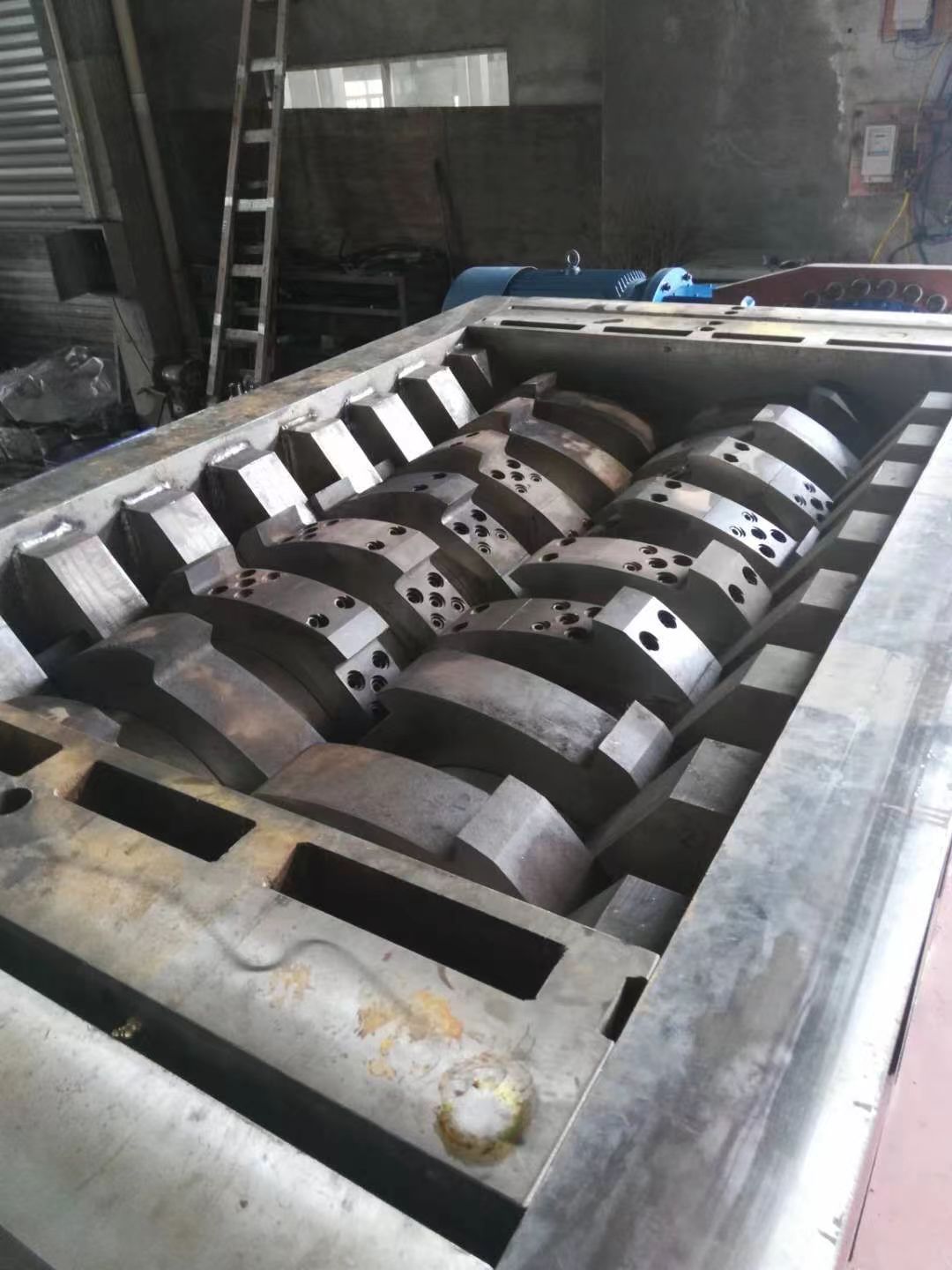
Watch our heavy-duty twin-shaft metal shredder blades at work in this industrial oil drum crushing test. Standard blades often slip, endure extreme torque or chip easily when cutting scrap metal, waste drums and car bodies.Our twin-shaft shredder knives put an end to these issues. Made from high-grade SKD-11, Cr12MoV cold work die steel or heavy-duty H13K steel, each piece undergoes vacuum hardening and cryogenic treatment. It delivers consistent HRC 58-62 hardness and strong impact resistance.The precision staggered claw design and hex spindle lock stop shaft bending and machine jams. You get smooth cutting and steady high output for daily shredding tasks.
Precision built to fit your shredder shaft and torque requirements exactly
Modular claw structure cuts blade change downtime by 80%
Direct factory supply, with full on-site engineering support worldwide
Tired of frequent blade swaps and costly line stops? Our team will pick the right steel material and claw style to match your processing volume.
Email for quotes: mt@alasmachinery.com
WhatsApp / Phone: +86-15852949220
Check our full shredder blade lineup: alasmachinery.com
In the solid waste recycling industry, the double-shaft shredder is key front-end crushing equipment. Its operating efficiency, maintenance costs, and service life all depend on the blades you choose. Choosing the wrong blades causes quick wear, uneven crushing, higher energy use, and frequent downtime.
Most double-shaft shredders use a low-speed (5.5–10 rpm), high-torque design. This means blades must be wear-resistant, impact-resistant, and structurally stable. The key to solving these problems is matching blade materials to your working conditions.

Material characteristics
Equipment parameters
Production capacity goals
Construction waste (with sand/mud): Needs strong impact resistance
Metal scraps: Needs high wear resistance
Soft fibrous materials: Needs sharp cutting edges
Blade thickness
Number of teeth
Installation structure
Fine-grained output: Use blades with more teeth
High-load continuous operation: Use special steel with good overall performance
Coarse crushing of large materials: Prioritize blade throughput and impact resistance
Core advantage: High toughness (impact value ≥ 120J/cm²) and strong impact resistance, made of ZGMn13 high manganese steel (manganese content 11%-14%), which is the key to resisting material impact.
After impact, the surface undergoes rapid work hardening (surface hardness up to HRC 55-60), while the core remains tough, effectively resisting wear from mud, gravel, and other impurities that easily damage blades.
Suitable materials: Municipal solid waste, construction waste, landfill screen rejects, industrial waste with sand/mud. Key pain points solved: Avoids blade chipping/cracking caused by high impact, extends service life by 30%-50% compared to ordinary steel, and maintains stable crushing efficiency without frequent replacement.
Core advantages: Made of 9CrSi alloy tool steel, with hardness up to HRC 58-60 after quenching, sharp edges (edge sharpness retention ≥ 80 hours of continuous operation), good wear resistance, and mature processing technology, with purchase cost 40%-60% lower than cold work die steel.
Disadvantage: Slightly brittle (impact value ≤ 30J/cm²), poor impact resistance, not suitable for processing materials containing hard impurities (e.g., sand, small metal pieces), which easily cause edge chipping.
Suitable materials: Rubber, paper, fiber, PE/PP film, woven bags (soft solid waste). Key pain points solved: Balances cost and efficiency, ensures high shearing efficiency for soft materials, and has a service life of 150-200 hours for continuous operation, reducing replacement frequency.
Cr12MoV: Cost-effective, mainstream domestic material, with a service life of 300-400 hours for continuous operation. Good for most medium-to-high hardness materials (ideal for small/medium projects). Key pain points solved: Reduces downtime caused by blade replacement, improves equipment utilization rate by 25%, and balances cost and service life.
SKD-11: Superior wear resistance (wear resistance 1.5-2 times that of Cr12MoV), with a service life of 450-600 hours for continuous operation. Good for high-strength materials (metal scraps, hard plastics). Widely used in export projects.Key pain points solved: Solves rapid wear of blades when processing hard materials, reduces long-term replacement costs, and ensures stable crushing efficiency.
Core advantage: Made of H13/H13K special steel (Cr 5%-7%, Mo 1.2%-1.7%, V 0.8%-1.2%), with excellent comprehensive performance—wear resistance 2-3 times that of Cr12MoV, impact resistance (impact value ≥ 60J/cm²), and high-temperature resistance (service temperature ≤ 500℃). High overall strength, no cracking or deformation even under long-term high load.
Suitable materials: Scrap steel, large car shells, heavy industrial mixed waste (ultra-high hardness, hardness ≥ HRC 30).
Best for large enterprises with high production capacity needs.Key pain points solved: Meets the demand for ultra-long continuous operation (service life up to 800-1000 hours), avoids frequent blade replacement, and ensures high-efficiency and stable operation of large-scale equipment.
2/3 claws: High throughput, good for coarse crushing (whole tires, large metal parts). Coarse particle size
6/8 claws: Balances throughput and efficiency. Good for most materials (industry standard). Uniform particle size
12 claws: Fine particle size (good for plastic recycling pre-crushing). Low throughput, more likely to jam
10mm/20mm: Soft materials (rubber, paper, film). Sharp edges, high efficiency
30mm/40mm: Medium-hard materials (wood, ordinary plastics, household waste). Universal thickness
50mm/75mm: Hard materials (metal scraps, construction waste, thick pipes). Strong impact resistance
Modular structure: "Blade body + claw blade + auxiliary blade" design. No need to disassemble the entire shaft. Replace worn parts with bolts. Reduces downtime by 80% (good for continuous operation).
Hexagonal spindle structure: Blade inner hole and spindle are hexagonal. Torque transmission is uniform. Prevents blade cracking and spindle deformation (good for low-speed, high-torque use).
Staggered arrangement: Blades are spiral-staggered on the shaft. Ensures constant shearing, higher efficiency, and no jamming (standard for high-quality blades).
Choose sharpenable materials: SKD-11, Cr12MoV, and H13 can be sharpened repeatedly, and you can also rely on a professional shredder blade sharpening service to restore their sharpness. High-manganese steel loses performance after sharpening (not recommended).
Adjustable gap: High-quality blades let you adjust gaps between blades and liners. This ensures crushing efficiency and prevents material slippage.
Determine the material: Use material hardness/impurities to pick blade material (high-manganese steel / 9CrSi / cold work die steel / special steel).
Determine parameters: Choose claw number (for particle size), thickness (for hardness), and installation structure (for equipment).
Determine maintenance: Prioritize sharpenable, multi-edge, adjustable-gap blades to reduce long-term costs.
Mistake: Choosing low prices over quality. Cheap blades use inferior steel (no proper heat treatment). They wear out quickly, increasing replacement costs—especially when you have to frequently conduct industrial shredder knife replacement, which also disrupts production efficiency.
Nanjing Alas International Co., Ltd. is a professional industrial tooling manufacturer focused on shear blades, bending dies, shredder blades, and custom wear parts. We offer full application engineering, material selection, setup guidance, and after-sales support to global customers.
Tell us your requirements, and our engineering team will provide professional solutions for blade specification, tool life optimization, and cost-effective production.