Optimizing Performance with Right Blades for Shredder and Granulator Knives
Introduction
In industrial recycling, your finished product quality and overall plant efficiency depend heavily on your shredder and granulator cutting tools. Dull, worn blades on single-shaft shredders and high-speed granulators commonly lead to higher power draw, machine overheating, and excessive fine dust generation. Selecting well-matched, high-quality blades for your specific recycling materials is one of the most practical ways to sustain stable throughput, improve regrind consistency, and maintain better profit margins.
Material Engineering: Balancing Operational Cost and Service Life
At ALAS, we know that no single steel grade works for every recycling application. To fit different processing needs, our shredder and plastic granulator blades are offered in multiple professional alloy options, balancing cost, hardness and toughness for real-world recycling conditions:
9CrSi Alloy Steel: A reliable, cost-effective choice. It is widely used in small and medium recycling facilities for processing soft plastics such as PE/PP films and woven sacks, as well as light rigid plastics including PET bottles. With a stable hardness of 58-61 HRC, this grade delivers dependable cutting performance without high investment costs.
D2 / SKD-11 Tool Steel: Ideal for high-wear engineering plastics, including ABS, PC and thick plastic profiles. This steel holds a sharp edge far longer than standard grades, extending service life and greatly reducing frequent sharpening and machine downtime.
DC53 High-Toughness Steel: Built for heavy-duty shredding work. It handles thick plastic purges, rubber, and glass fiber-contaminated plastics very well. The excellent toughness prevents edge chipping and cracking, ensuring stable operation under heavy, continuous loads.
Precision Structural Design: Minimizing Fine Dust Waste
Even top-grade blades work best only with precise machine fit and accurate clearance. Our custom-made replacement shredder blades are precision machined to maintain a tight clearance of 0.1mm to 0.2mm. This accurate gap stops materials from slipping or tearing in the cutting chamber, produces uniform-sized plastic flakes, and prevents material melting and screen clogging caused by excessive friction.
Core Advantages: Why Global Recyclers Choose ALAS
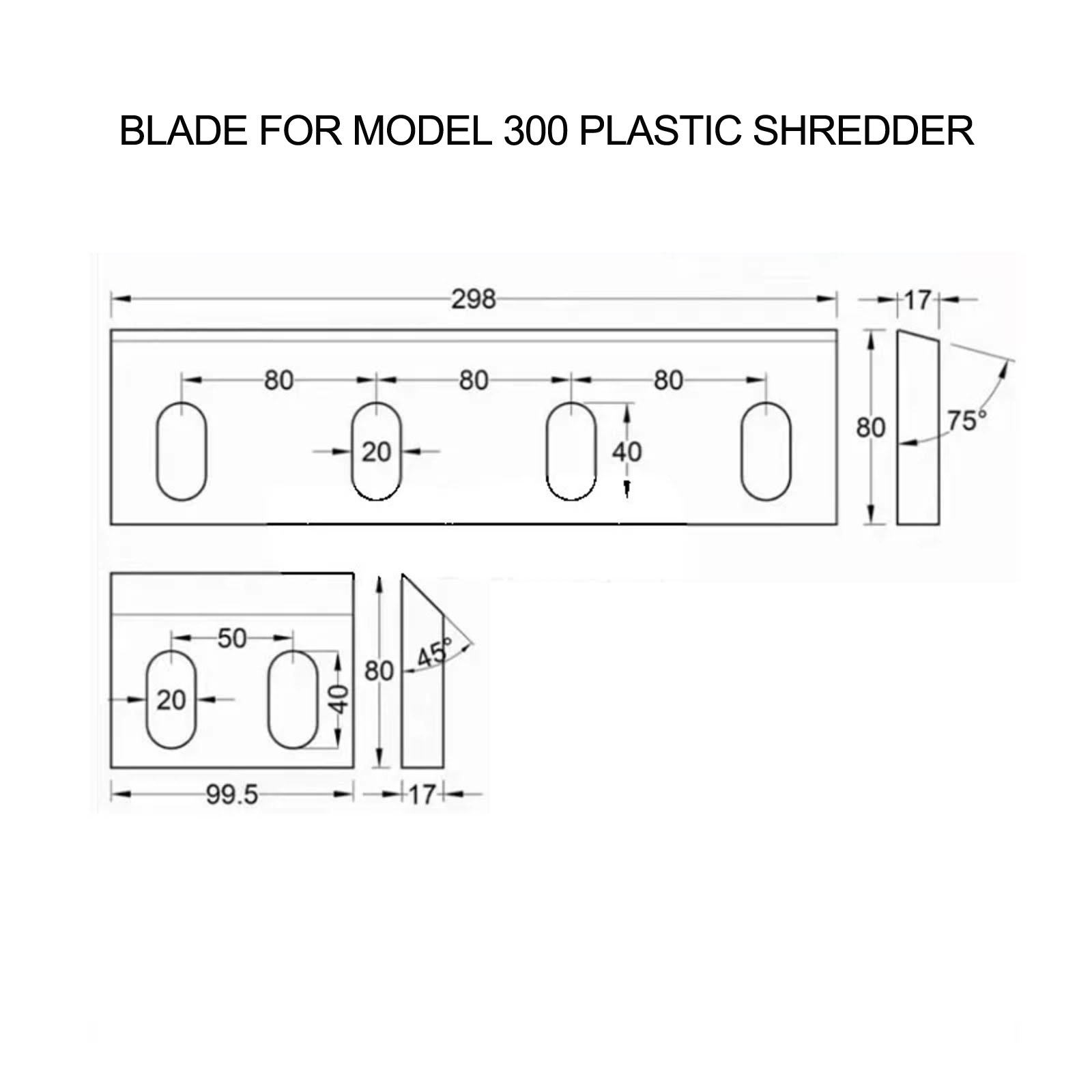
Full OEM Compatibility: We manufacture blades based on customer drawings or through professional reverse engineering. Every blade is precisely sized for perfect hole alignment and rotor balance, fitting most mainstream shredder and granulator brands on the market.
Rigorous Metallurgical Quality Control: We apply our HardnessMap inspection process to guarantee consistent hardness from surface to core. This avoids uneven blade performance and ensures steady cutting durability over long-term operation.
Lower Total Cost of Ownership (TCO): By adopting premium steel grades and user-friendly blade profiles that are easy to resharpen, our blades achieve higher crushing output over their lifespan. This means more processed material per cost unit, lowering overall operation and maintenance expenses.
Conclusion
Dull, outdated cutting tools always hold back recycling plant productivity. Upgrading to application-tailored shredder and granulator blades delivers cleaner cuts, lower energy consumption, and fewer tool changeovers. If you have custom dimensions or technical drawings, contact ALAS now for a fast, accurate quote.