

Phone:
86-15852949220


 |

loading


| Availability: | |
|---|---|
| Quantity: | |
H13 Material
The mainstream high-quality blade material in the market, featuring exceptional wear resistance, toughness and thermal cycling stability. It resists deformation and chipping even under long-term, high-intensity continuous cutting, making it ideal for large-scale processing of high-strength rebar. Renowned for its durability in international trade, it greatly reduces replacement frequency, transportation costs and customs duties.
Cr12MoV Material
High-hardness, high-wear-resistance tool steel with hardness far exceeding ordinary alloy blades, well-suited for cutting high-hardness cold-rolled rebar. Note that its toughness is relatively lower, so it is not recommended for high-impact, large-gap cutting conditions.
9CrSi Material
An economical and practical option with favorable hardenability and machinability. Suitable for cutting ordinary medium- and low-strength rebar, it is widely applied in small and medium-sized construction projects.
High-nickel Materials
Preferred for scrap rebar with severely corroded surfaces mixed with sand and dirt, which cause severe blade wear, delivering superior wear and impact resistance.
Shape Matching
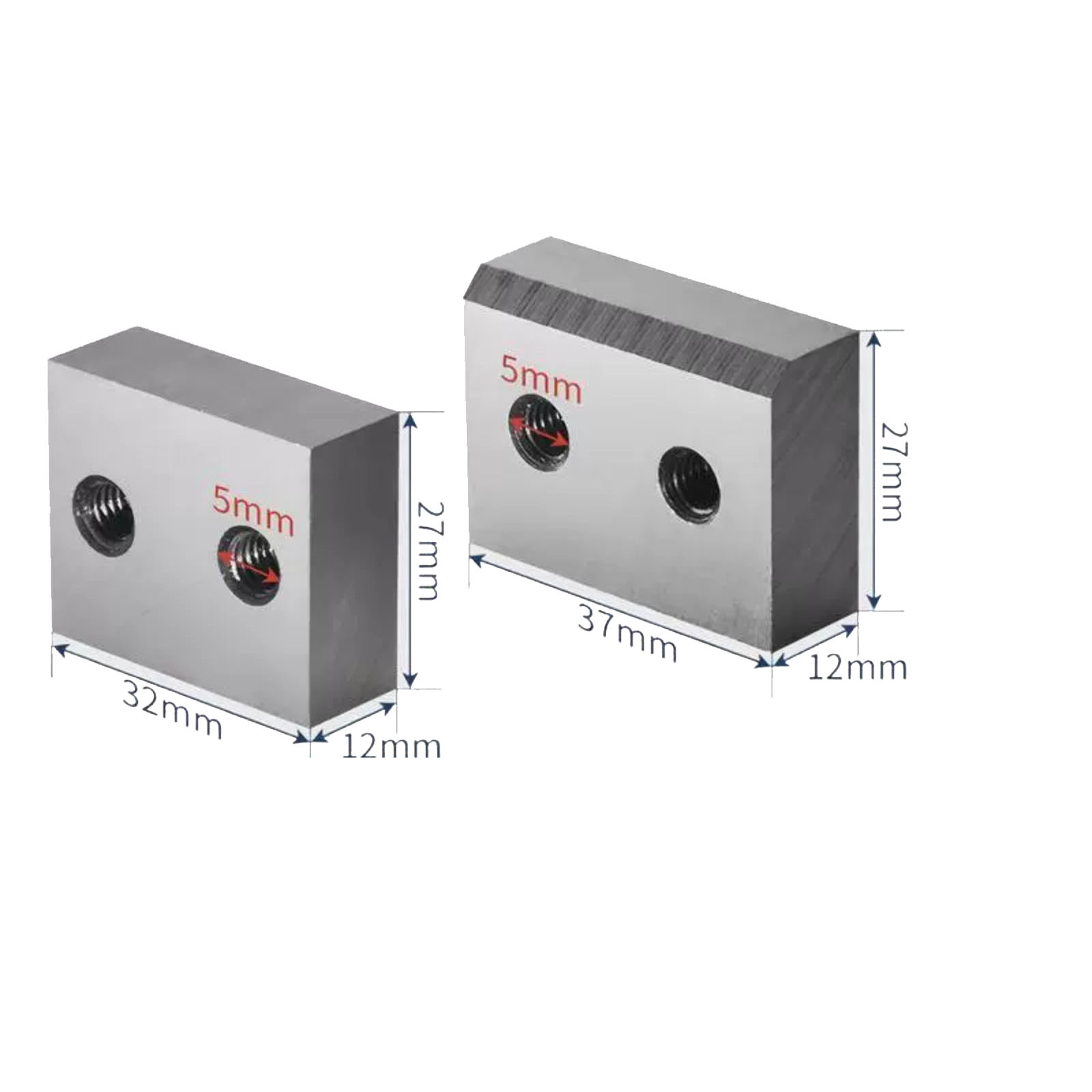
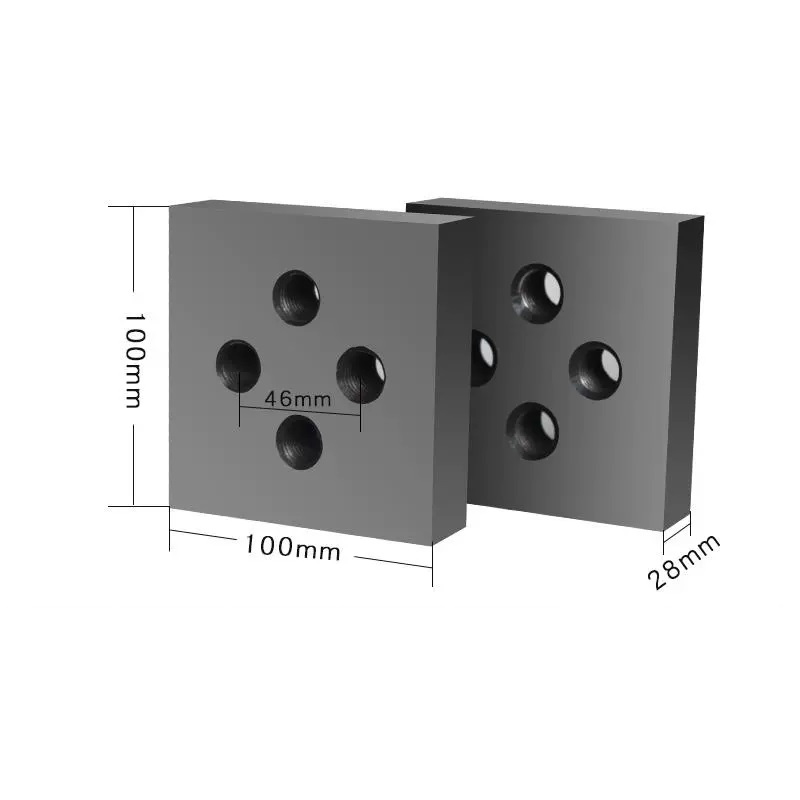
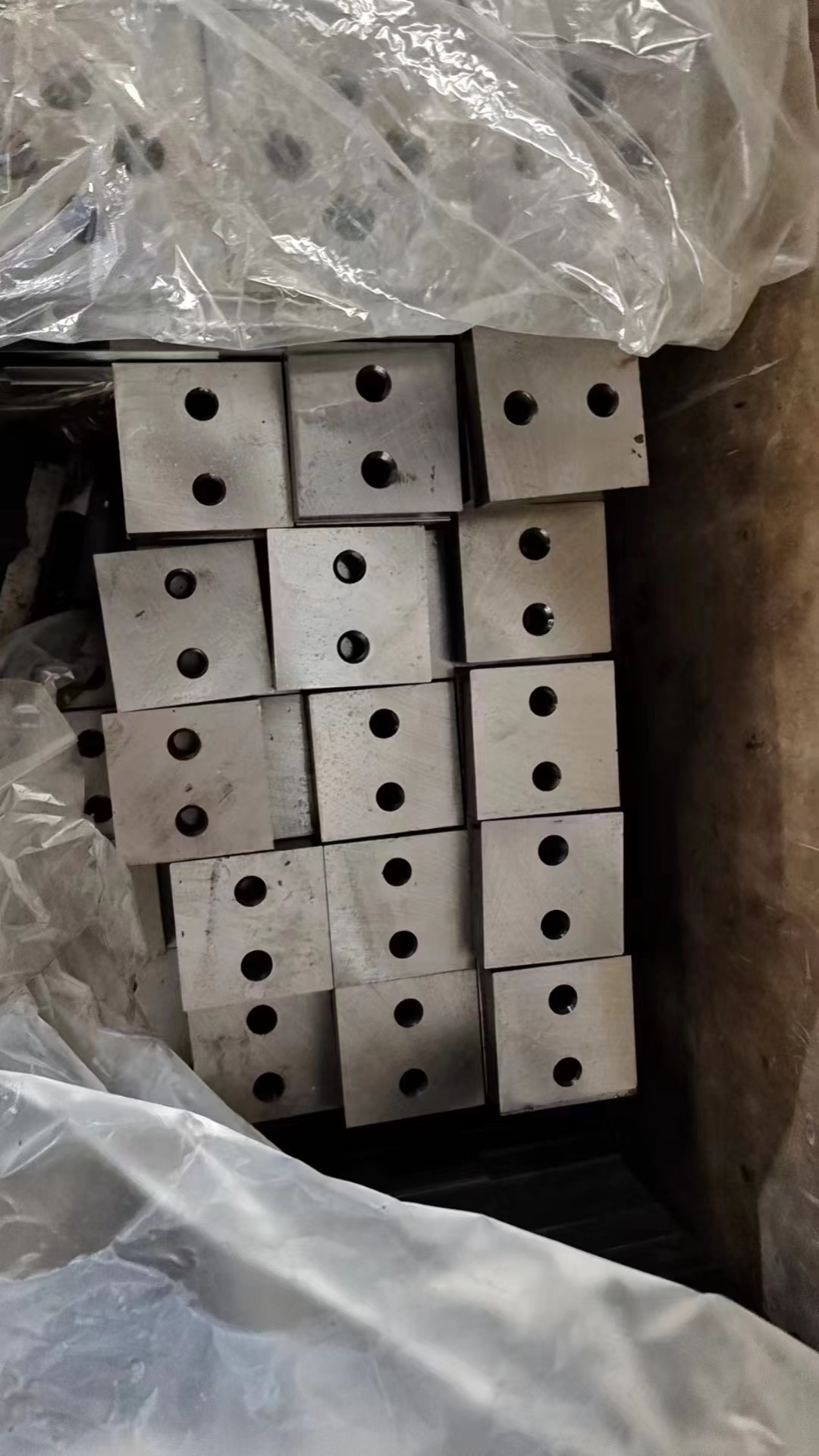
Square blades (four-edge usable) support rotation of four cutting edges, greatly extending service life and fitting large-scale processing. Rectangular blades, mostly single or double-sided, are designed for small-tonnage cutting machines.
Size Matching
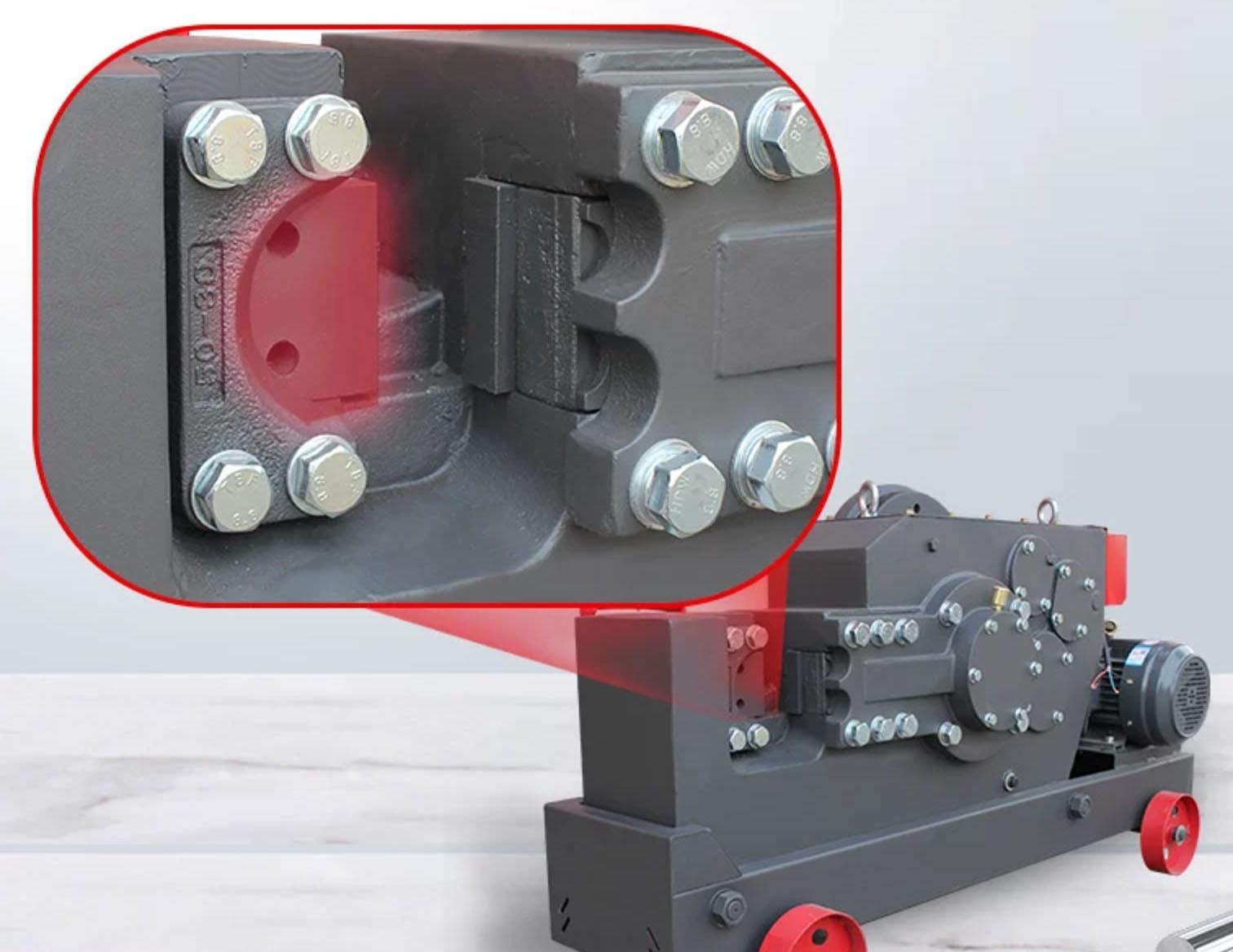
Different tonnage models such as GQ40, GQ50 and GQ60 have strict standards for blade thickness, length, width and bolt hole spacing. Selection must strictly follow the equipment manual.
Ordinary Round Steel
Low hardness and cutting resistance; 9CrSi or Cr12MoV blades meet basic cutting needs while controlling costs.
High-Strength Ribbed Rebar
High hardness and ribbed structure accelerate blade wear; H13 material is recommended for its outstanding wear resistance and toughness, reducing chipping and supporting continuous high-strength cutting.
Scrap Rebar
Severely corroded with sand and impurities causing heavy abrasion; high-nickel materials are the optimal choice.
| NO. | Product Name | Specification Dimensions (length x width x height/thickness) ) | Material | Remarks |
| 1 | Rebar Cutter Blade size | 78*78*17 mm | 9crsi,SKD-11,H13 | Customization services are available; we can manufacture according to your drawings, with a minimum order quantity of 2 piece. |
| 2 | 80*80*17 mm | |||
| 3 | 80*80*30mm | |||
| 4 | 83*83*16 mm | |||
| 5 | 83*83*26 mm | |||
| 6 | 83*83*26 mm | |||
| 7 | 90*90*20 mm | |||
| 8 | 90*90*26 mm | |||
| 9 | 100*100*20 mm | |||
| 10 | 100*100*30mm | |||
| 11 | 110*110*20 mm | |||
| 12 | 100*30*75 mm | |||
| 13 | 85x65x30mm | |||
| 14 | Handheld Rebar Cutter Blade | 26×20×10 mm | ||
| 15 | 30×24×11 mm | |||
| 16 | 36×28×14 mm | |||
| 17 | 40×30×15 mm | |||
Base Grade | Steel Category | Chinese Standard GB/T 1299 | American Standard ASTM | German Standard DIN (W-Nr.) | Japanese Standard JIS |
H13 | Hot Work Die Steel | 4Cr5MoSiV1 | H13 | 1.2344 | SKD61 |
Cr12MoV | Cold Work Die Steel | Cr12MoV | 1.2601 | SKD11 | |
9CrSi | Alloy Tool Steel (Cutting Tool Steel) | 9CrSi | 1.2108 |


Based on different working conditions and budget requirements, we offer three general industrial-grade alloy steel materials:
9CrSi (Alloy Tool Steel): An economical choice. It has good hardenability and machinability, suitable for cutting ordinary medium-to-low strength rebar, and is widely used in small and medium-sized projects.
Cr12MoV (Cold Work Die Steel): High-end wear-resistant type. High carbon and high chromium content, after heat treatment, it has excellent wear resistance, making it an ideal choice for continuous cutting of high-strength rebar. Its service life is much longer than 9CrSi.
H13 (Hot Work Die Steel/Red Hard Steel): High toughness and high wear resistance. It exhibits excellent resistance to chipping and thermal stability in rebar cutting applications, especially suitable for high-speed production lines or online cutting of hot-rolled rebar, and cutting of ultra-thick rebar and composite materials of scrap rebar.
Chipping is usually caused by the following factors:
Insufficient toughness: Using ultra-hard but low-toughness materials to cut large-diameter or ultra-hard rebar can easily lead to brittle fracture. In this case, we recommend switching to H13 material, as its excellent toughness can effectively absorb impact forces.
Improper clearance: Too large or too small a gap between the upper and lower blades will lead to uneven stress, resulting in chipping.
Insufficient heat treatment: Internal stress is not completely eliminated. All our blades use vacuum heat treatment technology to ensure uniform hardness from the inside out, greatly reducing the chipping rate.
Wear resistance: Cr12MoV has significantly better wear resistance than 9CrSi. Under the same working conditions, the number of cuts for Cr12MoV is usually 2-3 times that of 9CrSi.
Cost: 9CrSi is more cost-effective, suitable for projects sensitive to initial purchase costs; although the unit price of Cr12MoV is slightly higher, its lower replacement frequency results in a lower overall cutting cost per ton of rebar.
For high-strength or ribbed rebar, we strongly recommend H13:
If you are facing extremely high operating intensity and are concerned about downtime due to blade chipping, choose H13. Its impact fatigue resistance is top-notch in the rebar processing industry.
Yes. We understand that blade specifications vary among different equipment brands (e.g., from Italy, Germany, or China). We are equipped with a full set of CNC machining equipment, and you only need to provide the following information:
Detailed drawings (including length, width, thickness, and hole dimensions).
Material requirements (9CrSi, Cr12MoV, or H13).
Specifications of the workpiece to be processed (rebar diameter and strength grade).
We can provide a 1:1 precise customized solution.
Regular rotation: Our blades are usually designed with 4 or 8 cutting edges. Please rotate the blade promptly when one cutting edge becomes dull.
Tighten bolts: Ensure the blades are securely installed. Any slight looseness will cause destructive impact during the cutting process.
Control the gap: Adjust a reasonable blade gap according to the rebar diameter, usually about 10% of the rebar diameter.
Global Supply Ability: As a leading manufacturer of Hydraulic Rebar Cutter Blades, we support global construction projects with local expertise: #Hydraulic_Rebar_Cutter_Blade | #Cuchillas_para_cortadora_hidráulica | #Mata_pisau_potong_besi_hidrolik | #Lames_pour_coupe-boulons_hydrauliques | #Lâminas_para_cortador_hidráulico_de_vergalhão | #Ножи_для_гидравлического_резчика_арматуры | #شفرات_مقص_حديد_هيدروليكي | #Hydraulische_Betonstahlschneider_Messer | #Lưỡi_dao_máy_cắt_sắt_thủy_lực | #हाइड्रोलिक_सरिया_काटने_वाला_ब्लेड | #ใบมีดตัดเหล็กไฮโดรลิค | #Hidrolik_Inşaat_Demiri_Kesme_Bıçağı | #Lame_per_cesoie_idrauliche | #Noże_do_przecinarek_hydraulicznych | #Hydraulische_rebar_snijmessen | #ہائیڈرولک_سریہ_کاٹنے_والا_بلیڈ | #Гидравликалық_арматура_кесетін_пышақ | #Λεπίδες_υδραυλικού_κόφτη_οπλισμού | #Nože_pro_hydraulické_střihačky | #Cuțite_pentru_foarfecă_hidraulică_de_armătură | #Bilah_pemotong_besi_hidraulik | #Hydraulic_rebar_cutter_blade | #হাইড্রোলিক_রড_কাটার_ব্লে드 | #Ножі_для_гідравлічного_різака_арматури | #להבים_למספרי_ברזل_הידראוליים | #تیغه_میلگرد_بر_هیدرولیک | #Hidraulikus_betonacél_vágó_kések | #Hydrauliska_armeringsklippskär | #Hydraulisen_raudoitusleikkurin_terät | #Noževi_za_hidraulične_makaze_za_armaturu.


Nanjing Alas International Co., Ltd. is a professional industrial tooling manufacturer focused on shear blades, bending dies, shredder blades, and custom wear parts. We offer full application engineering, material selection, setup guidance, and after-sales support to global customers.
Tell us your requirements, and our engineering team will provide professional solutions for blade specification, tool life optimization, and cost-effective production.