


Phone:
86-15852949220


 |


Acute punch: For small angles or to fix springback
Gooseneck punch: For deep U-shaped workpieces (avoids interference with pre-bent edges)
V-groove width affects bending force, fillet size, and quality
Multi-V dies: One die with multiple V-groove widths (fits different sheet thicknesses)
Place the metal sheet on the lower die (usually a V-groove die).
The slider drives the upper die (bending machine punch) down.
The sheet bends to match the dies’ shape.
When the preset pressure is reached, the upper die moves back. Take out the workpiece.
Strong and Wear-Resistant: Made of alloy steel (e.g., 42CrMo) with heat treatment. Hardness is HRC45-HRC50, so it can handle high pressure and friction. Hardened bending segments are extra durable for tough jobs.
Customizable: Bending machine punches can be made into different shapes (arc, gooseneck punch, acute punch). Lower dies can have different V-groove widths (8mm, 16mm, 24mm) or multi-V dies.
Good Compatibility: Die size must match the press brake’s clamping system, slider stroke, and tonnage. This includes CNC press brake tools, V-groove dies, and gooseneck punches.
Standardized: Common press brake tooling (dies, bending machine punches, V-groove dies) has standard sizes. They fit popular brands like Amada and Trumpf. Special tools (custom gooseneck punches, hardened bending segments) can be made to order.
Standard Straight Edge Die: For basic straight bending (most common).
Acute Angle Die (Acute Punch): For small angles or springback compensation.
Gooseneck Die (Gooseneck Punch): For deep U-shaped workpieces (avoids interference).
Arc Die: For bending arcs and rounded corners.
Irregular Shaped Die: Custom-made for special workpiece shapes.
Standard Sheet Metal Bending Dies: For common sheets (low-carbon steel, galvanized steel) – cost-effective.
High-Strength Steel Bending Dies: Thick and hard, for tough materials (stainless steel). Pair with hardened bending segments for better durability.
Thin Material Specific Dies: Precision-made to prevent warping or scratching thin sheets.
Amada/Promecam Type: Fits Amada press brakes (works with bending machine punches, V-groove dies).
Trumpf/Wila Type: Fits Trumpf/Wila press brakes (works with CNC press brake tools, hardened bending segments).
New Standard Type: Universal – fits most domestic press brakes.
Mild steel: Little springback – use an 86°–88° acute punch for 90° bending.
Stainless steel/high-strength steel: More springback – use an 85° acute punch.
Sheet thickness: Choose the right V-groove die or multi-V die to avoid damage.
Rule: V-groove width (V) = 8 × sheet thickness (T) (good for 3–8mm sheets).
Thin sheets (T<3mm): V = 6T (smaller fillet).
Thick sheets (T>8mm): V = 10T–12T (reduces pressure, avoids die breakage).
Make sure the tool (die, hardened bending segment, bending machine punch) can handle the press brake’s pressure.
Do not overload – it will break the die or machine.
For thick/high-strength sheets: Use thickened dies or hardened bending segments.
Standard punch: For straight bending.
Acute punch: For small angles or springback.
Gooseneck punch: For deep U-shapes (avoids interference).
Custom punch: For circular/irregular workpieces.
Punch/die shank type must fit the press brake’s clamping system (Amada/Promecam, Trumpf/Wila, New Standard).
Die height must match the slider stroke and workbench height.
Standard Acute Punches: Versatile – good for most bending (small radius needed).
Gooseneck Punches: For deep U-shaped workpieces (avoids pre-bent edge interference).
Sash Punches: For secondary bending on narrow flanges.
Sectionalized Tooling (Hardened Bending Segments): Multiple lengths (10mm, 20mm, 100mm) – fits different workpiece widths (good for small batches).
Check the press brake’s interface (Amada/Promecam, Trumpf/Wila, European).
Calculate tonnage needed (based on sheet thickness) – avoid breaking the punch.
Punch R-angle: Slightly smaller than the workpiece’s required inner R-angle.
Do not ignore material springback – it causes wrong angles.
Follow the "8x rule" for V-groove/multi-V dies – avoids cracking and die damage.
Ensure tool compatibility with the press brake – prevents installation failure.
Test with scrap sheets first – adjust parameters to avoid losses.
Country/Standard Organization | Standard Code | Corresponding Grade |
China (GB) | GB/T 3077 | 42CrMo or 42CrMo4 |
USA (AISI/ASTM) | ASTM A29 | 4140 |
International Organization for Standardization (ISO) | ISO 683-1 | 42CrMo4 |
Germany (DIN) | DIN EN 10083 | 1.7225 (or 42CrMo4) |
Japan (JIS) | JIS G4105 | SCM440 |
UK (BS) | BS 970 | 708M40 (EN19) |


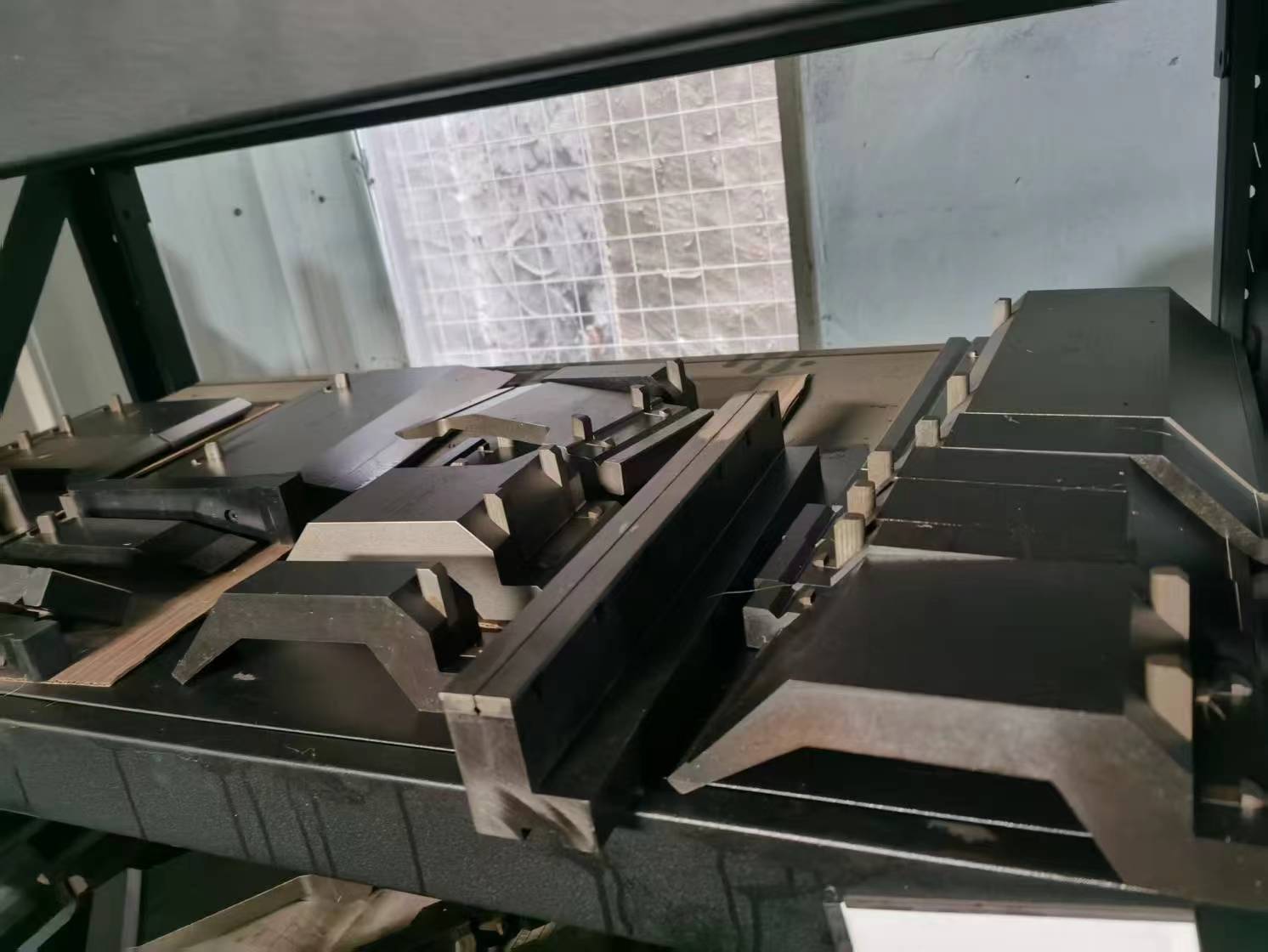
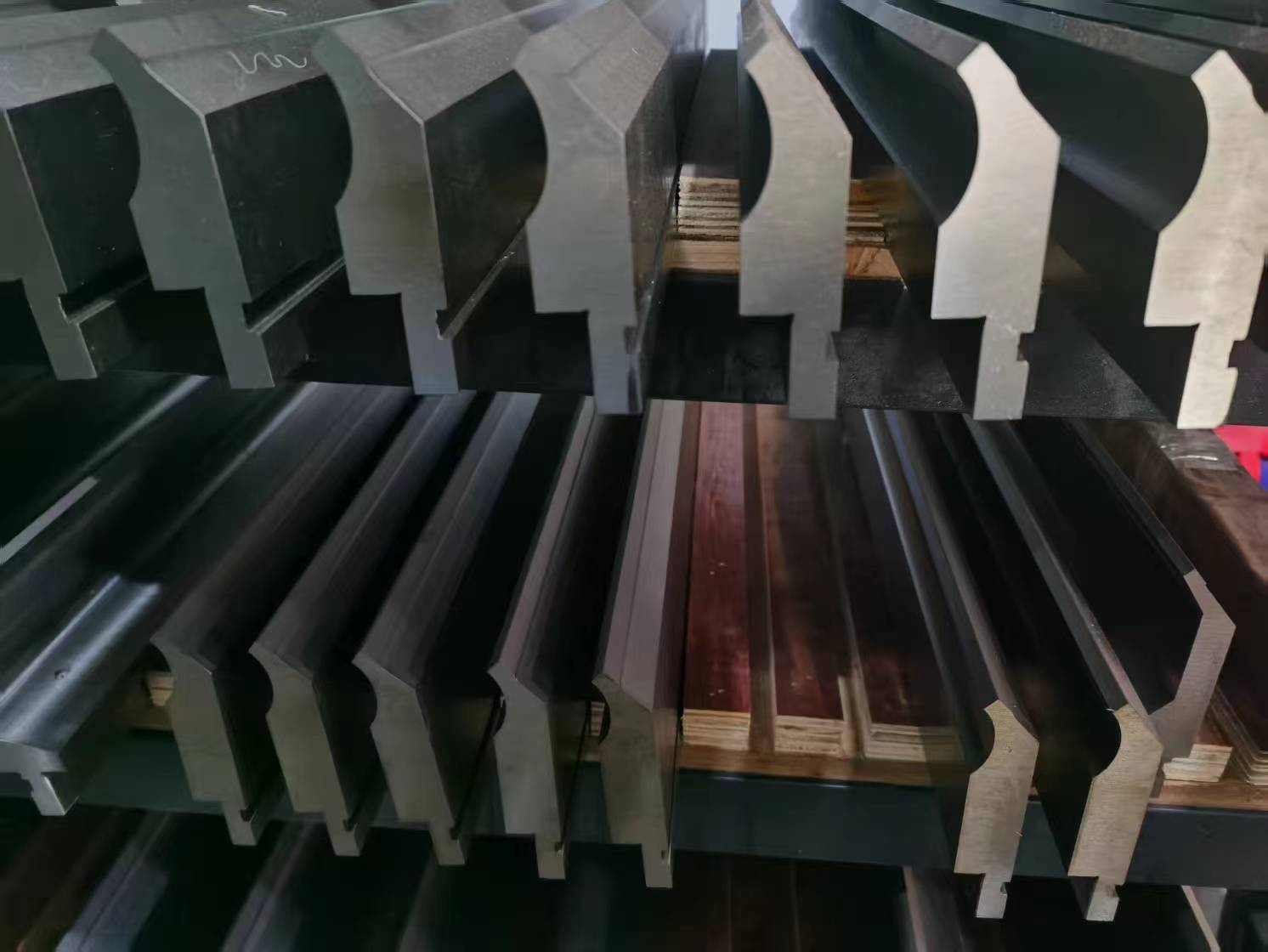


Americas & Oceania: Press Brake Upper Die, Bending Punch, Top Tooling (USA, Canada), Gooseneck Punches (Australia), Punção para Dobradeira (Brazil), Punzón Superior para Dobladora (Mexico).
Europe: Poinçon de Presse Plieuse, Outil Supérieur (France), Punzone per Pressa Piegatrice, Utensile Superiore (Italy), Press Brake Top Blade, Upper Tooling (UK, Switzerland), Bovenmes voor Kantpers, Stempel (Netherlands, Belgium), Stempel do Pras Krawędziowych (Poland), Punção para Quinadeira (Portugal), Horní nástroj pro ohraňovací lisy (Czech Republic), Öververktyg för Kantpress (Sweden), Élhajlító bélyeg (Hungary), Poanson pentru îndoit (Romania), Overstempel til Kantpresse (Denmark), Άνω Μαχαίρι Στρατζόπρεσας (Greece).
Middle East & Africa: Abkant Üst Kalıp, Abkant Parçalı Bıçak (Turkey), سكين ثناية علوي, قالب علوي (Saudi Arabia, UAE, Egypt), پانچ پرس برک (Iran), סכין עליונה למכבש כיפוף (Israel), Press Brake Top Tooling (South Africa).
Asia: Press Brake Upper Punch & Dies (India, Pakistan), Chày máy chấn, Dao chấn trên (Vietnam), ใบมีดบนเครื่องพับ (Thailand), Pisau Atas Mesin Tekuk (Indonesia), Mata Pisau Mesin Lipat (Malaysia).
Nanjing Alas International Co., Ltd. is a professional industrial tooling manufacturer focused on shear blades, bending dies, shredder blades, and custom wear parts. We offer full application engineering, material selection, setup guidance, and after-sales support to global customers.
Tell us your requirements, and our engineering team will provide professional solutions for blade specification, tool life optimization, and cost-effective production.