86-15852949220      mt@alasmachinery.com
NANJING ALAS INTERNATIONAL CO., LTD
You are here: Home » Products » Press Brake Tooling » Press Brake Tool

Product Category

Contact Us

loading

Share to:
sharethis sharing button

Press Brake Tool

Our Press Brake Tool is designed for professionals who demand accuracy and longevity in their metal fabrication processes. Using premium 42CrMo alloy steel and advanced induction hardening techniques, our tools maintain their precision even under the most demanding production schedules.
Superior Material: Crafted from high-quality alloy steel, vacuum heat-treated to 47+/-2 HRC.
Extreme Precision: Critical surfaces are precision-ground to within ±0.02mm for perfect alignment.
Custom Solutions: We provide tailored punch and die designs to meet your specific bending radius and geometry requirements.
Availability:
Quantity:

How to Achieve Precise Bending: ALAS Press Brake Tool in Action

Press Brake Tool: The Core of Precision Bending

Bending accuracy depends not only on the machine, but even more on the tooling. Press brake tooling is the true heart of the bending process. High‑quality molds directly decide bending precision, part consistency, and production efficiency.

What Are Press Brake Tooling & Bending Machine Dies?

Bending machine dies are specialized forming molds used with press brakes. They are the core working components for bending metal sheets, mainly composed of two key parts: the upper die and the lower die.

Basic Working Principle

  • Place the metal sheet on the lower die.

  • The slider drives the upper die down to press the sheet.

  • The sheet bends to match the dies (permanent plastic deformation).

  • After reaching the set pressure/stroke, the upper die returns.

  • Remove the finished workpiece.

Key Applications

  • Machinery manufacturing

  • Sheet metal fabrication

  • Hardware production

  • Cabinet & enclosure making

Core Components of Press Brake Tooling

Upper Die (Punch)

Installed on the movable slider; applies active pressure. Its shape defines the outer contour of the bent part.

Common Upper Die Types

  • Standard Straight Edge Punch: For general straight bending (most widely used).

  • Acute Angle Tooling (Sharp Angle Punch): For small‑angle bending & springback compensation.

  • Gooseneck Punch: For U‑channels & deep box bending; avoids interference with bent flanges.

  • Arc Punch: For curved parts & rounded corner forming.

  • Custom Irregular Punch: For complex, non‑standard shapes.

Lower Die (Die)

Fixed on the workbench; provides support. Most use a V‑groove design.

Common Lower Die Types

  • Standard V‑Die: Basic V‑groove for general bending.

  • Multi‑V Die: Multiple V‑grooves for various material thicknesses.

  • Special Groove Die: Custom grooves for unique bending requirements.

Key Characteristics of High‑Quality Press Brake Tooling

High Rigidity & Wear Resistance

  • Main material: Alloy structural steel (e.g., 42CrMo).

  • Heat treatment: Quenching & tempering; hardness HRC45–52.

  • Benefits: Withstands high extrusion force & friction; long service life.

Full Customization

  • Punches: Custom shapes (arc, gooseneck, irregular).

  • Dies: Custom V‑groove widths (8mm, 16mm, 24mm) or special grooves.

Perfect Compatibility

  • Matches machine specs: Clamping system, slider stroke, tonnage.

  • Aligns with workpiece drawings: Ensures bending accuracy & pass rate.

Standardization & Serialization

  • Standard molds fit Amada, Trumpf, Wille, etc.

  • Special molds: Fully customizable for enterprise needs.

Common Classifications of Press Brake Tooling

By Forming Shape

  • Standard Straight Edge Tooling: Conventional straight‑edge bending.

  • Acute Angle Tooling: High‑precision sharp angle forming.

  • Gooseneck Tooling: U‑shaped & deep channel processing.

  • Arc Tooling: Curved & rounded corner bending.

  • Irregular Tooling: Custom for special workpiece drawings.

By Application Scenario

  • Standard Sheet Metal Tooling: For mild steel, galvanized steel (cost‑effective).

  • High‑Strength Steel Tooling: Thickened, high‑hardness for stainless steel & alloys.

  • Thin Material Tooling: Precision‑made to prevent warping & scratching.

By Installation Interface

  • Amada/Promecam Type: Compatible with Amada machines.

  • Trumpf/Wila Type: Compatible with Trumpf & Wila machines.

  • New Standard Type: Universal interface for most domestic machines.

How to Select the Right Press Brake Tooling

1. Match Material Characteristics

  • Springback Compensation: Mild steel (86°–88° punch); stainless steel (85° punch).

  • Material Thickness Matching: Thin/medium/thick plates need corresponding die specs.

2. Follow the “8x Principle” (V‑Groove Selection)

  • Core Rule: V‑width = 8 × material thickness (ideal for 3–8mm plates).

  • Adjustments: Thin plates (V=6T); thick plates (V=10T–12T).

3. Pressure Tonnage Limitation

  • No Overloading: Machine tonnage < die capacity (10–15% safety margin).

  • Thick/High‑Strength Materials: Use thickened or segmented dies.

4. Choose the Correct Punch Shape

  • Match punch to part: Standard, acute angle, gooseneck, arc, or custom.

  • Gooseneck Punch: Critical for deep U‑bends to avoid interference.

  • Acute Angle Tooling: Essential for high‑precision small‑angle bends.

5. Ensure Machine Compatibility

  • Shank Type: Match Amada, Trumpf, Wila, or New Standard clamping systems.

  • Die Height: Align with machine slider stroke & worktable opening.

Critical Selection Precautions

  • Always account for material springback to avoid angle inaccuracies.

  • Follow the 8x rule to prevent workpiece cracking & die damage.

  • Verify full machine compatibility to avoid installation failure.

In short: High‑quality press brake tooling is the foundation of reliable bending. Gooseneck punches, multi‑V dies, acute angle tooling, and custom molds all help achieve stable, high‑precision bending results.

42CrMo International Standard Comparison Table (Essential for Selection)

Country/Standard Organization

Standard Code

Corresponding Grade

China (GB)

GB/T 3077

42CrMo or 42CrMo4

USA (AISI/ASTM)

ASTM A29

4140

International Organization for Standardization (ISO)

ISO 683-1

42CrMo4

Germany (DIN)

DIN EN 10083

1.7225 (or 42CrMo4)

Japan (JIS)

JIS G4105

SCM440

UK (BS)

BS 970

708M40 (EN19)

Why 42CrMo Is More Durable Than Ordinary Carbon Steel?

42CrMo alloy steel offers significantly higher durability compared with ordinary carbon steel, thanks to its alloy composition, heat treatment performance, and mechanical properties.

It contains chromium(Cr), molybdenum(Mo) and manganese, which greatly improve:

Higher hardness and wear resistance

Better strength and toughness

Higher tensile and yield strength

Excellent performance under high pressure and heavy load

Longer service life in industrial applications

Ordinary carbon steel is soft, wears out quickly, and deforms easily under pressure.42CrMo maintains shape, stability even under long-term heavy working conditions, making it the ideal material for press brake toolingand molds.
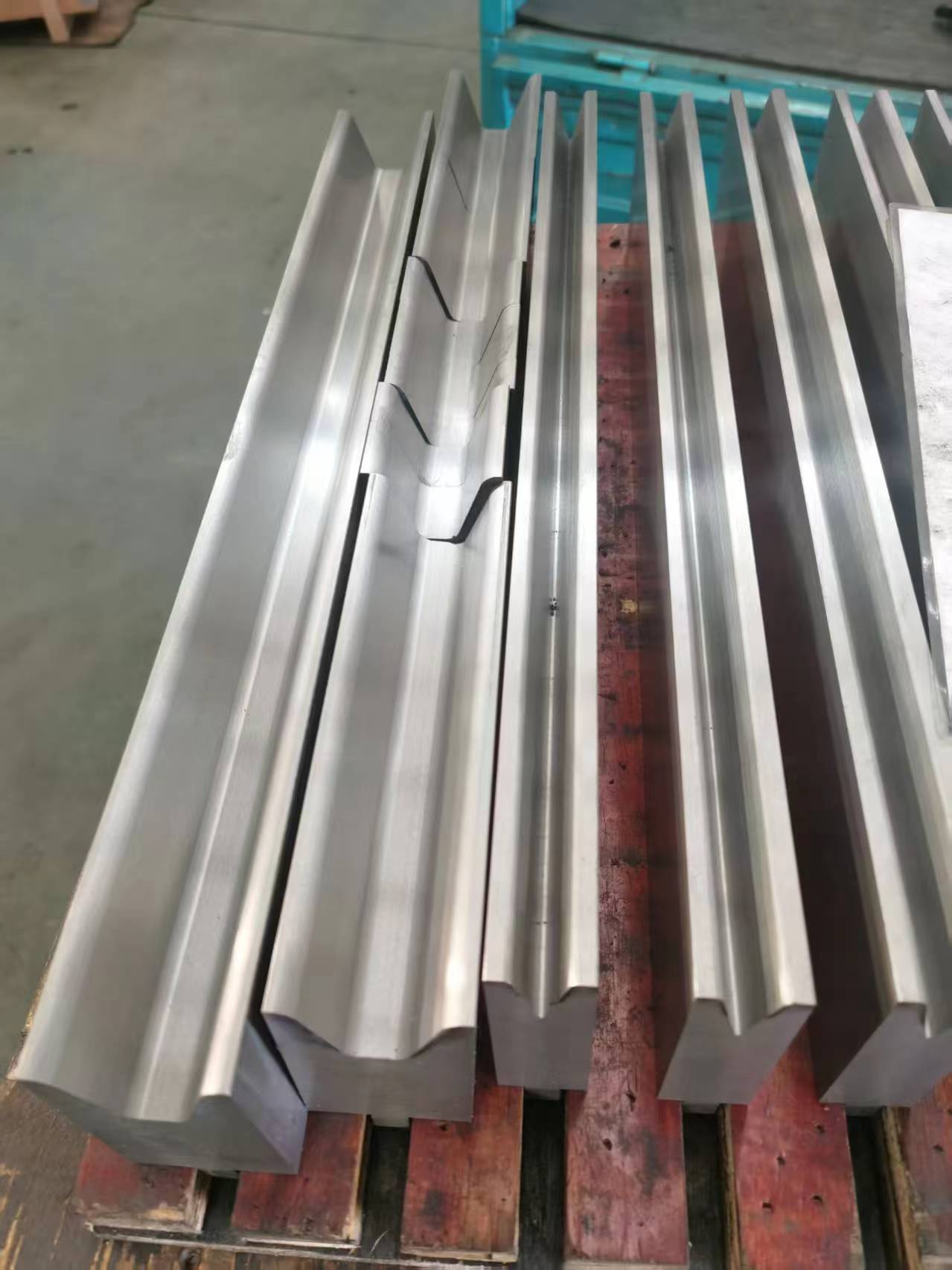
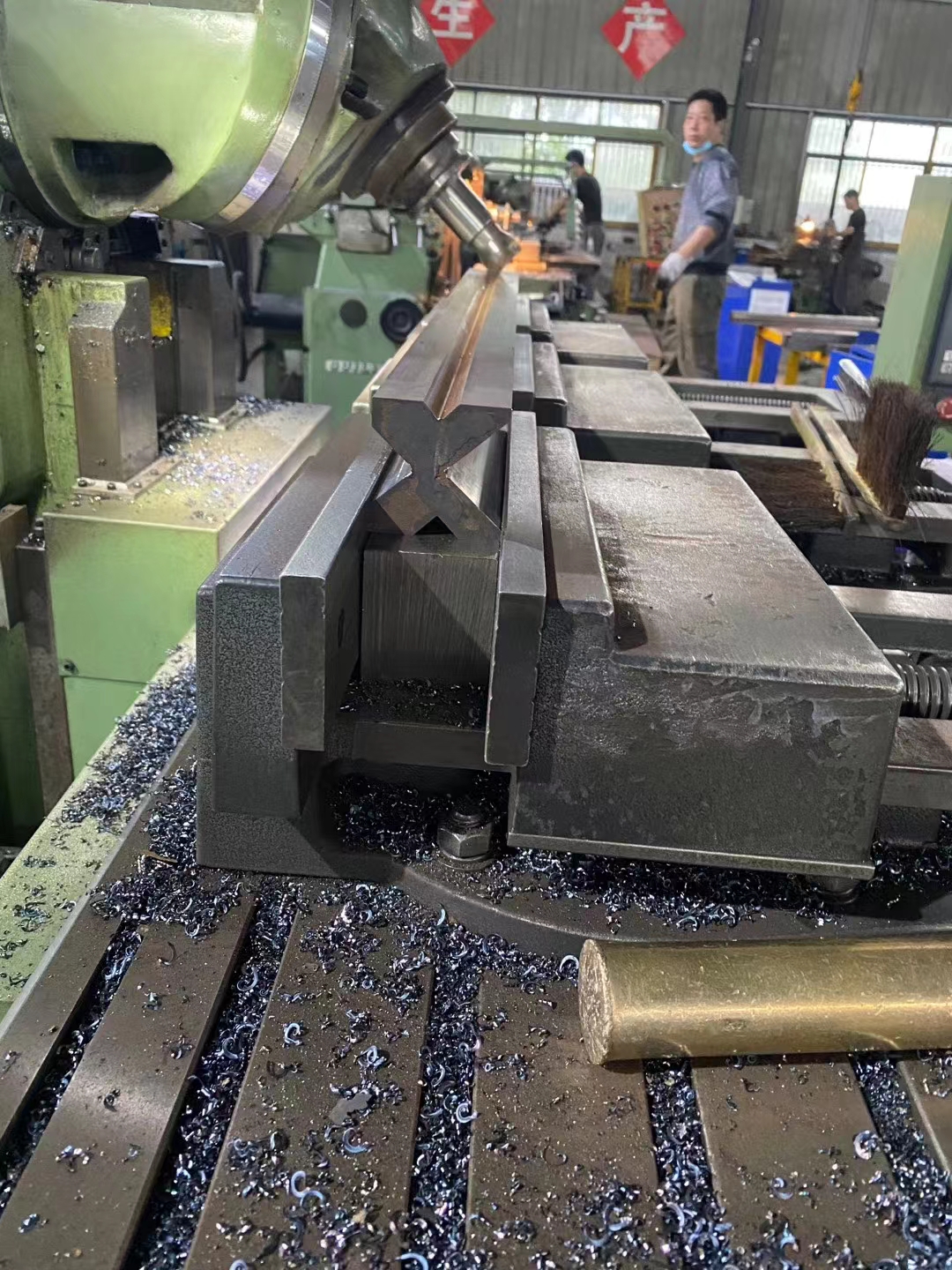
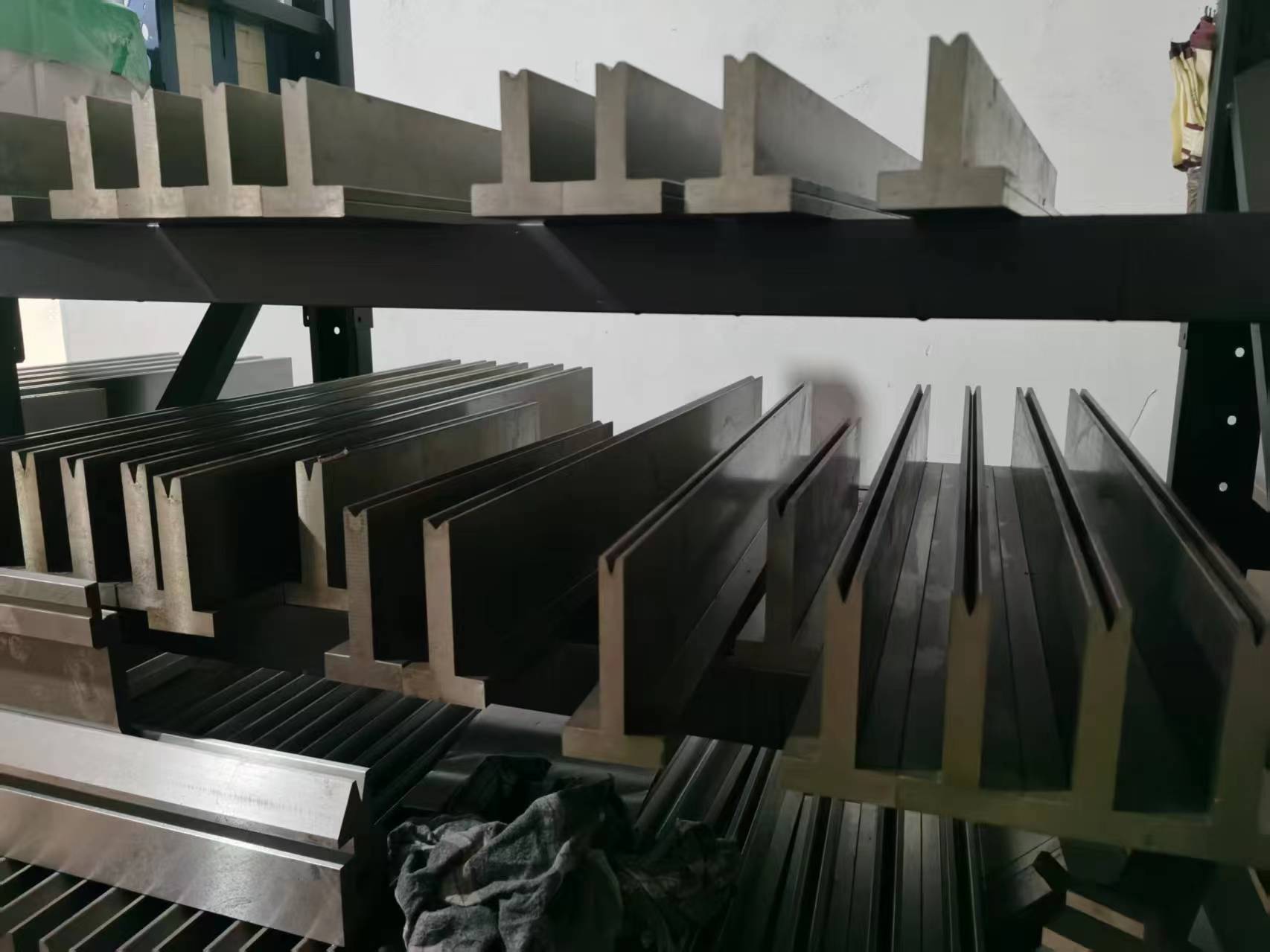
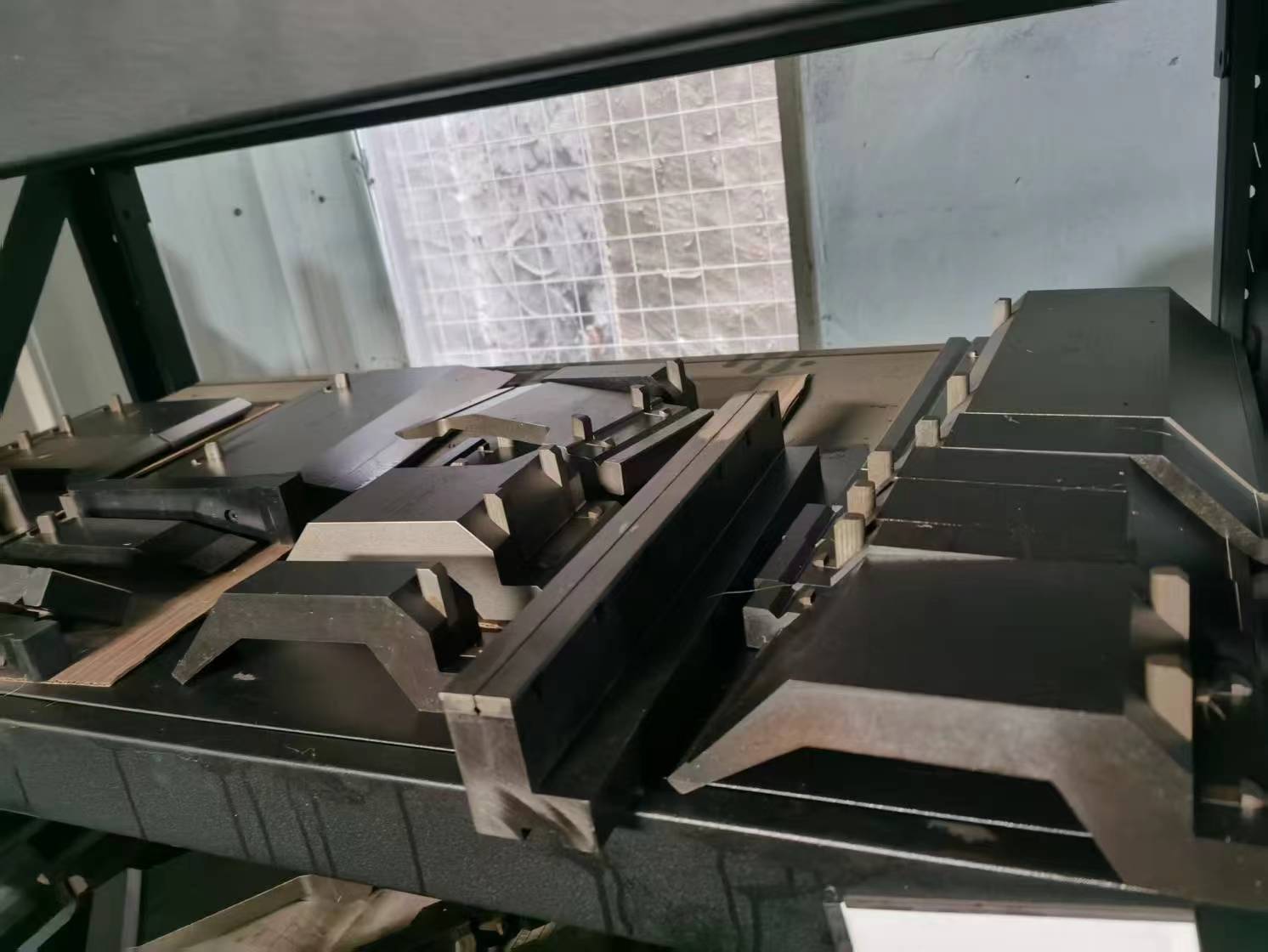
press-brake-v-die-factory-06process-press-brake-tooling-01press-brake-tooling-warehouse-inventory-04press-brake-tooling-warehouse-inventory-05


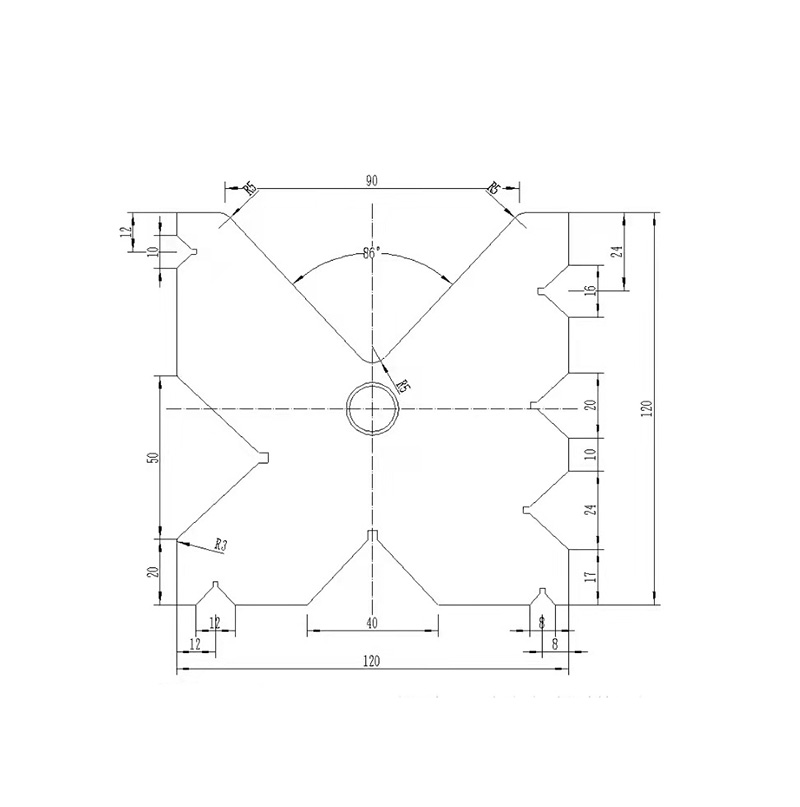
Press Brake Tool drawing

press brake tooling drawingpress-brake-tooling-drawing-04press-brake-tooling-drawing-06press-brake-v-die-drawingpress-brake-lower-die-01-

What maintenance is required for press brake tool to ensure longevity?

Press Brake Tooling Maintenance for Longevity

1. Regular Cleaning

  • Remove metal chips, dust, rust, and lubricant residue from punch, die, and clamping surfaces after every use.

  • Use compressed air, soft bristle brushes, or non-abrasive cleaners; avoid harsh grinding that damages precision profiles.

  • Clean grooves, V-openings, and radii thoroughly to prevent material buildup that causes part distortion and tool wear.

2. Proper Lubrication

  • Apply suitable press brake lubricant or anti-rust oil on contact surfaces, bending edges, and sliding parts before and during operation.

  • Lubricate tool mounting seats, alignment pins, and clamping mechanisms to reduce friction and scoring.

  • Avoid over-lubrication to prevent dust adhesion.

3. Daily Inspection

  • Check for chips, cracks, dents, edge chipping, wear, and deformation on punch and die profiles.

  • Verify parallelism, straightness, and alignment of upper and lower tooling; misalignment causes uneven wear and premature failure.

  • Inspect clamping tightness—loose tooling leads to shifting, bending inaccuracy, and tool damage.

4. Correct Installation & Alignment

  • Mount tooling strictly following machine specifications; ensure full contact with the ram and bed.

  • Maintain precise center alignment for V-dies and punches; avoid offset loading.

  • Use matched tool sets (same height, angle, tonnage rating) to prevent overloading individual sections.

5. Avoid Overloading & Improper Use

  • Never exceed the tonnage limit of the tooling for material thickness and width.

  • Do not bend ultra-hard materials (high-tensile steel, hardened plate) on standard light-duty tooling.

  • Prevent bending sharp-edged scraps directly on tool surfaces to avoid indentations and edge damage.

6. Rust Prevention & Storage

  • Wipe tooling dry and apply anti-rust oil if not in use for a long period.

  • Store unused press brake tools horizontally on dedicated racks, away from moisture and corrosive environments.

  • Separate punches and dies to avoid collision scratches; do not stack heavy tools on precision tooling.

7. Periodic Re-Grinding

  • Re-grind worn bending edges and radii periodically to restore sharpness and precision.

  • Use professional surface grinding to keep tool parallelism and hardness; avoid over-grinding which reduces service life.

  • After grinding, re-harden/ temper if required to maintain surface hardness and wear resistance.

8. Operational Environment Control

  • Keep the workshop dry, low-humidity, and well-ventilated to reduce oxidation and rust.

  • Avoid exposure to chemical splashes, welding spatter, and high-temperature heat radiation。

Previous: 
Next: 
200
Phone:
86-15852949220
Address:
Jiangning District, Nanjing
About Us

Nanjing Alas International Co., Ltd. is a professional industrial tooling manufacturer focused on shear blades, bending dies, shredder blades, and custom wear parts. We offer full application engineering, material selection, setup guidance, and after-sales support to global customers.
Tell us your requirements, and our engineering team will provide professional solutions for blade specification, tool life optimization, and cost-effective production.

Subscribe
Sign up for our newsletter to receive the latest news.
​Copyright 2021 NANJING ALAS INTERNATIONAL CO., LTD            苏ICP备2021025144号