Ironworker Shear Blades: Material, Performance and Selection Guide
What Are Ironworker Shear Blades?
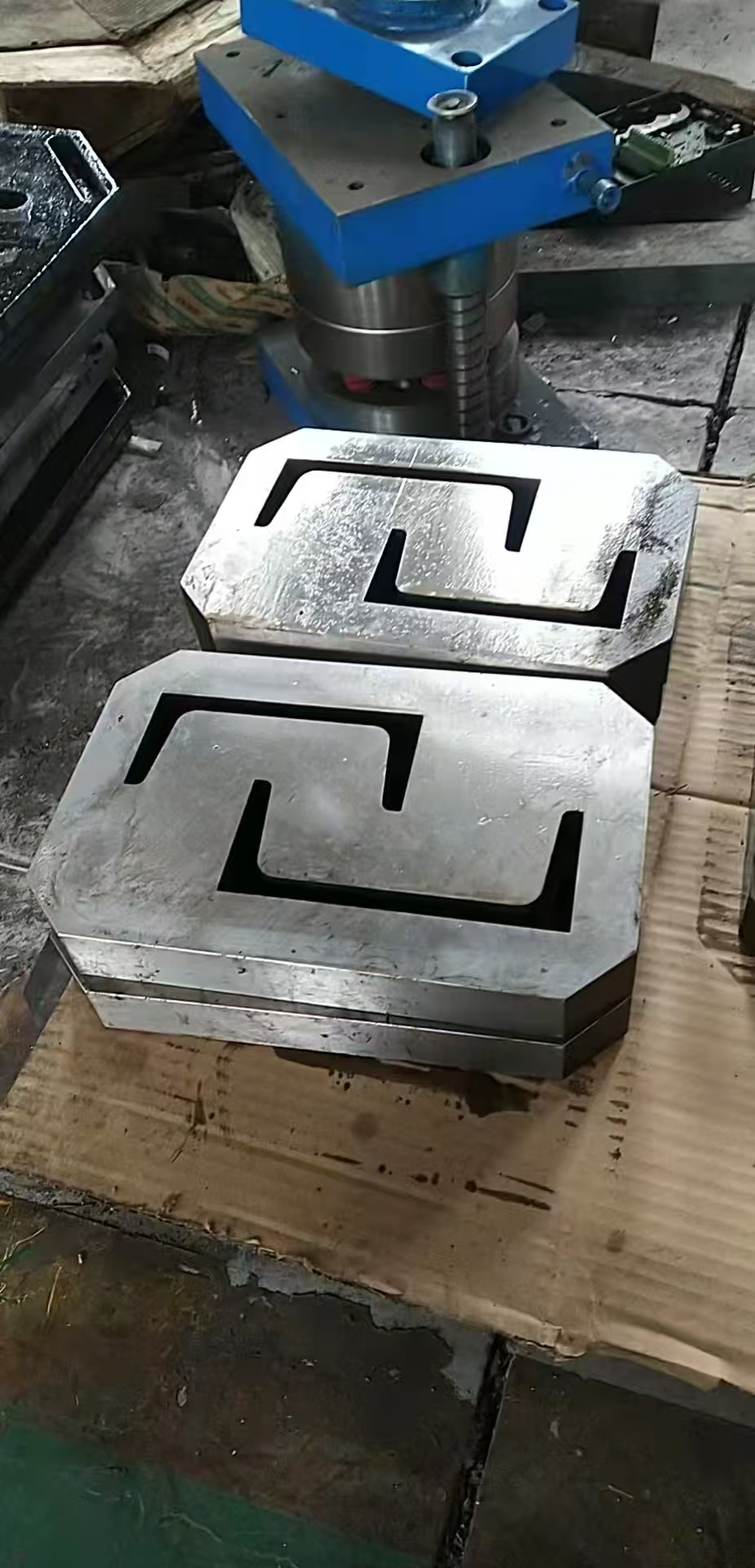
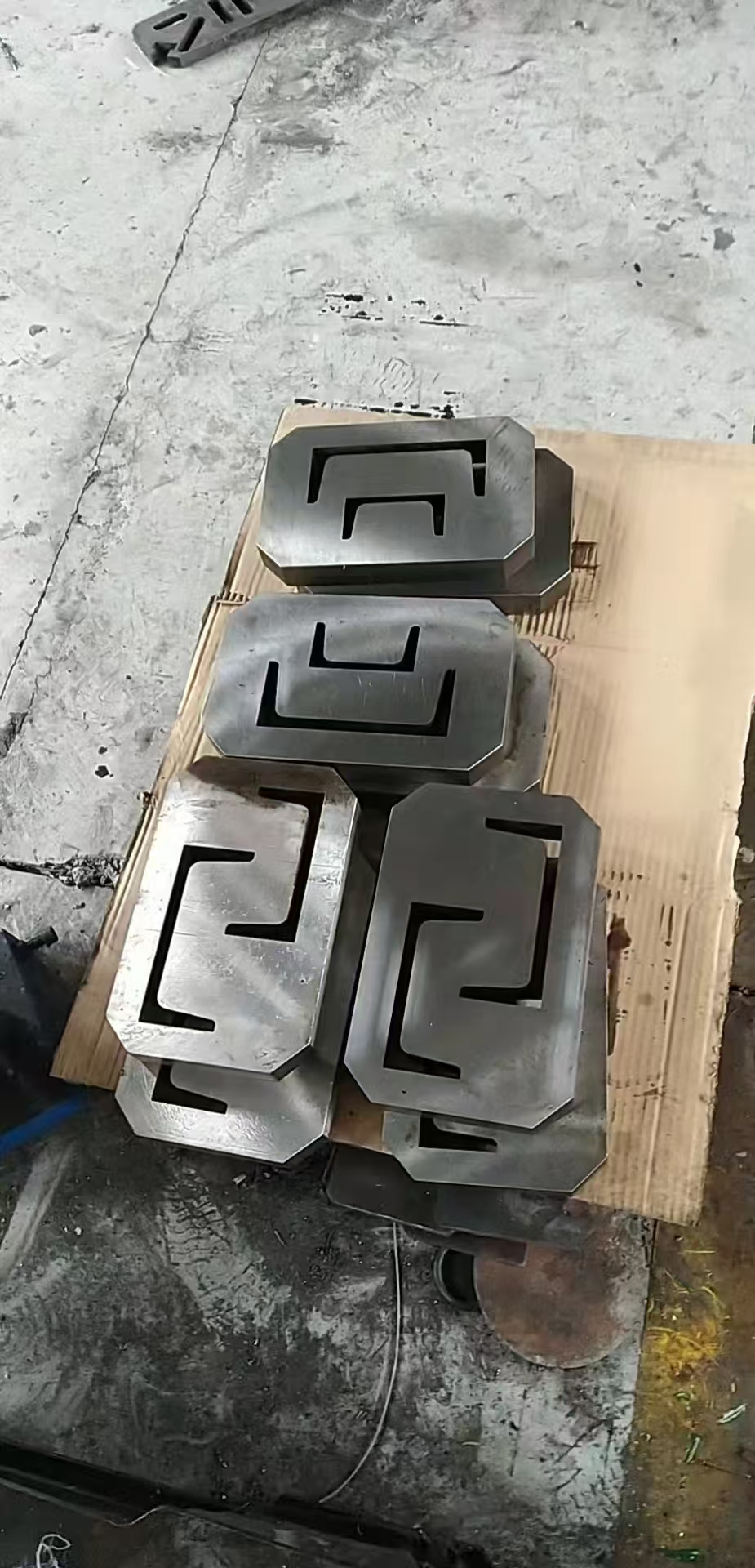
Ironworker shear blades are the core wear-resistant components of ironworker machines (combined punching and shearing machines), designed for cold shearing of angle steel, flat steel, round steel, channel steel and square steel. Used in steel structure factories, construction sites and metal processing plants, they bear high shear impact and friction—material selection, heat treatment and precision processing directly determine cutting efficiency, workpiece quality and equipment service life. In fabrication shops, blade quality dictates work precision and hydraulic wear when processing base plates, angle iron or custom brackets.
Key Material Selection
Optimal blade material is selected based on cutting specs, working frequency and conditions, balancing hardness, wear resistance and toughness to avoid chipping. The two mainstream high-quality materials are Cr12MoV and H13, detailed below:
Cr12MoV Cold Work Die Steel Blades (Mainstream First Choice)
Chemical Composition (Mass Fraction, %):
C: 1.45-1.70, Cr: 11.00-13.00, Mo: 0.40-0.60, V: 0.15-0.30, Mn: ≤0.40, Si: ≤0.40, P: ≤0.030, S: ≤0.030, Fe: Balanced
Performance Impact of Composition:
High carbon enhances hardness and wear resistance for high-frequency cold shearing; high chromium forms hard carbides to boost wear resistance and hardenability; molybdenum reduces brittleness and improves toughness; vanadium refines grains for better edge strength and impact resistance.
Key Performance & Advantages:
Core Hardness: HRC 58-62 (vacuum quenching + low-temperature tempering). Excellent hardenability, balanced wear resistance and impact resistance, not prone to chipping, 2-3 times longer service life than conventional materials. Ideal for thinner materials, more brittle than H13 under heavy impact.
Applicable Scenarios:
Medium-heavy load high-frequency continuous cutting, conventional industrial profiles, mass production in steel structure and metal processing plants. Suitable for 90% of medium-heavy ironworker machines.
H13 Die Steel Blades (Special for Severe Working Conditions)
Chemical Composition (Mass Fraction, %):
C: 0.32-0.45, Cr: 4.75-5.50, Mo: 1.10-1.75, V: 0.80-1.20, Si: 0.80-1.20, Mn: 0.20-0.50, P: ≤0.030, S: ≤0.030, Fe: Balanced
Performance Impact of Composition:
Medium carbon balances toughness and hardness, avoiding brittleness; chromium improves hardenability and corrosion resistance; molybdenum enhances hot hardness (retains temper during high-speed shearing); vanadium refines grains for better anti-chipping and wear resistance.
Key Performance & Advantages:
Core Hardness: HRC 52-56 (after quenching). Extreme toughness, super anti-chipping/fracture capabilities, strong adaptability to harsh conditions with profile impurities. Premium recommendation for most ironworkers due to excellent hot hardness.
Applicable Scenarios:
Extra heavy load cutting, large-spec profiles (≥100mm angle steel/channel steel), high-strength alloy steel cutting, irregular shearing with weld scars/hard slag. Suitable for super heavy-duty customized ironworker machines.
Core Performance Requirements
Precision Hardness Control: Stable edge hardness, no over-hardening (chipping) or under-hardening (fast wear), tied to material composition and heat treatment.
Excellent Toughness: Withstands instantaneous shear impact without chipping or deformation, determined by element matching (Cr, Mo, V for Cr12MoV; Cr, Mo, V for H13).
High Wear Resistance: Maintains sharp edge during high-frequency cutting, driven by hard carbides formed by C, Cr and V.
The Secret to Clean Cuts: Blade Clearance
Incorrect blade clearance causes folding or burrs. High-quality blades are CNC-ground for parallel surfaces, with optimal gap (0.05-0.1×profile thickness)—too large causes burrs, too small increases equipment load and blade wear.
Applicable Cutting Scenarios
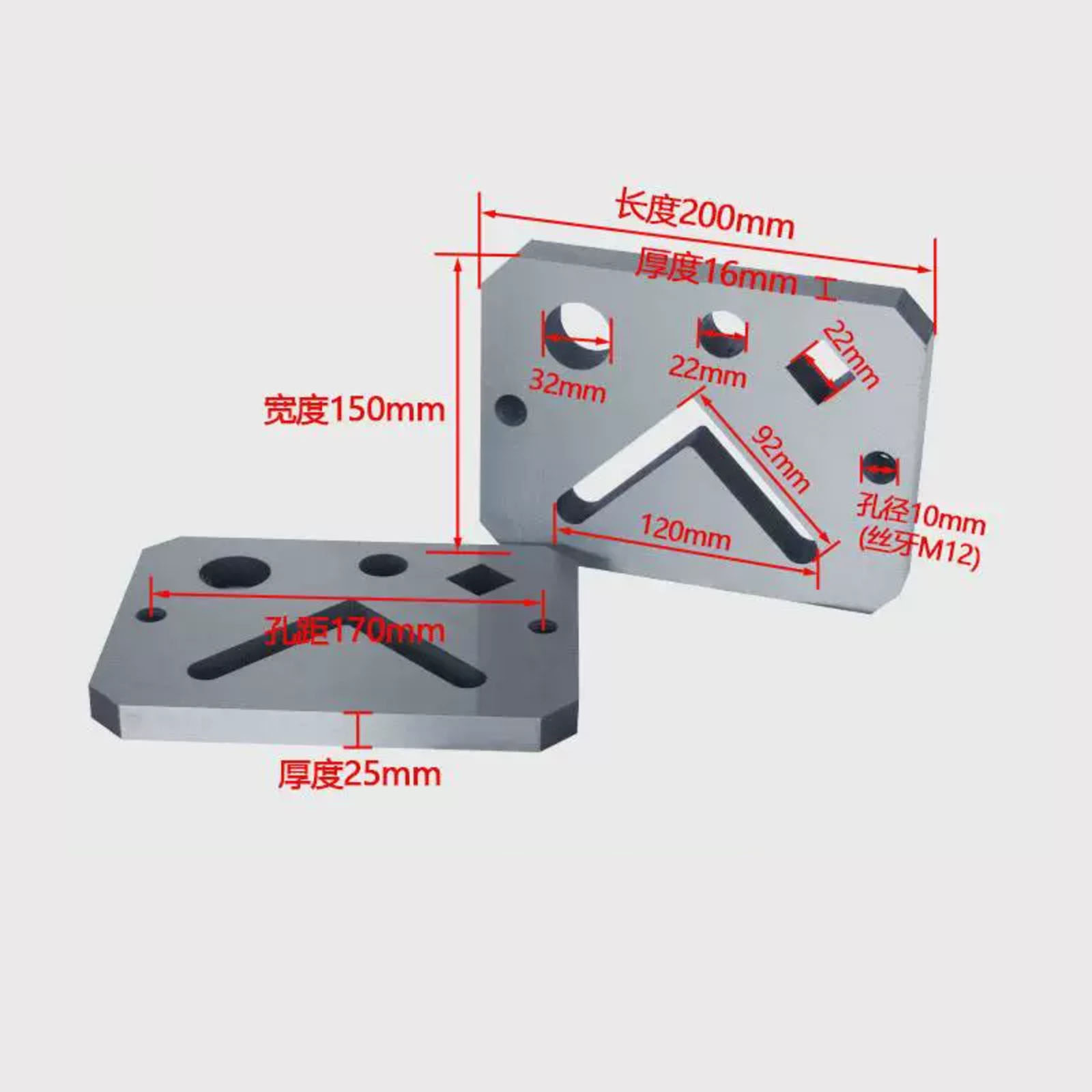
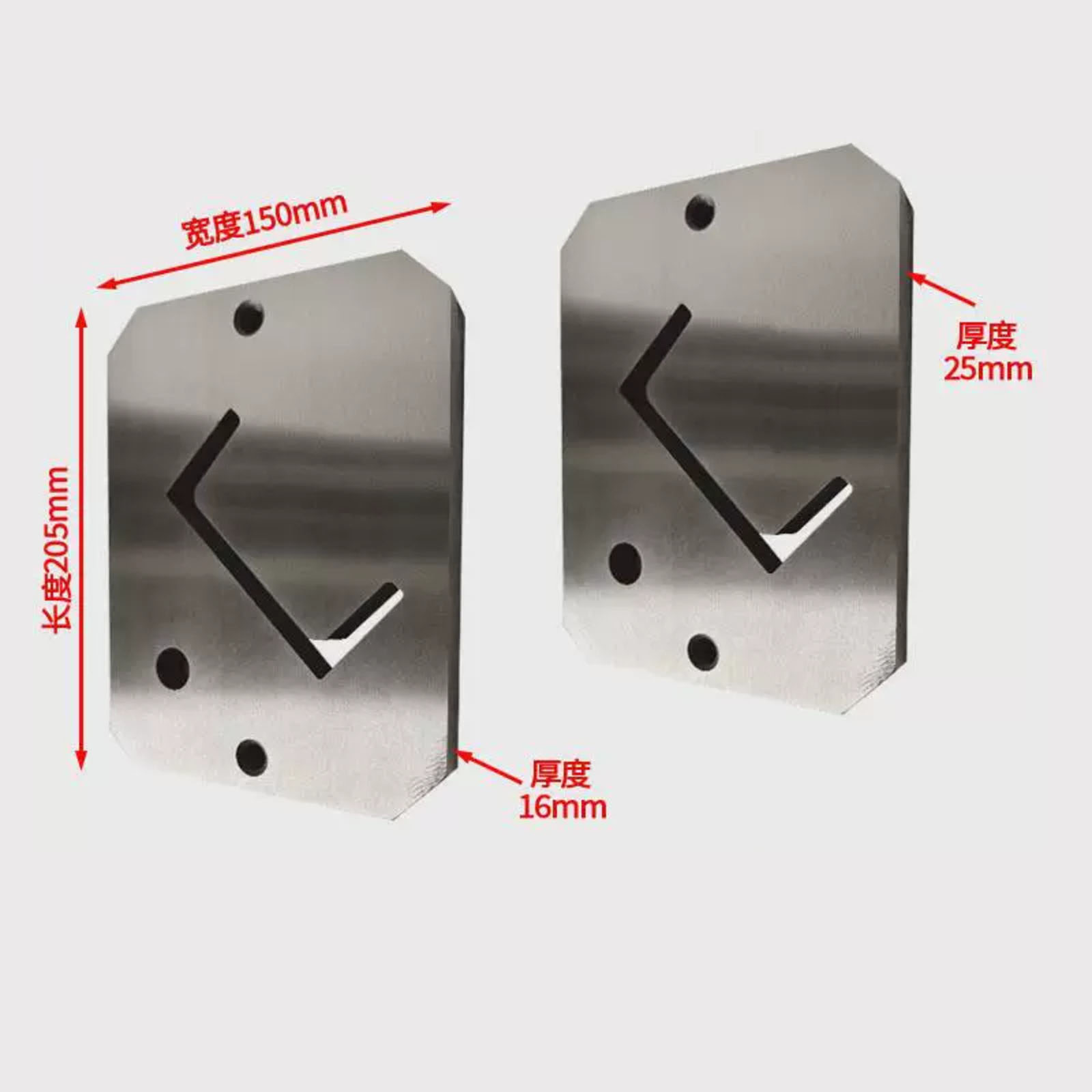
Angle Steel Cutting (V-shaped angle iron shear blades): Adapts to 30mm-200mm equal/unequal angle steel, precise and burr-free.
Flat Steel Cutting: For ≤50mm thickness, smooth edge without burr.
Round Steel Cutting: For ≤25mm diameter, no deformation.
Channel/Square Steel Cutting: Customized blades for non-standard profiles, suitable for heavy-duty needs.
How to Extend Blade Service Life
No over-spec cutting: Match blade size to profile specs.
Precise gap adjustment: Follow 0.05-0.1×profile thickness standard.
Clean workpiece impurities: Remove weld scars, hard slag and rust before cutting.
Regular lubrication: Add butter to machine guide rails and pin shafts for smooth operation.
Universal Compatibility & Our Advantages
Universal Brand Compatibility
Our blades meet/exceed OEM standards for Geka (Hydracrop/Microcrop), Piranha (P-50/65/90), Edwards (Standard/JAWS), Sunrise & Kingsland.
Core Advantages
Professional material customization:
Select Cr12MoV/H13 based on working conditions.
Advanced heat treatment:
Vacuum quenching for stable hardness and uniform structure.
High-precision CNC processing:
Smooth edges, parallel surfaces, optimal clearance.
Customized service:
Non-standard/V-shaped angle iron blades, OEM/ODM support.
Complete after-sales:
On-site guidance and regrinding suggestions.
Why Blades Dull & How to Choose Replacements
Dulling causes: Mismatched materials, incorrect clearance, over-spec cutting, unclean workpieces. When replacing, prioritize: 1) Material matching (Cr12MoV for medium-heavy load, H13 for harsh conditions); 2) CNC processing and vacuum heat treatment; 3) Machine brand compatibility.
Conclusion
Investing in high-grade Cr12MoV/H13 shear blades ensures cleaner parts, less secondary grinding and longer equipment life. Our wear-resistant, industrial-grade blades (angle steel, V-shaped, customized) meet all fabrication needs. Contact us with your machine model for a custom quote.
angle steel cutting blades for ironworker
wear-resistant ironworker machine blades
industrial grade metal cutting shear blades
customized ironworker shear blades
V-shaped angle iron shear blades