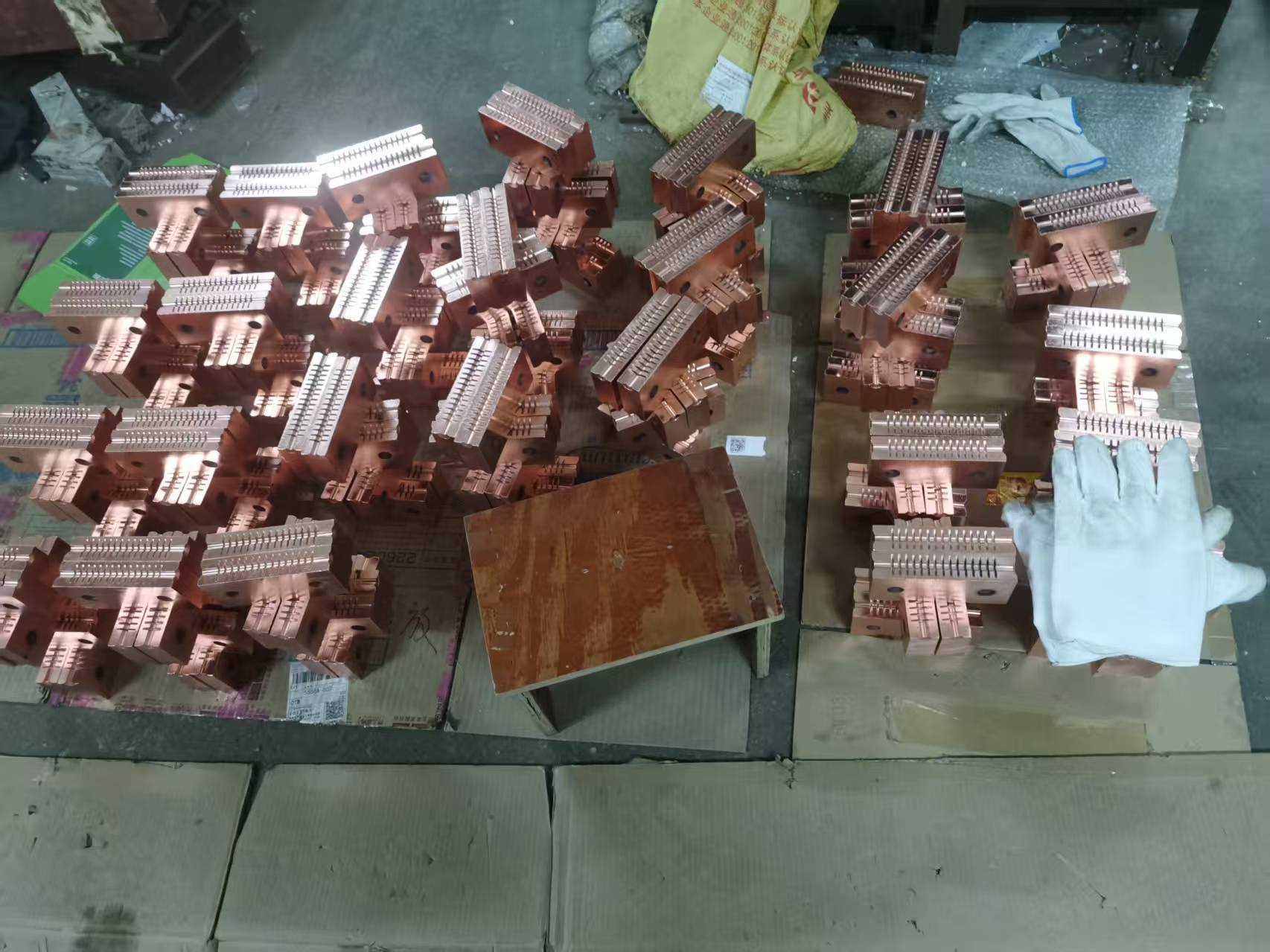
Rebar Clamps: Core Accessory Determining Prestressed Spun Pile Tensioning Success
In the centrifugal spun pile (PHC pipe pile) manufacturing process, prestressed steel bar processing is a critical link, and Rebar Clamps (Steel Bar Heading Machine Clamps) are the core and most decisive special accessory. While fixed blades, movable blades, and heading dies play auxiliary roles in blanking, cutting, and end upsetting, rebar clamps directly dominate the reliability of prestressed steel bar upsetting and tensioning—serving as a key guarantee for the structural safety of finished spun piles.
As the "core positioning and clamping guarantee" for prestressed steel bar processing, rebar clamps work in close coordination with heading dies and anchor wedges (a key component in tensioning) to ensure zero slippage of high-tensile PC wires/steel bars under massive hydraulic loads. Their precision, material performance, and adaptability directly determine the quality of steel bar processing, which in turn affects the prestressed anchoring effect, structural strength, and qualified rate of finished spun piles. At NANJING ALAS INTERNATIONAL CO., LTD, we prioritize rebar clamp quality, defining its excellence by clamping stability, wear resistance, and service life—all supported by superior H13 tool steel.
Core Position & Key Functions of Rebar Clamps
Rebar clamps are exclusive positioning and clamping accessories for the prestressed steel bar upsetting process, specially designed for small-diameter, high-strength prestressed steel bars (common specifications: Φ7.1, Φ9.0, Φ10.7, Φ12.6mm) used in spun pile production. They work in conjunction with heading dies and cooperate with anchor wedges in the subsequent tensioning link, forming a complete "upsetting-positioning-tensioning" protection system.
Core Functions of Rebar Clamps
The performance of rebar clamps directly avoids common production issues such as steel bar slipping, eccentric upsetting, and surface damage, which are crucial for ensuring the success of spun pile tensioning:
Precision Positioning: Ensure Upsetting Symmetry
Rebar clamps precisely fix the steel bar, ensuring the coaxiality deviation between the steel bar end and the heading die cavity is ≤0.03mm. This effectively prevents defects such as heading eccentricity, flat head, and material shortage, ensuring the alignment of the steel bar and the heading die—laying a solid foundation for the subsequent tensioning process where anchor wedges lock the steel bar without stress fractures.
High-Pressure Clamping: Prevent Slippage
Under high upsetting pressure (50~200kN), rebar clamps firmly fix the steel bar without any axial movement. This avoids insufficient heading length, incomplete forming, and ensures the heading diameter meets design requirements (usually 1.5~2 times the steel bar diameter). A stable, non-slip grip is critical for high-tensile PC wires/steel bars (e.g., 1420MPa grade), as slippage would not only waste materials but also lead to failure during tensioning—undermining the role of anchor wedges as the "final line of defense."
Steel Bar Protection: Maintain Mechanical Properties
The clamping surface of high-quality rebar clamps is closely attached to the steel bar surface, avoiding surface damage and work hardening caused by high-pressure clamping. This ensures the mechanical properties of high-strength prestressed steel bars are not compromised, allowing anchor wedges to lock onto the steel bar securely without causing stress fractures that could lead to wire snapping during the spinning or tensioning phase.
Material Selection for Rebar Clamps: H13 Tool Steel (Core Advantage)
The harsh working conditions of rebar clamps—sustained high-pressure clamping, frequent metal friction, and coordination with high-tensile steel bars—demand a material with excellent wear resistance, impact toughness, and dimensional stability. Unlike conventional materials, H13 tool steel (after vacuum heat treatment) is the optimal choice for rebar clamps, solving common issues such as premature wear, brittleness, and cracking that plague standard clamps.
Consistent with the vacuum heat treatment standard of ALAS tensioning accessories, our rebar clamps undergo sophisticated vacuum heat treatment, ensuring the surface reaches a hardness of HRC 50-55 while the internal core remains ductile—balancing wear resistance and toughness to withstand thousands of high-impact working cycles.
Chemical Composition of H13 Tool Steel & Its Performance Effects
H13 is a hot work tool steel with excellent comprehensive performance, whose balanced chemical composition (mass fraction) is perfectly adapted to the working requirements of rebar clamps. Its typical composition and corresponding performance impacts are as follows:
Carbon (C): 0.32–0.45% — Provides moderate hardness and excellent toughness, balancing wear resistance and impact resistance. It ensures rebar clamps can withstand high upsetting pressure and frequent clamping operations without brittle fracture, which is critical for processing high-tensile PC bars.
Chromium (Cr): 4.75–5.50% — Enhances hardenability and wear resistance, forming a dense oxide film on the surface to improve corrosion resistance. It prevents premature wear caused by metal friction between the clamp and steel bar during upsetting, greatly extending the service life of rebar clamps.
Molybdenum (Mo): 1.10–1.75% — Refines the grain structure, improves high-temperature strength and temper resistance, and reduces thermal cracking. This avoids deformation and cracking caused by heat accumulation during high-pressure clamping, ensuring the dimensional stability of rebar clamps.
Vanadium (V): 0.80–1.20% — Further refines grains, enhances hardness and wear resistance, and improves dimensional stability. It ensures that the clamping surface and positioning accuracy are maintained even after thousands of working cycles, ensuring consistent upsetting quality.
Silicon (Si): 0.80–1.20% — Improves hardenability and strength, while enhancing oxidation resistance, preventing surface damage of the clamp during high-temperature operation.
Manganese (Mn): 0.20–0.50% — Promotes the formation of fine-grained structures, improves toughness and ductility, and assists in deoxidation during smelting—ensuring the purity of the steel and avoiding internal defects in rebar clamps.
Coordination with Auxiliary Accessories & Tensioning System
While rebar clamps are the core, they work in coordination with auxiliary accessories and anchor wedges to ensure the smooth progress of prestressed steel bar processing and tensioning:
Coordination with Heading Dies
Rebar clamps and heading dies are a matched set—clamps position and fix the steel bar, while heading dies form the regular "heading" (pier head) of the steel bar. The precision of heading dies matches the positioning accuracy of rebar clamps, ensuring the heading is round and full, which is critical for the subsequent tensioning process where anchor wedges lock the steel bar reliably.
Coordination with Fixed & Movable Blades
Fixed and movable blades (made of Cr12MoV cold work die steel) are responsible for fixed-length blanking and excess section cutting of prestressed steel bars. They provide high-quality, burr-free, non-bevel steel bar blanks for the upsetting process—ensuring rebar clamps can position and clamp the steel bar stably without being affected by cutting defects.
Coordination with Anchor Wedges
Anchor wedges are the final line of defense in spun pile tensioning, and their locking effect depends entirely on the quality of the steel bar heading formed with the help of rebar clamps. Rebar clamps ensure the heading is symmetrical and intact, allowing anchor wedges (with CNC-machined thread profiles) to penetrate the steel bar surface appropriately—locking it in place without stress fractures during tensioning.
Core Value of High-Quality Rebar Clamps (H13 Material)
For spun pile manufacturers, high-quality rebar clamps made of H13 tool steel are not just consumables, but core assets that improve production efficiency, product quality, and workplace safety:
Ensure Tensioning Success: Precise positioning and stable clamping lay the foundation for anchor wedges to work effectively, avoiding tensioning failure caused by eccentric head or steel bar slippage.
Extend Service Life: H13 material’s excellent wear resistance and toughness reduce replacement frequency, lowering production costs.
Guarantee Product Qualification: Avoid defects such as eccentric heads, flat heads, and steel bar damage, improving the qualified rate of finished spun piles.
Adapt to High-Tensile Steel: Perfectly match 1420MPa high-tensile PC wires/steel bars, ensuring structural safety of spun piles.
Conclusion
The success of spun pile tensioning starts with the precision of rebar clamps. As the core accessory of prestressed steel bar processing, rebar clamps determine the quality of steel bar upsetting, which directly affects the performance of anchor wedges and the overall structural safety of finished spun piles. By choosing ALAS rebar clamps made of H13 tool steel—with advanced positioning performance, superior material properties, and perfect coordination with auxiliary accessories and tensioning systems—you are investing in a safer workspace, more consistent production output, and more reliable spun pile products.