

Phone:
86-15852949220


 |


Nanjing, China
L/C, T/T, Money Gram
40000PCS/Year
10
| Quantity: | |
|---|---|
In the demanding environment of a spun pile plant, the efficiency of your production line is only as strong as its weakest component. When processing High-Tensile PC Bars, the cutting stage is critical.
High-tensile PC bars are designed for extreme strength, which makes them notoriously difficult to cut. Standard blades often suffer from two key issues that hinder production efficiency and product quality.
Standard blades blunt quickly when cutting high-tensile PC bars, leading to frequent downtime for blade replacement. This interrupts the production flow, reduces overall throughput, and increases labor costs associated with maintenance.
Poor-quality blades can cause micro-cracking on the cut surface of PC bars. These tiny cracks compromise the bond between the bar and concrete, weakening the structural integrity of the final spun pile and posing potential safety risks.
To address the challenges of cutting high-tensile PC bars, we have developed specialized blades manufactured using vacuum-melted tool steels, such as H13 or Cr12MoV. This advanced material selection ensures superior performance and tangible benefits for your production line.
The vacuum-melted alloy steel construction significantly extends the blade’s service life compared to standard options. Fewer blade replacements mean less downtime, lower maintenance costs, and higher return on investment (ROI) for your spun pile operation.
Our specialized blades deliver clean, precise cuts with no burrs on the PC bar surface. This smooth cut ensures a perfect fit for heading machines, eliminating the need for additional processing and further streamlining your production workflow.
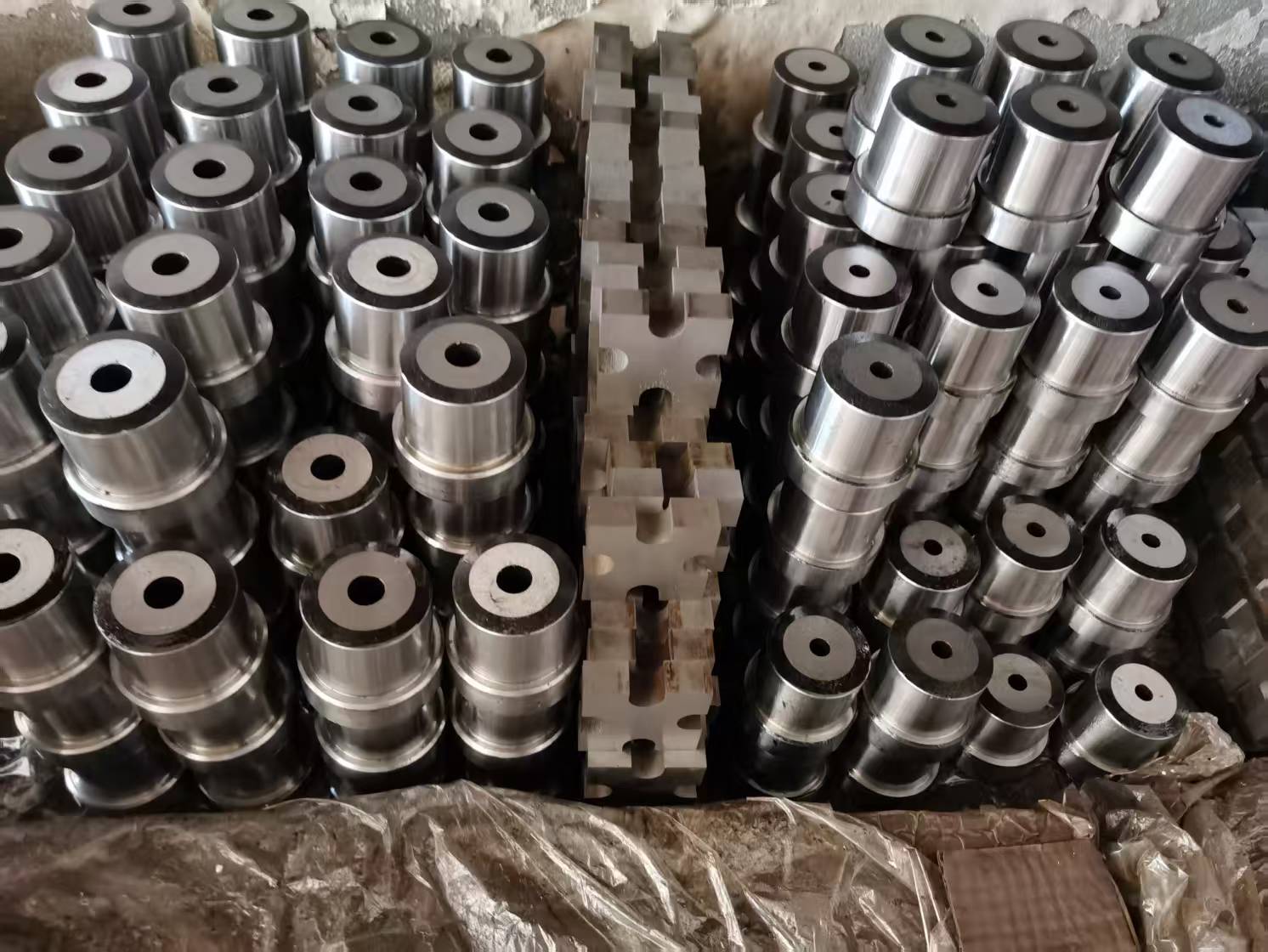
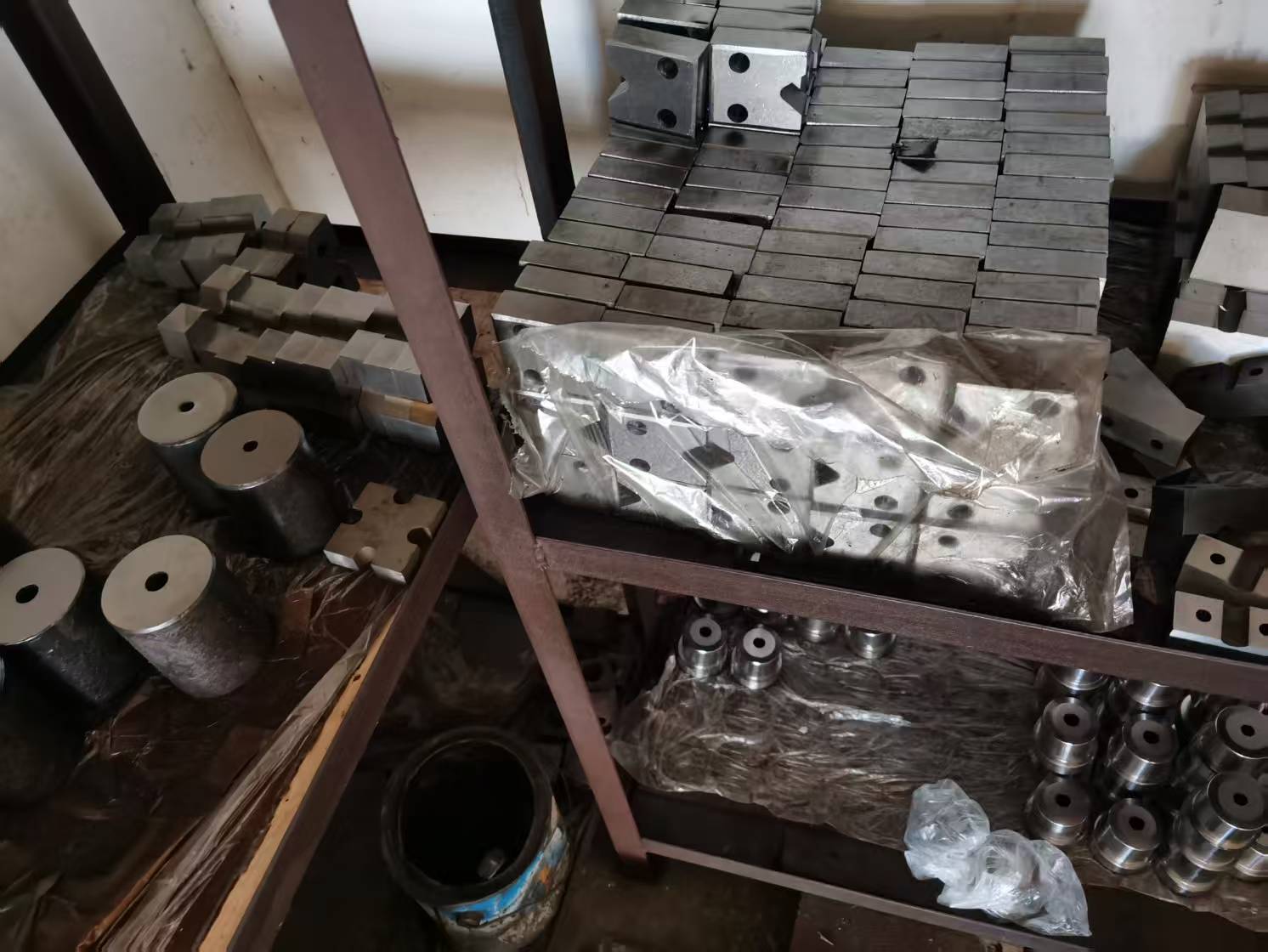
Fixed blades, movable blades, heading dies and steel bar clamps are the core special accessories for prestressed steel bar processing of concrete pipe pile drivers, serving the whole process of blanking and cutting, end upsetting, tensioning and clamping of special prestressed steel bars for pipe piles. The precision, material and adaptability of the accessories directly determine the quality of steel bar processing, which in turn affects the prestressed anchoring effect, structural strength and qualified rate of finished pipe piles.
The fixed and movable blades of a pipe pile driver are special matching wear parts for steel bar cutting. Different from the general cutting tools for pipe pile blank cutting, such blades are specially designed for small-diameter, high-strength prestressed steel bars. Their core function is to realize fixed-length blanking of steel bars and cutting of excess sections after tensioning, acting as the shearing accessories for steel bar processing.
Through the fixed support of the fixed blade and the hydraulically driven reciprocating movement of the movable blade, a precise shearing force is formed to realize burr-free and non-bevel cutting of PC steel bars and prestressed steel wires. This ensures the blanking length of steel bars and avoids the impact of cutting defects on the adaptability of subsequent upsetting and tensioning processes.
Steel bar cutting bears high-strength shearing force and metal friction, so the tool material focuses on high wear resistance and edge chipping resistance. Cr12MoV cold work die steel is conventionally selected.
The heading die is the core forming die of the heading mechanism of a pipe pile driver and a key accessory for prestressed steel bar anchoring. In pipe pile production, the end of the steel bar must be upset to form a regular "heading" to ensure the reliable connection between the steel bar and the anchor during tensioning. The cavity precision of the heading die directly determines the forming quality of the heading, which in turn affects the safety of pipe pile prestress tensioning.
The clamp for the steel bar heading machine is an exclusive positioning and clamping accessory for the prestressed steel bar upsetting process, used in conjunction with the heading die. Its core function is to fix the steel bar and ensure the coaxiality of the steel bar and the heading die cavity, prevent the steel bar from eccentricity and movement during upsetting, and ensure the heading is formed round and full. It is one of the key components affecting the anchoring reliability of prestressed steel bars.
Key Functions of the Heading Machine Clamp in Prestressed Steel Bar Upsetting
Ensure the coaxiality deviation between the steel bar end and the heading die cavity is ≤0.03mm, prevent defects such as heading eccentricity, flat head and material shortage, and ensure the alignment of the heading and the steel bar axis.
Fix the steel bar without axial movement under the high upsetting pressure (50~200kN), avoid insufficient heading length and incomplete forming, and ensure the heading diameter meets the design requirements (usually 1.5~2 times the steel bar diameter).
The clamping surface is closely attached to the steel bar surface to avoid steel bar surface damage and work hardening caused by high-pressure clamping, and ensure the mechanical properties of the steel bar are not affected.
Fixed blades, movable blades, heading dies and clamps are the four core accessories for prestressed steel bar processing of concrete pipe pile drivers. These accessories have distinct division of labor and work in coordinated cooperation, and determine the quality of steel bar processing throughout the process from steel bar blanking and cutting to end upsetting and then to tensioning and positioning. Among them, fixed and movable blades are wear parts that need to be accurately selected and regularly replaced according to cutting conditions; the heading die is a forming die that directly affects the safety of prestressed anchoring; the clamp is a force transmission and positioning accessory, and its clamping reliability and positioning precision determine the uniformity of pipe pile prestress distribution.
Nanjing Alas International Co., Ltd. is a professional industrial tooling manufacturer focused on shear blades, bending dies, shredder blades, and custom wear parts. We offer full application engineering, material selection, setup guidance, and after-sales support to global customers.
Tell us your requirements, and our engineering team will provide professional solutions for blade specification, tool life optimization, and cost-effective production.