


Phone:
86-15852949220


 |


ALAS
Nanjing, China
L/C, T/T, Paypal, Money Gram
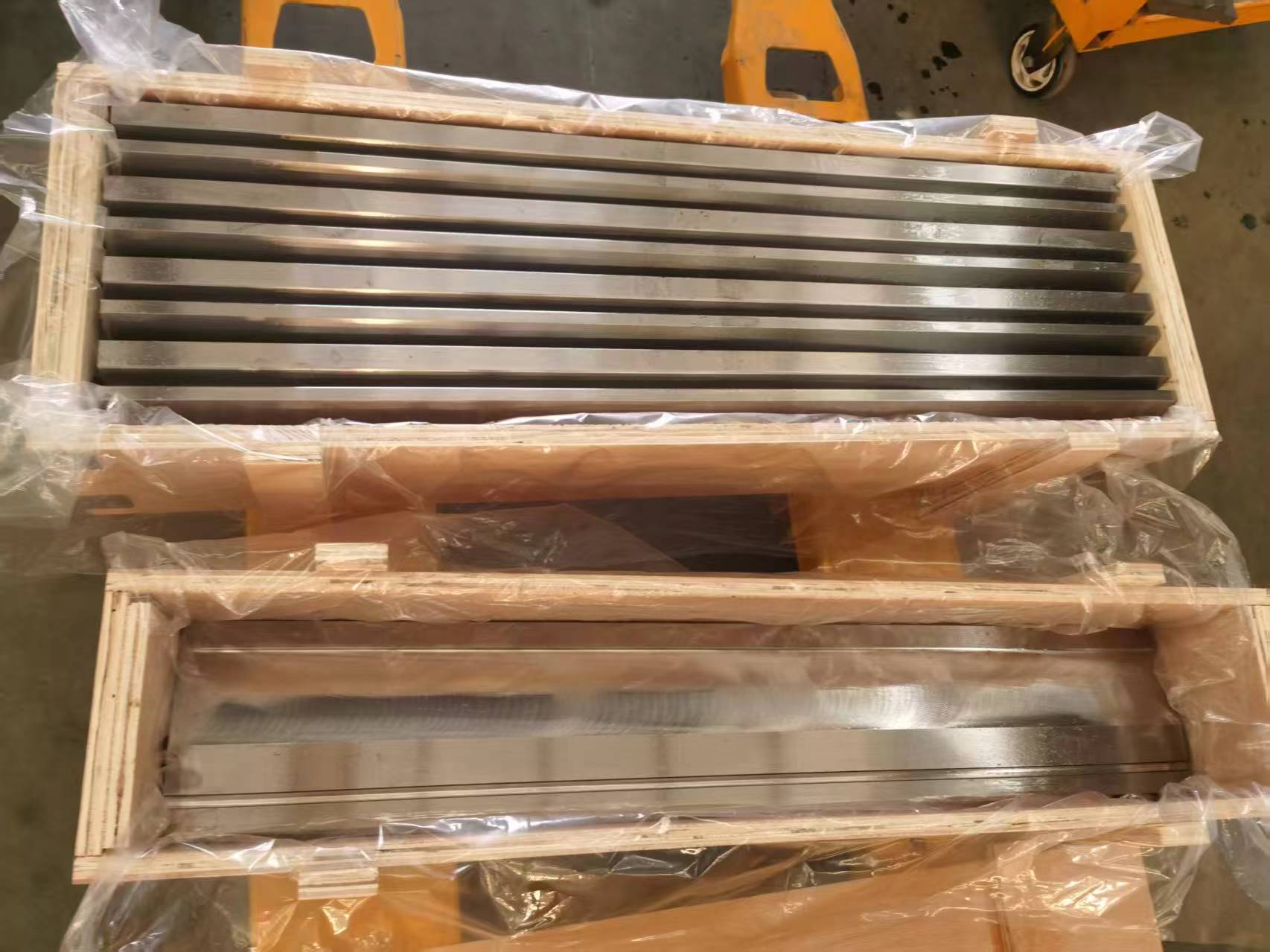
Wooden Crate Packaging
| Quantity: | |
|---|---|
Standard V slot width: 6~8 times plate thickness; 8× thickness is standard for regular carbon steel.
Constant value 650 comes from field test data for common Q235 mild steel with standard tensile strength and safety allowance.
Stainless steel and high strength steel bounce back heavily; use smaller punch angle or adjust K value to offset springback.
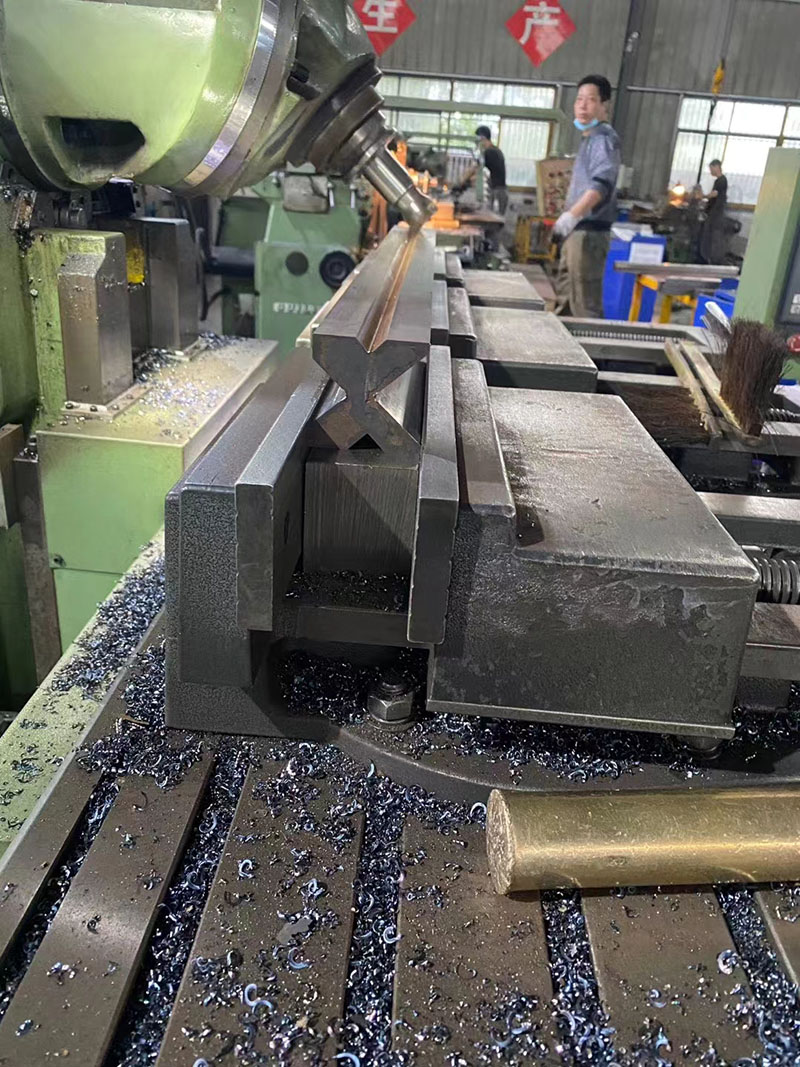
Watch our precision manufacturing process: CNC surface grinding of a multi-V press brake bottom die. Made from premium 42CrMo steel, the die undergoes strict metallurgical processing and continuous-cooling grinding to ensure exceptional flatness, precise V-groove angles, and heavy-duty structural stability for accurate sheet metal bending
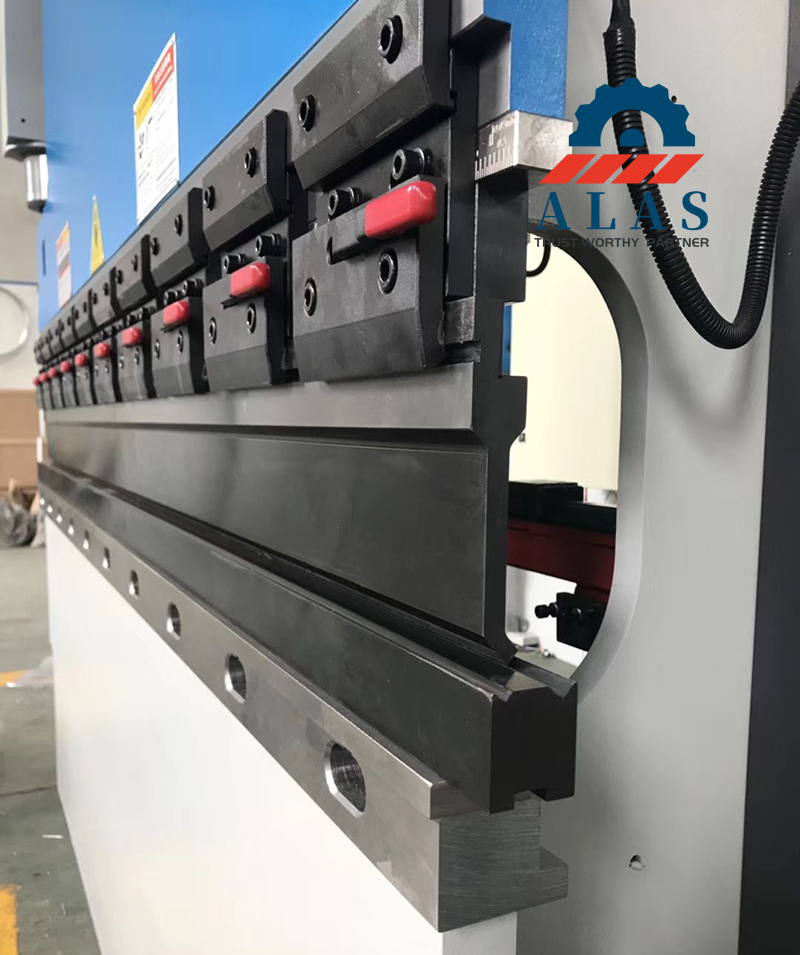
Punch: mounted on machine ram to press down onto raw material
Die: locked on machine table, mostly pre-machined with V grooves
CNC fine grinding keeps tolerance within ±0.01mm, consistent bending angle across all batches
Segmented modular design: standard sizes 20/40/200/500/800mm, freely combined for different workpiece lengths; replace only worn single piece to save cost
Fits Euro, American and Japanese clamping standards, compatible with Wila® and Amada® quick clamps; full die swap finishes within 2 minutes
Raw material 42CrMo / 55SiCr with overall heat treatment + ion nitriding, surface hardness HRC 52~56, 60% better abrasion resistance than regular untreated dies
Ready-made angles:86°/88°/90° right angle,30° sharp bend; custom R radius and flattening dies available per drawing
Reinforced die body with keyway and shoulder structure to resist uneven load and twisting, prolong service life for both dies and bending machines

| Parameter | EU Standard Dies | American Standard Dies | Heavy Duty Long Life Dies |
|---|---|---|---|
| Punch Type | Segmented 90°/88° sharp tip | One-piece 3/4 inch shank | Modular dual-V interchange punch |
| Bottom Die V Slot(mm) | 6/8/12/16/20/25/32/40 | 0.472"~2.0"(12~50mm) | 6~50mm with removable hardened V inserts |
| Angle Tolerance | ±0.2° | ±0.3° | ±0.15° |
| Hardness(HRC) | 50-52 (0.2mm nitrided layer) | 48-50 | 54-56 with extra wear resistant coating |
| Standard Length(mm) | 835/415mm separable segments | Max custom 3050mm | Modular assembled up to 4000mm |
| Applicable Plate(mm) | 0.5-12 (V=8×T default) | 0.8-16 | 0.5-20 for high tensile steel |
Regular V slot: V ≈ (8~10) × plate thickness T
Alternative force formula for high strength plate: P=(1.42 × tensile strength × t² × L)÷V

Standard straight punch: most widely used for regular right angle bending
Sharp angle punch: small angle bend and springback compensation for hard steel
Gooseneck punch: deep U shaped workpieces, avoid side wall collision during bending
Radius punch: arc forming to stop plate cracking and surface scratch
Custom non-standard punch: tailor made according to customer drawing for special complex bending
Economy standard die: for mild steel and galvanized sheet, cost effective
High strength special die: tough base material for stainless and high tensile alloy plate
Precision thin plate die: anti-scratch design for thin decorative sheet metal
Thin plate T<3mm: V=6T for smaller inner bend radius
Medium plate 3≤T≤8mm: V=8T to balance bending force and forming effect
Thick plate T>8mm: V=10~12T to cut down required tonnage and prevent die chipping
A1: V slot ranges 6~12 × plate thickness T, 8×T is best for regular carbon steel. For example, 2mm sheet matches V16 or V20 slot to avoid crack and unstable bending angle.
A2: Not possible for direct swap. EU dies use 42mm standard shank while US dies adopt 1/2" or 3/4" keyway shank. Need adapter sleeve or replaced clamp set for conversion; original matching quick clamp is preferred.
A3: Properly maintained nitrided 42CrMo die lasts roughly 1 million bending hits. Re-grind or replace die once continuous burr, angle error over 0.5° or obvious indent on V slot appears.
A4: Custom radius, flattening and special profile dies available per drawing, lead time 10~15 working days, 3D scan reverse engineering service provided.
A5: 42CrMo owns better toughness and anti-fatigue property for frequent high tonnage bending; T8 has high hardness but brittle, easy to chip edge. 42CrMo plus ion nitriding is the mainstream reliable option.
Country/Standard Organization | Standard Code | Corresponding Grade |
China (GB) | GB/T 3077 | 42CrMo or 42CrMo4 |
USA (AISI/ASTM) | ASTM A29 | 4140 |
International Organization for Standardization (ISO) | ISO 683-1 | 42CrMo4 |
Germany (DIN) | DIN EN 10083 | 1.7225 (or 42CrMo4) |
Japan (JIS) | JIS G4105 | SCM440 |
UK (BS) | BS 970 | 708M40 (EN19) |

Nanjing Alas International Co., Ltd. is a professional industrial tooling manufacturer focused on shear blades, bending dies, shredder blades, and custom wear parts. We offer full application engineering, material selection, setup guidance, and after-sales support to global customers.
Tell us your requirements, and our engineering team will provide professional solutions for blade specification, tool life optimization, and cost-effective production.