Press Brake Tooling: Complete Guide & ALAS Multi-Functional Solutions
Professional Press Brake Tooling & Multi-Functional Solutions for Precision Sheet Metal Bending
What Is Press Brake Tooling
Press brake tooling are specialized forming molds used in conjunction with bending machines. They are the core working components for bending and forming metal sheets, mainly composed of two key parts: the upper die and the lower die.
Through the relative movement of the bending machine's slider and workbench, the metal sheet is squeezed between the upper and lower dies, causing deformation and bending it into a workpiece of a specified angle, shape, and size (such as 90° right angle, U-shape, V-shape, etc.).
They are widely used in sheet metal processing fields such as mechanical manufacturing, sheet metal fabrication, hardware production, and cabinet manufacturing.
ALAS Multi-Functional Press Brake Tooling
Reducing Downtime via Engineering Design
In a high-mix, low-volume production environment, constant tool changes are the enemy of efficiency.
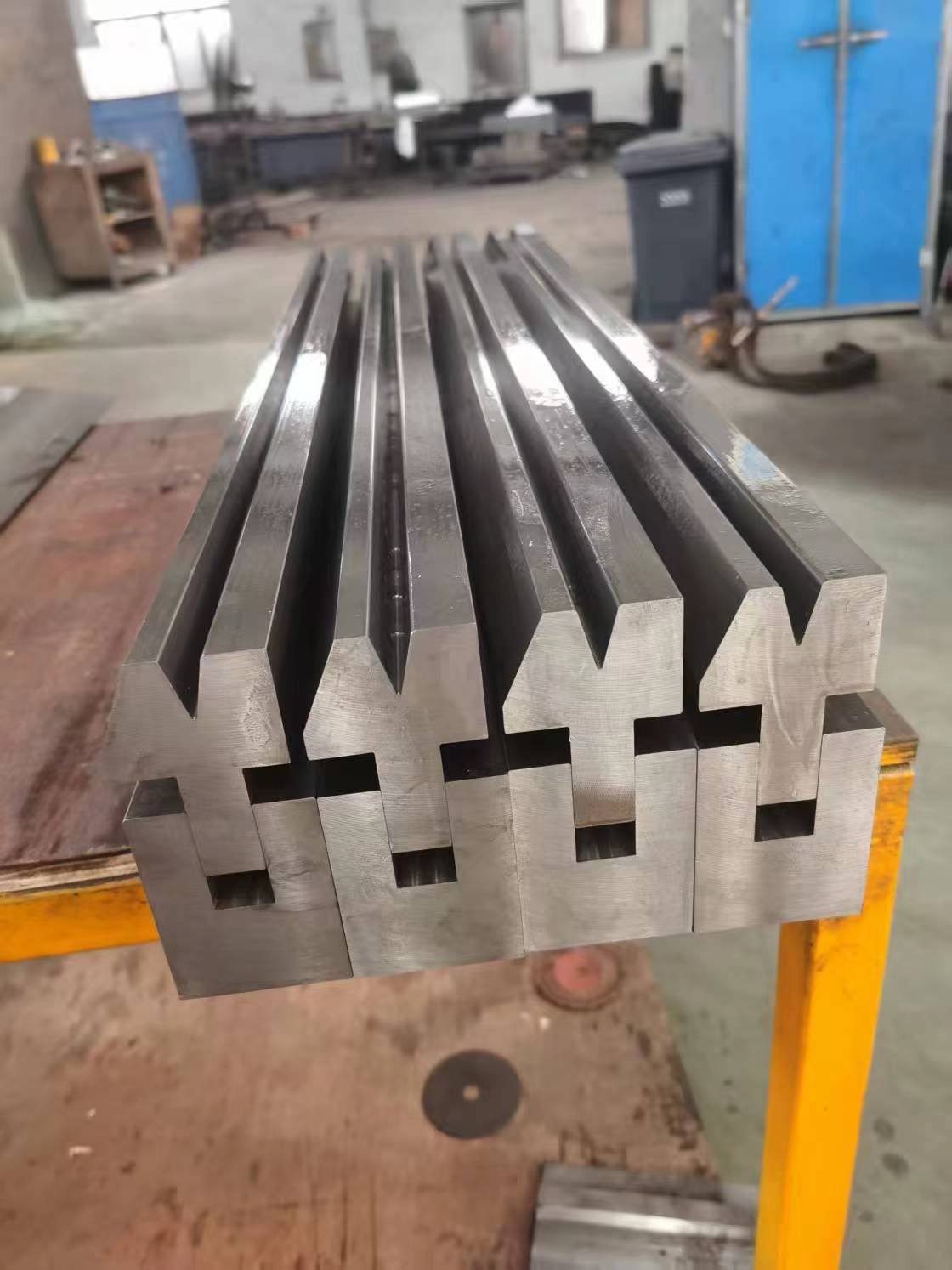
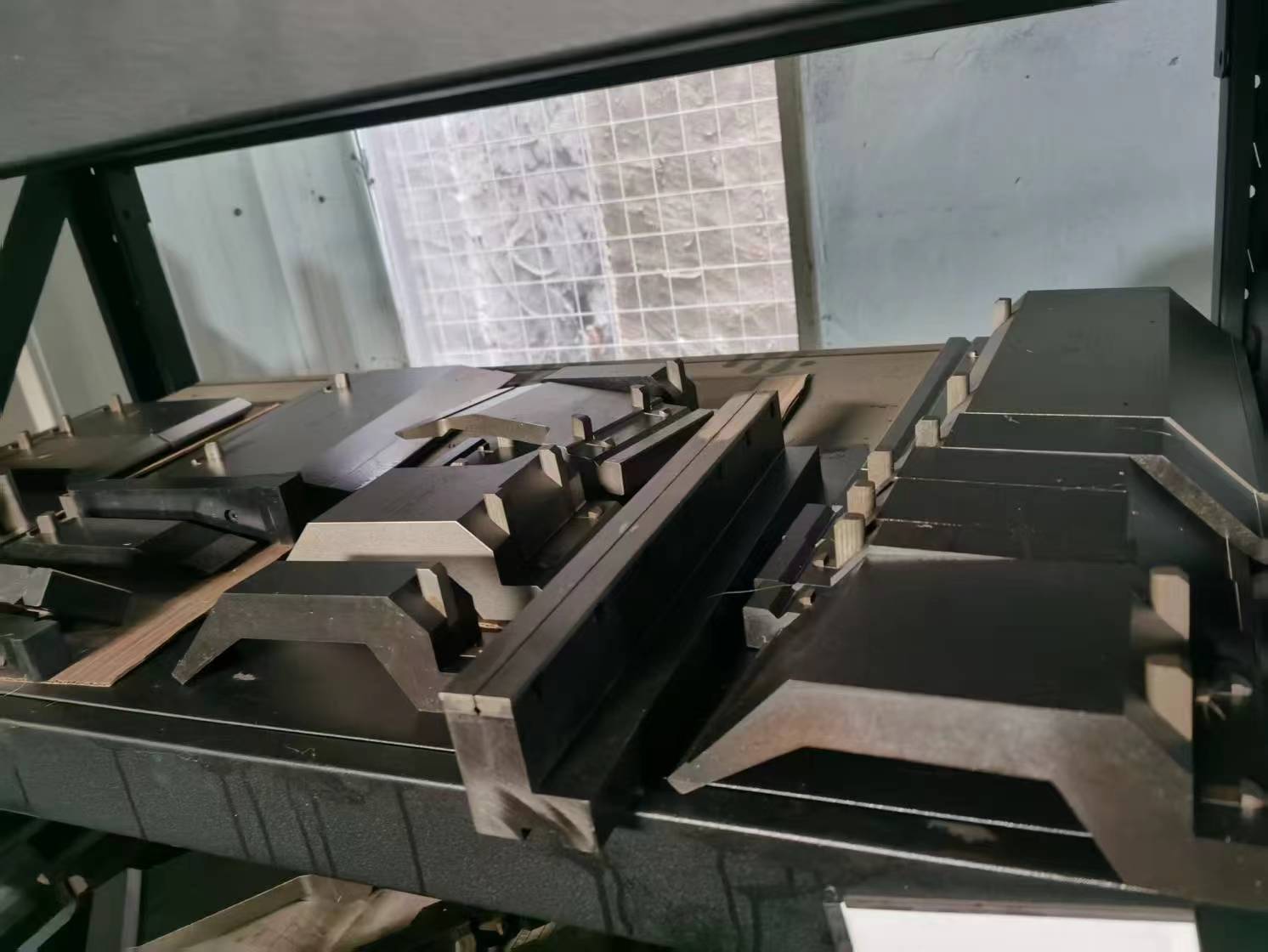
ALAS Multi-functional Press Brake Tooling is designed to handle multiple bending profiles — such as offset, flattening, or varied V-openings — in a single setup.
By integrating In-House Precision CNC machining, we ensure every angle is consistent, drastically reducing trial-and-error waste.
The Power of Versatility
Multi-functional press brake tools allow operators to perform multiple bending operations without frequent tool changes.
This significantly reduces downtime and increases throughput in high-mix, low-volume production.
A Technical Brand, Not Just a Vendor
ALAS is not a commodity supplier; we are an Application Engineering partner.
Our experts provide tailored guidance on material selection and tool geometry to match your specific fabrication challenges.
Choosing our multi-functional solutions means investing in long-term reliability and smarter value for your production line.
Core Components & Working Principle
Upper Die
Installed on the movable slider of the bending machine, it is the active pressure-applying component.
Its shape (standard straight edge, sharp corner, gooseneck, arc, etc.) determines the outer contour of the bent part of the workpiece.
Lower Die
Fixed on the workbench of the bending machine, it is the fixed support component, mainly using a V-shaped groove (V-groove) as its structure.
The width of the V-groove directly affects the bending force, fillet size, and forming effect of the sheet metal.
Working Principle
The metal sheet is placed on the lower die, and the slider drives the upper die to press down vertically.
The sheet is forced to conform to the contours of the upper and lower dies and undergoes irreversible plastic deformation.
After reaching the preset stroke and pressure, the bending and forming are completed.
After forming, the upper die returns to its original position, and the workpiece can be removed.
Key Characteristics of Press Brake Tooling
High Rigidity and Wear Resistance
The main material is alloy structural steel (such as 42CrMo), processed through heat treatment processes such as tempering and quenching, ensuring sufficient hardness (generally HRC45-HRC50), load-bearing capacity, and wear resistance to withstand the enormous extrusion force and friction during the bending process.
Mold Customization
According to the different bending requirements of the workpiece (angle, shape, size, material thickness), the punch can be customized into special shapes such as arc, gooseneck, and irregular shapes, and the die can be processed into V-grooves of different widths (such as 8mm, 16mm, 24mm) or special groove types.
High Matching Degree between Mold, Equipment, and Workpiece
The specifications of the mold (height, shank type, installation size) must be fully compatible with the clamping system, slider stroke, and rated tonnage of the bending machine.
The forming dimensions must be consistent with the workpiece drawing requirements to ensure bending accuracy and pass rate.
Standardization and Serialization
Conventional bending machine molds have general standard specifications (matching common bending machine brands such as Amada, Trumpf, and Wille), and can be purchased and used directly.
Special molds can be customized according to the actual processing needs of the enterprise.
Common Classifications of Press Brake Tooling
Classification by Forming Shape
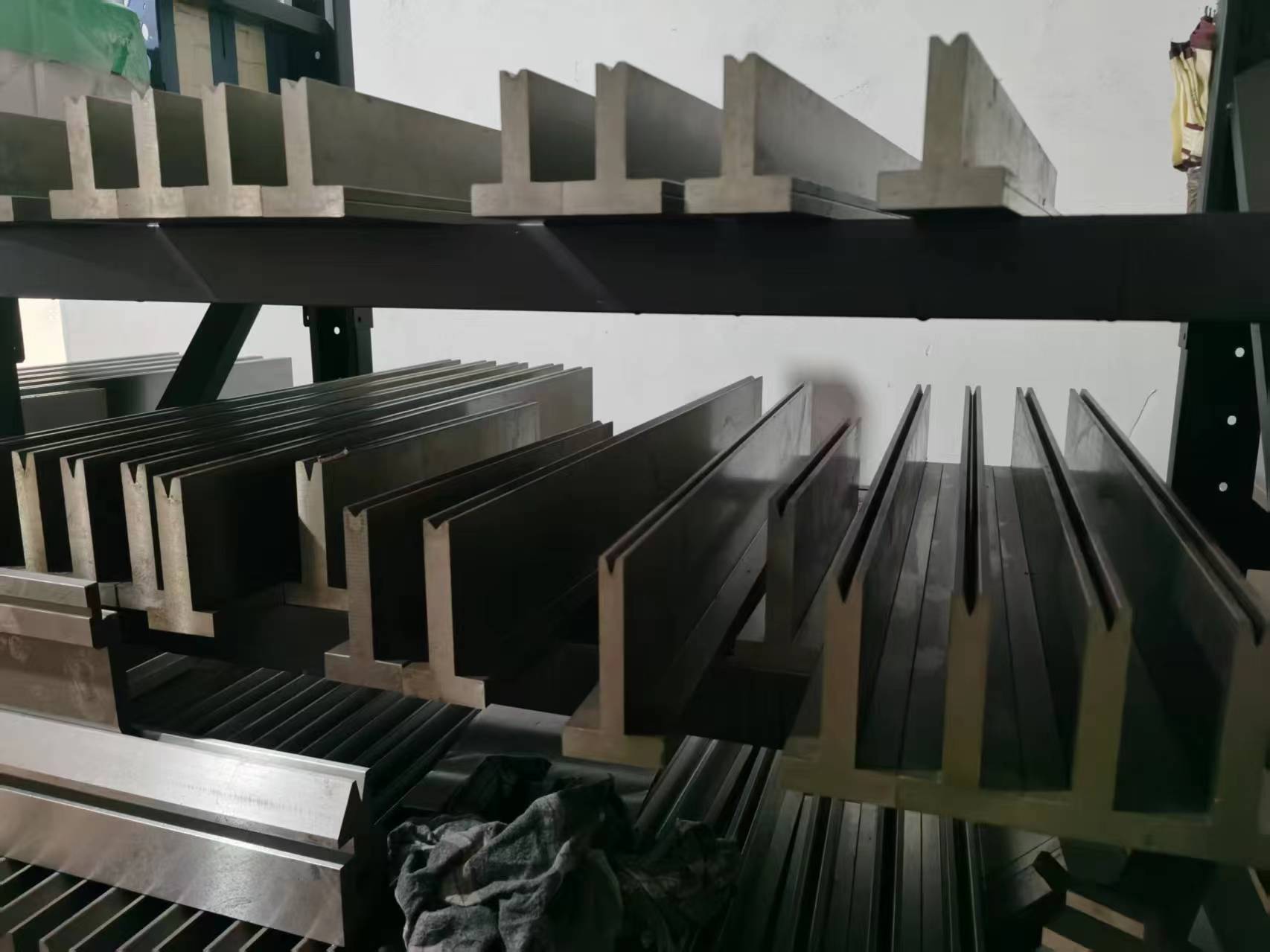
Standard Straight Edge Molds: Suitable for conventional straight edge bending, the most widely used.
Sharp Angle Molds: Suitable for small angle bending or springback compensation, meeting high-precision sharp angle forming needs.
Gooseneck Molds (Bending Knife): Suitable for U-shaped grooves and deep channel workpiece processing, avoiding interference with already bent edges.
Arc Molds: Suitable for arc and rounded corner bending and forming, such as arc-shaped workpieces and transition fillets.
Irregular Shaped Molds: Customized according to special workpiece drawings for irregular shape bending.
Classification by Application Scenario
Standard Sheet Metal Bending Dies: Suitable for ordinary sheet metals such as low-carbon steel and galvanized steel, cost-effective.
High-Strength Steel Bending Dies: Thickened design and high-hardness materials, suitable for stainless steel and high-strength alloy plates.
Thin Material Specific Dies: Precision machined to prevent warping, deformation, and scratching during thin material bending.
Classification by Installation Interface
Amada/Promecam Type: Compatible with Amada series bending machine clamping systems.
Trumpf/Wila Type: Compatible with Trumpf and Wila series bending machine clamping systems.
New Standard Type: Universal interface, suitable for most domestic bending machines.
Professional Press Brake Tooling Selection Method
Selecting the right press brake tooling is crucial for ensuring bending accuracy, production efficiency, and die service life.
1. Adaptation to Material Characteristics
The selection must match the tensile strength and springback characteristics of the processed material.
Ordinary mild steel: small springback, 86°~88° punch for 90° bending.
Stainless steel & high-strength steel: large springback, 85° punch or angle adjustment required.
Common material: 42CrMo, hardness HRC45-50 after heat treatment, with excellent strength and toughness to prevent fracture under high pressure.
2. Adhere to the "8x Principle" for Lower Die V-Notch
Core formula: Lower die V-notch width V = 8 × material thickness T
This ensures proper fillet size, avoids cracking, and reduces bending force.
3. Pressure Tonnage Limitation
Actual bending tonnage must be less than the die’s rated bearing capacity, with a 10%-15% safety margin.
For thick plates and high-strength steel, use thickened or segmented dies to disperse pressure and extend service life.
4. Punch Shape Selection
Standard punches: conventional straight-edge bending.
Sharp-angle punches: small-angle bending and springback compensation.
Gooseneck punches: U-shaped and deep-channel parts.
Arc / irregular punches: customized for special-shaped workpieces.
5. Installation & Equipment Compatibility
Match shank type: Amada/Promecam, New Standard, Trumpf/Wila.
Match die height with machine stroke and table opening.
Ensure accurate positioning and stable installation.
Key Selection Precautions
Do not ignore material springback, otherwise bending angles will be inaccurate.
Strictly follow the 8x rule to avoid workpiece cracking and mold damage.
Ensure full equipment compatibility to prevent installation failure.
42CrMo International Standard Comparison Table (Essential for Selection)
Country/Standard Organization | Standard Code | Corresponding Grade |
China (GB) | GB/T 3077 | 42CrMo or 42CrMo4 |
USA (AISI/ASTM) | ASTM A29 | 4140 |
International Organization for Standardization (ISO) | ISO 683-1 | 42CrMo4 |
Germany (DIN) | DIN EN 10083 | 1.7225 (or 42CrMo4) |
Japan (JIS) | JIS G4105 | SCM440 |
UK (BS) | BS 970 | 708M40 (EN19) |