86-15852949220      mt@alasmachinery.com
NANJING ALAS INTERNATIONAL CO., LTD
You are here: Home » Products » Ironworker Die & Tooling » Punches and Dies for Ironworker

Product Category

Contact Us

loading

Share to:
sharethis sharing button

Punches and Dies for Ironworker

Alas offers a comprehensive range of premium punches and dies for ironworker machines, engineered for high-tonnage metal fabrication. Manufactured in our state-of-the-art facility from shock-resistant tool steel, our tooling delivers exceptional wear resistance, reduced chipping, and extended service life. Optimized for clean, burr-free holes in plates, angles, and channels, these components ensure seamless compatibility with industry-leading ironworker brands.
  • ALAS

  • Nanjing, China

  • T/T, Money Gram

  • Wooden Crate Packaging

Availability:
Quantity:

Premium Punches and Dies for Ironworker Machines (Factory Direct)

NANJING ALAS manufactures a complete lineup of heavy-duty punches and dies for ironworker equipment, engineered to withstand continuous high-tonnage metal fabrication. Crafted from premium-grade shock-resistant tool steels (including DC53, D2, M2, and S7), our replacement tooling delivers exceptional edge retention, low risk of chipping, and excellent wear life under repetitive high-impact operations.
As a dedicated industrial tooling factory, we specialize in high-precision cross-brand compatibility. Our ironworker punch and die sets are machined to strict OEM tolerances, serving as direct, trouble-free replacements for industry-leading brands such as Edwards, Piranha, Scotchman, Geka, Mubea, Kingsland, Baileigh, and METALpro. Whether you need standard round punching stations or customized elongated, square, or hexagon profiles, ALAS ensures a flawless fit for machine capacities ranging from 25 to 150 tons.

Looking for other specialized shearing blades or notcher attachments? 

View our complete Ironworker Tooling & Die category for comprehensive fabrication solutions.

1. Product Overview

  • High-precision custom punches and dies for all hydraulic ironworker machines

  • Available materials: D2/SKD11/Cr12MoV, M2/SKH51, S7, H13/SKD61, 9CrSi, DC53, 6CrW2Si

  • Fully compatible with mainstream brands: Edwards, Piranha, Scotchman, Mubea, Geka, Kingsland, Peddinghaus, UniPunch, Baileigh, METALpro

  • Suitable for flat bar, angle iron, channel, I-beam, sheet metal, tubing, pipe and plate steel (3/16″ – 1″ / 4.76mm – 25.4mm)

  • Diverse punch shapes: Round, square, oblong, hexagon, oval, metric, offset, corner turning, picket, trimming

  • Custom sizes supported, with 1/64″ (0.4mm) incremental adjustment and full metric sizing options

  • Efficient delivery: In-stock products ship within 24-48 hours, custom orders completed in 3-5 days

  • Factory direct supply, no middleman markup with competitive pricing

Standard export packaging of ironworker punches and dies at Alas machinery factory

2. Tool Steel Material Selection

Professional material selection for different punching scenarios to ensure optimal tool life and working performance.
Steel Grade
Common Names
Key Characteristics
Best Application
D2 / SKD11 / Cr12MoV
High-carbon high-chromium tool steel
Excellent wear resistance, high compressive strength and stable shape retention
Long-run punching for carbon steel (Q235, A36) and thin steel plates
M2 / SKH51 / W6Mo5Cr4V2
High-speed steel
Superior toughness, good red hardness and strong impact resistance
High-speed continuous punching of stainless steel and high-hardness materials
S7
Shock-resistant tool steel
Extreme impact toughness, effectively prevents chipping and cracking
Punching thick plates, hard alloys and complex-shaped workpieces
6CrW2Si
Low-alloy shock steel
Moderate impact toughness with high cost performance
Conventional punching for medium and thin structural steel
H13 / SKD61
Hot-work die steel
Outstanding overall toughness, avoids fracture under heavy impact
Punching ultra-thick and low-hardness plates requiring high impact resistance
9CrSi
General low-alloy tool steel
Reliable wear resistance and economical cost
General-purpose punching for low and medium production volume
DC53
Optimized D2 variant steel
Better edge retention and toughness than D2 steel
Heavy-duty punching for stainless steel and abrasive materials under high impact

3. Standard Heat Treatment Hardness (HRC)

Standardized Rockwell C hardness treatment ensures stable tool performance and extended service life.

Punch Hardness by Material

Material
Recommended HRC
Performance Feature
D2 / Cr12MoV
58 – 61
Balanced wear resistance and anti-chipping performance
M2 / SKH51
60 – 63
High hardness for excellent wear resistance and cutting performance
S7
56 – 58
Optimized hardness for maximum impact toughness
6CrW2Si
57 – 59
Balanced toughness and cost for conventional structural steel processing
H13 / SKD61
50 – 54
Prioritizes extreme toughness for heavy-impact working conditions
9CrSi
58 – 60
Stable general-purpose hardness for daily punching work
DC53
60 – 62
Higher hardness and improved toughness compared with D2 steel

Die Standard Hardness

Component
Recommended HRC
Specification
General Die
56 – 60
1-2 HRC lower than matching punch to avoid cracking, ensuring compression and friction resistance

4. Complete Technical Specifications

Parameter
Specification Details
Available Tool Steels
D2/SKD11/Cr12MoV, M2/SKH51, S7, 6CrW2Si, H13/SKD61, 9CrSi, DC53
Punch Hardness
Matched with different materials (refer to Section 3)
Die Hardness
HRC 56 – 60 (1-2 HRC lower than supporting punch)
Standard Die Clearance
1/32″ (0.8mm), 1/16″ (1.6mm); maximum optional 1/8″ (3.2mm)
Punch Shapes
Round, square, oblong, hexagon, oval, metric, offset, corner turning
Max Processing Plate Thickness
1″ (25.4mm) mild steel
Hole Diameter Range
Round hole: 1/8″ – 1-1/2″ (3.2mm – 38.1mm); Square hole: up to 1″ (25.4mm)
Surface Treatment
Precision ground finish + anti-rust oil coating
Applicable Machines
Edwards, Piranha, Scotchman, Mubea, Geka, Kingsland, Peddinghaus, UniPunch, Baileigh, METALpro

5. Tool Steel Selection Guide

Step 1: Select by Workpiece Material

  • Carbon steel (Q235, A36, mild steel): D2/SKD11 for standard use, 9CrSi/6CrW2Si for budget projects

  • Stainless steel: M2/SKH51 for high-speed work, DC53 for long-term wear resistance

  • Thick plate (>1/2″ / 12.7mm) & structural steel: S7 for strong impact resistance

  • Ultra-thick soft plate: H13 for ultimate toughness protection

Step 2: Select by Production Volume

  • High-volume continuous production: D2, DC53, M2 (excellent wear resistance)

  • Low-volume job shop processing: 9CrSi, 6CrW2Si, S7 (cost-effective and anti-breakage)

Step 3: Select by Punch Shape

  • Simple round punch: All steel grades are applicable

  • Thin or complex special-shaped punch: S7 or H13 to prevent cracking and damage

Step 4: Hardness Matching Rule

The die hardness must be 1-2 HRC lower than the supporting punch. Example: D2 punch (HRC 60) matched with D2 die (HRC 58).

6. Die Clearance Reference Table

Mild Steel Plate Thickness
Per-Side Recommended Clearance
Up to 1/4″ (6mm)
1/32″ (0.8mm)
1/4″ – 1/2″ (6-12mm)
1/32″ – 1/16″ (0.8mm – 1.6mm)
1/2″ – 3/4″ (12-19mm)
1/16″ (1.6mm)
3/4″ – 1″ (19-25mm)
3/32″ (2.4mm)
Over 1″ (25mm+)
1/8″ (3.2mm)

Note: Stainless steel requires 25-30% larger clearance; thin aluminum sheets require smaller clearance (approx. 0.5mm).

Technical dimension diagram and size specifications chart for ironworker punch and die

7. Frequently Asked Questions

1. What materials are ironworker dies and punches made of?
Our standard ironworker punches and dies are manufactured from high-grade tool steel, including 9CrSi, D2, Cr12MoV and DC53, heat-treated to 55–62 HRC for balanced hardness and toughness. For heavy-duty, high-volume continuous punching tasks, M2/SKH51 high-speed steel is applied for superior durability. For hard, abrasive materials such as stainless steel, premium steel grades deliver stable cutting performance and extended tool service life.
2. Are punches and dies compatible with all ironworker brands?
Standard shank-style tooling is compatible with most mainstream ironworker brands, including Edwards, Scotchman, Piranha, Mubea, Geka, Kingsland, Peddinghaus, UniPunch, Baileigh and METALpro. Before ordering, please confirm your machine’s shank size, overall length and rated tonnage. Some custom-shaped tooling is machine-specific and requires personalized customization.
3. Why does the punch keep breaking or chipping?
Punch breakage and chipping are mainly caused by punch-die misalignment, uneven or improper die clearance, mismatched tool material, machine over-tonnage and dull cutting edges. Corresponding solutions: realign tool holders and fixing bolts, adjust die clearance evenly, replace with impact-resistant materials such as DC53 or D2, operate with a higher-tonnage machine or reinforced punch, and resharpen or replace worn tooling in a timely manner. Note that D2 steel is not suitable for plates over 5/8″ (15.9mm) due to high chipping risk; S7 is the preferred option, while 6CrW2Si serves as an economical alternative for low-volume processing.
4. What causes heavy burrs and rough hole edges?
Rough hole edges and excessive burrs result from dull tool cutting edges, oversized die clearance, misaligned punch and die, or incorrect machine stroke. To solve the problem, resharpen tool edges, adjust clearance to standard specifications, and recalibrate tooling alignment.
5. Why do slugs get stuck in the die?
Slug jamming is caused by insufficient die inner taper, overly small die clearance or accumulated metal debris inside the die cavity. Effective fixes include polishing the die inner taper, slightly increasing clearance according to plate thickness, and cleaning the die cavity regularly to remove residual debris.
6. Why does the punch stick to the workpiece?
Punch sticking usually occurs due to weak or broken stripper springs, insufficient die clearance, or metal galling when punching stainless steel and aluminum. Resolve the issue by replacing damaged stripper springs, adjusting clearance to standard values, and applying professional cutting lubricant during operation.
7. What is the service life of punches and dies?
Tool service life varies according to tool material, workpiece material, plate thickness and daily production volume. Scientific maintenance effectively prolongs service life: resharpen dull cutting edges regularly, and replace cracked, deformed or severely worn tooling immediately to avoid processing defects and machine damage.
8. Is lubrication needed for punching operation?
Lubrication is required for most punching scenarios. Professional cutting oil is necessary for processing stainless steel, high-carbon steel and thick plates to reduce friction, tool wear and metal galling. Dry punching is only applicable for thin mild steel sheets.
9. How to install punches and dies correctly?
Follow standard installation procedures to ensure tool stability and processing accuracy: loosen the punch fixing nut and die set screw, insert the punch and align the keyway accurately, fully seat the die and match positioning marks, tighten all fasteners firmly, and test with a slow machine stroke before formal full-power operation.
10. How to calculate required punching tonnage?
The standard calculation formula for mild steel punching: Tonnage = Hole perimeter × Material thickness × 80. Always comply with the machine’s rated tonnage limit specified in the official manual to avoid equipment overload and tool damage.
11. Can I get custom-shaped punches and dies?
Yes, customized tooling services are available. We provide oblong, square, rectangular and various special-profile punches and dies, which can be fully customized to match your machine’s shank specifications and personalized punching requirements.
12. What is the best material for punching stainless steel?
M2 (SKH51) and DC53 are the optimal choices. M2 is ideal for high-speed continuous punching, while DC53 features superior edge retention and longer service life for stainless steel processing.
13. Why are dies softer than matching punches?
Dies bear long-term compression and friction during operation. Keeping die hardness 1-2 HRC lower than the matching punch effectively prevents cracking while maintaining stable wear resistance, reducing overall tool replacement costs.
14. Do you provide H13 thick plate punching tools?
Yes. We supply H13/SKD61 punches and dies, which deliver excellent toughness and are specially designed for ultra-thick plate and heavy-impact punching working conditions.
15. Can you provide hardness inspection certificates?
Yes. Batch hardness test reports and official material certification are available upon request for all finished tools from Nanjing Alas.
16. What clearance is suitable for 1/2″ (12mm) A36 steel plate?
For 1/2″ (12mm) A36 mild steel plate, adopt 1/16″ (1.6mm) total clearance (1/32″ / 0.8mm per side) to achieve clean and smooth punching results.

8. Quality Control & Factory Strength

Material Performance Data

Material
Punch HRC
Impact Toughness (J/cm²)
Application Scenario
D2/SKD11
58-61
10-12
High-volume carbon steel processing
M2/SKH51
60-63
18-22
High-speed stainless steel processing
S7
56-58
35-40
Thick plate & structural steel processing
6CrW2Si
57-59
28-33
Cost-effective medium-thickness steel processing
H13
50-54
45+
Ultra-thick soft plate heavy-duty processing
DC53
60-62
25-30
Abrasive and high-hardness material processing

Strict QC Process

  • 100% concentricity inspection (≤0.001″ / 0.025mm TIR)

  • Full inspection of die inner surface to eliminate burrs

  • Batch hardness testing with official certification support

  • Professional anti-rust oil coating for long-term storage and transportation

Factory Information

Nanjing Alas is a professional manufacturer of ironworker punching tools. We support standard and customized punches and dies, providing reliable factory direct supply solutions for global customers. Please contact us for quotation with your machine model, processing material and required hole specifications.

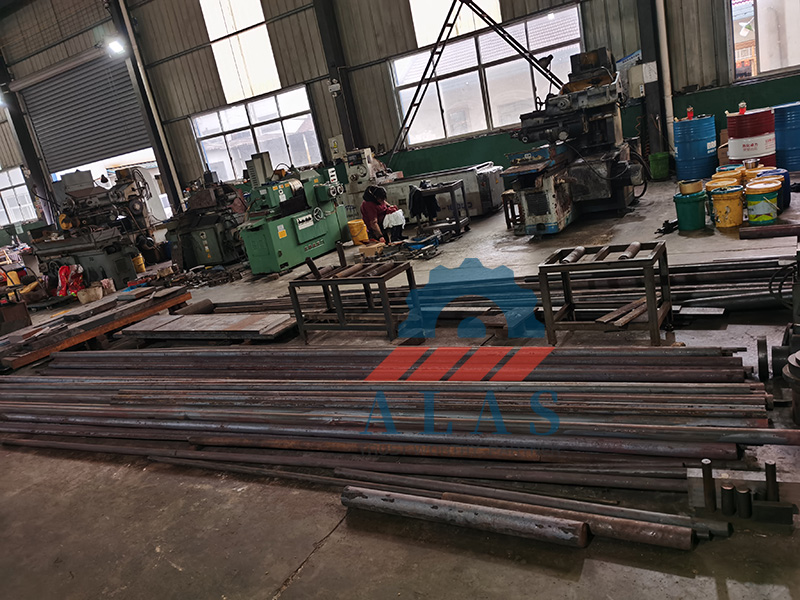
Premium steel round bars and raw materials in the ironworker punch and die manufacturing workshop


Heavy Duty DC-53 Ironworker Punches & Dies - 55-62 HRC Punching Test

High-quality punches and dies for ironworker machines. Watch our premium DC-53 steel tooling (hardened to 58-62 HRC) complete heavy plate punching with laser-precision.

Get a Quick Quote on Replacement Tooling: Our ironworker punches and dies are fully compatible with major industry brands, including Geka, Edwards, Piranha, and Scotchman, engineered to fit 25-ton to 150-ton machines perfectly without chipping.


Previous: 
Next: 
200
Phone:
86-15852949220
Address:
Jiangning District, Nanjing
About Us

Nanjing Alas International Co., Ltd. is a professional industrial tooling manufacturer focused on shear blades, bending dies, shredder blades, and custom wear parts. We offer full application engineering, material selection, setup guidance, and after-sales support to global customers.
Tell us your requirements, and our engineering team will provide professional solutions for blade specification, tool life optimization, and cost-effective production.

Subscribe
Sign up for our newsletter to receive the latest news.
​Copyright 2021 NANJING ALAS INTERNATIONAL CO., LTD            苏ICP备2021025144号