

Phone:
86-15852949220


 |


ALAS
Nanjing, China
L/C, T/T, Paypal, Money Gram
10
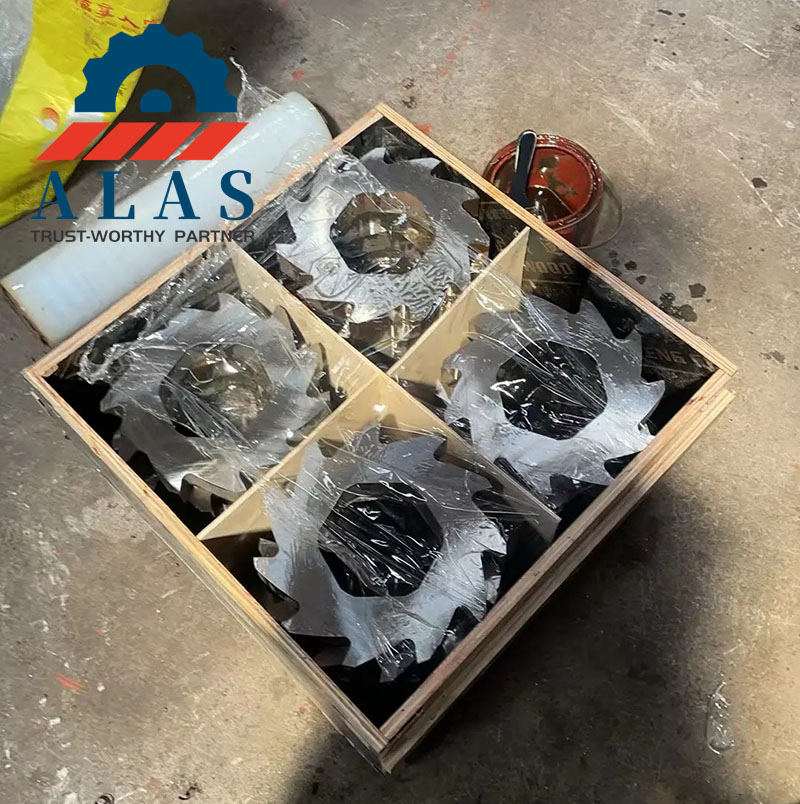
Wooden Crate Packaging
| Quantity: | |
|---|---|
| Comparison Items | ALAS Double Shaft Shredder Blades | Single Shaft Shredder Blades |
|---|---|---|
| Installation | Two parallel shafts, blades arranged in staggered way | Single main shaft plus fixed counter blade |
| Speed & Torque | 5.5-10 rpm, high torque | 50-150 rpm, medium torque |
| Crushing Method | Shearing, tearing and stretching | Cutting and extrusion, rely on screen mesh for discharge |
| Applicable Materials | Scrap car bodies, tires, mixed waste, metal drums and other large materials | Plastic, wood, film and materials with uniform texture |
| Jam Solution | Machine reverses automatically to remove foreign objects | Stop machine for manual cleaning; screen mesh easy to damage |
| Discharge Size Control | Determined by blade thickness and claw quantity | Determined by screen mesh hole size |
| Normal Service Life | 300-600 hours (varies by material) | 200-400 hours |
Grab Materials
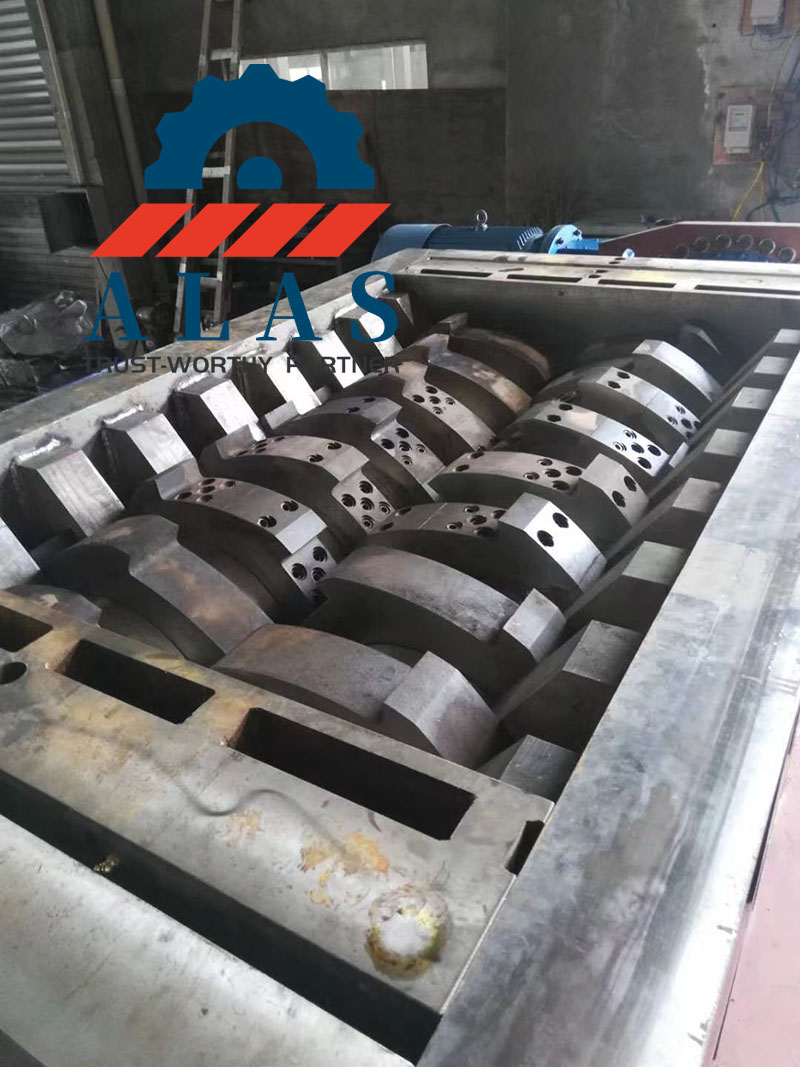
Hook-shaped cutting edges catch large and fluffy materials. Anti-slip structure prevents materials from spinning together with shafts.
Tear Materials
Blades on two shafts squeeze each other to generate strong tearing force and split materials.
Reduce Particle Size
Continuous cutting makes materials smaller. Blade thickness decides the width of final materials.
Automatic Discharge
Qualified small materials drop from the machine bottom. No screen mesh is needed, so blockage rarely happens.
Overload Protection
Hydraulic or torque sensors trigger shaft reversal for 2 to 3 seconds under overload. Hard impurities are removed and the machine returns to normal work.
| Industry | Common Materials | ALAS Recommended Materials | Hardness (HRC) | Main Performance Requirements |
|---|---|---|---|---|
| Metal Recycling | Scrap car bodies, steel scraps, aluminum profiles | H13, Carburized SKD-11 | 50-55 / 58-62 | Impact resistance, high temperature resistance |
| E-waste Processing | Circuit boards, equipment chassis, waste home appliance shells | Cr12MoV, Tungsten Carbide Tipped | 58-62 | Wear resistance, anti-chipping |
| Waste Tire Recycling | All-steel radial tires | M2 High-speed Steel, Alloy Tipped | 63-66 | High strength, anti-fatigue fracture |
| Plastic Recycling | Plastic drums, bottles, plastic film | 9CrSi, SKD-11 | 56-62 | Sharp edge, anti-winding |
| Municipal Solid Waste | Mixed waste, textile, kitchen waste | Hadfield Steel, 42CrMo | Work-hardened | High toughness, impact resistance |
| Construction Waste | Mixed waste with sand, steel bars and wood | Hadfield Steel, H13 | Over 45 after impact | Abrasion resistance, impact resistance |
| Material | Steel Type | Hardness (HRC) | Heat Resistance | Impact Toughness | Wear Resistance | Sharpening Times | Cost Level | Normal Service Life (Hours) |
|---|---|---|---|---|---|---|---|---|
| H13 (SKD61) | Hot Work Tool Steel | 50-55 | Excellent | Good | Medium | 3-4 | Medium-High | 300-450 |
| SKD-11 (Cr12MoV) | Cold Work Tool Steel | 58-62 | Fair | Medium | Excellent | 4-5 | High | 400-600 |
| Hadfield Steel (Mn13) | Austenitic Steel | Initial 180-220 HB, over 45 HRC after impact | Poor | Excellent | Medium, good anti-abrasion | Hard to resharpen | Medium | 250-350 |
| 9CrSi | Alloy Tool Steel | 56-60 | Poor | Poor | Medium | 2-3 | Low | 150-250 |
| M2 High-speed Steel | High-speed Tool Steel | 63-66 | Good | Fair | Good | 3 | Very High | 350-500 |

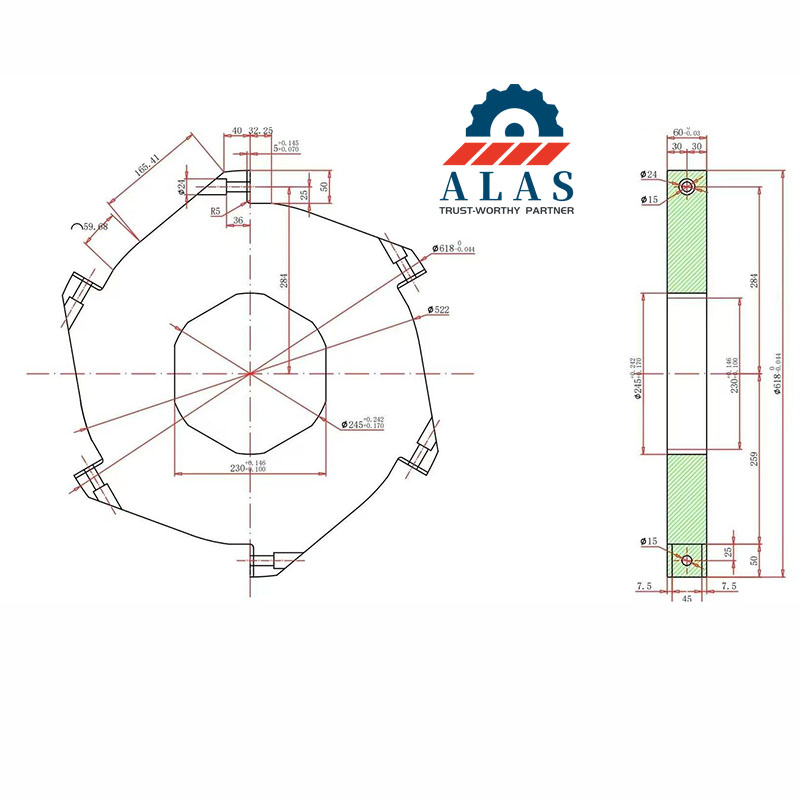
| Claw Quantity | Usage Type | Discharge Size | Material Grabbing Ability | Cutting Times per Rotation | Application Scenarios |
|---|---|---|---|---|---|
| 2-3 | Coarse shredding | 80-200 mm | Strong | Low | Bundled steel, large timber, whole vehicle bodies |
| 6 | General use | 40-100 mm | Good | Medium | Industrial waste, plastic drums, common e-waste |
| 8 | Fine shredding | 20-60 mm | Medium | High | Waste tires, aluminum profiles, circuit boards |
| 12 | Ultra-fine shredding | 10-30 mm | Weak | Very High | Plastic pelletizing, rubber grinding, small electronic parts |
| Blade Thickness | Standard Discharge Width | Impact Resistance | Application Scenarios |
|---|---|---|---|
| 10-20 mm | 10-20 mm | Weak, easy to deform | Plastic film, woven bag, paper, chemical fiber |
| 20-30 mm | 20-30 mm | Medium weak | Hard plastic bottles, small e-waste, rubber strips |
| 40-50 mm | 40-50 mm | Medium strong | Wood pallets, mixed municipal waste (mainstream size) |
| 60-75 mm | 60-75 mm | Strong | Scrap car bodies, engine shells, heavy steel |
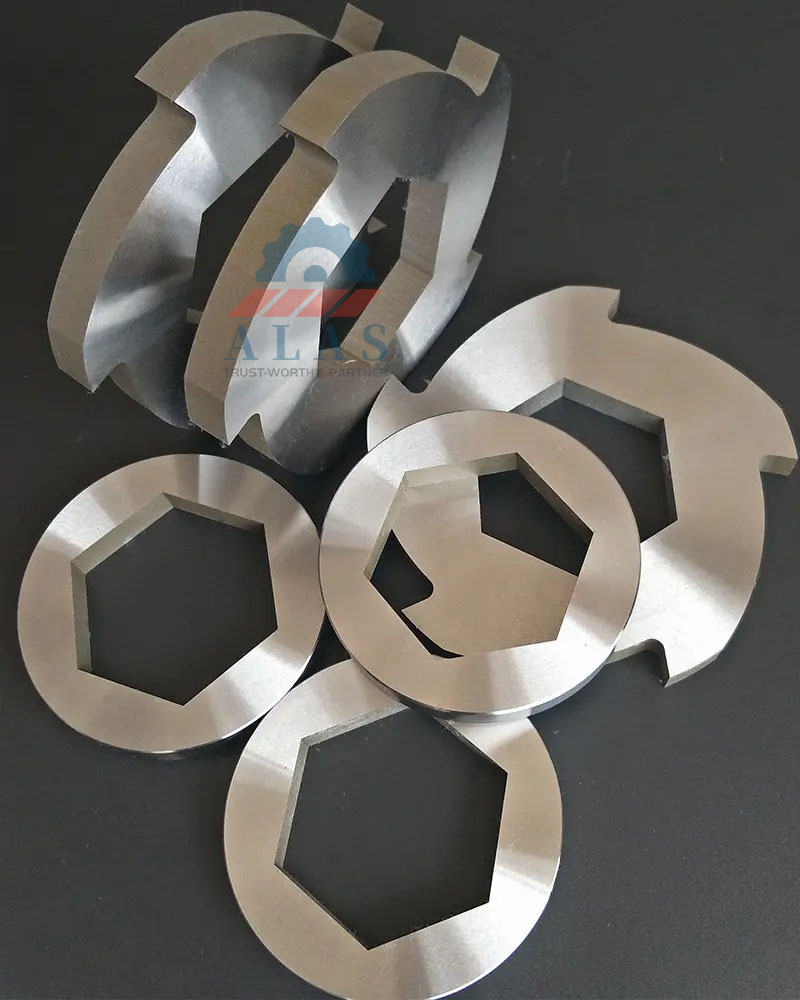
Base hub: Made of 42CrMo, fixed on main shaft, long service life.
Replaceable cutter claw: Core cutting part, available in H13 and SKD-11, easy for single replacement.
Auxiliary guard tooth: Protect base hub, can be installed reversely for second use.
Cut off power, lock hydraulic system and hang warning signs on site.
Open the shredding chamber cover with hydraulic system.
Turn the shaft manually to move the target claw to the access opening.
Loosen fixing bolts with torque wrench. Replace deformed bolts together.
Tap stuck blades gently with copper rod. Do not use steel hammer.
Clean dirt and oil on mounting surface with steel brush and compressed air.
Install new claws, apply anti-seize compound on contact surface. Tighten bolts at standard torque 200-280 N·m.
Measure blade gap with feeler gauge. Standard gap: 0.3-0.8 mm.
Run machine with no load for 2 minutes to check abnormal noise. Then run with materials at low speed for 5 minutes.
Record replacement position, time and operator information.
| Inspection & Sharpening Items | Execution Standards |
|---|---|
| Sharpening Cycle | Every 200-300 working hours, or after processing 200-400 tons of materials |
| Primary Edge Angle | 30°±2°, keep same as original design |
| Secondary Edge Angle | 45°±2° |
| Maximum Single Grinding Depth | 1.5 mm (from edge to blade back) |
| Post-sharpening Treatment | Polish edge to 0.05-0.1 mm radius to remove burrs |
| Maximum Temperature During Grinding | Below 200℃. Use water cooling or CBN grinding wheel |
| Maximum Sharpening Times | SKD-11 & H13: 4-5 times; High-speed Steel: 3 times; 9CrSi: 2-3 times |
| Scrap Standard | Thickness loss over 15% of original size, penetrating cracks, chipping depth over 5 mm |
Hard metal parts mixed in materials: Install magnetic separator and metal detector on feeding line to remove impurities automatically.
Blade gap less than 0.2 mm, blades hit each other: Stop machine and adjust gap to 0.3-0.8 mm with gaskets.
Wrong material selection: Brittle 9CrSi blades used for hard materials. Replace with ALAS H13 or high-speed steel blades.
Loose fixing bolts cause blade vibration and collision: Check bolt torque before daily startup. Use lock washers and thread locking adhesive.
Raw material forging defects and material segregation: Return defective products and ask for metallographic inspection report.
Unqualified heat treatment and insufficient tempering: Purchase qualified finished blades from ALAS.
Long time overload operation: Reduce feeding size and add pre-shredding equipment. Upgrade to higher strength blades.
Worn shaft bearings lead to larger shaft distance: Check bearing clearance and replace worn bearings.
Worn blade base or missing sealing gaskets: Dismantle blades for measurement. Add gaskets or install new ALAS blades.
Cut off power and clean dirt on blade surface.
Select 3 to 5 points along shaft direction, measure minimum gap between paired blades with feeler gauge.
Loosen bearing housing bolts.
Adjust eccentric sleeves or add / remove gaskets under bearing housings to fine tune shaft position.
Retighten bolts and recheck gap. Gap tolerance along the whole shaft: ±0.05 mm.
Run machine with no load for 2 minutes. Start formal production if no friction or abnormal noise.
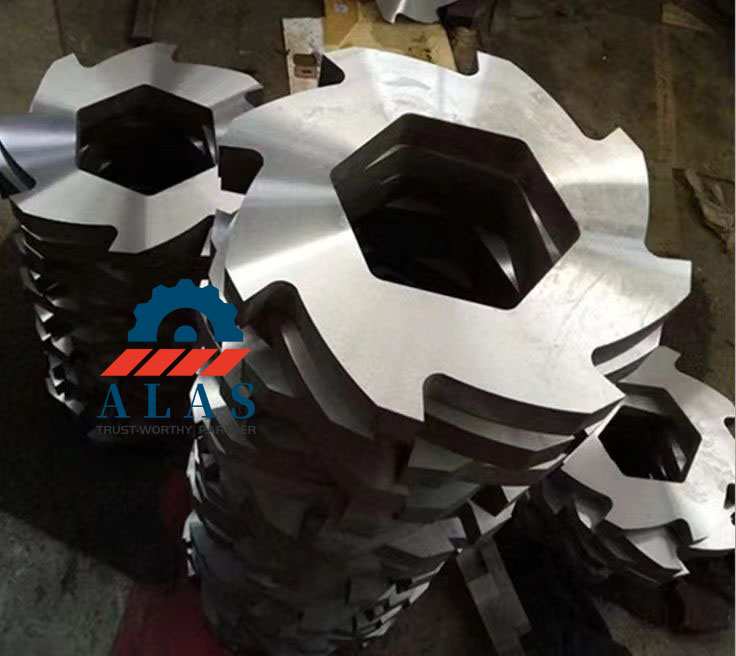
Grind damaged area to remove oxide and dirt, expose clean metal surface.
Preheat the whole blade to 150℃~250℃ to prevent cold cracks after welding.
Conduct multi-layer hardfacing with specified welding rods. Remove slag after each layer.
Wrap blades with asbestos cloth for slow cooling after welding. Then do low temperature tempering at 200℃ for 2 hours.
Grind blades back to original size and shape.
Complete dynamic balance test. Allowable unbalance: less than 5 g·cm per shaft.
Carbide-tipped blades: Welding high temperature will damage internal brazing material and cause carbide to fall off.
Blade chipping depth over one third of total thickness: Structural damage cannot be fixed by welding.
Blades with large penetrating cracks.
Material hardness: Select ALAS SKD-11 or high-speed steel for hard materials.
Impurity ratio: Choose Hadfield Steel or H13 if sand, stone and metal blocks take more than 10% of raw materials. Focus on toughness.
Continuous operation: Select re-sharpenable H13 or SKD-11 blades for 24-hour non-stop production.
Fine shredding (output below 30 mm): 12-claw blades, thickness 20-30 mm.
Standard shredding (output 30-80 mm): 6-8-claw blades, standard thickness 40 mm.
Coarse shredding (output over 80 mm): 2-3-claw blades, thickness over 50 mm.
| Cost Items | 9CrSi Ordinary Blades | ALAS SKD-11 High Performance Blades |
|---|---|---|
| Ex-factory Price per Set | $294.74 | $736.84 |
| International Freight per Set | $22.14 | $22.14 |
| Tariff & Clearance Fee per Set | $29.47 | $73.68 |
| Total Landed Cost per Set | $346.35 | $832.66 |
| Total Processing Capacity per Set | 200 tons | 600 tons |
| Annual Consumption Quantity | 25 sets | Approx. 8.3 sets |
| Annual Total Landed Cost | $8,658.75 | $6,911.08 |
| Annual Total Resharpening Fee | $442.11 | $589.47 |
| Downtime Loss per Replacement | $589.47 | $589.47 |
| Annual Total Downtime Loss | $14,736.84 | $4,892.63 |
| Total Annual Life Cycle Cost | $23,837.70 | $12,393.18 |
ALAS provides material spectrum test report and heat treatment record for each batch of goods. We also supply complete customs documents for cross-border orders.
Support sample order of 1 to 2 sets for 200-hour field test. Choose international express for small samples to control logistics cost.
Check blade wear condition after test. Uniform arc wear means normal use. Adjust blade gap or change material if chipping and unilateral wear occur.
Nanjing Alas International Co., Ltd. is a professional industrial tooling manufacturer focused on shear blades, bending dies, shredder blades, and custom wear parts. We offer full application engineering, material selection, setup guidance, and after-sales support to global customers.
Tell us your requirements, and our engineering team will provide professional solutions for blade specification, tool life optimization, and cost-effective production.