Ironworker Punch and Die Set: Products, Performance & Service Life Extension
Overview of Ironworker Punch and Dies
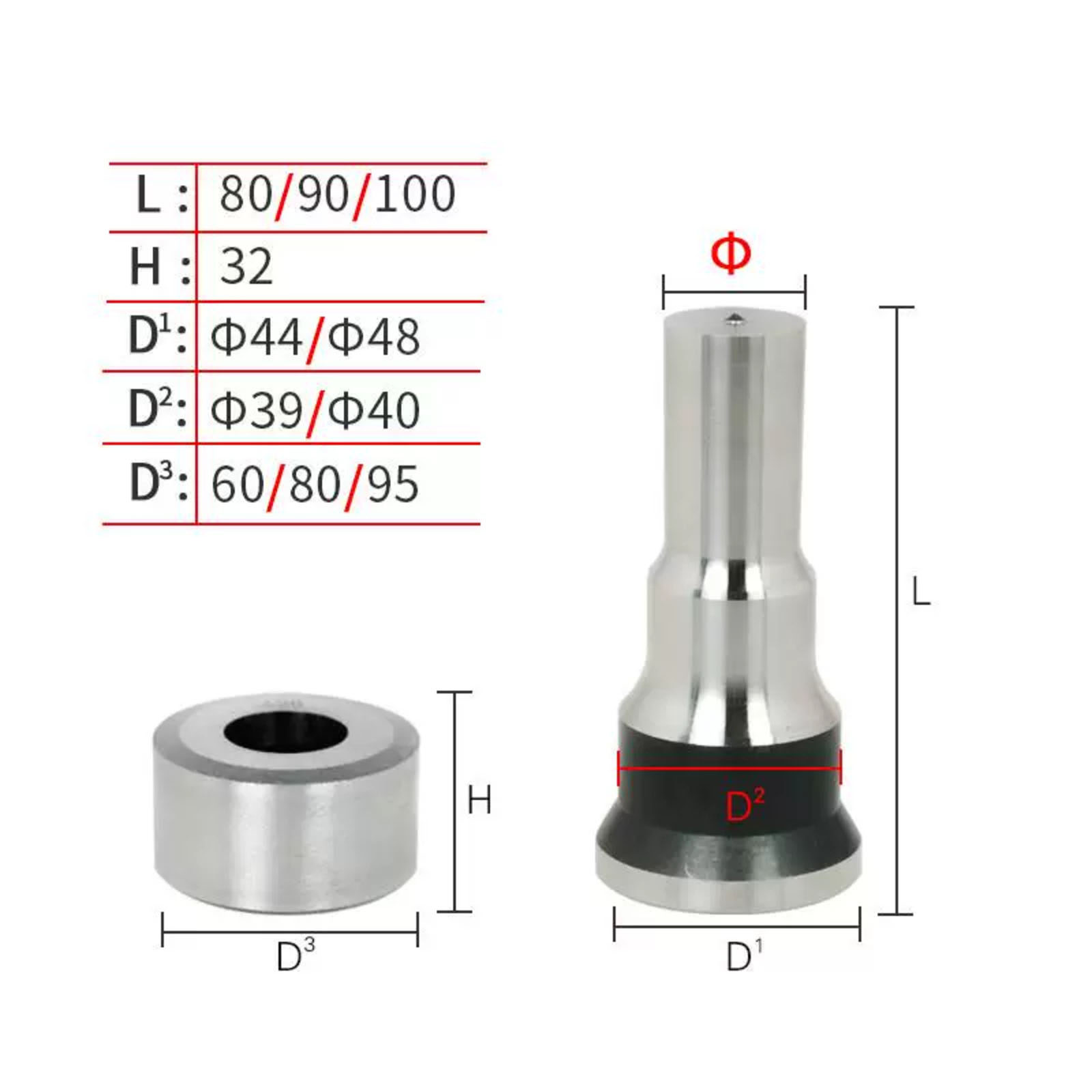
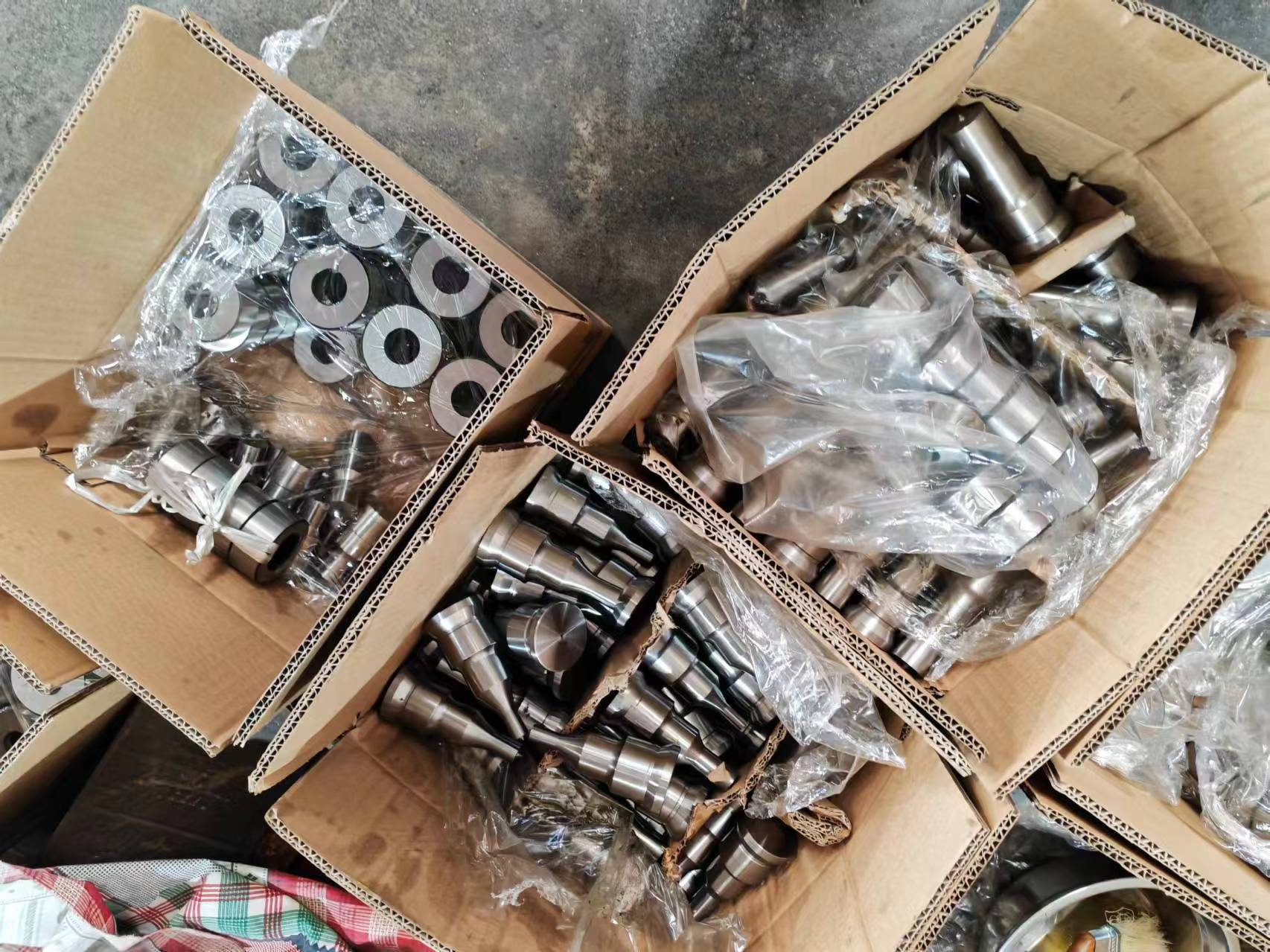
The combined punching and shearing machine molds (die sets) cover a variety of products tailored to the equipment’s functional stations, mainly including punching dies and forming dies. These dies correspond precisely to the punching, bending, and forming stations of the ironworker machine, ensuring seamless integration with the equipment’s operation process.
Featuring precise cavities and high positioning accuracy, our punch and die sets support punching operations of different diameters and shapes, as well as angle steel bending and channel steel forming processes—effectively meeting the diverse processing needs of structural steel fabrication, metal processing, and other industries. Additionally, the dies boast excellent compressive strength and wear resistance, which guarantee stable forming effects, and prevent deformation and chipping even under long-term heavy-duty use.
Punch: Core Execution Component of Punching Stations
As the core execution part of the punching station, the punch is designed to work in perfect conjunction with the die. It can precisely penetrate various metal plates and profiles, delivering clean and accurate punching results every time. Each punch undergoes integrated forging and professional strengthening treatment, resulting in uniform hardness distribution and strong impact resistance. This ensures the punch is not easily broken or worn, maintains precise punching dimensions for a long time, and adapts flexibly to processing requirements of different hole diameters.
How to Extend the Life of Your Ironworker Punch and Dies?
In the structural steel fabrication industry, ironworker punch and dies are essential but frequently worn-out tools. Whether you are punching through 10mm plates or heavy-duty angle iron, the cost of frequent tool replacement can quickly add up. Choosing the right material for your punch and dies and maintaining them properly is the key to maximizing your return on investment (ROI) and reducing operational costs.
Material Matters: 9CrSi, SKD-11 & DC53 Steel (Recommended for Heavy-Duty Performance)
Not all punch and die materials are created equal—selecting the right material directly determines the service life, performance, and cost-effectiveness of your tooling. We focus on high-quality alloy steels that excel in the harsh working environment of ironworker machines, with 9CrSi, SKD-11, and DC53 as our core options, each tailored to specific application scenarios.
9CrSi Steel: Cost-Effective & Reliable for General-Purpose Punching
Chemical Composition & Functions: 9CrSi is a low-alloy cold-work die steel, with key chemical components (mass fraction) including 0.85-0.95% C (carbon, enhances hardness and wear resistance), 0.30-0.60% Si (silicon, improves hardenability and toughness), 0.80-1.10% Cr (chromium, enhances wear resistance and corrosion resistance), and trace amounts of Mn (manganese, refines grains and improves strength). Each component works synergistically to balance hardness and toughness, making it suitable for general-purpose applications.
Performance Characteristics: 9CrSi steel has good hardenability and wear resistance, with a hardness of HRC 58-62 after heat treatment. It is not easy to deform during processing and has moderate impact resistance, making it ideal for punching medium-thickness carbon steel plates, angle irons, and channel steels in general industrial scenarios. It is a cost-effective choice for customers with regular processing needs, balancing performance and budget.
SKD-11 Steel: High Wear Resistance for High-Volume Production
Chemical Composition & Functions: SKD-11 is a high-carbon high-chromium cold-work die steel, with chemical components including 1.40-1.60% C (high carbon content, significantly improves hardness and wear resistance), 11.00-13.00% Cr (high chromium content, forms chromium carbides to enhance wear resistance and corrosion resistance), 0.80-1.10% Mo (molybdenum, improves hardenability and toughness, prevents temper brittleness), and 0.20-0.40% V (vanadium, refines grains and enhances wear resistance). These components make it a high-performance material for high-demand scenarios.
Performance Characteristics: SKD-11 steel has excellent wear resistance, high hardness (HRC 60-64 after heat treatment), and good dimensional stability. It is not easy to wear or chip even under high-volume, continuous punching operations, making it suitable for mass production of thinner metal materials, such as thin steel plates and light profiles. Its strong wear resistance reduces tool replacement frequency, improving production efficiency.
DC53 Steel: Premium Toughness & Wear Resistance for Heavy-Duty Scenarios
Chemical Composition & Functions: DC53 is an upgraded version of SKD-11, a high-performance cold-work die steel with optimized chemical components: 1.00-1.20% C (balances hardness and toughness), 8.00-10.00% Cr (enhances wear resistance and corrosion resistance), 2.00-3.00% Mo (improves hardenability and toughness, reduces internal stress), and 0.15-0.35% V (refines grains, enhances wear resistance and impact resistance). The optimized composition solves the brittleness problem of SKD-11, while maintaining high wear resistance.
Performance Characteristics: DC53 steel combines excellent toughness and wear resistance, with a hardness of HRC 60-64 after heat treatment. It has strong impact resistance, making it not easy to shatter or break under high-tonnage punching impact—perfect for heavy-duty scenarios, such as punching thick steel plates, heavy angle irons, and high-strength steel profiles. It also has good machinability and dimensional stability, ensuring consistent punching accuracy and a longer service life than SKD-11 and 9CrSi.
The Importance of Proper Clearance
One of the most common causes of punch and die failure is improper clearance between the punch and the die. For most carbon steels, a clearance of 10% of the material thickness is the golden rule—too small a clearance will increase friction between the punch and die, leading to excessive wear and burrs; too large a clearance will cause deformation of the punched hole and reduce punching accuracy.
Our CNC-ground punch and die sets ensure perfect alignment and precise clearance, reducing burrs on punched parts, preventing premature wear on both the tooling and the ironworker machine, and effectively extending the service life of your punch and dies.
We offer a comprehensive range of standard and custom ironworker dies, including:
Sometimes standard round or square holes aren’t enough to meet your unique processing needs. We specialize in custom oblong, offset, hex, and other special-shaped punches and dies, tailored to your specific project requirements. By using advanced vacuum heat treatment technology, we ensure our custom tools have a consistent hardness of HRC 58-64 (depending on the material), making them as durable and reliable as our stock punch and die sets.
Our ironworker replacement tooling is precision-engineered to be 100% compatible with leading hydraulic ironworker brands, including Geka, Piranha, Edwards, Kingsland, Sunrise, and Cleveland.
Stop wasting money on low-quality punch and dies that chip or wear out after a few hundred hits. Upgrade to our high-performance ironworker punch and die sets—available in 9CrSi, SKD-11, and DC53 materials—to enjoy superior performance, fewer tool changes, and lower operational costs. Remember, punch and dies are usually purchased as a set (pair) for optimal compatibility and performance.
Contact us today with your ironworker machine model for a compatibility check and get a tailored punch and die solution!
We manufacture industrial-grade Ironworker Punch Dies (Material: 9Crsi, D2, DC53) engineered for hydraulic ironworkers and punching stations. Our tools feature exceptional toughness and precision alignment, optimized for high-speed hole punching in angle iron, flat bar, and heavy plate steel. Available in standard round, oblong, square, and hexagonal shapes, with custom profile manufacturing to fit all major global machine brands.
English: Ironworker Punch Dies | Punch and Die Sets | Metal Hole Punching Tools
French (Français): Matrices de poinçonnage | Jeux de poinçons et matrices | Outils de poinçonnage industriel
Portuguese (Português): Matrizes de puncionamento | Conjuntos de punção e matriz | Ferramentas para puncionadeira
Polish (Polski): Matryce do wykrawarek | Zestawy stempli i matryc | Narzędzia do przebijania otworów
Turkish (Türkçe): Delme Kalıpları | Zımba ve Matris Setleri | Metal Delme Takımları
Vietnamese (Tiếng Việt): Khuôn đột lỗ liên hợp | Bộ chày cối đột dập | Khuôn đột thép hình
Thai (ภาษาไทย): แม่พิมพ์เจาะรูเหล็ก | ชุดพั้นช์และดาย | เครื่องมือเจาะรูอุตสาหกรรม
Filipino: Mga Die sa Pag-punch ng Ironworker | Mga Set ng Punch at Die
Arabic (العربية): قوالب تثقيب حديد التسليح | أطقم السنابك والقوالب | أدوات تثقيب المعادن
Hindi (हिन्दी): आयरनवर्कर पंच डाइज़ | पंच और डाई सेट | मेटल होल पंचिंग टूल्स
Indonesian (Bahasa Indonesia): Matriks Pelubang Logam | Set Punch dan Die | Alat Tekuk dan Lubang
Malay (Bahasa Melayu): Acuan Penebuk Ironworker | Set Penebuk dan Acuan | Alat Penebuk Logam
Dutch (Nederlands): Ponsmatrijzen voor metaal | Pons- en matrijssets | Metaalponsgereedschap
Swedish (Svenska): Stansdynor för järnarbetare | Stansverktygssatser | Dynor till stansmaskin
Hungarian (Magyar): Lyukasztó matricák | Bélyeg és matrica készletek | Fémmegmunkáló szerszámok
Greek (Ελληνικά): Μήτρες διάτρησης μετάλλου | Σετ ζουμπάδων και μητρών | Εργαλεία γκιλοτίνας
Danish (Dansk): Lokkematricer til metal | Stansesæt | Metalstanseværktøj
Norwegian (Norsk): Stansematriser for jernarbeider | Stanseverktøysett | Verktøy for metallstansing
Finnish (Suomi): Lävistysmeistit ja matriisit | Meistisarjat metallintyöstöön | Lävistystyökalut
Czech (Čeština): Razníky a matrice pro děrovačky | Sady střižných nástrojů | Nástroje pro děrování kovů
Romanian (Română): Matrițe de perforare metal | Seturi poansoane și matrițe | Scule de stanțat
Slovak (Slovenčina): Razníky a matrice pre dierovačky | Sady nástrojov na dierovanie | Nástroje na dierovanie kovu
Bulgarian (Български): Щанци и матрици за пробиване | Комплекти за пробиване на метал
Croatian (Hrvatski): Matrice za probijanje metala | Setovi probojaca i matrica | Alat za probijanje čelika
Ukrainian (Українська): Пуансони та матриці для металу | Набори для пробивання отворів
Azerbaijani (Azərbaycan dili): Metal deşmə qəlibləri | Puns və matris dəstləri | Kəsici bıçaqlar
Bengali (বাংলা): আয়রনওয়ার্কার পাঞ্চ ডাইস | পাঞ্চ এবং ডাই সেট | মেটাল পাঞ্চিং সরঞ্জাম
Tamil (தமிழ்): அயர்ன்வொர்க்கர் பஞ்ச் டைஸ் | பஞ்ச் மற்றும் டை செட்கள் | கட்டிங் கருவிகள்
Persian (فارسی): قالب های پانچ آهن | ست های سنبه و ماتریس | ابزار سوراخکاری فلز
Hebrew (עברית): מבלטים לניקוב פלדה | סטים של פאנץ' ומטריצה | כלי ניקוב תעשייתיים
Afrikaans: Ponse en matryse vir ponsmasjiene | Ponsgereedskap stelle | Metaalponswerktuie