86-15852949220      mt@alasmachinery.com
NANJING ALAS INTERNATIONAL CO., LTD
You are here: Home » Products » Ironworker Tooling & Replacement Blades » Ironworker Blades, Punches and Shear Knives: Heavy-Duty Replacement Tooling

Product Category

Contact Us

loading

Share to:
sharethis sharing button

Ironworker Blades, Punches and Shear Knives: Heavy-Duty Replacement Tooling

Maximize your fabrication efficiency with our complete line of industrial ironworker blades, punches, and shear knives. Crafted from premium cold-work tool steels (D2, SKD-11, DC53), our wear parts are engineered to deliver clean, burr-free cuts under massive shock loads. Fully compatible with Q35Y series and major international hydraulic ironworkers, we offer both ready-to-ship standard sets and tailor-made custom tooling solutions to eliminate workshop downtime.
  • ALAS

  • Nanjing, China

  • T/T, Money Gram

  • 2

  • Wooden Crate Packaging

Availability:
Quantity:

Ironworker Blades, Punches & Dies: Material Performance, Selection & Total Cost of Ownership

ALAS Machinery (Nanjing Alas) manufactures ironworker punches, dies, and shear blades from certified cold‑work tool steels – 9CrSi, Cr12MoV (D2/SKD‑11), DC53, and H13. Adopting computer‑controlled vacuum heat treatment, our products achieve stable and uniform hardness: HRC 58‑62 for Cr12MoV and SKD‑11, HRC 60‑62 for DC53 (optimised for balanced toughness and wear resistance), and HRC 50‑56 for H13 (calibrated for maximum impact fracture resistance in cold shearing). Supported by CNC grinding with ±0.01 mm high precision tolerance, all parts feature OEM‑grade drop‑in fit, compatible with Q35Y series machines and all major international brands including Geka, Ficep, Kingsland, Mubea, and Sunrise.

What Are Ironworker Replacement Parts & Why Material Choice Matters

Ironworker replacement parts mainly refer to punches, dies, and shear blades, which are applied for cold shearing and punching of angle steel, flat steel, round steel, channel steel, and square steel. These core components bear high shear impact, edge extrusion, and repeated friction during long-term operation. Their raw material, heat treatment process, and machining precision directly determine cutting efficiency, workpiece finished quality, and overall service life of processing equipment.
Low‑grade replacement parts bring far higher hidden costs than their purchase price: poor fitting accuracy increases hydraulic pressure and causes severe motor wear; soft blade materials get dull or chipped rapidly, leading to frequent equipment shutdowns; substandard steel products may shatter under high tonnage, posing serious safety hazards to operators. All ALAS Machinery products are equipped with official material certificates for full production traceability.

Material Performance & Service Life Comparison Guide

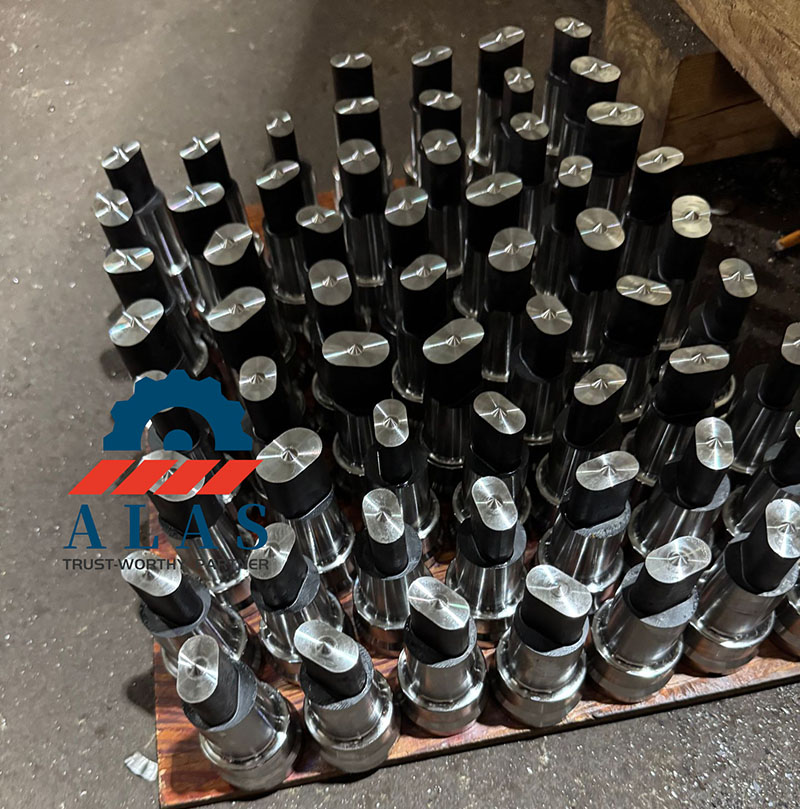
A large batch of machined oblong ironworker punches organized on the factory floor

The following data is sourced from actual workshop production, showing the real service life of different tool steel materials for punching and shearing operations:
Material Grade
Hardness (HRC)
Punching Life (strokes)
Shearing Life (strokes)
Primary Applications
Toughness vs. SKD‑11
9CrSi (Economy)
52‑55
10,000 – 30,000
5,000 – 15,000
Light intermittent processing, sheet metal <5 mm, low‑frequency use in small maintenance shops
Baseline
Cr12MoV (D2/SKD‑11) – Industrial Standard
58‑62
80,000 – 150,000
40,000 – 80,000 (blades regrindable 3‑5×)
Medium‑heavy, high‑frequency continuous punching/shearing; structural steel fab shops – the choice for 90% of global industrial buyers
Moderate
DC53 (Upgraded D2) – Premium Heavy‑Load
60‑62
200,000 – 350,000
100,000 – 180,000 (maximum wear resistance)
High‑precision, high‑volume heavy‑load production; stainless steel, high‑strength alloys, large profiles under clean to moderate working conditions
2× SKD‑11 (superior chipping resistance under shock loads)

Key Takeaways

  • Cr12MoV delivers the optimal balance of cost, wear resistance, and impact toughness, suitable for 90% of industrial processing scenarios.

  • DC53 (HRC 60‑62) features double the toughness of SKD‑11 while retaining exceptional high hardness and wear resistance, effectively avoiding edge chipping and delivering stable performance during high‑tonnage punching of stainless steel and high‑strength alloys.

  • 9CrSi is only applicable for extremely light and intermittent work. Its low hardness and toughness lead to rapid wear and higher per‑cut comprehensive cost.

Punch & Die Material Selection Guide

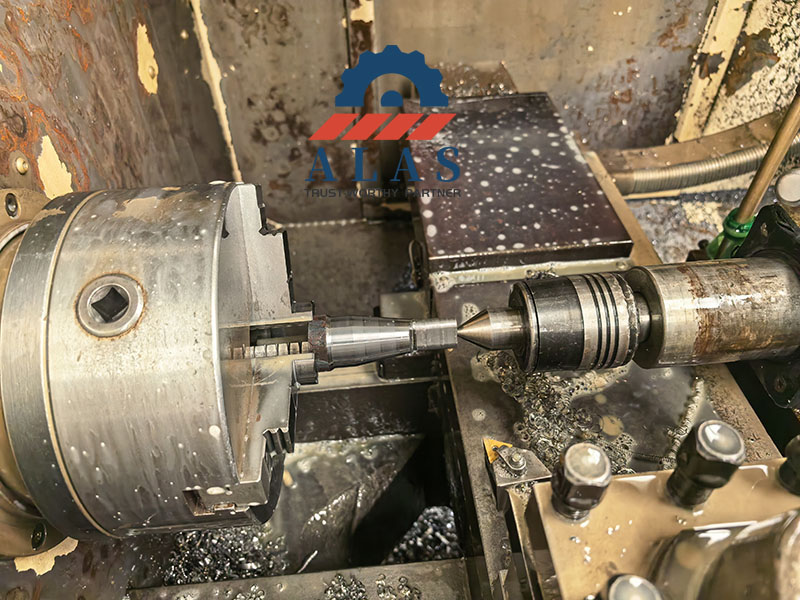
CNC lathe machining a premium alloy steel punch for hydraulic ironworker machines

Material selection is determined by actual workload, workpiece material hardness, and monthly production volume:
  • Angle steel (leg width 30‑200 mm): Cr12MoV (standard) / DC53 (high‑strength material or high‑volume production)

  • Flat steel (thickness ≤20 mm): Cr12MoV

  • Round steel (diameter ≤25 mm): Cr12MoV

  • Stainless steel, high‑strength alloys, or monthly output >200,000 strokes: DC53

ALAS Machinery supports custom heat‑treatment profiles to adjust the balance of hardness and toughness, matching your specific workpiece alloy and machine tonnage requirements.

Shear Blade Material Selection Guide

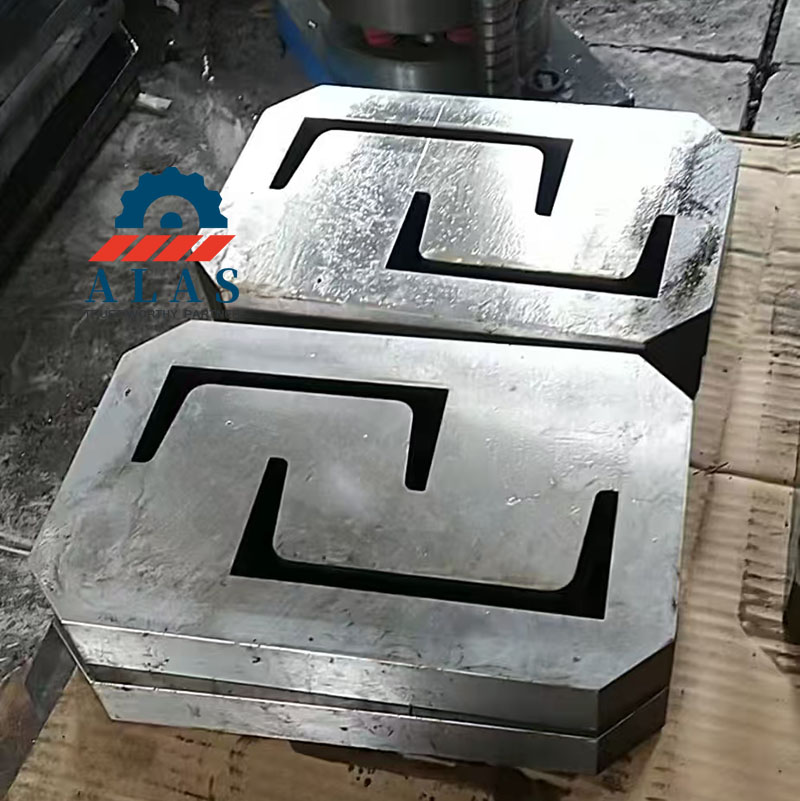
Custom channel steel section shear blades for hydraulic ironworker machines

Shear blades endure instantaneous, high-tonnage impacts during operation, requiring significantly higher shock-absorbing toughness than punches. To maximize efficiency, choose the optimal alloy steel tailored to your specific workshop conditions:
Material
Hardness (HRC)
Shearing Life (strokes)
Application Scenarios
Core Advantage
9CrSi (Economy)
52‑55
5,000 – 15,000
Light, intermittent shearing of thin sheet (<5 mm) and low‑strength steel; infrequent maintenance shop use
Cost‑effective for low‑demand casual processing
SKD‑11 / Cr12MoV (Industrial Standard)
58‑62
40,000 – 80,000 (regrindable 3‑5×)
Medium‑heavy continuous shearing: flat bars ≤20 mm, angle/channel steel ≤200 mm flange width
Balanced wear resistance and toughness, stable edge retention for 90% standard production
DC53 (Premium Heavy‑Load)
60‑62
100,000 – 180,000
High‑volume, high‑precision shearing; stainless steel, high‑strength alloy steel and thick clean profiles
2× toughness of SKD‑11, ultra‑wear‑resistant, anti‑chipping, ideal for long‑term high‑tonnage heavy production
H13 (High‑Toughness Anti‑Fracture)
50-56
30,000 – 60,000 (regrindable 2‑3×)
Harsh dirty working conditions: large profiles, high‑strength steel, workpieces with weld slag, rust and thick scale
Extreme impact toughness, effectively prevents blade cracking and fracture under severe shock loads
TECHNICAL NOTE: Each blade material features targeted performance for differentiated scenarios. 9CrSi serves entry-level light-duty use; SKD-11/Cr12MoV is the universal industrial standard; DC53 excels at high-volume, high-precision clean material processing; H13 is uniquely optimized for anti-fracture performance in slag-rich, high-impact harsh conditions with slightly lower abrasion resistance on clean steel. Furthermore, all ALAS flat-bar knives adopt a 4-way rotatable usable edge design. By utilizing all four edges and performing timely regrinds, a single set of our premium SKD-11 blades can achieve a cumulative service life of 160,000 to 400,000 total strokes, drastically maximizing overall service life and reducing your workshop's unplanned downtime.

Blade Clearance Standard & Performance Impact

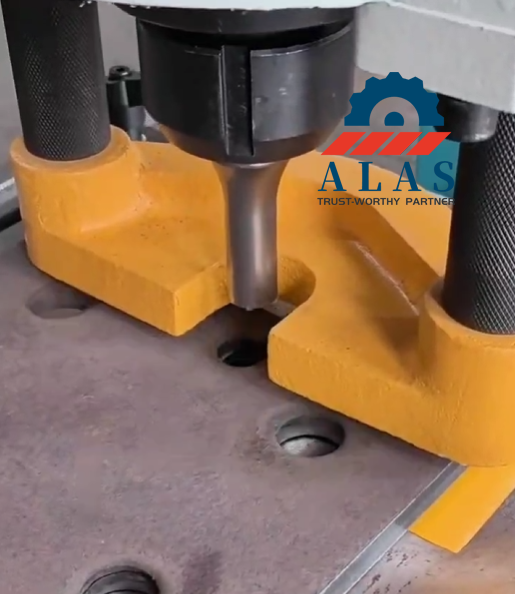
Hydraulic ironworker machine punching clean, burr-free holes in a thick steel plate

Blade clearance is the core parameter determining cutting quality and tool service life, which is adjusted according to workpiece material thickness rather than machine tonnage.

Industry Standard Clearance Rule

  • Mild steel: 5–10% of material thickness (t)

  • Premium steel / Stainless steel: 8–12% of material thickness (t)

  • For burr‑free cutting, prioritize the mid‑to‑lower value of the recommended range

Material Thickness (t)
Standard Mild Steel Clearance ((5%–10%)·t)
Premium / Stainless Clearance ((8%–12%)·t)
6 mm
0.30 – 0.60 mm
0.48 – 0.72 mm
12 mm
0.60 – 1.20 mm
0.96 – 1.44 mm
20 mm
1.00 – 2.00 mm
1.60 – 2.40 mm

Clearance Error Impact

  • Excessively large clearance: Causes workpiece burrs, requiring secondary deburring processing

  • Excessively small clearance: Increases machine operating load, leads to premature tool edge wear

ALAS Machinery recommends checking blade clearance daily with a feeler gauge before equipment startup and adjusting parameters according to actual workpiece thickness.

How Vacuum Heat Treatment Extends Tool Life

Heat treatment determines the internal microstructure and comprehensive performance of tool steel. ALAS Machinery adopts computer‑controlled vacuum quenching + 500–530°C high‑temperature tempering process to realize secondary hardening, which is the key to optimizing carbide precipitation and retained austenite transformation for Cr12MoV and DC53 materials. This precise process stably locks in our standardized hardness grades: HRC 58‑62 for Cr12MoV/SKD‑11, HRC 60‑62 for DC53, and HRC 50‑56 for H13, ensuring consistent mechanical properties for cold shearing and punching.
  • Uniform hardness: Eliminates the surface‑to‑core hardness gradient defect of traditional salt‑bath quenching

  • Complete stress relief: Reduces internal micro‑cracks and significantly improves impact resistance

  • Stable fine microstructure: Ensures stable HRC hardness and maximum toughness of finished products

ALAS Core Advantage: Vacuum‑treated DC53 (HRC 60‑62) achieves 2 times the toughness of SKD‑11 while maintaining ultra‑high hardness and wear resistance, greatly reducing edge chipping under repeated shock loads, perfectly adapting to high‑tonnage hydraulic ironworker high‑volume production conditions.

Total Cost of Ownership (TCO) Analysis

The initial purchase price of tooling only accounts for 5‑15% of the total ownership cost. The core hidden costs come from the following aspects:
  • Production downtime: A single unplanned tool replacement causes 4.5 hours of production suspension plus workpiece scrap loss

  • Frequent replacement: Low‑grade parts need to be replaced 3‑5 times more frequently than high‑quality industrial parts

  • Secondary processing cost: Burrs generated by inferior tools increase manual grinding and deburring labor costs

  • Equipment loss: Mismatched inferior tools increase hydraulic system load and shorten equipment service life

TCO Comparison (Based on 100,000 Cuts)

  • 9CrSi punches: 3‑4 sets required, high labor and downtime costs

  • Cr12MoV punches: 1 set sufficient (80k‑150k strokes), low per‑cut comprehensive cost

  • DC53 punches: 1 set sufficient (200k‑350k strokes), the lowest per‑cut cost for heavy‑load & high‑volume production

DC53 tooling can reduce per‑cut tool cost by 40‑60% compared with economy‑grade materials, while eliminating frequent tool replacement downtime.

Machine Brand Compatibility

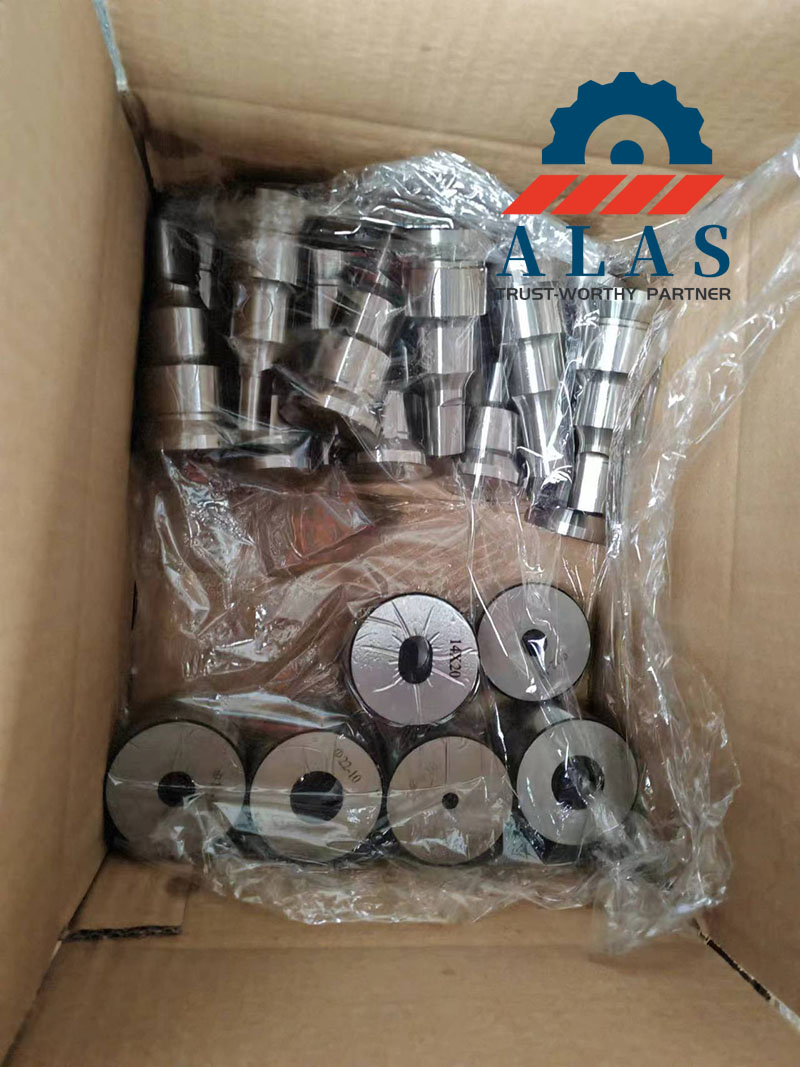
Standard and oblong ironworker punches and dies packed for shipping

All ALAS Machinery parts are CNC‑machined strictly in accordance with OEM original specifications, supporting direct drop‑in installation. Compatible with mainstream global brands and models:
Geka, Ficep, Kingsland, Mubea, Sunrise, Peddinghaus, Edwards, Piranha, Spartan, Q35Y series (Q35Y‑16/20/25/30)
Important Note: Tool parts are not universal across different brands. Please confirm the original part number before ordering. Our engineering team provides professional compatibility verification services.

Tool Life Extension Maintenance Guide

Daily 5‑minute Maintenance

  • Lubrication: Oil punches & dies every 5‑10 punching holes, lubricate shear blades every 10‑15 cutting operations

  • Cleaning: Remove metal chips and debris in the shearing and punching area in time

  • Parameter inspection: Check blade clearance with a feeler gauge daily and adjust according to workpiece thickness

Standard Operating Rules

  • Do not exceed the rated tonnage of the machine, and match tool specifications with workpiece profile

  • Clean weld slag, scale and rust on workpieces before processing

  • Ensure accurate tool installation; misalignment is the leading cause of punch damage

ALAS Machinery provides on‑site usage guidance and professional tool regrinding suggestions to maximize your tool service life.

FAQ

Q1: What critical ironworker wear parts does ALAS Machinery supply?

A: We specialize in full‑spec high‑precision ironworker consumables, including punches, dies, multi‑spec shear blades, notching blades, strippers, and customized tooling accessories tailored to diverse industrial processing needs.

Q2: How to select the right material for different working conditions?

A: 9CrSi for light, intermittent daily maintenance work; Cr12MoV for conventional medium‑heavy continuous processing; DC53 for high‑volume, high‑precision heavy‑load production of stainless steel and high‑strength alloys with clean workpieces; H13 exclusively for harsh working conditions with heavy slag, thick scale, severe impact shock and high breakage risk.

Q3: What are the common wearing parts of a hydraulic ironworker?

A: The most frequently replaced vulnerable components include punching punches & dies, flat/angle shear blades, notching blades, and material strippers. These core wear parts directly determine cutting accuracy, surface finish and continuous production stability.

Q4: How to identify worn blades or tooling?

A: Typical signs of tool wear include visible burrs on cut workpieces, uneven cutting edges, edge chipping or micro cracks, abnormal machine operating noise, and reduced punching/shearing speed.

Q5: What is the correct blade clearance setting?

A: Set clearance at 5–10% of workpiece material thickness for mild steel, and 8–12% for stainless steel and high‑strength alloy grades. Always start from the mid‑to‑lower range to achieve burr‑free cutting. Verify and adjust clearance daily with a feeler gauge before production.

Q6: What are the main causes of punch damage?

A: Punch failure is mainly caused by incorrect installation & misalignment, machine overloading beyond rated tonnage, processing ultra‑hard workpieces or residual slag, and insufficient tool lubrication during continuous operation.

Q7: Are ALAS parts universal for different ironworker brands?

A: Most ironworker tooling is brand‑specific and non‑interchangeable. We strictly follow OEM original dimensions. Please confirm your original part number before ordering for accurate compatibility.

Q8: How to properly store spare tool parts?

A: Store spare punches, dies and blades in a dry, clean and dust‑free environment. Coat metal surfaces with anti‑rust oil regularly and classify storage to avoid collision damage and corrosion.

Q9: What is your product delivery lead time?

A: Standard in‑stock tooling ships within 1–3 working days. Custom non‑standard punches, dies and blades require 10–21 working days for production and delivery.

Q10: What is the actual total service life of Cr12MoV shear blades?

A: Our Cr12MoV shear blades support 3–5 professional regrinds. Combined with the 4‑way rotatable usable edge design, one set of blades delivers a practical cumulative service life of 160,000 to 400,000 strokes under standard structural steel processing, balancing high durability and low operating costs.

Q11: What practical methods extend ironworker tool life?

A: Key practices include daily inspection and systematic lubrication, strict adherence to standard operating procedures, regular blade clearance calibration, and timely removal of metal scraps and workpiece impurities during production.

Contact Us

Contact ALAS Machinery (Nanjing Alas) to get a customized product catalogue matching your ironworker model, or consult us for custom blueprint processing services. Our professional engineering team provides fast B2B quotation and one‑stop technical selection support, helping you reduce production costs and maintain efficient operation of processing lines.

Ultimate Ironworker Performance Demo: Heavy-Duty Punching & Shearing


ALAS Machinery Field-Test Video: Ultimate Ironworker Restorations

This industrial field-test video demonstrates professional-grade replacement wear parts from ALAS Machinery running continuous, high-volume punching, shearing, and notching operations under high-tonnage hydraulic working loads.

Core Video Highlights

  • Precision Punching Operations: Equipped with premium upper punches and perfectly aligned concentric dies (as shown in the first clip), our tooling pierces thick structural steel stably with zero clearance drift. This heavy-duty design effectively avoids premature tool chipping and extends single-edge service life.

  • Plate & Flat-Bar Shearing: Features industrial flat bar cropping knives engineered with a 4-way rotatable cutting edge design. This cost-saving structure quadruples the overall blade service life and significantly reduces workshop regrinding frequency.

  • Multi-Profile Section Shearing: Fitted with customized cropping blades featuring specialized V-shaped and diamond geometric profiles (demonstrated in the section-cutting clip). It shears heavy structural angle iron and channel bars cleanly from the apex downward, completely eliminating cross-sectional deformation or ragged edges after processing.

Material Metallurgy & Hardness Specifications

To guarantee high performance, all ALAS ironworker tooling undergoes computer-controlled vacuum heat treatment, followed by a precise high-temperature secondary hardening process at 500 to 530 degrees Celsius. This eliminates surface-to-core hardness gradients and delivers uniform through-hardness. We offer graded material options tailored to your specific workshop environments:
  • SKD-11 / Cr12MoV (Universal Industrial Standard): Hardness HRC 58-62. Delivers an industry-proven balance of wear resistance and structural toughness, ideal for 90% of conventional structural steel fabrication scenarios.

  • DC53 (Premium Heavy-Load Grade): Hardness HRC 60-62. Boasts 2 times the impact toughness of standard SKD-11/D2, providing maximum resistance to edge chipping and preventing punch fracture under continuous high-tonnage loads.

  • H13 (High-Toughness Anti-Fracture Grade): Hardness HRC 48-52. Specifically calibrated for extreme shock absorption and shatter resistance. Optimized exclusively for cutting large structural profiles or messy workpieces covered in heavy weld slag, thick rust, or abrasive scale.

OEM-Grade Direct Replacement Compatibility

Every component is CNC-machined with a strict dimensional tolerance of +/-0.01 mm, enabling a seamless, drop-in installation without secondary modifications. We achieve 100% mechanical compatibility with mainstream hydraulic ironworker equipment worldwide:
  • Domestic Standard Series: Fully matches Q35Y-16, Q35Y-20, Q35Y-25, and Q35Y-30 hydraulic ironworkers.

  • Global Mainstream Brands: Direct OEM replacements for Geka, Sunrise, Kingsland, Ficep, Mubea, Peddinghaus, Piranha, and Edwards.

Switch to ALAS vacuum-heat-treated tool steels to cut your tooling replacement frequency, eliminate unplanned machine downtime, and minimize your comprehensive cost per cut.


Contact the ALAS Machinery engineering desk today to obtain official product catalogs, request custom blueprint manufacturing, or verify your equipment model compatibility.


Previous: 
Next: 
200
Phone:
86-15852949220
Address:
Jiangning District, Nanjing
About Us

Nanjing Alas International Co., Ltd. is a professional industrial tooling manufacturer focused on shear blades, bending dies, shredder blades, and custom wear parts. We offer full application engineering, material selection, setup guidance, and after-sales support to global customers.
Tell us your requirements, and our engineering team will provide professional solutions for blade specification, tool life optimization, and cost-effective production.

Subscribe
Sign up for our newsletter to receive the latest news.
Copyright © 2021-2026 NANJING ALAS INTERNATIONAL CO., LTD            苏ICP备2021025144号