86-15852949220      mt@alasmachinery.com
NANJING ALAS INTERNATIONAL CO., LTD
You are here: Home » Products » Crusher Blade & Chipper blade & Shredder blade » Industrial Shredder Blades for Single & Double Shaft Shredders

Product Category

Contact Us

loading

Share to:
sharethis sharing button

Industrial Shredder Blades for Single & Double Shaft Shredders

Industrial Shredder Blades
Premium Material: Processed with high-grade alloy steel and precision vacuum heat treatment for maximum wear resistance.
Cost-Efficient: Engineered for long-term durability; each blade supports up to 4 regrinds, cutting replacement costs by over 50%.
Universal Compatibility: Custom CNC solutions tailored perfectly for all major brands of single and double shaft shredders.
High Adaptability: Easily shreds tough materials including steel-wire waste tires, e-waste, mixed metals, and municipal waste.
  • ALAS

  • Nanjing, China

  • L/C, T/T, Paypal, Money Gram

  • 10

  • Wooden Crate Packaging

Availability:
Quantity:

ALAS Industrial Shredder Blades & Custom Tools | Complete Solutions for Single and Double Shaft Shredders

ALAS supplies high-performance industrial shredder blades and custom cutting tools, compatible with all single and double shaft shredder models. As the key cutting part of the machine, blade quality directly affects shredding performance, finished output and overall equipment lifespan. Choose ALAS, and you will achieve stable, efficient production as well as long-term economic benefits.

Core Advantages

Less downtime: Blades are forged from premium alloy steel and processed with precise heat treatment to avoid unexpected breakdowns. Lower running costs: Each blade can be reground up to four times, cutting replacement frequency by more than 50%. Higher working efficiency: The optimized cutting edge design reduces power consumption by 15% to 30% compared with standard blades. Versatile for diverse materials: We deliver tailored solutions for steel wire tires, mixed metal scraps, electronic waste, household waste and other materials. Quick-change modular structure for double shaft shredders: Only damaged parts need to be replaced, slashing maintenance time by 60%.

1. Blade Material & Performance Chart

Steel Grade Hardness Wear Resistance Toughness (Impact Resistance) Machining & Quenching Properties Application Scenarios ALAS Recommended Model
H13 HRC 48–52 Medium ★★★★★ Excellent Works steadily under high temperatures and features strong hardenability Heavy impact jobs: steel wire tires, mixed metal, automotive shells, thick steel plates ALAS‑H13 Heavy Duty
DC53 HRC 62–63(Tempered at 520-530℃) Excellent. Fine and even carbide grains deliver better wear resistance than D2 and SKD11 ★★★★★ Excellent. Resistance to edge chipping is twice that of SKD11 Low retained austenite after high-temperature tempering, minor residual stress after wire cutting, reliable dimensional stability Mixed waste, PVC, rubber, light metal and steel wire tires. Ideal for jobs requiring both toughness and wear resistance ALAS‑DC53 All-Round
D2 HRC 58–62 Good. Rich carbide grains ensure solid wear resistance, while toughness is limited ★★☆☆☆ Average. Large carbide grains may lead to brittle fracture Minimal deformation after quenching, relatively hard to machine Filled hard plastics and regular hard materials for low-impact, wear-focused working conditions ALAS‑D2 Precision Plastic Blade
SKD‑11 HRC 58–61 Fair. Even internal structure, slightly less wear-resistant than D2 ★★★☆☆ Moderate. Tougher than D2 but still prone to brittleness Easy to machine and maintains stable dimensions after heat treatment Medium hard steel scraps, copper, aluminum and steel wire tires for continuous production under medium impact ALAS‑SKD11 Wear-Resistant Economy Series
ZGMn13 High Manganese Steel ≥HRC 45 (Work-hardened) Good. Surface hardens quickly under impact ★★★★☆ Very Good Requires solution treatment after forging and casting, difficult to machine Household waste, construction waste and stone-mixed materials under heavy impact ALAS‑Mn13 Waste Disposal Series
9CrSi HRC 58–62 Medium ★★★☆☆ Moderate Good hardenability and easy to grind Rubber, waste paper, fiber and other soft materials. Cost-effective option ALAS‑9CrSi Soft Material Blade
YG8 Tungsten Carbide Insert ≥HRA 89 Ultra wear-resistant. Service life is 5 to 7 times longer than regular steel ★★★☆☆ Moderate Can only be processed via EDM and diamond grinding, not conventional cutting 24/7 heavy-duty and high-wear working conditions. Premium choice for long-term use ALAS‑YG8 Ultra Wear-Resistant Series
On-site test results: DC53 outperforms D2 and SKD11 in overall wear resistance. When shredding stone-contained plastics, YG8 tungsten carbide insert blades last 5 to 7 times longer than standard D2 blades.

2. Frequently Asked Questions

1. What materials are used for ALAS shredder blades?

Blade Steel Grade Hardness Performance & Application
D2 HRC 58-62 Solid wear resistance with average toughness. Suitable for pure hard plastics and low-impact materials.
DC53 (tempered) HRC 62-63 Great toughness and wear resistance. Edge chipping resistance is twice that of SKD11. Widely used for waste tires, electronic waste, copper wires and various mixed scraps.
SKD11 / Cr12MoV HRC 58-61 Balanced performance and good value for money. Fits wood, hard plastics and metal scraps under medium impact.
H13 HRC 48-52 Strong impact and fatigue resistance. A heavy-duty material for mixed metal, automotive shells, thick steel plates and whole waste tires under severe impact.
ZGMn13 High Manganese Steel ≥HRC 45 (Work-hardened) Features work-hardening property. Perfect for household and construction waste mixed with stones under heavy impact.
9CrSi / 42CrMo HRC 58-62 Budget steel grade for intermittent light-duty processing of rubber, paper and fiber materials.
YG8 Tungsten Carbide Insert HRA≥89 Extremely hard and wear-resistant, 5 to 7 times the service life of common alloy steel. Ideal for 24-hour continuous processing of highly abrasive stone-mixed materials.

2. How to choose the right blade material?

There is no single material that suits all applications. You can make your choice according to processed materials, impact load and daily running hours.
  • DC53 (All-Round Grade): Works well for most working scenarios. Resists cracking and chipping with balanced toughness and wear resistance.

  • D2 / Cr12MoV / SKD11: Cost-effective options for pure plastics, wood and light mixed scraps.

  • H13 (Heavy Duty Grade): Designed for thick metal, auto parts and whole waste tires under heavy impact.

  • YG8 Tungsten Carbide Insert: First pick for highly abrasive, stone-mixed materials with the longest service life.

  • 9CrSi / 42CrMo: Budget choice for intermittent light-duty production.

Note: Blades with excessive hardness have poor toughness and may break under strong impact.

3. Quick Material Selection Guide by Processed Material

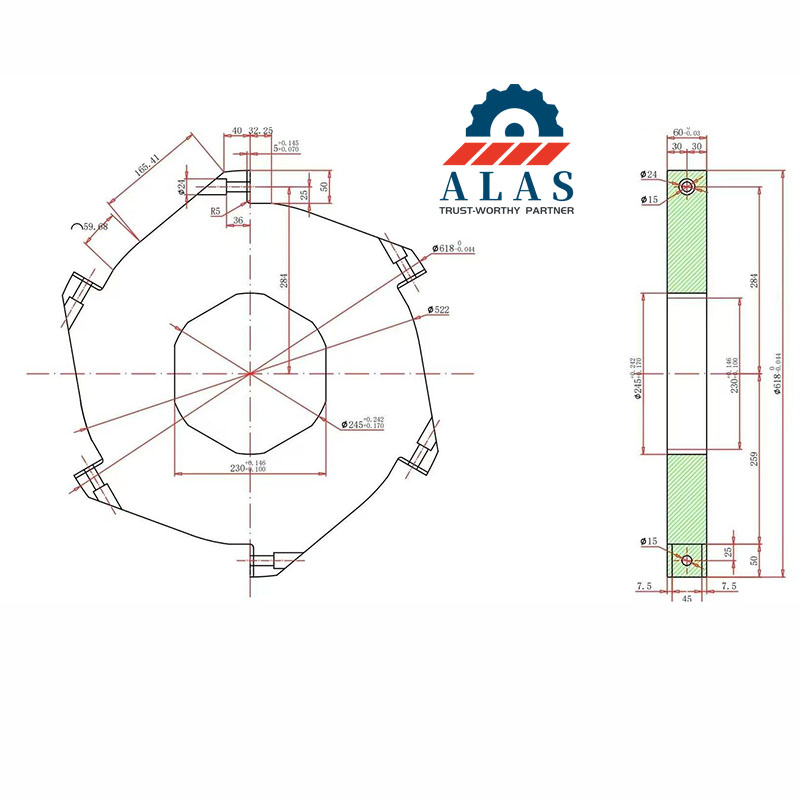
Technical engineering drawing of ALAS industrial double shaft shredder blade with 618mm outer diameter and octagonal inner bore specification

  • Plastics & wood: Cr12MoV / D2

  • Waste tires & elastic materials: DC53 as priority, H13 as alternative

  • Stone-mixed materials: High manganese steel / YG8 tungsten carbide blades

  • Heavy industrial metal scraps & automotive shells: ALAS-H13 forged blades

  • Household waste & construction waste: ZGMn13 high manganese steel

  • Electronic waste (circuit boards): SKD11 / DC53 double shaft fine-tooth blades

4. What is the standard service life of ALAS shredder blades?

Calculated based on 8 to 12 hours of daily operation with proper blade gaps and feeding work:
  • Economy grade steel (9CrSi/42CrMo): 10-30 days

  • Mid-to-high end alloy steel (D2/SKD11/DC53): 40-120 days

  • H13 heavy-duty forged blades (for metal and tire processing): 90-180 days

  • YG8 tungsten carbide insert blades: 6-12 months of continuous use

The actual service life is affected by steel type, impurity content in raw materials, blade gaps and equipment overload frequency.

5. When to sharpen or replace shredder blades?

Sharpen blades in time: Uneven output particle size, excessive powder output, reduced shredding speed, frequent material jams and abnormal current fluctuation. Replace blades directly: Blades with cracks or chipped edges, or blades reaching the maximum grinding limit. ALAS alloy steel blades can be reground up to four times.

6. What causes blade edge chipping and breakage?

  1. Hard foreign substances such as bolts, nails, iron blocks and stones mixed in raw materials.

  2. Selected blade material does not match actual impact conditions.

  3. Unqualified heat treatment and cryogenic treatment reduce blade toughness.

  4. Improper blade gap setting and long-term overfeeding.

Solutions: Install a metal detector at the feeding inlet. Choose ALAS blades matching your working conditions and set blade gaps strictly as required.

7. Recommended blade sharpening cycle

  • Light-duty processing (plastics/wood): Sharpen every 20 to 40 working hours

  • Medium-duty processing (waste tires / mixed household waste): Sharpen every 10 to 20 working hours

  • Heavy-duty processing (metal / highly abrasive materials): Sharpen every 5 to 10 working hours

It is advised to prepare spare blades to avoid production halt during maintenance.

8. Standard installation gaps for single and double shaft shredder blades

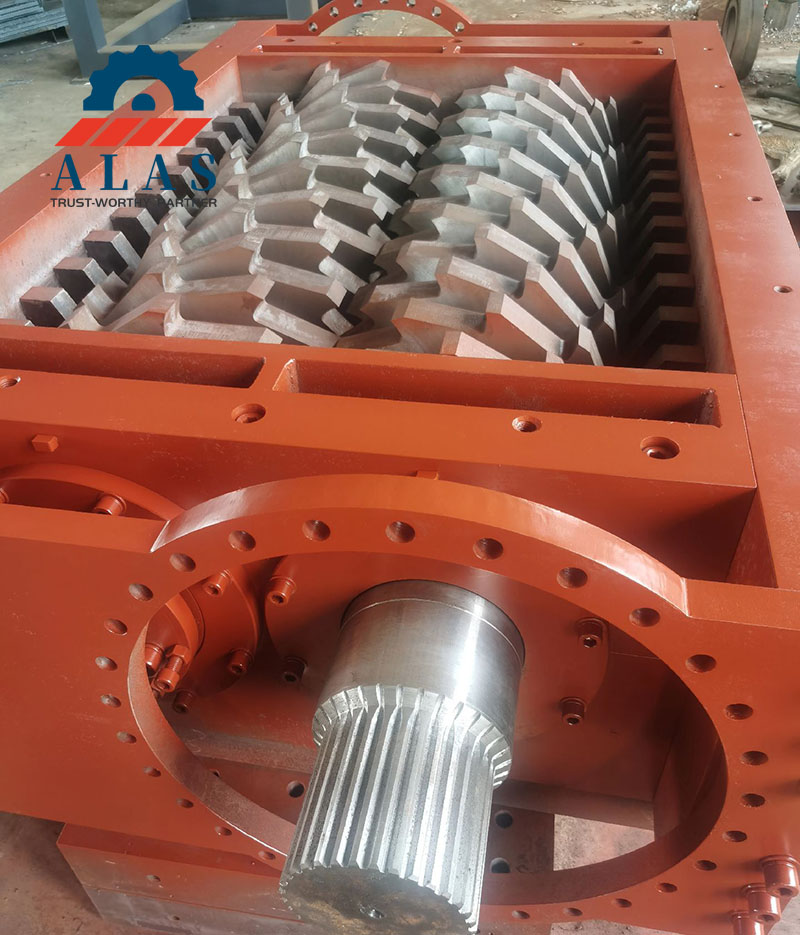
industrial-shredder-replacement-knives-manufacturedindustrial-two-shaft-shredder-box-interior-view

Single Shaft Shredder

  • Plastics & wood: 0.1-0.3 mm

  • Waste tires and other elastic materials: 0.3-0.5 mm

Double Shaft Shredder

  • General plastics: 0.2-0.5 mm

  • Mixed metal scraps: 0.5-1.0 mm

Tips: Too narrow gaps will lead to blade overheating and accelerated wear. Too wide gaps will weaken cutting performance. Calibrate blade gaps every week. ALAS blades are finished within a grinding tolerance of ±0.01 mm to ensure precise gaps and even output.

9. Structural differences between single shaft and double shaft blades

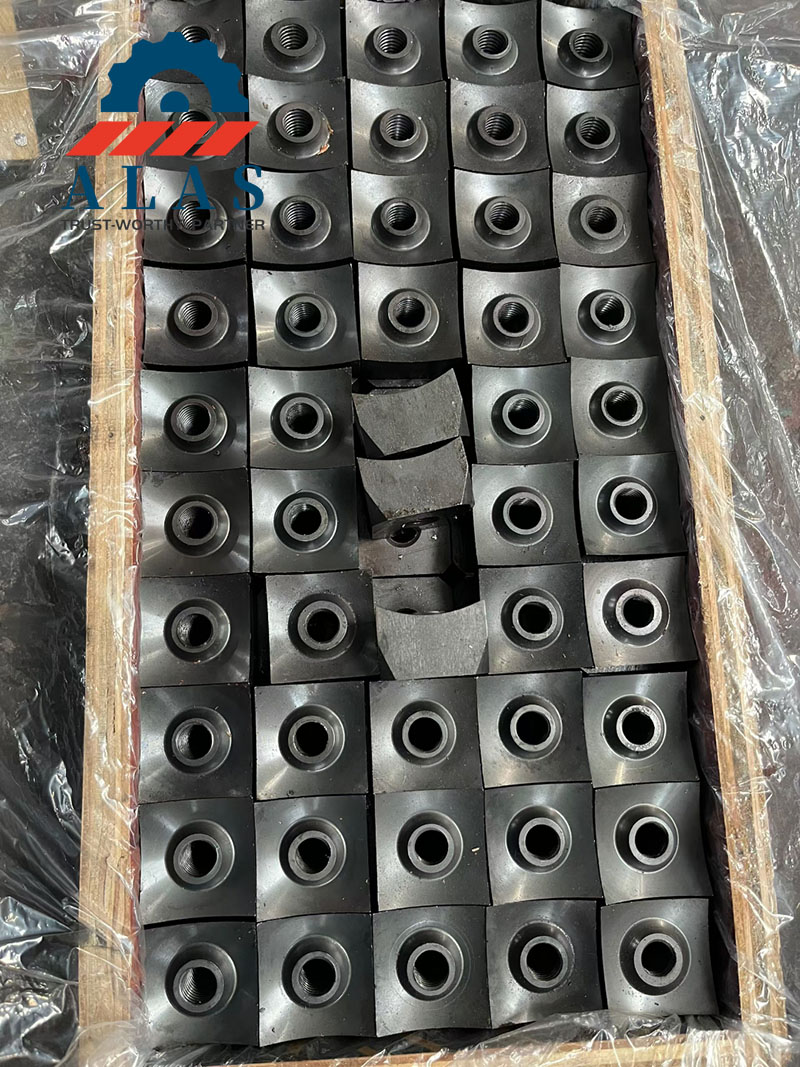
Heavy-duty single shaft shredder rotor assembly branded by ALAS, featuring precision-machined rotary shaft and square blade holdersPremium quality square single shaft shredder cutting inserts packed in a wooden crate by ALAS

  • Single shaft blades: Square one-piece structure with four usable cutting edges, mainly used for fine shredding of light materials. Common sizes: 35×35×25mm / 40×40×25mm / 80×80×30mm.

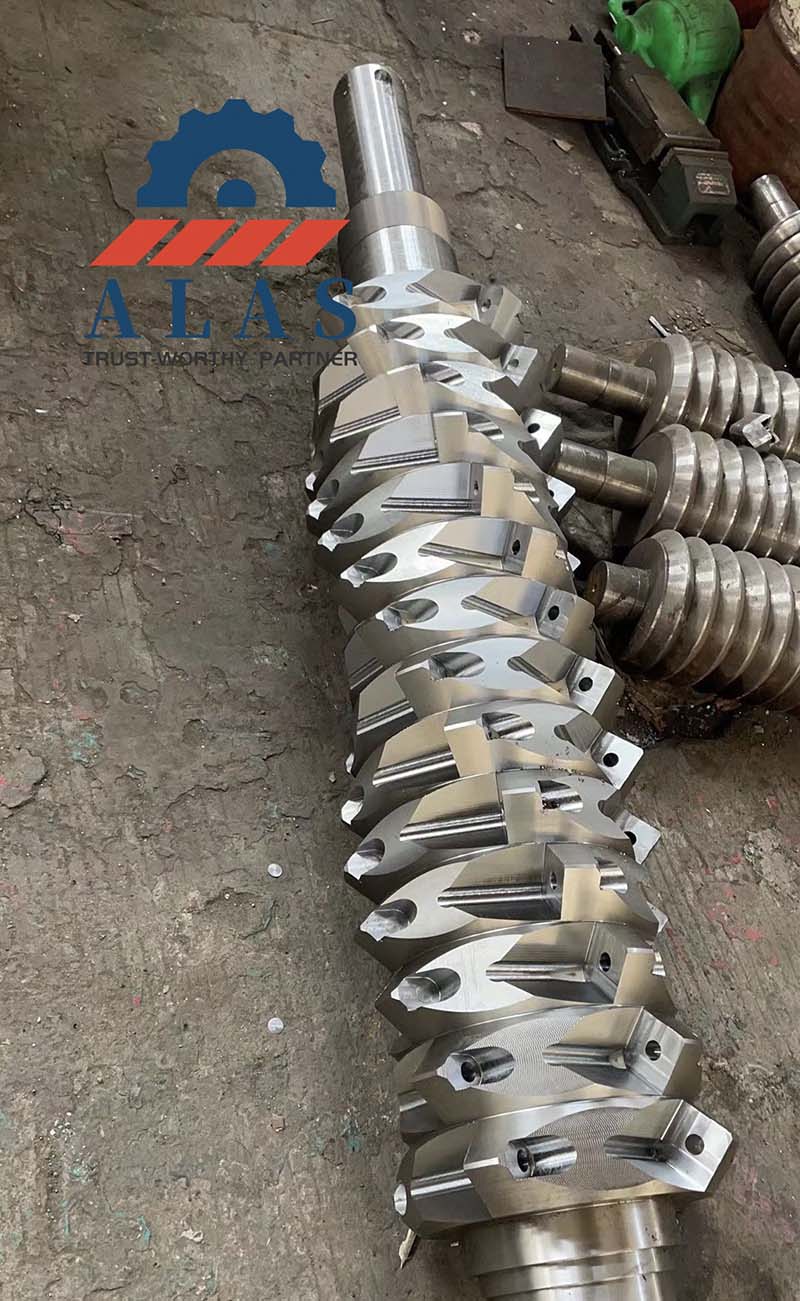
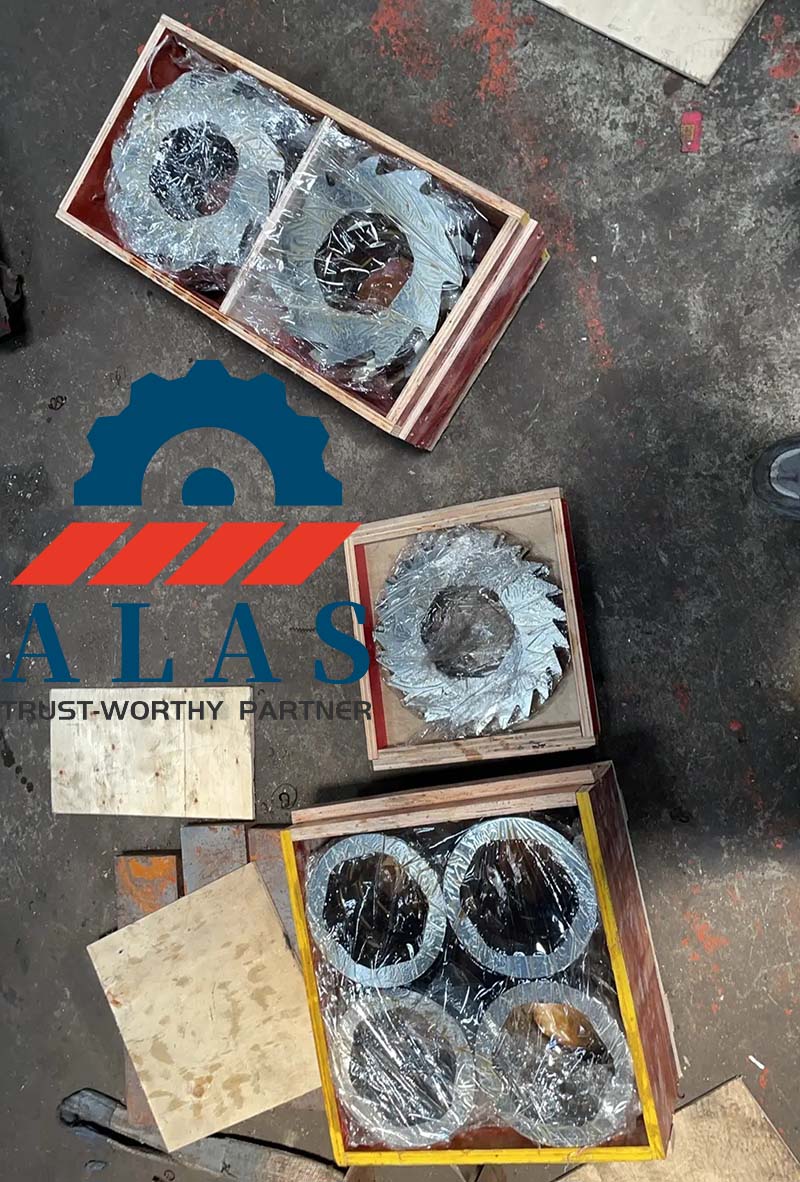
  • Double shaft blades: Claw-type modular structure with strong material grabbing capacity. 2-tooth and 3-tooth blades for coarse shredding; 6-tooth, 8-tooth and 12-tooth blades for fine shredding. Equipped with ALAS quick-change modules to cut maintenance time by 60%.

10. How to extend the service life of ALAS blades?

  1. Control feeding volume and avoid long-term equipment overload.

  2. Remove stones, metal pieces and other hard impurities from raw materials before processing.

  3. Keep blade gaps within standard range and conduct weekly calibration.

  4. Apply special lubricant to reduce friction during cutting.

  5. Stop the machine for cooling after long hours of continuous operation.

  6. Coat spare blades with anti-rust oil and store them properly.

  7. Rotate blades every 40 to 80 working hours to use all cutting edges evenly.

11. Does ALAS provide custom blade service?

We offer full customization for non-standard blades. Products can be manufactured according to customer drawings or original samples. Available materials include D2, DC53, H13, SKD11, high manganese steel, bimetallic composite steel and YG8 tungsten carbide. Blade hardness can be adjusted from HRC54 to HRC64. Tooth quantity, thickness, mounting holes and other parameters are all customizable.
Please provide your equipment model, processed materials and daily output. Our technical team will send you the quotation and 3D confirmation drawing within 24 hours.

12. Troubleshooting for common shredder faults

  • Material jam: Cut off the main power supply, clear blocked materials and take out hard foreign substances inside the machine.

  • Abnormal running noise: Fasten loose bolts and check bearing lubrication and wear condition.

  • Uneven output particles: Replace worn blades and readjust blade gaps to standard values.

  • Equipment overheating: Slow down feeding speed, refill lubricant and check blade friction gaps.

13. Safety notes for blade disassembly and maintenance

  1. Cut off and lock the main power before any disassembly or maintenance work.

  2. Wear complete protective gear including cut-resistant gloves, safety goggles and safety shoes.

  3. Do not let skin come into direct contact with sharp cutting edges.

  4. Check spare blades for hidden cracks before installation.

  5. Fasten bolts with standard torque to prevent blade displacement during operation.

3. Step-by-Step Daily Blade Maintenance Guide

Maintenance target: Extend blade service life and ensure 24-hour stable equipment operation.

Daily Pre-Start Inspection

Check blades and counter blades for cracks and chipped edges, and clear tangled debris. Rotate the main shaft manually to check for abnormal friction noise.

Regular Blade Rotation & Replacement

Rotate single shaft blades every 40 to 80 working hours based on material wear. For double shaft shredders with quick-change structure, replace damaged modules directly. DC53 and SKD‑11 blades can use four cutting edges alternately.

Periodic Gap Calibration

Use a feeler gauge to measure blade gaps every week. The standard gap is 0.3–0.8mm for single shaft shredders and 0.5–1.5mm for double shaft shredders. ALAS blades are finished within ±0.01mm grinding tolerance to guarantee precise gaps and even output.

Bolt Torque Management

Fasten bolts with specified torque. For M20 bolts, the standard torque is 450–550N·m. Retighten bolts two hours after machine startup to prevent loosening caused by thermal expansion and contraction.

Cleaning & Anti-Rust Care

Clean materials attached or tangled on shafts and blades after each working shift. Spray anti-rust oil on H13, DC53 and other blades after processing wet or corrosive materials.

4. Quality Standards & Certifications

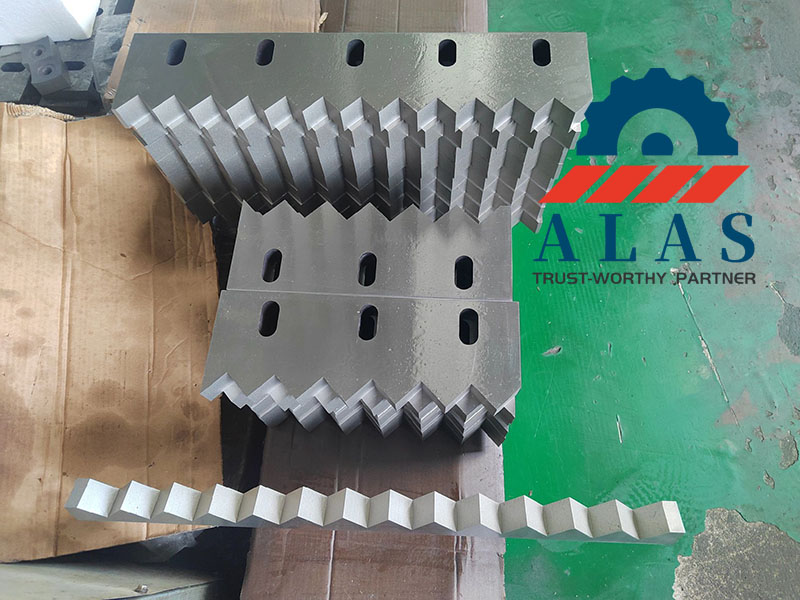
Close-up view of precision-machined heavy-duty shredder counter blades and comb stator knives by ALAS

The whole production process of ALAS shredder blades, including forging, heat treatment and CNC precision grinding, strictly follows two international standards:
  • ASTM A681 (United States Tool Steel Standard)

  • DIN 17350 (Germany Tool Steel Standard)

Every batch of products is delivered with material certificates, multi-point Rockwell hardness test reports and metallographic analysis documents.

5. Material Selection Q&A

Q: For plastic film processing, which ALAS single shaft blade is better, 35mm or 40mm?

A: Choose 35×35×25mm ALAS‑D2 blades for low-power machines requiring 20–25mm output size. Select 40×40×25mm ALAS‑DC53 blades for general 25–40mm output and higher working efficiency. Plastic film is easy to tangle around equipment. Smaller blades achieve finer cutting. DC53 blades feature better toughness and wear resistance to withstand lateral force caused by tangling and serve longer.

Q: Why choose ALAS high manganese steel double shaft blades for construction waste instead of SKD‑11?

A: Construction waste contains plenty of stones and concrete blocks, which bring heavy impact load. SKD‑11 does not have enough toughness and is easy to chip under strong impact. ZGMn13 high manganese steel hardens quickly on the surface under impact, with hardness rising from HB200 to over HRC45, while the inner part remains highly tough. It becomes more wear-resistant under impact, making it the ideal choice for such working conditions.

Q: Can ALAS quick-change modular design really save 60% of maintenance time?

A: This has been verified by on-site tests. Replacing traditional one-piece blades requires disassembling the whole rotor, which takes 4 to 6 hours. With ALAS modular blades, you only need to loosen clamp bolts and replace damaged blade segments. The work can be finished within 1.5 hours, and no gap recalibration is needed.

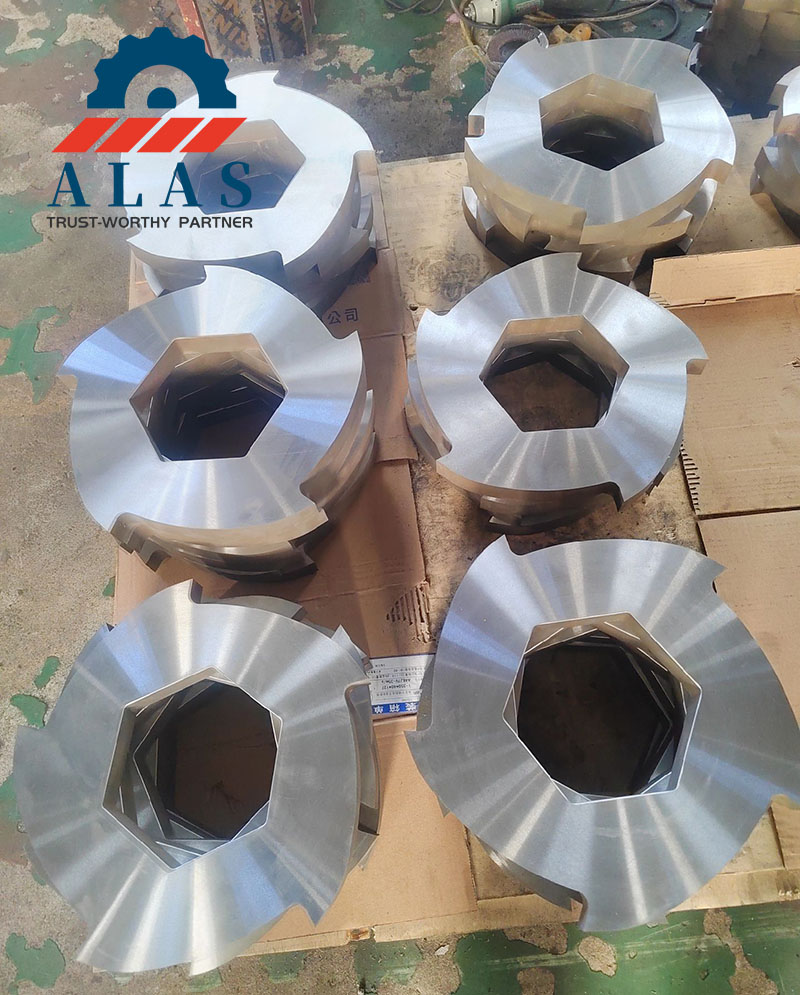
Export standard wooden crates filled with ALAS high-performance multi-jaw double shaft shredder blades wrapped in protective film

7.1 How to get a quotation for custom blades?

Provide the following information, and our technicians will work out solutions and quotations within 24 hours:
  • Equipment model, or drawings of main shaft and mounting dimensions

  • 2 to 3 clear photos of existing blades and rotors

  • Processed material type, output requirements and daily processing capacity

7.2 Quick Selection Table

Material Type ALAS Blade Recommendation (Priority)
Steel wire tires / Mixed metal H13 > DC53 > SKD‑11; YG8 tungsten carbide inserts for high-budget projects
Hard plastics / Wood DC53 / D2; DC53 is preferred for large-size single shaft blades
Rubber / Waste paper / Fiber materials 9CrSi for cost control; DC53 for longer service life
Household waste / Construction waste ZGMn13 High Manganese Steel / H13
Electronic waste (circuit boards, etc.) SKD11 / DC53 double shaft 12-tooth fine blades

7.3 Solutions for Different Budgets

High-end solution: ALAS‑YG8 tungsten carbide insert blades. Extra-long service life for 24/7 continuous heavy-duty production.Cost-effective solution: ALAS‑6CrW2Si blades. Suitable for conventional metal and tire shredding with lower overall operating costs.

8. Summary

ALAS industrial shredder blades and custom cutting tools are core parts to keep waste recycling lines stable, efficient and cost-saving. Our full product range covers all kinds of industrial waste processing applications, including general 40×40mm D2/DC53 single shaft blades, heavy-duty H13 and high manganese steel double shaft blades for high-impact jobs, and ultra wear-resistant YG8 tungsten carbide insert blades.
Feel free to contact ALAS with your equipment parameters and material information. We will customize exclusive blade solutions and provide 3D confirmation drawings. Blade trial service and on-site technical guidance are also available.

To get factory-direct wholesale pricing, you can consult our experienced team as a trusted industrial shredder blades supplier today.

Single-Shaft Shredder Blades in Action | Heavy-Duty Rotor Knives Demolition

Watch our premium single-shaft shredder blades process bulky waste with ease. This video demonstrates the exceptional cutting efficiency and wear resistance of our precision-ground rotor knives and counter blades. Engineered with rotatable multi-edge designs to drastically reduce tool replacement costs and machine downtime.

High-Torque Twin-Shaft Shredder Knives | Interlocking Blades Working Video

See how our interlocking twin-shaft shredder knives tear through high-resistance materials. Manufactured from shock-resistant alloy steel, these dual-shaft cutting discs feature custom hook profiles designed for maximum grab and high-torque shearing. Perfect for scrap metal, tires, and electronic waste recycling


Previous: 
Next: 
200
Phone:
86-15852949220
Address:
Jiangning District, Nanjing
About Us

Nanjing Alas International Co., Ltd. is a professional industrial tooling manufacturer focused on shear blades, bending dies, shredder blades, and custom wear parts. We offer full application engineering, material selection, setup guidance, and after-sales support to global customers.
Tell us your requirements, and our engineering team will provide professional solutions for blade specification, tool life optimization, and cost-effective production.

Subscribe
Sign up for our newsletter to receive the latest news.
​Copyright 2021 NANJING ALAS INTERNATIONAL CO., LTD            苏ICP备2021025144号