Why SKD-11 Steel is the Ultimate Choice for Plastic Shredder Blades?
In the plastic recycling industry, the efficiency of your operation is measured by the longevity and sharpness of your shredder blades. For processing abrasive materials like PET, heavy-duty HDPE, or reinforced plastics, SKD-11 plastic shredder blades have become the industry benchmark for performance and cost-effectiveness.
Characteristics of Different Types of Plastics and Blade Material Selection
The hardness, toughness, and fiber content of plastics determine the stress points during shredding. Hard and brittle materials are prone to impact, soft materials are prone to blade entanglement and adhesion, and fiber-reinforced materials are prone to wear on the cutting edge. Blade selection should follow the principles of high hardness, wear resistance, and impact resistance for hard materials; high toughness and shear force for soft materials; and high wear resistance and resistance to chipping for fiber-reinforced materials. Precise matching can reduce costs and improve efficiency.
Shredder Blades for Hard Plastics (ABS/PS/Hard PVC)
Plastic Characteristics
Hard plastics are hard and brittle. During the shredding process, the blades are susceptible to instantaneous impact forces, leading to problems such as chipping and rapid dulling of the cutting edge. This requires extremely high hardness, wear resistance, and impact resistance from the blades.
Recommended Material
SKD-11 High-carbon high-chromium alloy steel
Core Material Characteristics
Possesses extremely high hardness and superior wear resistance, maintaining a sharp cutting edge for a long time and significantly reducing the frequency of dulling;
Excellent impact resistance, able to withstand the instantaneous impact force of hard plastic shredding, preventing chipping and breakage;
High cutting edge strength, suitable for high-speed cutting of hard and brittle materials.
Plastic Characteristics
Soft/high-toughness plastics have strong elasticity and good ductility. They are difficult to cut during shredding, leading to problems such as blade entanglement, material sticking to the blade edges, and material being discharged in strips. This requires blades with high toughness, shear strength, and smooth cutting edges.
Recommended Material
9CrSi Chromium Silicon Steel (Special alloy tool steel can be used for ultra-thin materials such as films/woven bags)
Core Material Characteristics
1. Excellent toughness, not easy to break, suitable for the high-speed shearing motion of the shredder, effectively cutting highly elastic plastics;
2. High precision grinding of the cutting edge and smooth surface reduce sticking and entanglement of soft plastics, ensuring efficiency;
3. Good processing performance, allowing for fine grinding of the cutting edge.
Shredder Blades for Fiber-Reinforced/Thick/Mixed Materials
Plastic Characteristics
Fiber-reinforced plastics (glass fiber/carbon fiber reinforced plastics) contain hard fibers, which can quickly wear down the blade edges; when shredding thick/mixed materials, the blades are subjected to multiple forces including impact, wear, and shear, making this the scenario with the highest demands on the overall performance of the blades.
Recommended Material
DC-53 High-Strength Tough Alloy Steel
Core Material Characteristics
1. Superior wear resistance compared to SKD-11, with excellent hardness and toughness, addressing the blade wear problem of fiber-reinforced materials and significantly increasing service life;
2. Outstanding resistance to chipping and fracture, suitable for the strong impact force of thick material crushing and the complex stress environment of mixed material crushing;
3. Good high-temperature stability; the cutting edge is not easily deformed during long-term continuous crushing of thick/mixed materials, maintaining a stable shearing effect. 2. Plastic Shredder Blade Selection: Pitfalls to Avoid and Recommendations
For hard plastics, choose SKD-11; for soft plastics, choose 9CrSi; for fiber-reinforced thick materials, choose DC-53.
Entry-level/general-purpose: Choose 9CrSi, which is inexpensive and suitable for most recycled materials without special requirements.
Professional high-efficiency type: Choose SKD-11, which is currently the mainstream configuration for mid-to-high-end shredders and offers the best overall cost-effectiveness.
Wear-resistant type: If the budget is sufficient and you are processing high-fiber materials and thick materials, choose DC-53.
Blade Metal Materials International Grade Corresponding Table
China (GB) | USA(ASTM) | Japan (JIS) | Germany (DIN) | Germany (W-Nr) | France (NF) | Russia (ROCT) | U.K (BS) |
9CrSi | - | - | 90CrSi5 | 1.2108 | - | 9XC | - |
Cr12MOV | - | SKD11 | X165CrMov12 | 1.2601 | - | X12M | - |
Drawings of the blades for a plastic shredder
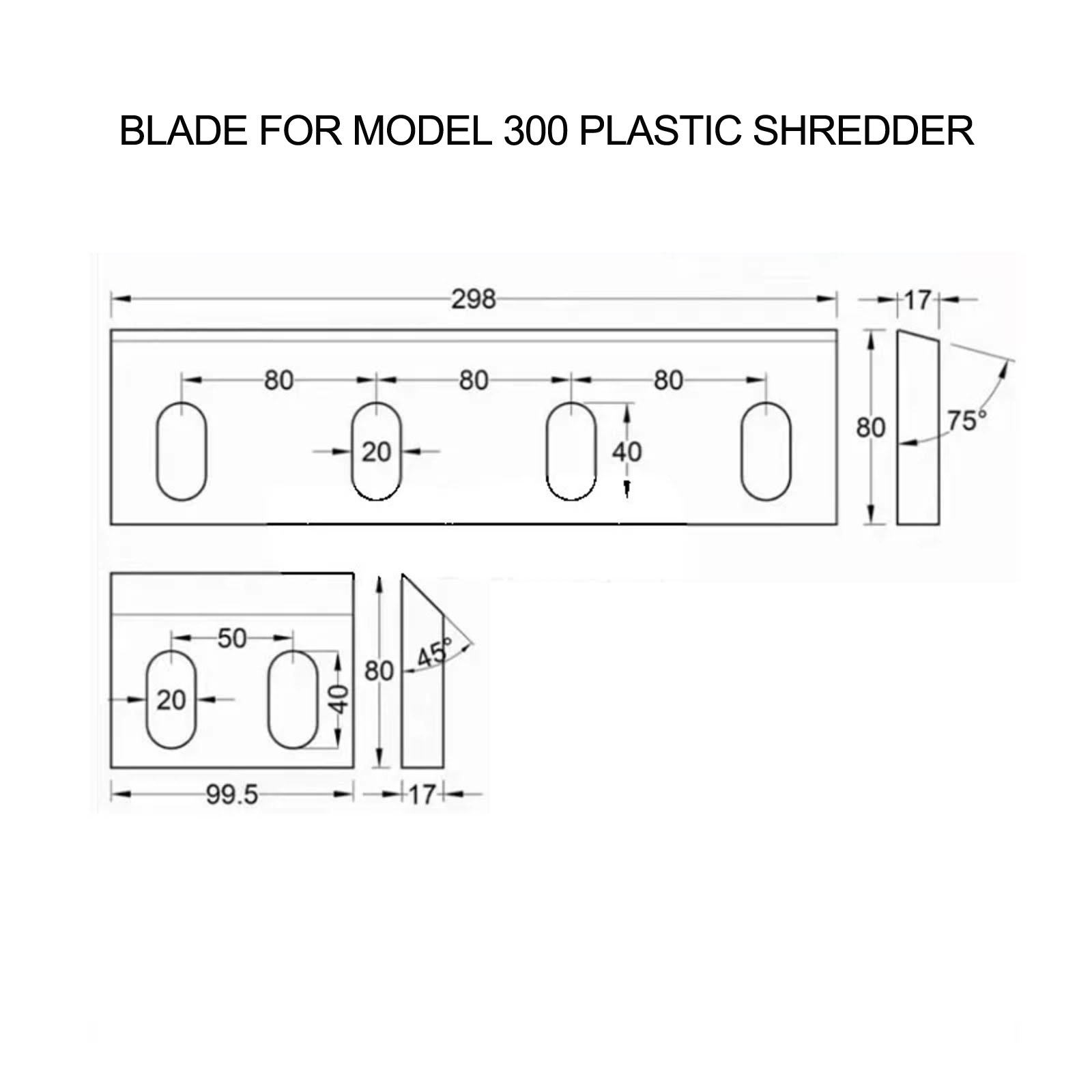
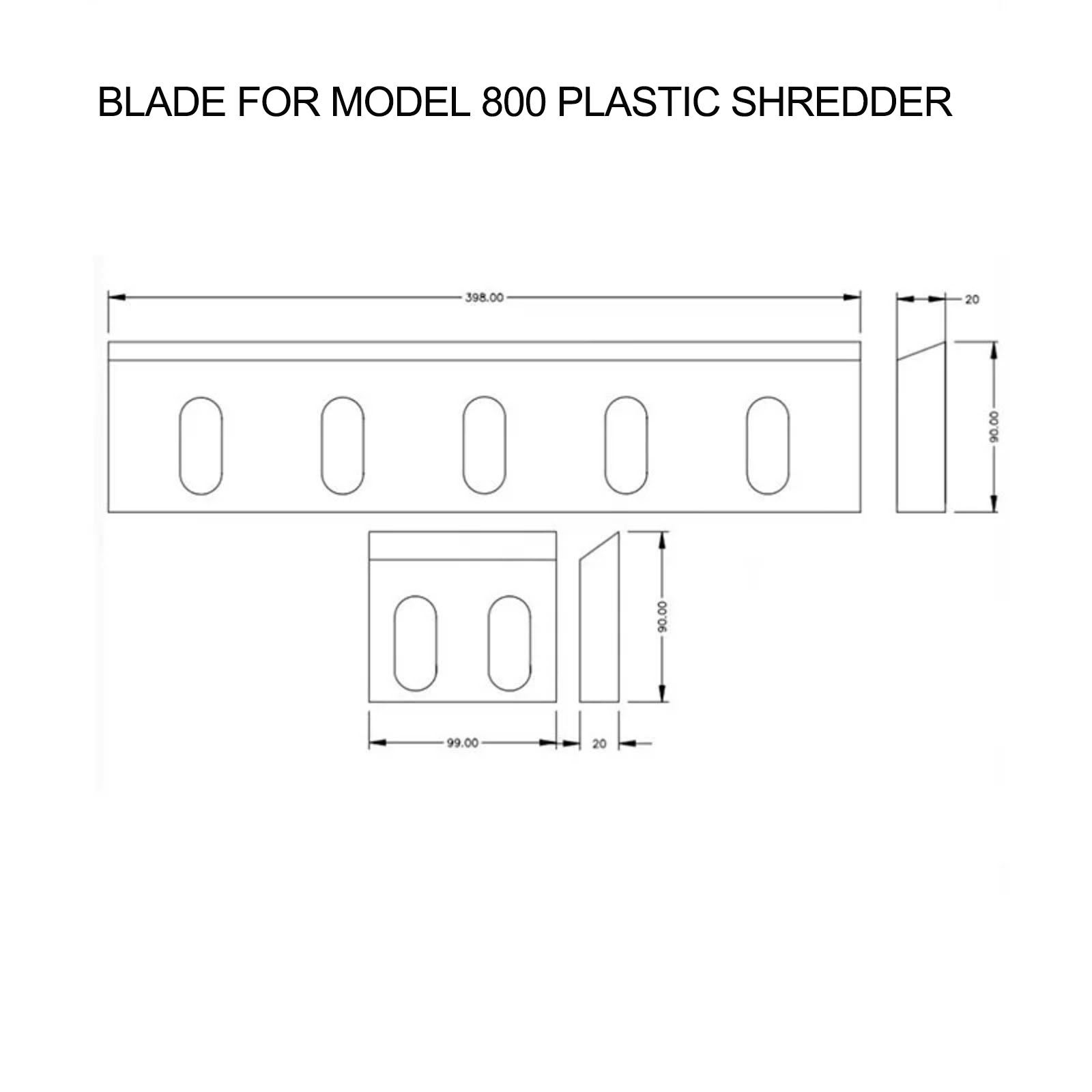
SKD-11 shredder blades
ABS/PS/PVC shredder blades
PE/PP/PA shredder blades
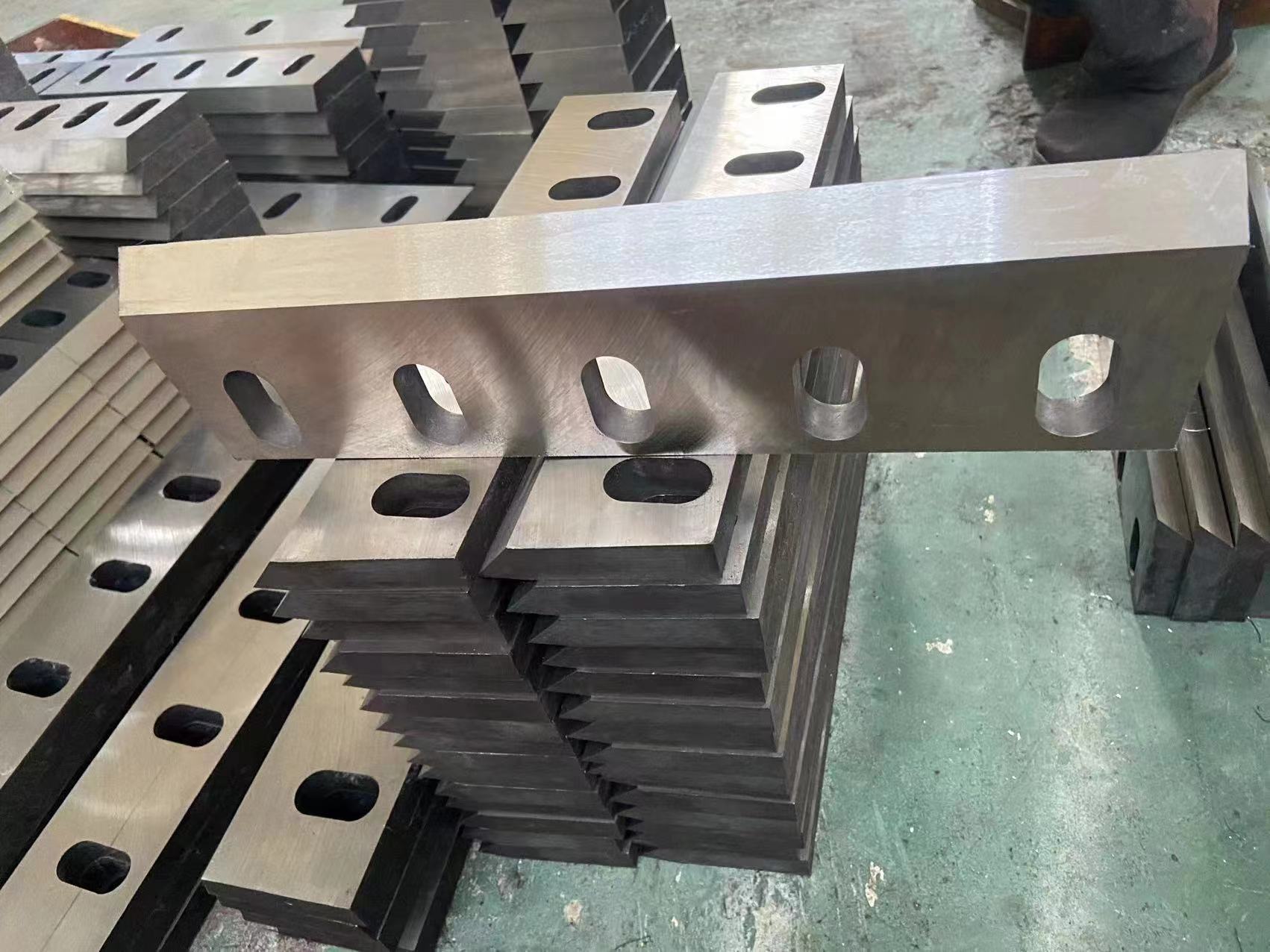
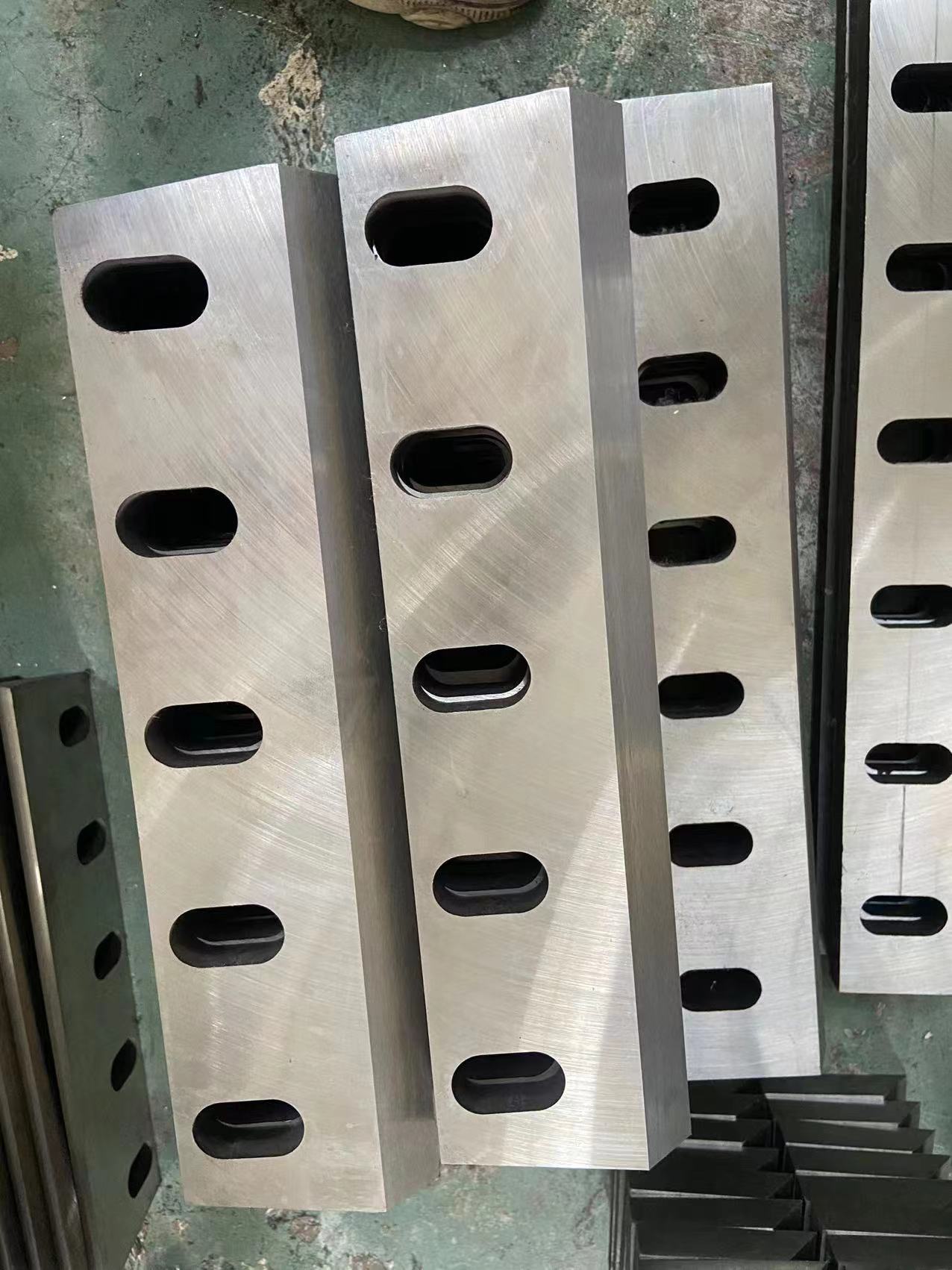
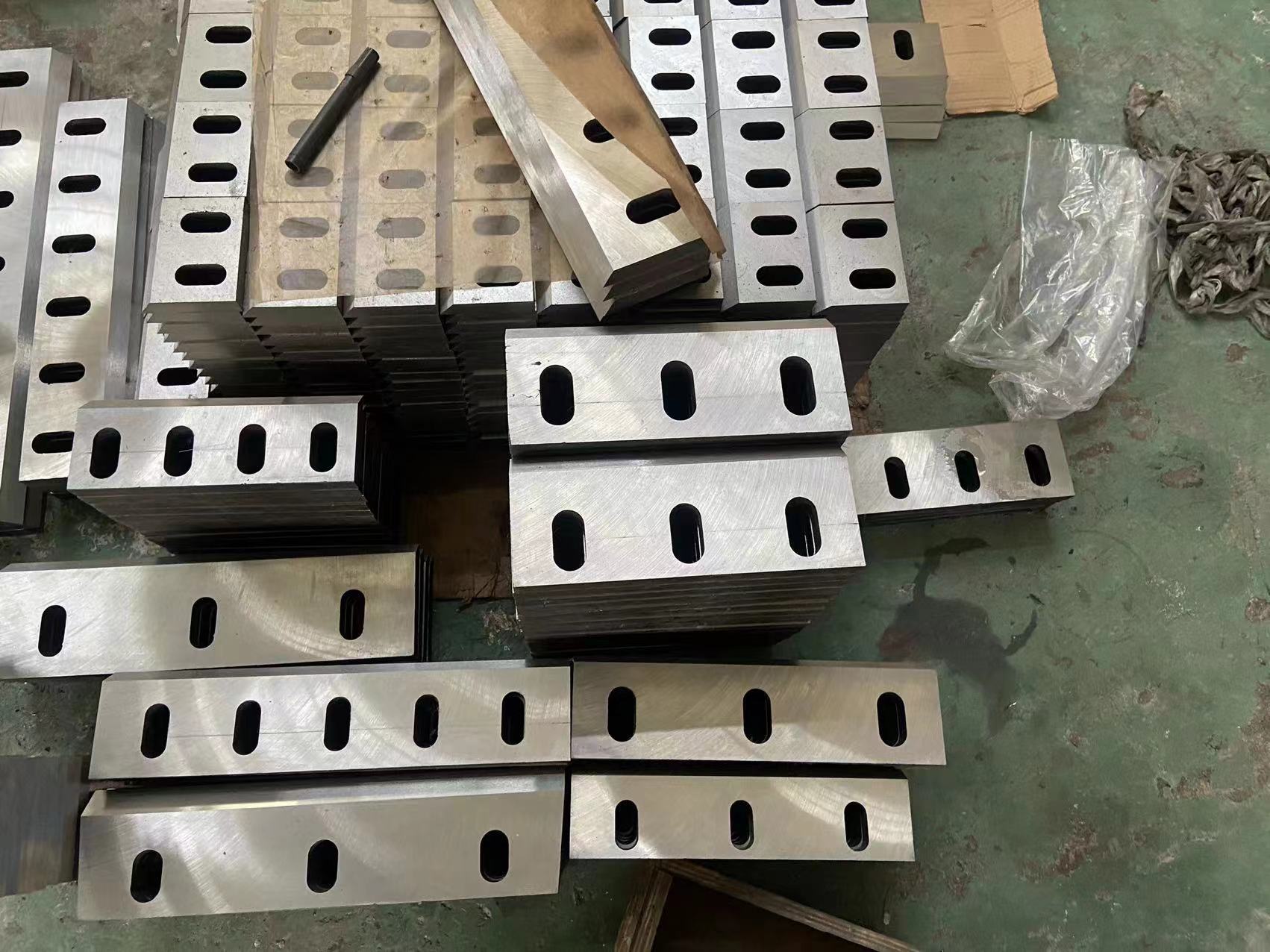
Global Supply: Industrial Plastic Shredder Blades & Granulator Knives
We manufacture high-performance Plastic Shredder Blades (Material: SKD-11, D2, DC53, 9CrSi) optimized for the recycling of PE, PP, PVC, PET, and heavy-duty plastics. Our precision-ground blades offer superior toughness, heat treatment stability, and high wear resistance for industrial crushers, granulators, and pelletizing systems.
Multi-language Index for Recycling Equipment Sourcing:
English: Plastic Shredder Blades | Crusher Knives | Plastic Granulator Blades
French (Français): Lames de broyeur plastique | Couteaux de granulateur | Lames de recyclage
Portuguese (Português): Lâminas para triturador de plástico | Facas para granuladores | Lâminas de reciclagem
Polish (Polski): Noże do kruszarek do plastiku | Noże do granulatorów | Noże do recyklingu
Turkish (Türkçe): Plastik Kırıcı Bıçakları | Granül Bıçakları | Geri Dönüşüm Bıçakları
Vietnamese (Tiếng Việt): Lưỡi dao máy băm nhựa | Dao máy nghiền nhựa | Lưỡi dao tạo hạt
Thai (ภาษาไทย): ใบมีดเครื่องบดพลาสติก | ใบมีดเครื่องย่อยพลาสติก | ใบมีดเครื่องทำเม็ดพลาสติก
Filipino: Mga Blade ng Shredder ng Plastic | Mga Kutsilyo para sa Crusher ng Plastic
Arabic (العربية): شفرات كسارة البلاستيك | سكاكين مفارم البلاستيك | شفرات إعادة التدوير
Hindi (हिन्दी): प्लास्टिक श्रेडर ब्लेड | प्लास्टिक क्रशर चाकू | रीसाइक्लिंग मशीन ब्लेड
Indonesian (Bahasa Indonesia): Pisau Penghancur Plastik | Pisau Mesin Granulator | Bilah Daur Ulang
Malay (Bahasa Melayu): Bilah Pengisar Plastik | Pisau Mesin Granulator | Bilah Kitar Semula
Dutch (Nederlands): Plastic versnippermessen | Kunststof granulatormessen | Recyclingmessen
Swedish (Svenska): Knivar för plastkross | Granulatorknivar | Knivar för plaståtervinning
Hungarian (Magyar): Műanyagdaráló kések | Granuláló pengék | Újrahasznosító kések
Greek (Ελληνικά): Λεπίδες θρυμματιστή πλαστικών | Μαχαίρια κοκκοποιητή | Λεπίδες ανακύκλωσης
Danish (Dansk): Plastik neddeler knive | Knive til granulator | Genbrugsknive
Norwegian (Norsk): Kniver for plastkvern | Granulatorkniver | Gjenvinningskniver
Finnish (Suomi): Muovimurskaimen terät | Granulaattorin terät | Kierrätysterät
Czech (Čeština): Nože do drtiče plastů | Granulační nože | Nože na recyklaci plastu
Romanian (Română): Cuțite tocător mase plastice | Cuțite granulator | Lame reciclare
Slovak (Slovenčina): Nože do drviča plastov | Granulačné nože | Nože na recykláciu plastov
Bulgarian (Български): Ножове за мелница за пластмаса | Ножове за гранулатор
Croatian (Hrvatski): Noževi za drobilicu plastike | Noževi za granulator | Noževi za reciklažu
Ukrainian (Українська): Ножі для дробарки пластику | Ножі для гранулятора | Ножі для переробки
Azerbaijani (Azərbaycan dili): Plastik doğrayan bıçaqlar | Qranulyator bıçaqları | Təkrar emal bıçaqları
Bengali (বাংলা): প্লাস্টিক শ্রেডার ব্লেড | প্লাস্টিক ক্রাশার ছুরি | রিসাইক্লিং ব্লেড
Tamil (தமிழ்): பிளாஸ்டிக் ஷிரெடர் பிளேடுகள் | பிளாஸ்டிக் கிரஷர் கத்திகள் | மறுசுழற்சி கத்திகள்
Persian (فارسی): تیغه های خردکن پلاستیک | چاقوهای گرانول ساز | تیغه های بازیافت
Hebrew (עברית): להבים למגרסת פלסטיק | סכינים לגרנולטור | להבי מיחזור
Afrikaans: Plastiekversnipperaar lemme | Granuleerder messe | Herwinning lemme


