| Availability: | |
|---|---|
| Quantity: | |
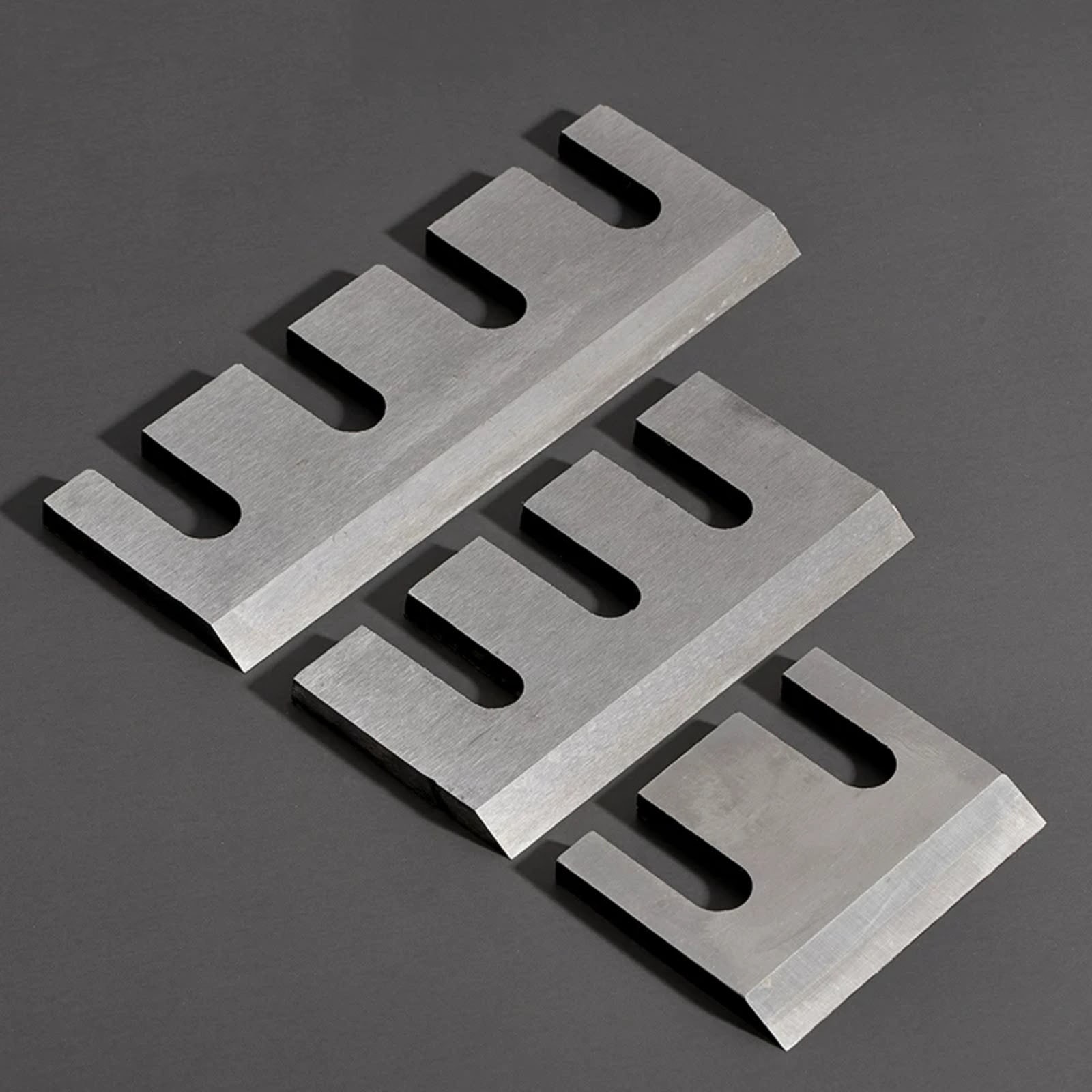
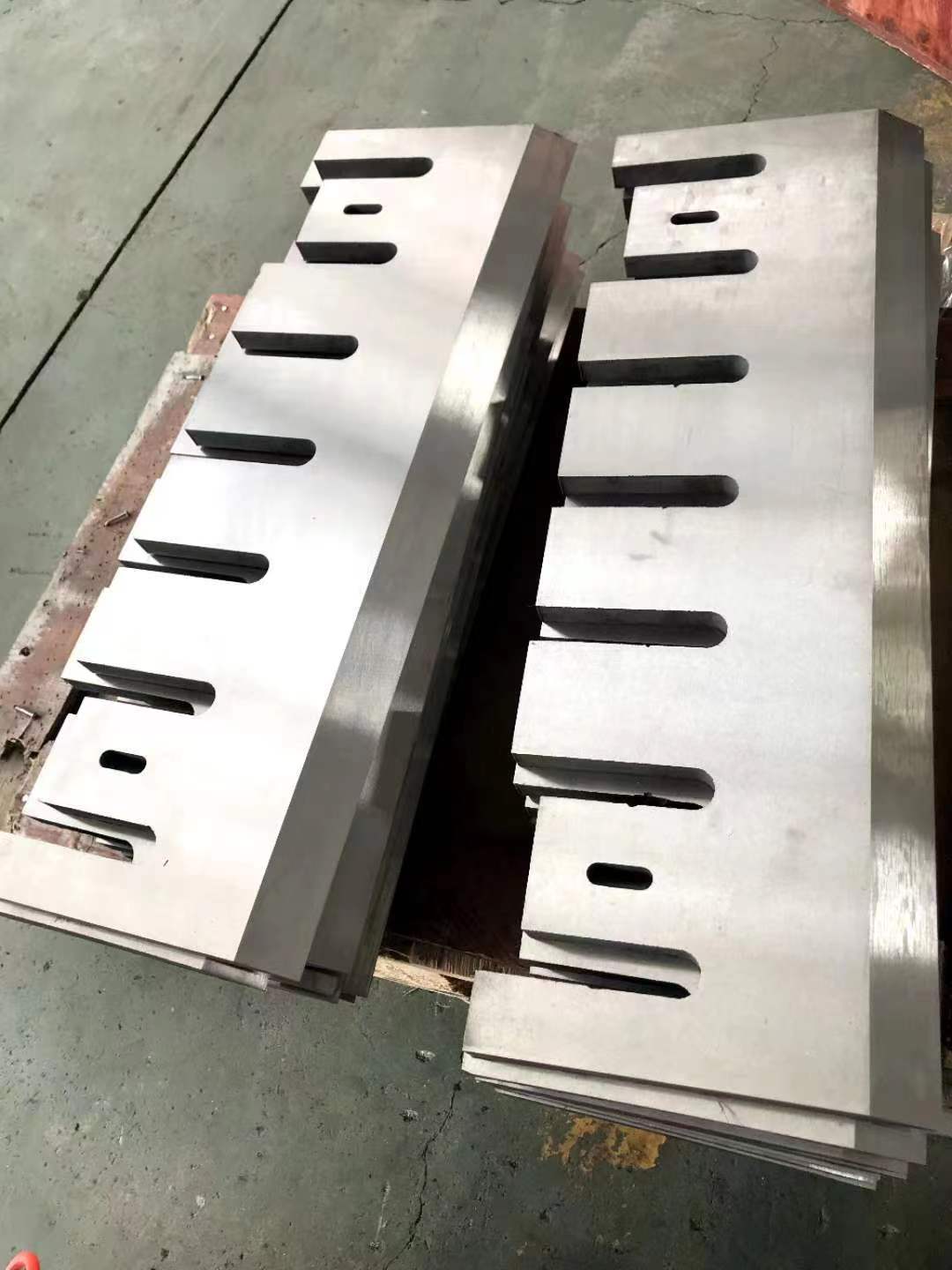
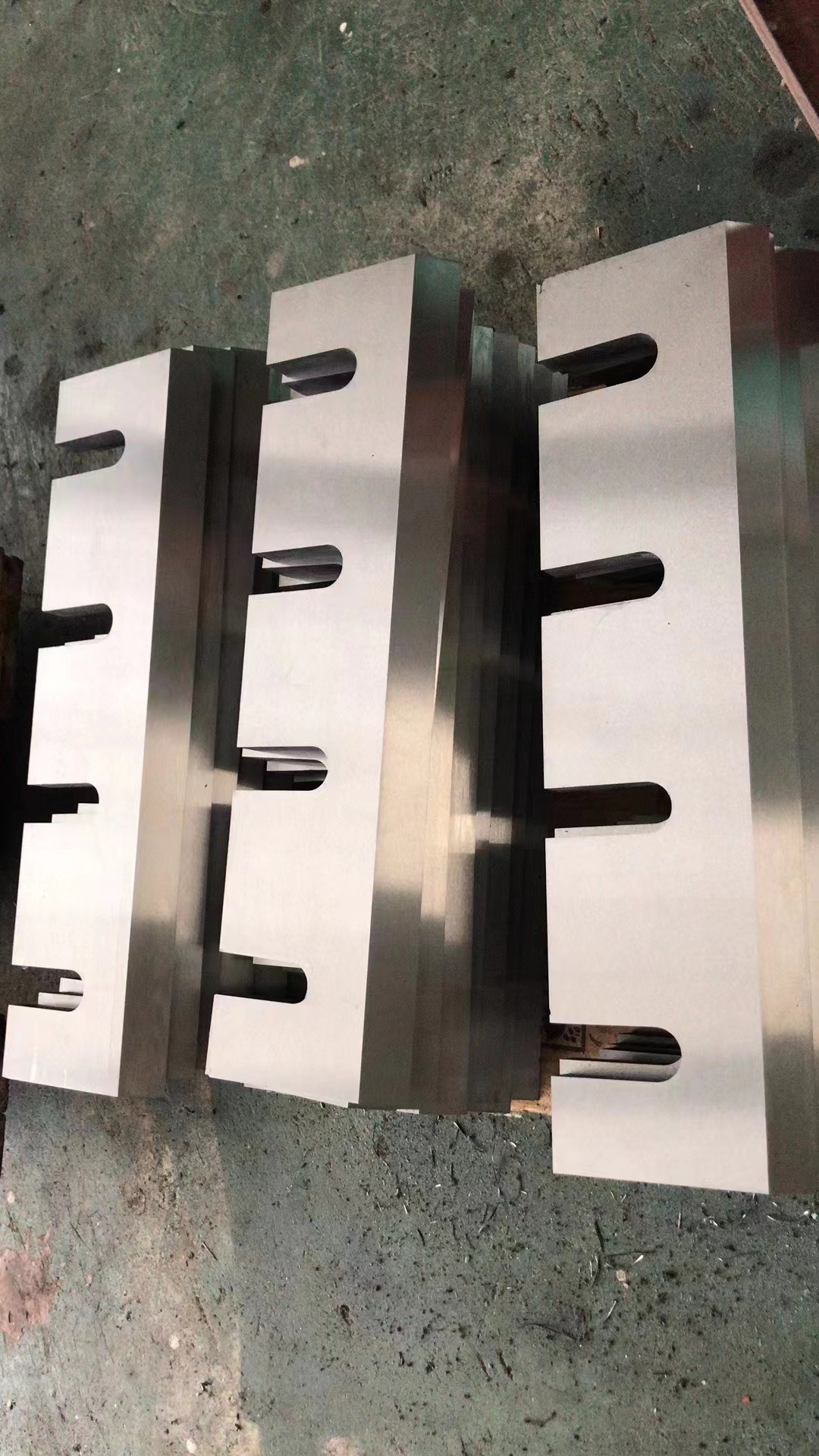
Wood chipper blades are the core cutting components of wood chippers, designed to cut logs, branches, bark, and recycled wood into uniformly sized wood chips. They are indispensable in raw material preparation for papermaking/pulping, engineered wood (particleboard/MDF), and biomass energy industries. The performance and lifespan of these blades depend entirely on material science—especially the alloy composition and heat treatment processes.
Understanding blade structural types is the first step to matching the right material, as different blade designs face distinct operational stresses:
Structure: Mounted on a rotating cutter head (4-6/8-12 blades or spiral designs)
Characteristics: Clean cuts, high-quality chips, ideal for large-diameter logs
Primary Use: Mainstream choice for paper mills (high chip quality requirements)
Structure: Fixed to cylindrical cutter drum surfaces
Characteristics: Excellent raw material adaptability (bark, small-diameter wood), slightly lower chip uniformity vs. disc blades
Primary Use: Small/medium processing plants with complex raw material requirements
A8, A8B (A8 Modified), and D2 (SKD-11) are the gold-standard alloy tool steels for chipper blades. Their core differences lie in alloy element ratios (C, Cr, Mo, V, W) that balance toughness, wear resistance, hardness, and cost.
Performance Metric | A8 | A8B (A8 Modified) | D2 |
Toughness/Impact Resistance | Optimal | Near A8 | Weakest |
Wear Resistance | Good | Better than A8 | 2-3x A8 |
Hardness (HRC) | 58–62 | 58–62 (More stable) | 60–62 |
High Temp Resistance | Good | Excellent (No annealing) | Average (Prone to softening) |
Corrosion Resistance | Average | Good | Semi-stainless (Best) |
Price | Medium-Low | Medium | High |
Element (wt%) | A8 | A8B | D2 | Core Function |
Carbon (C) | 0.50–0.60% | 0.55–0.65% | 1.40–1.60% | Determines hardness/wear resistance (higher = harder/brittler) |
Chromium (Cr) | 4.75–5.50% | 5.20–6.00% | 11.0–13.0% | Improves hardenability/corrosion resistance; forms hard carbides |
Molybdenum (Mo) | 1.15–1.65% | 1.40–1.80% | 0.70–1.20% | Refines grains; boosts toughness/high-temp stability |
Vanadium (V) | 0.80–1.40% | 1.00–1.50% | 0.50–1.10% | Forms ultra-hard VC carbides; enhances wear resistance |
Tungsten (W) | 1.00–1.50% | 1.20–1.70% | — | Improves hot hardness and high-temp wear resistance |
Positioning: Low carbon + medium chromium + high Mo/W = extreme impact resistance
Key Advantage: No chipping/breaking when cutting hardwood, knotty wood, or wet wood
Best For: Small/medium chippers/branch shredders; mixed raw materials with high impact
Positioning: A8 upgrade with fine-tuned alloys + optimized heat treatment
Key Advantage: Toughness ≈ A8, wear resistance far superior; no annealing in continuous operation (highest cost-performance)
Best For: Medium/large continuous production lines (papermaking/wood panels); rubberwood/eucalyptus processing
Positioning: High carbon + 12% chromium (semi-stainless) = unmatched wear resistance
Key Advantage: 2-3x longer service life than A8; minimal replacement frequency
Critical Limitation: Poor toughness (prone to cracking under high impact)
Best For: High-capacity chippers; softwood/bamboo/straw processing (low impact, high wear)
Even the best steel fails without precision manufacturing. At ALAS Machinery, we ensure blade performance through:
Blades are CNC-ground to exact tolerances (uniform weight/dimensions per set)
Eliminates vibration that damages bearings/drums
Benefits: Smoother operation, lower fuel consumption, reduced engine strain
Unlike standard quenching, vacuum heat treatment delivers uniform HRC 55-58 hardness (surface to core)
Eliminates internal stresses → blades resist chipping/breaking under extreme loads
Operational Scenario | Best Material | Core Reason |
Mixed raw materials (hardwood/knotty/wet wood) | A8 | Max toughness prevents breakage |
Continuous production (hardwood focus) | A8B | Balanced toughness/wear resistance (best ROI) |
High-volume softwood/bamboo/straw processing | D2 | Ultra-long service life, minimal replacements |
Our blades are compatible with major brands including Morbark, Bandit, Vermeer—making them a reliable replacement for OEM parts. We also offer custom sizes to match your specific chipper model and operational needs.
Don’t compromise on safety or uptime. The right blade material (paired with precision manufacturing) reduces sharpening frequency, extends equipment life, and lowers overall operational costs. Whether you need shock resistance (A8), balanced performance (A8B), or maximum wear resistance (D2), ALAS Machinery’s alloy steel blades are engineered for longevity. Contact us for custom solutions tailored to your production needs.
Material Core Logic: A8 prioritizes toughness for high-impact wood, A8B balances toughness/wear resistance (best cost-performance), D2 delivers extreme wear resistance (for low-impact/high-volume scenarios).
Manufacturing Matters: CNC precision grinding and vacuum heat treatment are critical to unlocking the full performance of alloy steels, preventing vibration damage and internal stresses.
Practical Selection: Match blade material to raw material type and operational load—prioritize toughness for high impact, wear resistance for high volume, and balance for continuous hardwood processing.


Wood chipper blades are the core cutting components of wood chippers, designed to cut logs, branches, bark, and recycled wood into uniformly sized wood chips. They are indispensable in raw material preparation for papermaking/pulping, engineered wood (particleboard/MDF), and biomass energy industries. The performance and lifespan of these blades depend entirely on material science—especially the alloy composition and heat treatment processes.
Understanding blade structural types is the first step to matching the right material, as different blade designs face distinct operational stresses:
Structure: Mounted on a rotating cutter head (4-6/8-12 blades or spiral designs)
Characteristics: Clean cuts, high-quality chips, ideal for large-diameter logs
Primary Use: Mainstream choice for paper mills (high chip quality requirements)
Structure: Fixed to cylindrical cutter drum surfaces
Characteristics: Excellent raw material adaptability (bark, small-diameter wood), slightly lower chip uniformity vs. disc blades
Primary Use: Small/medium processing plants with complex raw material requirements
A8, A8B (A8 Modified), and D2 (SKD-11) are the gold-standard alloy tool steels for chipper blades. Their core differences lie in alloy element ratios (C, Cr, Mo, V, W) that balance toughness, wear resistance, hardness, and cost.
Performance Metric | A8 | A8B (A8 Modified) | D2 |
Toughness/Impact Resistance | Optimal | Near A8 | Weakest |
Wear Resistance | Good | Better than A8 | 2-3x A8 |
Hardness (HRC) | 58–62 | 58–62 (More stable) | 60–62 |
High Temp Resistance | Good | Excellent (No annealing) | Average (Prone to softening) |
Corrosion Resistance | Average | Good | Semi-stainless (Best) |
Price | Medium-Low | Medium | High |
Element (wt%) | A8 | A8B | D2 | Core Function |
Carbon (C) | 0.50–0.60% | 0.55–0.65% | 1.40–1.60% | Determines hardness/wear resistance (higher = harder/brittler) |
Chromium (Cr) | 4.75–5.50% | 5.20–6.00% | 11.0–13.0% | Improves hardenability/corrosion resistance; forms hard carbides |
Molybdenum (Mo) | 1.15–1.65% | 1.40–1.80% | 0.70–1.20% | Refines grains; boosts toughness/high-temp stability |
Vanadium (V) | 0.80–1.40% | 1.00–1.50% | 0.50–1.10% | Forms ultra-hard VC carbides; enhances wear resistance |
Tungsten (W) | 1.00–1.50% | 1.20–1.70% | — | Improves hot hardness and high-temp wear resistance |
Positioning: Low carbon + medium chromium + high Mo/W = extreme impact resistance
Key Advantage: No chipping/breaking when cutting hardwood, knotty wood, or wet wood
Best For: Small/medium chippers/branch shredders; mixed raw materials with high impact
Positioning: A8 upgrade with fine-tuned alloys + optimized heat treatment
Key Advantage: Toughness ≈ A8, wear resistance far superior; no annealing in continuous operation (highest cost-performance)
Best For: Medium/large continuous production lines (papermaking/wood panels); rubberwood/eucalyptus processing
Positioning: High carbon + 12% chromium (semi-stainless) = unmatched wear resistance
Key Advantage: 2-3x longer service life than A8; minimal replacement frequency
Critical Limitation: Poor toughness (prone to cracking under high impact)
Best For: High-capacity chippers; softwood/bamboo/straw processing (low impact, high wear)
Even the best steel fails without precision manufacturing. At ALAS Machinery, we ensure blade performance through:
Blades are CNC-ground to exact tolerances (uniform weight/dimensions per set)
Eliminates vibration that damages bearings/drums
Benefits: Smoother operation, lower fuel consumption, reduced engine strain
Unlike standard quenching, vacuum heat treatment delivers uniform HRC 55-58 hardness (surface to core)
Eliminates internal stresses → blades resist chipping/breaking under extreme loads
Operational Scenario | Best Material | Core Reason |
Mixed raw materials (hardwood/knotty/wet wood) | A8 | Max toughness prevents breakage |
Continuous production (hardwood focus) | A8B | Balanced toughness/wear resistance (best ROI) |
High-volume softwood/bamboo/straw processing | D2 | Ultra-long service life, minimal replacements |
Our blades are compatible with major brands including Morbark, Bandit, Vermeer—making them a reliable replacement for OEM parts. We also offer custom sizes to match your specific chipper model and operational needs.
Don’t compromise on safety or uptime. The right blade material (paired with precision manufacturing) reduces sharpening frequency, extends equipment life, and lowers overall operational costs. Whether you need shock resistance (A8), balanced performance (A8B), or maximum wear resistance (D2), ALAS Machinery’s alloy steel blades are engineered for longevity. Contact us for custom solutions tailored to your production needs.
Material Core Logic: A8 prioritizes toughness for high-impact wood, A8B balances toughness/wear resistance (best cost-performance), D2 delivers extreme wear resistance (for low-impact/high-volume scenarios).
Manufacturing Matters: CNC precision grinding and vacuum heat treatment are critical to unlocking the full performance of alloy steels, preventing vibration damage and internal stresses.
Practical Selection: Match blade material to raw material type and operational load—prioritize toughness for high impact, wear resistance for high volume, and balance for continuous hardwood processing.