86-15852949220      mt@alasmachinery.com
NANJING ALAS INTERNATIONAL CO., LTD
You are here: Home » Products » Crusher Blade & Shredder Blade » A8 Steel Wood Chipper Knives

Product Category

Contact Us

loading

Share to:
sharethis sharing button

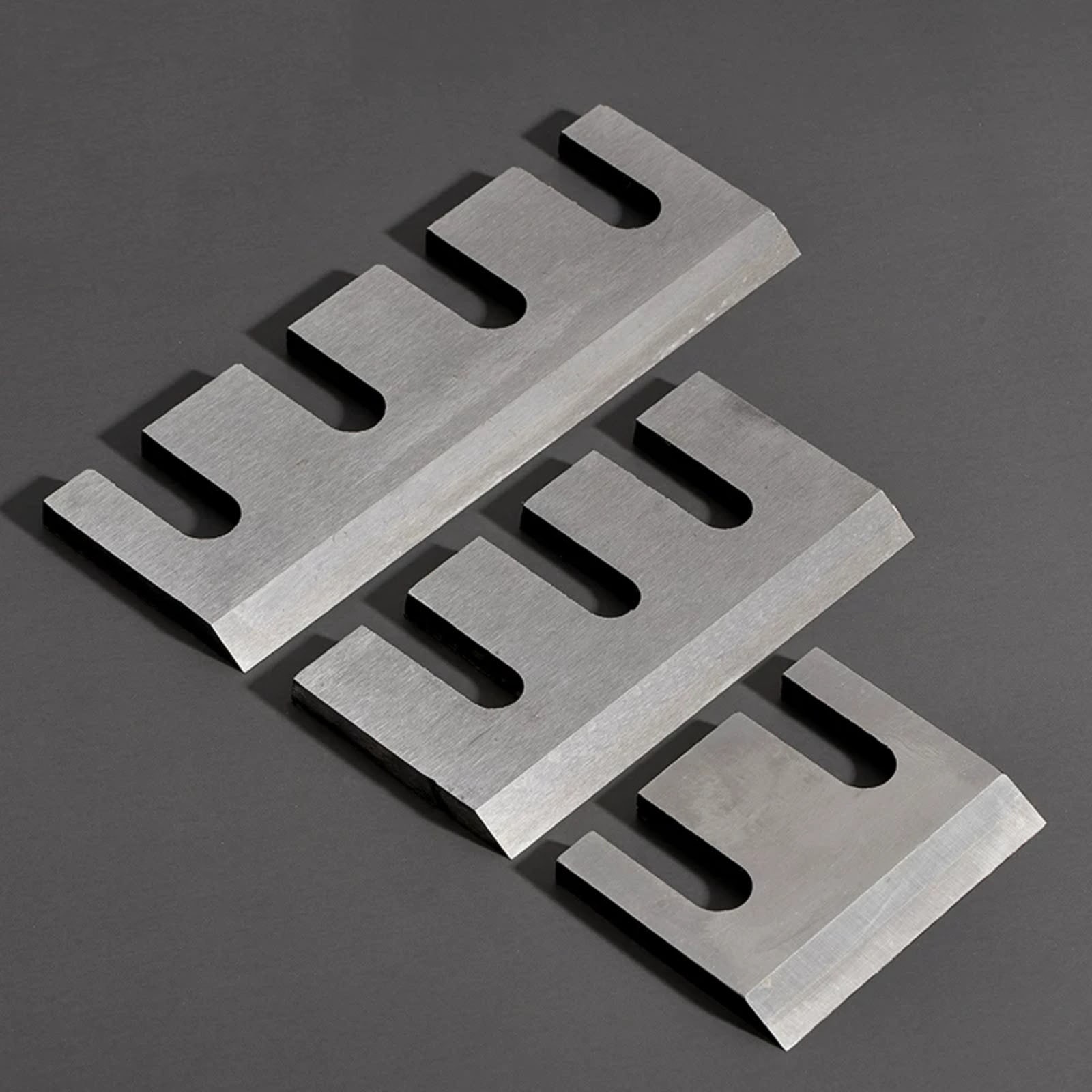
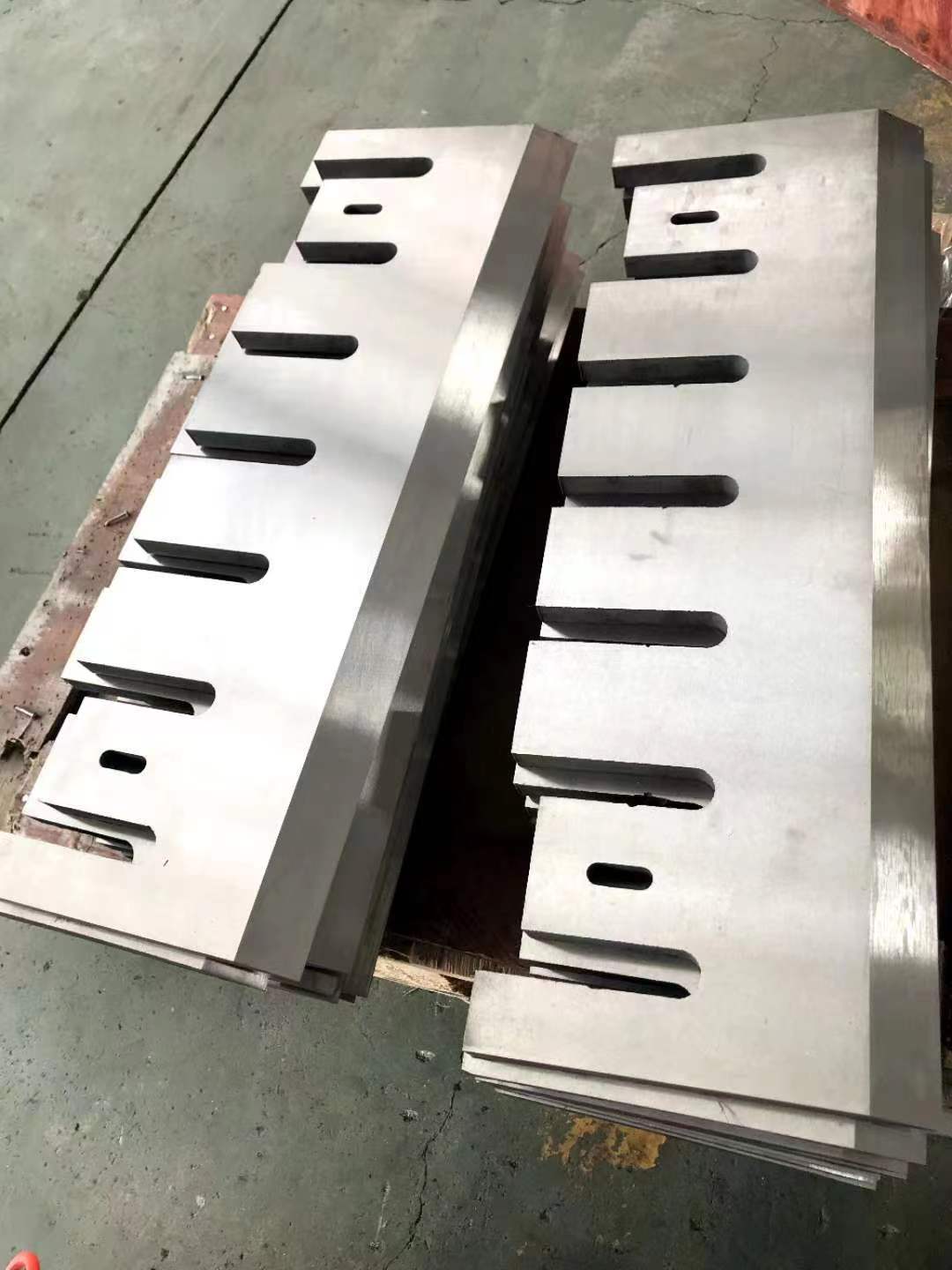
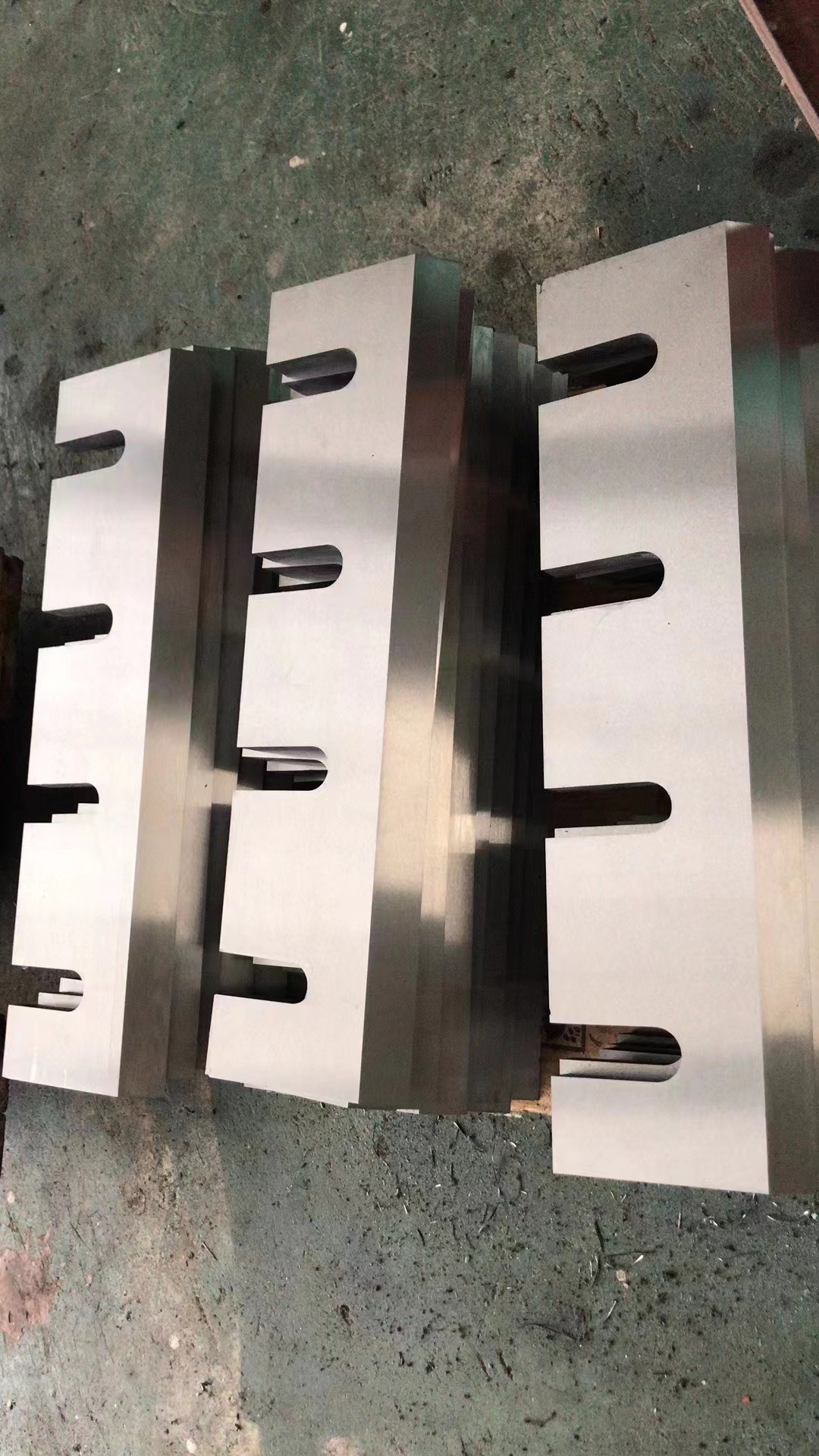
A8 Steel Wood Chipper Knives

A8 Steel Wood Chipper Knives
Availability:
Quantity:

Maximize Your Uptime with A8 Modified Tool Steel Wood Chipper Knives

In the demanding world of forestry and land clearing, your equipment is only as efficient as its cutting edge. Our A8 steel wood chipper knives are engineered for professionals who demand the highest level of impact toughness and abrasion resistance—designed to keep your operations running smoothly, minimize downtime, and handle the harshest working conditions.

Why Choose A8 Modified Tool Steel for Wood Chipper Knives?

A8 modified tool steel stands out in forestry applications for its unique focus on toughness and reliability, addressing the common pain points of standard tool steels. Unlike conventional options, A8 is engineered to balance strength and durability, making it ideal for the unpredictable nature of wood chipping.

Core Advantages of A8 Tool Steel

Superior Impact Toughness:

 A8 offers significantly higher impact strength than standard D2 steel. Its low carbon content and optimized chromium, molybdenum, and vanadium alloy ratio prioritize toughness, meaning fewer chips and cracks when processing hardwood, frozen timber, or contaminated brush—common challenges in forestry and land clearing.

Precision Heat Treatment

Each A8 wood chipper knife undergoes vacuum heat treatment, achieving an optimal hardness of HRC 55-58. This ensures a razor-sharp edge that maintains its sharpness through the toughest jobs, reducing the need for frequent sharpening or replacement.

Consistent Performance:

 Precision-ground to tight tolerances, our A8 knives ensure smooth feeding and uniform chip quality. This not only improves the end product but also reduces strain on your chipper’s engine and belts, extending the lifespan of your entire equipment.

A8 vs. A8B (A8 Upgraded Version) vs. D2: Key Differences & Optimal Applications

Choosing the right tool steel depends on your specific chipping needs—whether you prioritize impact resistance, wear resistance, or cost-effectiveness. Below is a detailed, integrated comparison of A8, its upgraded version A8B, and the widely used D2 steel, including their composition, performance, and ideal use cases.

A8: High-Toughness Workhorse for Demanding Conditions

At its core, A8 is formulated for high impact resistance and toughness, making it perfect for scenarios where wood type and condition are unpredictable. Its composition—low carbon (0.5–0.6%), medium chromium (≈5%), and high molybdenum/tungsten—ensures a tough matrix that resists chipping and breaking, even when processing hardwood, knotty wood, or wet wood.
Application: Ideal for small and medium-sized chippers and branch shredders, where raw materials include logs, branches, and mixed wood with high impact potential. A8 excels in jobs where toughness is non-negotiable, such as land clearing or residential tree care.

A8B: A8’s Upgraded, Balanced Performer (Highest Cost-Effectiveness)

A8B is a modified and optimized version of A8, designed to bridge the gap between toughness and wear resistance. By slightly increasing the carbon, chromium, molybdenum, vanadium, and tungsten content—while retaining A8’s high toughness—A8B delivers significantly improved wear resistance and high-temperature stability.
Advantages: Toughness equal to A8, with wear resistance that outperforms A8; it resists annealing under high temperatures during continuous operation, keeping the cutting edge sharp longer. This balance makes A8B the most cost-effective option for most professional applications.
Application: Perfect for medium and large-scale continuous production lines, such as papermaking, wood-based panels, and pulping. It excels at processing hardwoods like rubber wood and eucalyptus, where both efficiency and long service life are critical.

D2: Ultra-Wear-Resistant, High-Hardness Option (For Low-Impact Scenarios)

D2 is a high-carbon, high-chromium (≈12%) cold work steel, often called “semi-stainless steel” for its corrosion resistance. Its composition—high carbon (1.4–1.6%) and ultra-high chromium—forms a large number of hard carbides, delivering extreme wear resistance and a long service life.
Advantages: Wear resistance is 2–3 times that of A8, with exceptional edge retention that minimizes replacement frequency. It also offers better corrosion resistance than A8 and A8B, making it suitable for humid or corrosive environments.
Disadvantages: Poor toughness and high brittleness, making it prone to cracking under high impact (e.g., when processing knotty or frozen wood). It is also more expensive and harder to process than A8 and A8B.
Application: Best for large-scale, high-capacity chippers in continuous operation, where raw materials are low-impact but high-wear—such as softwood, bamboo, and straw. D2 is ideal for operations that prioritize ultra-long service life and low maintenance over impact resistance.

Comparison of Material and Core Performance

Comparison Items

A8

A8B (A8 Modified)

D2

Material Type

High Toughness Cold Work Die Steel

A8 Optimized & Upgraded Steel

High Carbon High Chromium Cold Work Die Steel

Core Advantages

Extremely high toughness, strong impact resistance,   not easy to break

Dual advantages of toughness and wear resistance,   high temperature resistance

Top-level wear resistance, high hardness, long   service life

Typical Hardness

HRC 58–62

HRC 58–62 (more stable)

HRC 60–62

Toughness

★★★★★ (Optimal)

★★★★☆ (Better than A8)

★★☆☆☆ (Weakest)

Wear Resistance

★★★☆☆

★★★★☆ (Better than A8)

★★★★★ (Optimal)

High Temperature Resistance

Good

Excellent (not easy to anneal)

Average (easy to soften at high temperature)

Corrosion Resistance

Average

Good

Semi-stainless steel (better than A8/A8B)

Price

Medium-Low

Medium

High


Selection Suggestions

Mixed raw materials, high impact (hardwood, knotty wood, wet wood) → Choose A8, prioritize toughness to prevent breakage.

Continuous production, mainly hardwood, pursuing balance between efficiency and service life → Choose A8B, with optimal comprehensive performance and highest cost performance.

Softwood/bamboo/straw, high capacity, pursuing ultra-long service life and less blade replacement → Choose D2, with the strongest wear resistance and longest service life.


Composition & Performance Logic: Why Each Steel Performs Differently

The performance differences between A8, A8B, and D2 stem directly from their alloy compositions, which are tailored to specific priorities:

A8: Low carbon (0.5–0.6%) ensures matrix toughness; medium chromium (≈5%) provides basic wear resistance; molybdenum and tungsten work together to strengthen the steel, achieving superior impact resistance and preventing breakage. Priority: Impact resistance for high-impact working conditions.

A8B: Fine-tuned on A8’s formula, with slightly increased C, Cr, Mo, V, and W. This enhances wear resistance and high-temperature stability while preserving A8’s toughness. Priority: Balanced performance and cost-effectiveness for continuous production.

D2: High carbon (1.4–1.6%) forms hard carbides; ultra-high chromium (≈12%) delivers top-tier wear resistance and corrosion. Priority: Maximum wear resistance and longest service life for low-impact, high-wear raw materials.

Standard Chemical Composition Table

Element

A8

A8B (A8 Modified)

D2

Key Functions

Carbon (C)

0.50–0.60%

0.55–0.65%

1.40–1.60%

Determines basic hardness and wear resistance;   the higher the content, the harder and more brittle

Chromium (Cr)

4.75–5.50%

5.20–6.00%

11.0–13.0%

Improves hardenability and corrosion resistance;   forms hard carbides (e.g., Cr₇C₃)

Molybdenum (Mo)

1.15–1.65%

1.40–1.80%

0.70–1.20%

Refines grains, improves toughness and   high-temperature stability; inhibits temper brittleness

Vanadium (V)

0.80–1.40%

1.00–1.50%

0.50–1.10%

Forms extremely hard VC carbides, significantly   improves wear resistance; prevents grain growth

Tungsten (W)

1.00–1.50%

1.20–1.70%

Improves hot hardness and high-temperature wear   resistance

Manganese (Mn)

0.20–0.50%

0.30–0.60%

0.10–0.60%

Deoxidation, improves hardenability

Silicon (Si)

0.20–0.80%

0.50–1.00%

0.10–0.60%

Deoxidation, improves strength and oxidation   resistance

Phosphorus (P)

≤0.030%

≤0.025%

≤0.030%

Harmful impurity, reduces toughness

Sulfur (S)

≤0.030%

≤0.025%

≤0.030%

Harmful impurity, reduces toughness


Summary of Composition Differences

A8: Low C, medium Cr, high Mo/W → Strongest toughness

A8B: C/Cr/Mo/V/W are all higher than A8 → Toughness ≈ A8, significantly improved wear resistance

D2: High C, ultra-high Cr → Strongest wear resistance, weakest toughness


Choose A8 for high impact, A8B for continuous hardwood processing, and D2 for wear resistance and long life.


wood chipper shredder blades

wood chipper blades replacement

woods shredder blades

wood-chipper-blades-07wood-chipper-blades-factory-direct-01wood-chipper-blades-factory-direct

blades-factory-direct


Previous: 
Next: 
200
Phone:
86-15852949220
Address:
Maanshan Bowang District
About Us

Nanjing Alas International Co., Ltd. is a professional industrial tooling manufacturer focused on shear blades, bending dies, shredder blades, and custom wear parts. We offer full application engineering, material selection, setup guidance, and after-sales support to global customers.
Tell us your requirements, and our engineering team will provide professional solutions for blade specification, tool life optimization, and cost-effective production.

Subscribe
Sign up for our newsletter to receive the latest news.
​Copyright 2021 NANJING ALAS INTERNATIONAL CO., LTD            苏ICP备2021025144号