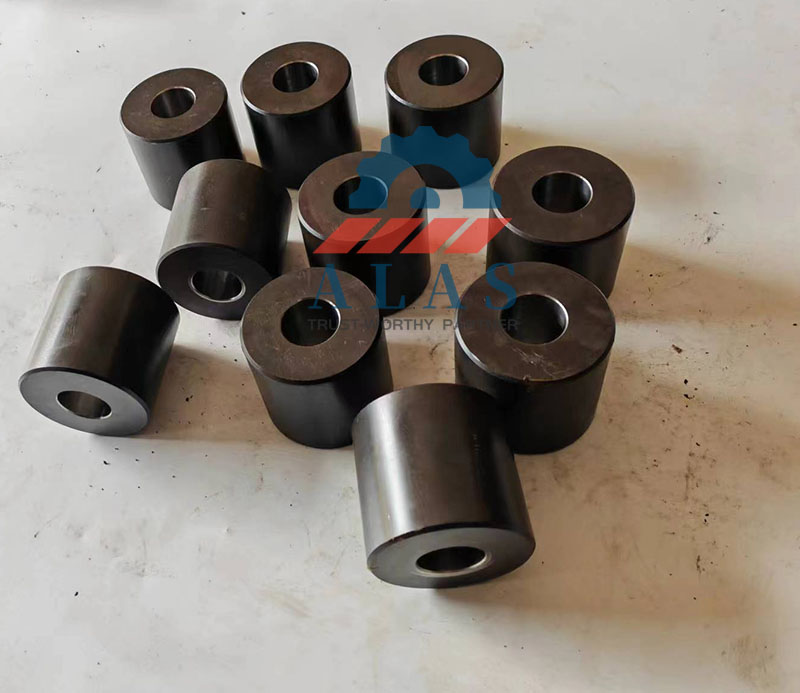
Rebar Bender Roller Dies
Rebar Bender Roller Dies are key parts of rebar processing machines. They directly affect rebar bending accuracy, finished product quality and equipment efficiency. Based on the three-point bending principle, these dies can bend different rebar sizes into shapes needed for construction (such as stirrups, beam and column reinforcement). As essential Automatic rebar bender parts, they work with most semi-automatic and fully automatic CNC rebar bending machines.
Definition and Principle
Definition
Rebar Bender Roller Dies are special molds mounted on a rebar bender’s working disc. They have three main parts: a central roller, a movable roller and a positioning roller. These Steel bar bending rollers work together to bend rebar precisely. You can replace rollers to fit different rebar diameters, with Center pins for bender ensuring stable positioning.
Working Principle
These dies use the three-point bending principle. Rebar is held tightly between the central and positioning rollers. The machine drives the movable roller to apply even pressure, bending the rebar around the central roller. Changing the central roller’s diameter adjusts the bending radius. The working disc’s rotation controls the bending angle (0–180° stepless adjustment). In rebar processing, bending accuracy is critical for building safety—die quality ensures consistent results.
Main Specifications
Classification by Function
Dies are split into three types by function: central, movable and positioning rollers. The central roller is the core pivot, determining the minimum bending radius. The movable roller applies bending force and controls the angle. The positioning roller prevents rebar from shifting during bending. Together, they form reliable Steel bar bending rollers.
Classification by Rebar Size
Dies are grouped by the rebar diameter they handle: small (6–16mm, for stirrups), medium (18–28mm, for main structural rebar), large (32–50mm, for heavy components) and special (custom for irregular or high-strength rebar). These options make them versatile Automatic rebar bender parts.
Core Parameters
Key parameters must match the machine and rebar: Roller diameter (25–120mm, 1.5–5x the rebar diameter), width (15–50mm, based on rebar size and quantity), and shaft hole diameter (16–40mm). The shaft hole must fit the machine’s working disc and Center pins for bender to ensure stable installation.
Material and Manufacturing
Common Materials
Die material determines hardness, wear resistance and impact resistance. Main options: Cr12MoV (good for regular rebar) and D2 (tough for heavy use). Both ensure durable Steel bar bending rollers.
Manufacturing Processes
Precision manufacturing is key. Processes include: precision forging (strengthens the roller), vacuum heat treatment (prevents deformation), and precision grinding (controls diameter tolerance to ±0.02mm). This ensures high-quality Automatic rebar bender parts.
Applications and Purchasing
Application Scenarios
These dies are used in building, bridge, tunnel construction, rebar processing plants and precast factories. They bend rebar for beams, columns, bridges and prefabricated components. Stable Center pins for bender and dies ensure reliable production.
Purchasing Tips
When buying, focus on compatibility: ensure the die fits your bender (shaft hole and Center pins for bender), matches your rebar size, and uses the right material. Choose quality Steel bar bending rollers for long service life.
Maintenance and Replacement
Daily Maintenance
Check rollers and Center pins for bender before use. Clean off debris, avoid overloading, and apply anti-rust oil after use. This extends the life of Automatic rebar bender parts.
Regular Maintenance
Do a full check weekly for batch processing. Disassemble, clean, inspect for wear, lubricate, and polish minor damage. Store rollers in a dry, ventilated area.
Replacement Standards
Polish minor scratches. Replace dies with severe wear, cracks, deformation or misaligned shaft holes.