


Phone:
86-15852949220


 |


Mounted on a rotating cutter head
Common types: 4-6 blades, 8-12 blades, spiral blades
Good for large-diameter logs
Makes high-quality, clean wood chips
Mostly used in paper mills
Fixed on a cylindrical cutter drum
Works well with different raw materials (bark, wood scraps, small-diameter wood)
Suitable for small and medium processing plants
Good for complex raw material needs
Wood chips are slightly less even than disc blades
We don’t just sell blades—we offer application engineering support
Your TCO (Total Cost of Ownership) depends on how often you change and regrind blades
We optimize the blade’s edge for your specific wood type
This extends blade service time, making your mill more profitable
Chipping hardwood or frozen logs needs a blade that won’t break under stress
ALAS Wood Chipper Knives are made from Modified A8 Tool Steel
This steel balances heat resistance and shock resistance well
Prevents small chips (common in lower-quality blades)
Keeps your operation running smoothly all year
Type: High-toughness cold work die steel
Best toughness and strong impact resistance
Hardness: HRC 58–62
Wear resistance: Medium
High-temperature resistance: Good
Corrosion resistance: Average
Type: Optimized A8 steel
Balances toughness and wear resistance; excellent high-temperature resistance
Hardness: HRC 58–62 (more stable)
Wear resistance: Better than A8
High-temperature resistance: Excellent (won’t easily soften)
Corrosion resistance: Good
Type: High-carbon, high-chromium cold work die steel
Highest wear resistance and hardness; longest service life
Hardness: HRC 60–62
Wear resistance: Best (2–3 times that of A8)
High-temperature resistance: Average (easily softens)
Corrosion resistance: Good (semi-stainless, better than A8/A8B)
Weakness: Poor toughness, easy to crack under high impact
Mixed raw materials, high impact (hardwood, knotty wood, wet wood) → Choose A8 (prioritize toughness)
Continuous production, mainly hardwood (balance efficiency and service life) → Choose A8B (best cost-performance)
Softwood/bamboo/straw, high capacity (want long service life, fewer blade changes) → Choose D8 (best wear resistance)
Carbon (C): Determines hardness and wear resistance (higher = harder but more brittle)
Chromium (Cr): Improves durability and corrosion resistance
Molybdenum (Mo): Makes the blade tougher and more heat-stable
Vanadium (V): Improves wear resistance
Tungsten (W): Improves heat resistance (not in D2)
A8: Low carbon, medium chromium, high molybdenum/tungsten → Strongest toughness
A8B: Slightly higher carbon, chromium, molybdenum/vanadium/tungsten than A8 → Toughness same as A8, better wear resistance
D2: High carbon, ultra-high chromium → Strongest wear resistance, weakest toughness
A: The "best" material depends on your wood type. For general hardwoods and frozen wood, we recommend Modified A8 Steel due to its extreme impact toughness. For softwoods or high-volume clean wood, D2 (Cr12MoV) or A8 offer the best wear resistance.
A: Most industrial chipper knives perform best at a 30° to 35° angle. A 30° angle is sharper and cuts faster but is more prone to chipping if it hits stones or nails. A 35° angle is more durable for "dirty" wood containing bark or debris.
A: This depends on the wood species and cleanliness. Generally, knives should be inspected every 8–10 hours of operation. If you notice "stringy" chips, excessive dust, or a drop in engine RPM, it's time to sharpen.
A: Yes. We manufacture OEM-standard replacement blades compatible with leading brands like Morbark, Vermeer, Bandit, Carlton, and Woods. We can also customize blades based on your specific drawings or part numbers to ensure a 100% perfect fit.
A: Cracking is usually caused by improper heat treatment. We use Vacuum Heat Treatment to ensure a uniform hardness of HRC 55-60. This process creates a "tough core" that absorbs shocks from knots and frozen logs without brittle failure or chipping.
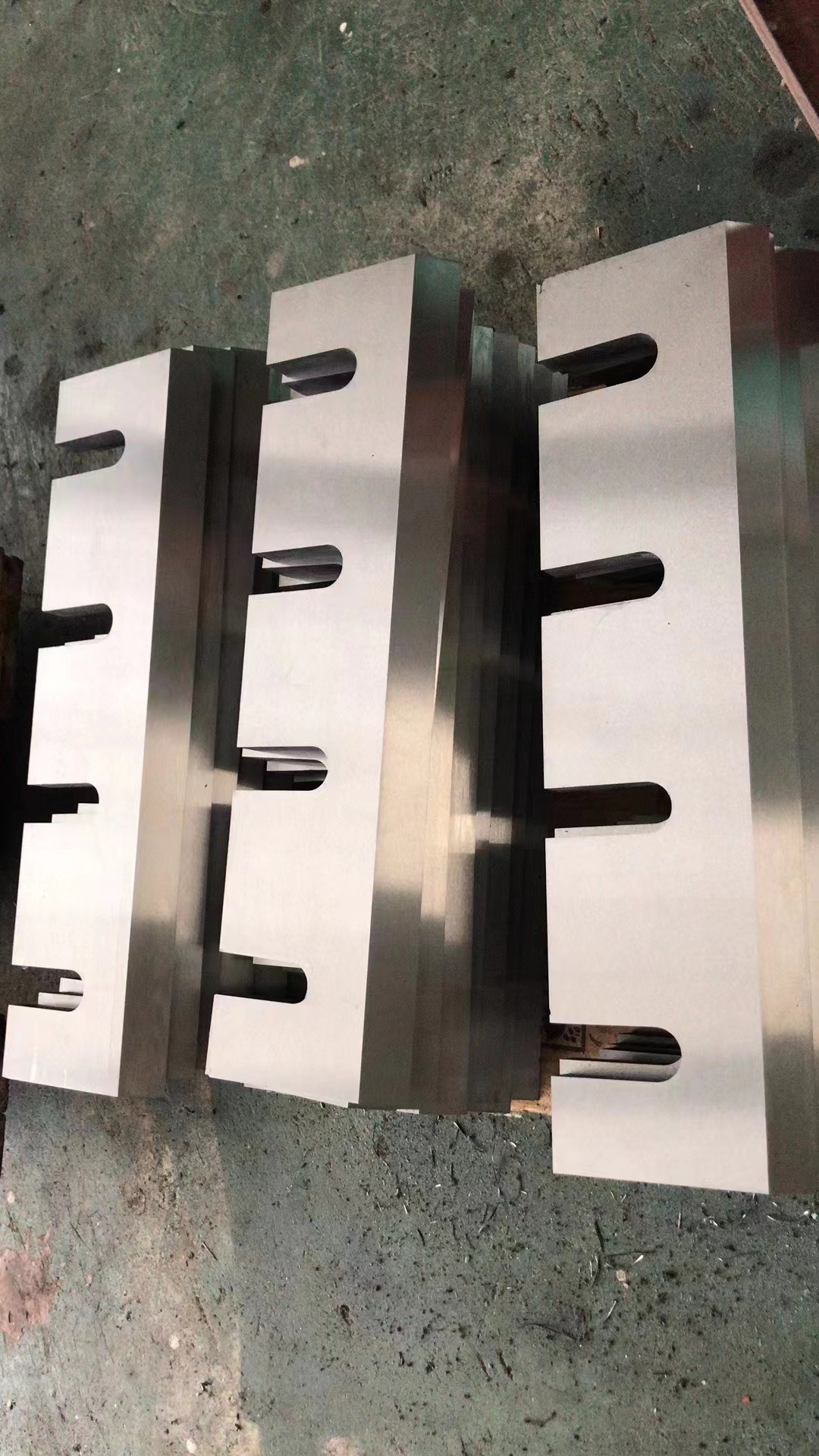
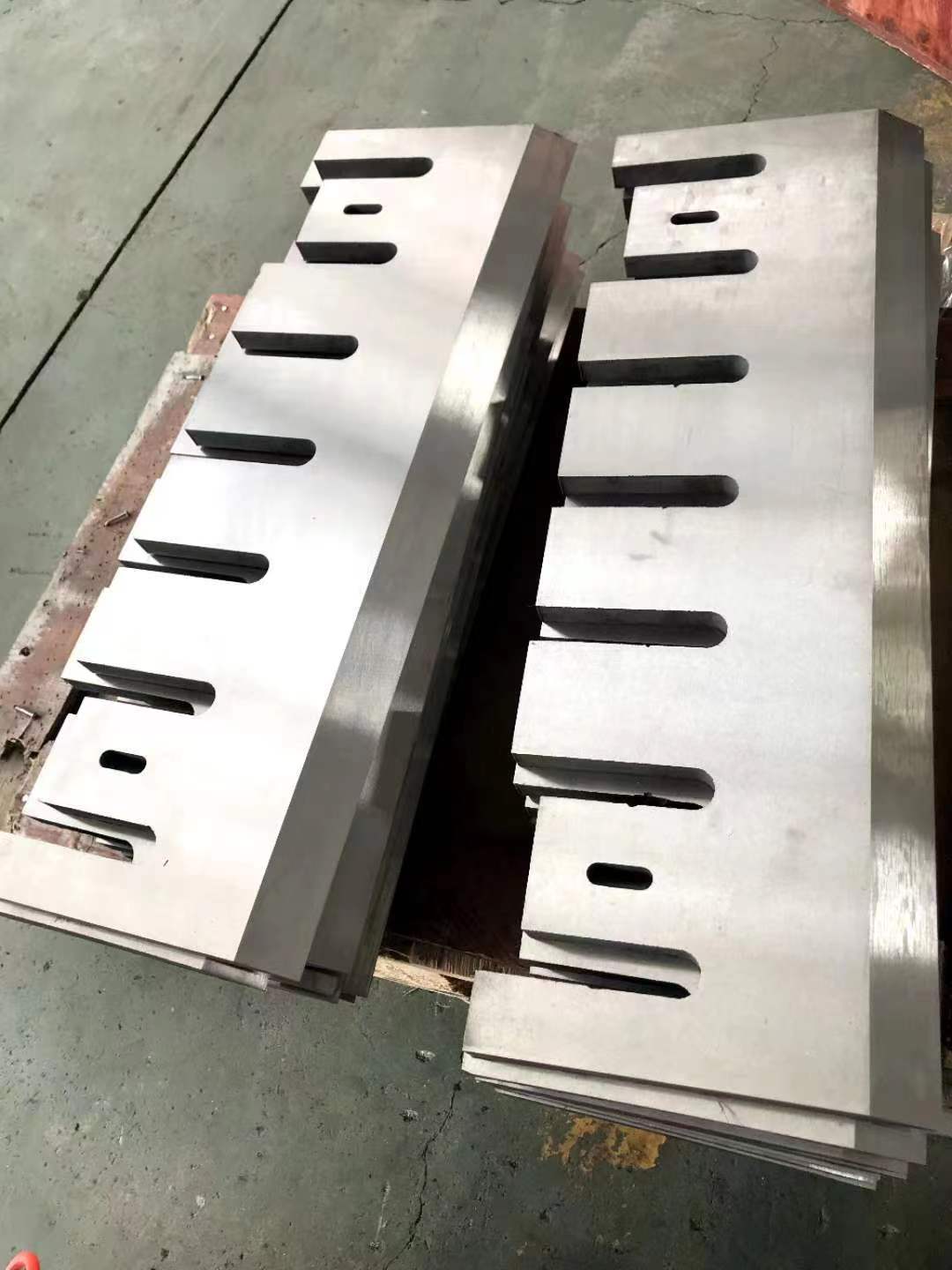

English: Wood Chipper Knives | Forestry Chipper Blades
French (Français): Lames de déchiqueteuse à bois | Couteaux pour broyeur forestier
Portuguese (Português): Facas para picador de madeira | Lâminas para triturador florestal
Polish (Polski): Noże do rębaka do drewna | Noże do rębarki leśnej
Turkish (Türkçe): Odun Parçalayıcı Bıçakları | Ağaç Yonga Bıçakları
Vietnamese (Tiếng Việt): Lưỡi dao máy băm gỗ | Dao băm dăm gỗ lâm nghiệp
Thai (ภาษาไทย): ใบมีดเครื่องสับไม้ | ใบมีดเครื่องย่อยกิ่งไม้สำหรับป่าไม้
Filipino: Mga Kutsilyo ng Wood Chipper | Mga Blade para sa Forestry Chipper
Arabic (العربية): سكاكين آلة تقطيع الخشب | شفرات ماكينات الحراجة وتقطيع الأخشاب
Hindi (हिन्दी): लकड़ी काटने वाले चाकू (Wood Chipper Knives) | वानिकी चिपर ब्लेड
Indonesian (Bahasa Indonesia): Pisau Pencacah Kayu | Bilah Mesin Chipper Kehutanan
Malay (Bahasa Melayu): Pisau Mesin Pencarik Kayu | Bilah Chipper Perhutanan
Dutch (Nederlands): Houtversnippermessen | Messen voor bosbouwversnipperaars
Swedish (Svenska): Flishuggsknivar | Knivar för skogsbrukstugg
Hungarian (Magyar): Faaprító kések | Erdészeti aprító pengék
Greek (Ελληνικά): Μαχαίρια θρυμματιστή ξύλου | Λεπίδες δασοκομικών μηχανημάτων
Nanjing Alas International Co., Ltd. is a professional industrial tooling manufacturer focused on shear blades, bending dies, shredder blades, and custom wear parts. We offer full application engineering, material selection, setup guidance, and after-sales support to global customers.
Tell us your requirements, and our engineering team will provide professional solutions for blade specification, tool life optimization, and cost-effective production.