


Phone:
86-15852949220


 |


| Quantity: | |
|---|---|
For contractors and steel fabrication shops, maintaining electric hydraulic rebar cutters is a continuous task. When the original factory blades wear out, the choice of replacement is critical. Universal replacement blades offer a high-performance, cost-effective solution that fits a wide variety of portable cutting tools without compromising on precision.
A truly universal blade is designed based on the most common industry standards for bolt-hole spacing, thickness, and shearing geometry. Our blades are engineered to be compatible with major brands used on jobsites worldwide. This versatility allows fleet managers to stock a single type of blade that services multiple machine models, simplifying inventory and reducing costs.
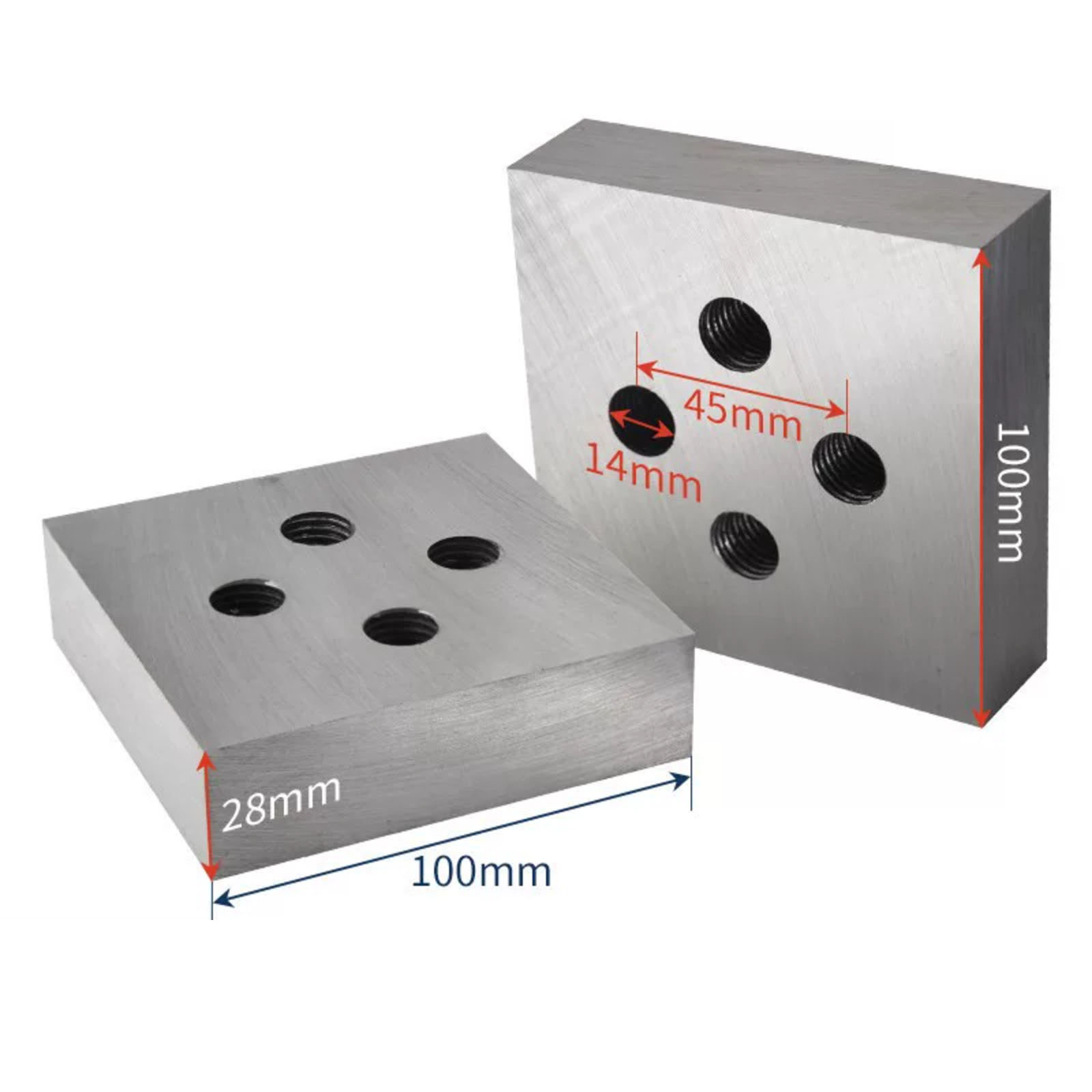
| NO. | Product Name | Specification Dimensions (length x width x height/thickness) ) | Material | Remarks |
| 1 | Rebar shear blade size | 78*78*17 mm | H13 | Customization services are available; we can manufacture according to your drawings, with a minimum order quantity of 2 piece. |
| 2 | 80*80*17mm | |||
| 3 | 80*80*30 mm | |||
| 4 | 83*83*16 mm | |||
| 5 | 83*83*26 mm | |||
| 6 | 83*83*26 mm | |||
| 7 | 90*90*20mm | |||
| 8 | 90*90*26 mm | |||
| 9 | 100*100*20mm | |||
| 10 | 100*100*30 mm | |||
| 11 | 110*110*20 mm | |||
| 12 | 100*30*75 mm | |||
| 13 | 85x65x30 mm | |||
I will provide you with usage suggestions based on material selection, equipment matching, cutting material, and manufacturing process:
The blade material directly determines its hardness, toughness, and service life. Choose the material according to your cutting needs:
C: 0.32–0.45%Cr: 4.75–5.50%Mo: 1.10–1.75%Si: 0.80–1.20%Mn: 0.20–0.60%V: 0.80–1.20%P, S ≤ 0.030%Balance Fe
Medium C: Balances strength and high toughness to avoid chipping.
Cr + Mo + V: Greatly improves heat resistance, hot cracking resistance and impact strength.
Si: Improves high-temperature strength and temper stability.
Hardness: HRC 48–54
Excellent toughness, impact resistance and chipping resistance,outstanding heat resistance and thermal fatigue resistance.
Application: Hot shear blades, thick blades, and high-impact rebar cutting conditions.
Currently the mainstream high-quality blade material on the market, possessing both extremely high wear resistance and toughness, with outstanding resistance to thermal cycling. Even during long-term, high-intensity continuous cutting, it is not prone to deformation or chipping, making it suitable for large-scale processing of high-strength rebar.
C: 1.45–1.70%Cr: 11.00–12.50%Mo: 0.40–0.60%V: 0.15–0.30%Si ≤ 0.40%Mn ≤ 0.40%P, S ≤ 0.030%Balance Fe
Effects of Chemical Composition
High C + high Cr: Forms massive hard carbides for extremely high wear resistance.
Molybdenum (Mo): Refines grains, reduces brittleness, improves toughness and fatigue resistance.
Vanadium (V): Further refines microstructure, enhances wear resistance and edge retention.
High compressive and bending strength,excellent wear life and chipping resistance.
High-hardness, high-wear-resistance tool steel. Its hardness far exceeds that of ordinary alloy blades, and it can handle the cutting needs of high-hardness cold-rolled rebar. Note that its toughness is relatively weaker; it is recommended to avoid using it in high-impact, large-gap cutting conditions.
C: 0.85–0.95%Si: 1.20–1.60%Cr: 0.95–1.25%Mn: 0.30–0.60%P, S ≤ 0.030%Balance Fe
Carbon (C): Increases hardness and wear resistance for a sharp cutting edge.
Silicon (Si): Improves temper stability and red hardness, preventing softening during continuous shearing.
Chromium (Cr): Enhances hardenability for uniform hardness across the blade.
Manganese (Mn): Improves toughness and reduces quenching cracking risk.
Hardness: HRC 60–62
High compressive strength, good wear resistance,moderate toughness and impact resistance.
Application: Economical small-to-medium rebar cutting blades.
An economical and practical choice. It has good hardenability and machinability, suitable for cutting ordinary medium- and low-strength rebar, and is widely used in small and medium-sized projects.
Shape Matching: Common blade shapes are square (four sides usable) and rectangular. Square blades allow for the rotation of four cutting edges, significantly extending their service life, suitable for large-scale processing scenarios; rectangular blades are mostly single-sided or double-sided, suitable for small-tonnage cutting machines.
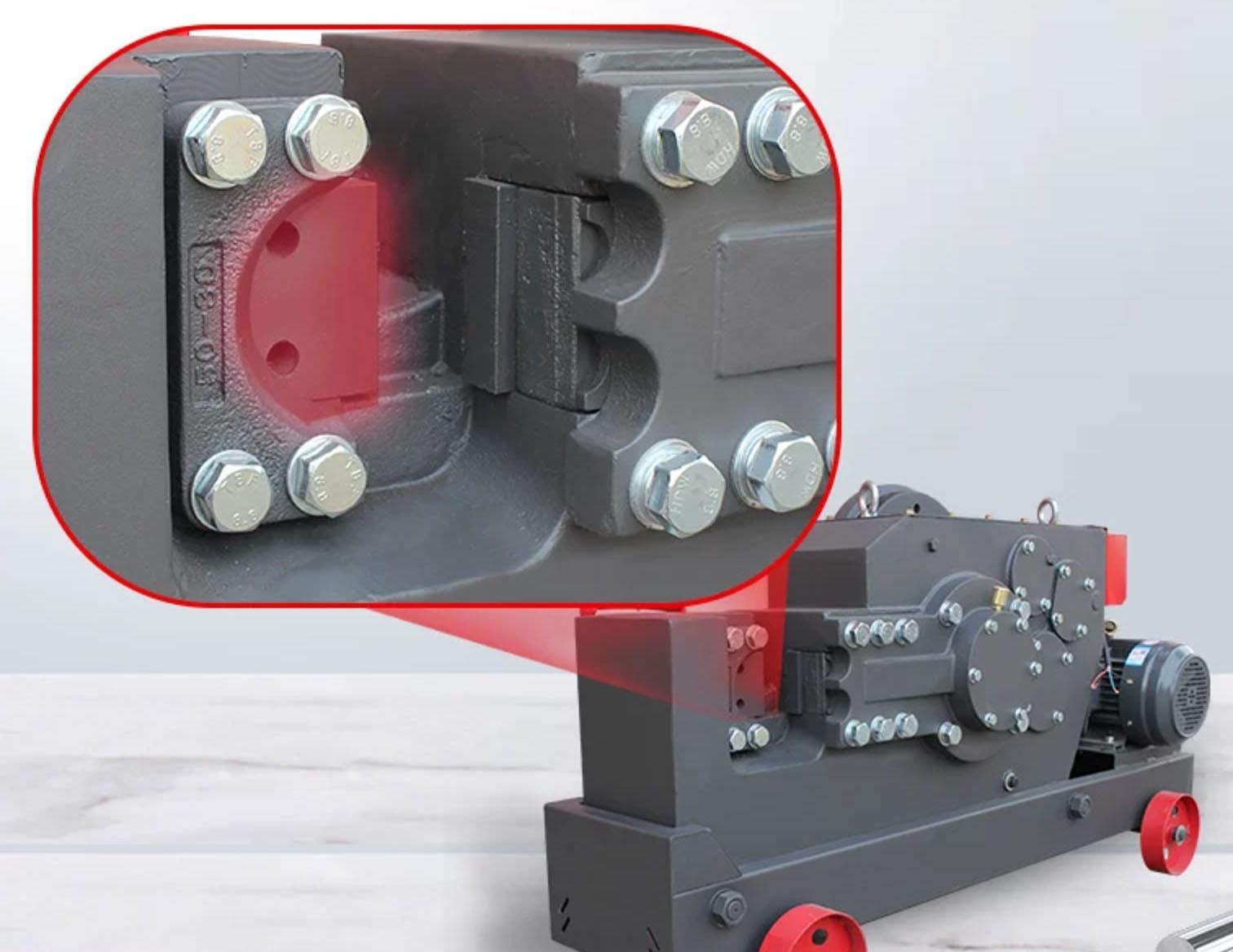
Size Matching: Different tonnage cutting machines (such as GQ40, GQ50, GQ60) have specific standards for blade thickness, length, width, and bolt hole spacing. Selection must strictly follow the equipment's instruction manual.
Ordinary Round Steel: Low hardness and low cutting resistance. 9CrSi or Cr12MoV materials are sufficient, meeting basic cutting needs while controlling costs.
High-Strength Ribbed Rebar : High hardness, and the ribbed surface structure easily wears down the blade. It is recommended to use H13 material. Its excellent wear resistance and toughness can effectively reduce the risk of chipping, making it suitable for high-strength continuous cutting.
Blades processed through full grinding and vacuum heat treatment are preferred. These blades have a uniform hardness distribution, good edge retention, and are less prone to chipping or dulling during cutting.
Our blades, through optimized hardening depth and toughness, address the common industry problem of brittle fracture when cutting high-strength rebar
Base Grade | Steel Category | Chinese Standard GB/T 1299 | American Standard ASTM | German Standard DIN (W-Nr.) | Japanese Standard JIS |
H13 | Hot Work Die Steel | 4Cr5MoSiV1 | H13 | 1.2344 | SKD61 |
Cr12MoV | Cold Work Die Steel | Cr12MoV | 1.2601 | SKD11 | |
9CrSi | Alloy Tool Steel (Cutting Tool Steel) | 9CrSi | 1.2108 |


Based on different working conditions and budget requirements, we offer three general industrial-grade alloy steel materials:
Chipping is usually caused by the following factors:
For contractors and steel fabrication shops, maintaining electric hydraulic rebar cutters is a continuous task. When the original factory blades wear out, the choice of replacement is critical. Universal replacement blades offer a high-performance, cost-effective solution that fits a wide variety of portable cutting tools without compromising on precision.
A truly universal blade is designed based on the most common industry standards for bolt-hole spacing, thickness, and shearing geometry. Our blades are engineered to be compatible with major brands used on jobsites worldwide. This versatility allows fleet managers to stock a single type of blade that services multiple machine models, simplifying inventory and reducing costs.
| NO. | Product Name | Specification Dimensions (length x width x height/thickness) ) | Material | Remarks |
| 1 | Rebar shear blade size | 78*78*17 mm | H13 | Customization services are available; we can manufacture according to your drawings, with a minimum order quantity of 2 piece. |
| 2 | 80*80*17mm | |||
| 3 | 80*80*30 mm | |||
| 4 | 83*83*16 mm | |||
| 5 | 83*83*26 mm | |||
| 6 | 83*83*26 mm | |||
| 7 | 90*90*20mm | |||
| 8 | 90*90*26 mm | |||
| 9 | 100*100*20mm | |||
| 10 | 100*100*30 mm | |||
| 11 | 110*110*20 mm | |||
| 12 | 100*30*75 mm | |||
| 13 | 85x65x30 mm | |||
I will provide you with usage suggestions based on material selection, equipment matching, cutting material, and manufacturing process:
The blade material directly determines its hardness, toughness, and service life. Choose the material according to your cutting needs:
C: 0.32–0.45%Cr: 4.75–5.50%Mo: 1.10–1.75%Si: 0.80–1.20%Mn: 0.20–0.60%V: 0.80–1.20%P, S ≤ 0.030%Balance Fe
Medium C: Balances strength and high toughness to avoid chipping.
Cr + Mo + V: Greatly improves heat resistance, hot cracking resistance and impact strength.
Si: Improves high-temperature strength and temper stability.
Hardness: HRC 48–54
Excellent toughness, impact resistance and chipping resistance,outstanding heat resistance and thermal fatigue resistance.
Application: Hot shear blades, thick blades, and high-impact rebar cutting conditions.
Currently the mainstream high-quality blade material on the market, possessing both extremely high wear resistance and toughness, with outstanding resistance to thermal cycling. Even during long-term, high-intensity continuous cutting, it is not prone to deformation or chipping, making it suitable for large-scale processing of high-strength rebar.
C: 1.45–1.70%Cr: 11.00–12.50%Mo: 0.40–0.60%V: 0.15–0.30%Si ≤ 0.40%Mn ≤ 0.40%P, S ≤ 0.030%Balance Fe
Effects of Chemical Composition
High C + high Cr: Forms massive hard carbides for extremely high wear resistance.
Molybdenum (Mo): Refines grains, reduces brittleness, improves toughness and fatigue resistance.
Vanadium (V): Further refines microstructure, enhances wear resistance and edge retention.
High compressive and bending strength,excellent wear life and chipping resistance.
High-hardness, high-wear-resistance tool steel. Its hardness far exceeds that of ordinary alloy blades, and it can handle the cutting needs of high-hardness cold-rolled rebar. Note that its toughness is relatively weaker; it is recommended to avoid using it in high-impact, large-gap cutting conditions.
C: 0.85–0.95%Si: 1.20–1.60%Cr: 0.95–1.25%Mn: 0.30–0.60%P, S ≤ 0.030%Balance Fe
Carbon (C): Increases hardness and wear resistance for a sharp cutting edge.
Silicon (Si): Improves temper stability and red hardness, preventing softening during continuous shearing.
Chromium (Cr): Enhances hardenability for uniform hardness across the blade.
Manganese (Mn): Improves toughness and reduces quenching cracking risk.
Hardness: HRC 60–62
High compressive strength, good wear resistance,moderate toughness and impact resistance.
Application: Economical small-to-medium rebar cutting blades.
An economical and practical choice. It has good hardenability and machinability, suitable for cutting ordinary medium- and low-strength rebar, and is widely used in small and medium-sized projects.
Shape Matching: Common blade shapes are square (four sides usable) and rectangular. Square blades allow for the rotation of four cutting edges, significantly extending their service life, suitable for large-scale processing scenarios; rectangular blades are mostly single-sided or double-sided, suitable for small-tonnage cutting machines.
Size Matching: Different tonnage cutting machines (such as GQ40, GQ50, GQ60) have specific standards for blade thickness, length, width, and bolt hole spacing. Selection must strictly follow the equipment's instruction manual.
Ordinary Round Steel: Low hardness and low cutting resistance. 9CrSi or Cr12MoV materials are sufficient, meeting basic cutting needs while controlling costs.
High-Strength Ribbed Rebar : High hardness, and the ribbed surface structure easily wears down the blade. It is recommended to use H13 material. Its excellent wear resistance and toughness can effectively reduce the risk of chipping, making it suitable for high-strength continuous cutting.
Blades processed through full grinding and vacuum heat treatment are preferred. These blades have a uniform hardness distribution, good edge retention, and are less prone to chipping or dulling during cutting.
Our blades, through optimized hardening depth and toughness, address the common industry problem of brittle fracture when cutting high-strength rebar
Base Grade | Steel Category | Chinese Standard GB/T 1299 | American Standard ASTM | German Standard DIN (W-Nr.) | Japanese Standard JIS |
H13 | Hot Work Die Steel | 4Cr5MoSiV1 | H13 | 1.2344 | SKD61 |
Cr12MoV | Cold Work Die Steel | Cr12MoV | 1.2601 | SKD11 | |
9CrSi | Alloy Tool Steel (Cutting Tool Steel) | 9CrSi | 1.2108 |
Based on different working conditions and budget requirements, we offer three general industrial-grade alloy steel materials:
Chipping is usually caused by the following factors: