

Phone:
86-15852949220


Views: 297 Author: ALASMT Publish Time: 2026-05-30 Origin: Site
Industrial shredder blades are the critical wear components in waste recycling equipment, directly impacting throughput, power consumption, and operational stability. Selecting the right knife geometry and steel grade is essential to minimize downtime and lower your overall processing cost-per-ton. This guide analyzes practical blade classifications, mainstream alloy selection, and field-proven design optimizations to help purchasing engineers and plant operators maximize shredder tooling performance.

Industrial shredder knives must be configured based on the physical properties of the feedstock and the required output sizing. Modern recycling systems often utilize hybrid configurations to process complex, multi-material waste streams:
Shear Blades: Engineered with razor-sharp, precision-ground edges to execute clean scissor-action cuts. Optimized for pliable, low-density materials like paper, films, textiles, and rubber.
Shredding Blades (Heavy-Duty): Featuring robust, heavy-profile cross sections designed to withstand severe impact. Engineered specifically for high-torque processing of scrap metal, timber, and e-waste (WEEE).
Grinding & Granulating Knives: Designed to reduce materials into tight, uniform particle sizes, heavily utilized in plastic pelletizing production lines and secondary paper recycling.
Dual-Shaft Shredder Cutters: Multi-hook or single-hook rotary discs that deliver exceptional splitting force and maximum cutting coverage. Ideal for oversized, bulky, and high-hardness municipal or industrial waste.
Multi-Blade Combinations: Cluster-layout configurations forming multi-directional cutting pathways, dramatically increasing throughput per shaft rotation.
Combi Cut-and-Shred Knives: Hybrid blades combining piercing, tearing, and shearing profiles to reliably process heterogeneous waste streams with unpredictable material mixtures.
Adjustable Counter-Blades: Designed with slot-mounting holes to allow fine-tuning of the cutting clearance (blade gap), extending tool life and maintaining cutting efficiency as blades wear.
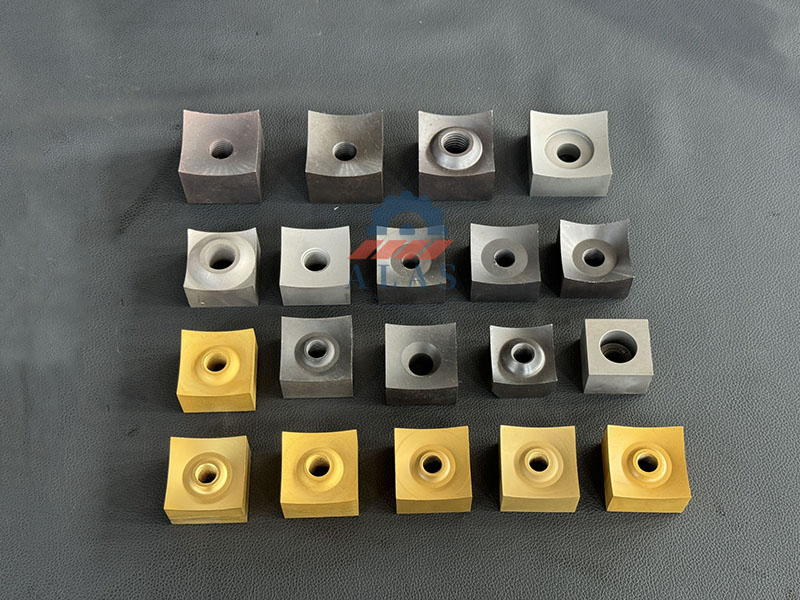


Optimizing cutter geometry and spatial layout is critical to preventing material bridging (jamming), reducing peak motor load, and extending service intervals. Premium industrial shredder knives focus on specific kinematic and structural factors:
Multi-Hook / Multi-Edge Configurations: Increases the active cutting surface per shaft rotation. This accelerates individual grabs, maximizes shearing frequency, and enhances hourly throughput.
Serrated & Aggressive Tooth Profiles: Provides superior bite on high-tensile, slippery, or fibrous feedstocks (such as plastics or radial tires), preventing material slippage and ensuring precise grain size.
Calibrated Rake & Clearance Angles: Engineered to minimize piercing resistance. Optimized cutting vectors allow for smoother material penetration, significantly lowering energy consumption and heat generation.
Staggered/Spiral Array: Knives are arranged in a staggered helical pattern along the rotor. This ensures sequential cutting rather than simultaneous engagement, smoothing out torque spikes and maintaining continuous feeding.
Dual-Shaft Counter-Rotating Interlock: Precision-meshed rotary discs eliminate material "dead zones." The synchronized counter-rotation creates a powerful intake and positive-displacement shredding zone.
Micron-Level Blade Clearance: Axial spacing and knife gaps are tightly calibrated based on feedstock friability and thickness. Proper clearance prevents material bypass, reduces friction-induced heat, and eliminates catastrophic jamming.
Different steel grades offer distinct mechanical properties. Choosing the right material based on actual abrasion, impact and corrosion conditions helps factories realize shredder tooling lifespan optimization and reduce frequent blade replacement.
Material Category | Typical Grade | Core Characteristics | Application Scenarios |
Alloy Tool Steel | D2, SKD-11, DC53 | High hardness, reliable toughness and stable cutting performance | Suitable for general plastic and metal waste processing. D2 shredder blades are the most widely used option for high-wear industrial shredding environments. |
Cemented Tungsten Carbide | WC-Co | Extreme hardness and superior wear resistance | Ideal for severe abrasive working conditions, including hard plastic and heavy scrap metal shredding. |
Martensitic Stainless Steel | 440C | Balanced hardness and excellent corrosion resistance | Works well in wet, humid and corrosive environments, especially for food-grade material processing. |
High-Speed Steel (HSS) | M-series | Stable cutting performance and decent abrasion resistance | Perfect for conventional waste recycling with medium hardness materials and normal working loads. |
Ferritic Stainless Steel | 430 | Excellent anti-corrosion performance | Used for specialized shredding equipment in food, chemical and medical waste processing industries. |
High-Strength Wear Plate | Hardox 450-600 | Premium martensitic wear-resistant steel with extreme structural toughness. | Heavy-duty MSW and primary shredding |
Powder Metallurgy Steel | PM200, ASP2030 | Fine and uniform internal structure, high hardness, great impact resistance and wear resistance. It supports complex blade shaping and stable long-term heavy-load operation. | Designed for heavy-duty shredding of hard plastic, scrap metal and glass fiber materials. It is the ideal choice for users pursuing high shredder blade wear resistance and long-term operational stability. |

Accelerating cutter wear and unscheduled downtime are critical cost drivers in high-volume recycling operations. Maximizing tool life requires an engineering understanding of specific failure modes combined with a strict preventive maintenance protocol.
Abrasive Feedstock Load: High-hardness or friction-heavy input streams (such as tire wire or contaminated post-consumer plastics) accelerate mechanical abrasion. Matching the material's structural characteristics with custom metallurgical hard-phases is essential.
Stress Concentration & Partial Fatigue: Improper cutting vectors or uncalibrated tooth entry angles cause localized load spikes. This localized stress leads to premature structural fatigue, manifesting as localized edge chipping.
Eccentric & Asymmetric Wear: Incorrect mechanical alignment during installation or uneven clamping force on the main shaft forces the knives to engage out-of-square, leading to severe asymmetric wear and catastrophic rotor imbalance.
Feedstock Pre-Sorting (Contamination Control): Implement upstream magnetic separators and density separators to eliminate non-shreddable tramp metal, ballast stones, or concrete. This protects your cutting hooks from catastrophic high-energy impacts.
Precision Clearance Calibration: Maintain optimal axial and radial blade clearances. Routinely adjust the shims or adjustable counter-knives to compensate for micro-wear, keeping the shearing action clean while preventing material bypass.
Predictive Inspection & Regrinding Intervals: Implement a strict schedule for tool inspection. Execute precision surface or profile regrinding before cutting edges become completely dull. Timely dressing minimizes the required stock removal per grind and dramatically extends the overall lifespan of the knife blank.

Achieving long-term equipment stability and cost reduction in recycling operations requires an engineered approach to blade geometry and metallurgy. Upgrading from low-grade machinery steel to premium options like D2 shredder blades or SKD11 shredder knives prevents premature failure, smooths out processing cycles, and lowers your long-term operating costs. Ultimately, proper tool optimization translates directly into higher tons-per-hour output and a stronger bottom line for your recycling facility.
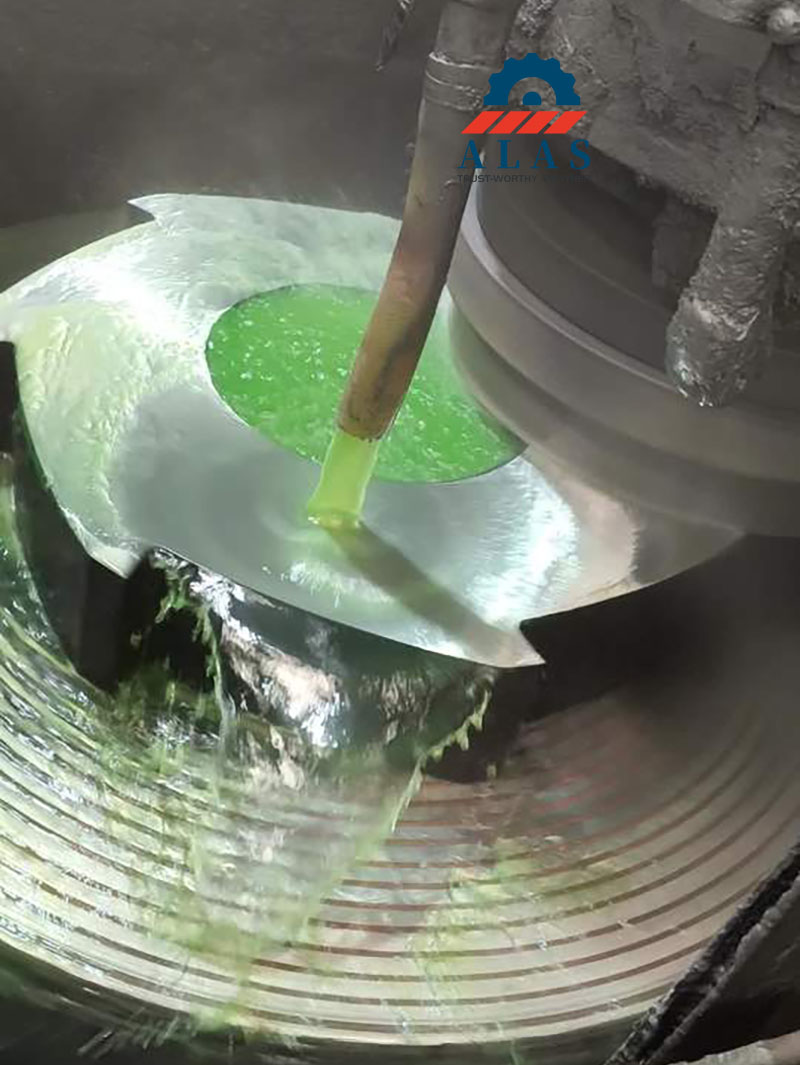


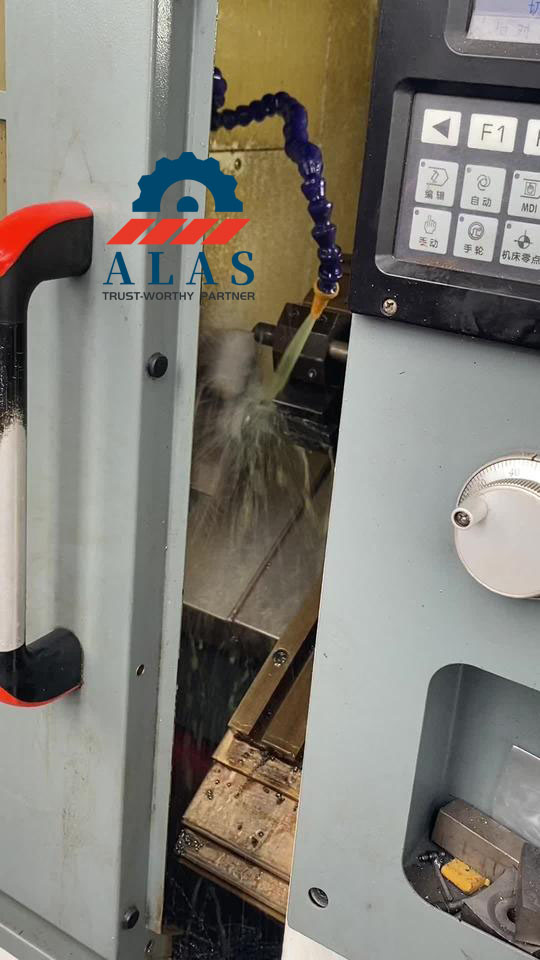
Based in China, Nanjing Alas International Co., Ltd. is a premier custom manufacturer and heavy-duty supplier of high-performance industrial shredder blades. We specialize in precision engineering, advanced metallurgy, and professional OEM tooling solutions for global B2B recycling enterprises.
Our Core Capabilities Include:
Precision Custom OEM Manufacturing: Complete engineering support for standard and custom-profile rotary cutters, counter-knives, and interlocking shredder discs.
Advanced Metallurgical Guidance: Engineering assistance to select the ideal steel grade—including D2, SKD11, and advanced Powder Metallurgy steels—matched to your precise abrasive or high-impact operating conditions.
Lifespan Optimization & Support: Comprehensive application engineering designed to improve tool wear resistance, prolong service life, and minimize unscheduled plant downtime.
A: Tool steel selection depends on a balance of wear resistance, impact toughness, and feedstock properties:
Standard Metals & General Plastics: D2 / SKD11
is the global benchmark (58–62 HRC), offering excellent abrasive wear resistance.
High-Impact E-Waste & Heavy Scrap: Upgrade to DC53, which provides double the structural toughness of D2 to eliminate premature edge chipping and micro-cracking.
Highly Abrasive Composites (GFRP/Wash-Flakes): Powder Metallurgy (PM) steel is the optimal ROI choice. Its isotropic microstructure extends service intervals by 300% to 500%.
Heavy Primary MSW & Demolition Debris: Hardox® wear plates (450–600) are engineered for severe shock loads and massive torsional stress, acting as the ultimate solution against catastrophic fracturing.
A: Waiting until the shredder’s throughput drops drastically is a critical mistake. Blades require precision profile regrinding when the cutting edge radius reaches 0.5 mm to 1.0 mm, or when the motor amp draw rises by 15–20%. Timely regrinding requires minimal stock removal, allowing a single high-quality knife blank to survive 6 to 8 regrinding cycles to lower your total tool consumption cost.
A: While tool steels like D2 excel at clean cutting and precision shearing, they can fracture under massive impacts. Hardox plates (such as Hardox 500/550/600) should be selected for high-impact primary shredding (e.g., municipal solid waste, demolition debris, bulk metals) or used as the heavy-duty base core for multi-piece interlocking blade bodies due to their supreme crack resistance and toughness.
A: Standard D2 blades work well for clean plastic films. PM steel blades deliver longer service life for abrasive composite materials, though with a higher upfront material cost.
A: Nanjing ALAS uses advanced multi-stage vacuum hardening and triple tempering cycles to achieve a uniform hardness profile and mitigate blade fracture risks.
Frustrated with Premature Blade Wear or Costly Material Jamming on Your Heavy-Duty Shredders?
Don't let unstable steel metallurgy or improper claw tooth profiles stall your recycling line. Contact the ALAS engineering team today to receive a targeted shredder tooling lifespan optimization blueprint (D2/DC53/PM Steel), certified vacuum quenching specifications, and a factory-direct wholesale quote!
Nanjing Alas International Co., Ltd. is a professional industrial tooling manufacturer focused on shear blades, bending dies, shredder blades, and custom wear parts. We offer full application engineering, material selection, setup guidance, and after-sales support to global customers.
Tell us your requirements, and our engineering team will provide professional solutions for blade specification, tool life optimization, and cost-effective production.