Maximize Efficiency with Precision Wood Chipper Blades
Why Good Wood Chipper Blades Matter
In forestry and landscaping, your machine’s performance depends on sharp tools. Choosing the right wood chipper blades helps you work better and faster, not just maintain your equipment. Our high-quality blades make clean, consistent cuts, so your machine works at its best even in tough conditions.
Key benefits of quality blades:
Lower fuel costs
Less machine downtime
Safer operation
Durable Design: How Our Blades Last Longer
Our blades are made from strong, shock-resistant tool steels: A8, A8B, and D2. We use a special vacuum heat treatment to balance hardness and toughness, so blades can handle hard, frozen wood without chipping or breaking.
All blades reach a hardness of HRC 58–62 (D2 is HRC 60–62), making them tough enough for thousands of impacts.
Two Main Blade Types
We offer two blade styles to fit different needs:
Disc Blades: Mounted on a rotating head (4-6, 8-12 blades, or spiral design). Good for large logs, makes clean, high-quality chips. Best for paper mills.
Drum Blades: Fixed to a cylindrical drum. Works well with bark, small wood, and mixed materials. Great for small-to-medium plants, but chips are slightly less uniform than disc blades.
Blade Material Options (A8, A8B, D2)
Each material has different strengths for different jobs:
-
A8:
Type: High-toughness cold work die steel
Strengths: Very tough, resists impact, won’t break easily
Best for: Small-to-medium chippers, mixed wood, hardwood, knotty or wet wood
Other: Good high-temperature resistance, average corrosion resistance
-
A8B (A8 Upgrade):
Type: Improved A8 steel
Strengths: Tough like A8, but more wear-resistant; stays sharp longer, resists high heat
Best for: Medium-to-large production lines (paper, wood panels), hardwood (rubber wood, eucalyptus)
Other: Good corrosion resistance, great overall performance
-
D2:
Type: High-carbon, high-chromium "semi-stainless" steel
Strengths: Extremely wear-resistant, hard, long-lasting (2–3x more than A8)
Best for: Large, high-capacity chippers, softwood, bamboo, straw (low impact, high wear)
Other: Better corrosion resistance; less tough, may crack under high impact
How to Choose the Right Blade
Mixed, high-impact materials (hardwood, knotty wood, wet wood) → Choose A8 (prioritize toughness)
Continuous production, mainly hardwood → Choose A8B (best overall performance)
Softwood/bamboo/straw, high capacity → Choose D2 (longest life, most wear-resistant)
Our Manufacturing & Services
Balanced blades: Prevents vibration that damages bearings and uses more fuel
CNC-ground edges: Ensures consistent chip quality (critical for paper/pulp)
Replacement blades: Fits major brands (Vermeer, Bandit, Morbark, Echo)
Custom options: We make blades to your blueprints or samples
Maintenance Tip
Don’t wait for "stringy" chips—this means blades are dull. Sharpen regularly to a 30°–35° angle to extend motor life and keep operations profitable.
Material Composition
The core difference between the three chipper blade materials A8, A8B, and D2 lies in the different ratios of alloy elements such as carbon (C), chromium (Cr), molybdenum (Mo), and vanadium (V), which directly determine toughness, wear resistance, hardness, and cost. The following is a comparison of their standard chemical compositions (mass percentage, wt%) and key functions.
Standard Chemical Composition Table
Element | A8 | A8B (A8 Modified) | D2 | Key Functions |
Carbon (C) | 0.50–0.60% | 0.55–0.65% | 1.40–1.60% | Determines basic hardness and wear resistance; the higher the content, the harder and more brittle |
Chromium (Cr) | 4.75–5.50% | 5.20–6.00% | 11.0–13.0% | Improves hardenability and corrosion resistance; forms hard carbides (e.g., Cr₇C₃) |
Molybdenum (Mo) | 1.15–1.65% | 1.40–1.80% | 0.70–1.20% | Refines grains, improves toughness and high-temperature stability; inhibits temper brittleness |
Vanadium (V) | 0.80–1.40% | 1.00–1.50% | 0.50–1.10% | Forms extremely hard VC carbides, significantly improves wear resistance; prevents grain growth |
Tungsten (W) | 1.00–1.50% | 1.20–1.70% | — | Improves hot hardness and high-temperature wear resistance |
Manganese (Mn) | 0.20–0.50% | 0.30–0.60% | 0.10–0.60% | Deoxidation, improves hardenability |
Silicon (Si) | 0.20–0.80% | 0.50–1.00% | 0.10–0.60% | Deoxidation, improves strength and oxidation resistance |
Phosphorus (P) | ≤0.030% | ≤0.025% | ≤0.030% | Harmful impurity, reduces toughness |
Sulfur (S) | ≤0.030% | ≤0.025% | ≤0.030% | Harmful impurity, reduces toughness |
Composition Differences and Performance Logic
A8
Low C, medium Cr, high Mo/W: Carbon content is only 0.5–0.6%, ensuring matrix toughness; chromium is about 5% to provide basic wear resistance; molybdenum and tungsten work together to strengthen, achieving impact resistance and not easy to break.
Positioning: Priority to impact resistance, suitable for high-impact working conditions such as hardwood, knotty wood, and wet wood.
A8B: Balanced Upgraded Formula of A8
Fine-tuned on the basis of A8: C, Cr, Mo, V, and W are all slightly increased, greatly improving wear resistance and high-temperature stability while retaining the high toughness of A8.
Positioning: Optimal comprehensive performance and highest cost performance, suitable for medium and large-scale chippers with continuous production.
D2
High C, ultra-high Cr, appropriate Mo/V: Carbon content is as high as 1.4–1.6%, forming a large number of hard carbides; chromium is about 12%, known as "semi-stainless steel", with top-level wear resistance and corrosion resistance.
Cost: The worst toughness and highest brittleness, easy to crack under high impact; high price and high processing difficulty.
Positioning: Priority to wear resistance and longest service life, suitable for raw materials with high wear and low impact such as softwood, bamboo, and straw.
Summary of Composition Differences
A8: Low C, medium Cr, high Mo/W → Strongest toughness
A8B: C/Cr/Mo/V/W are all higher than A8 → Toughness ≈ A8, significantly improved wear resistance
D2: High C, ultra-high Cr → Strongest wear resistance, weakest toughness
Choose A8 for high impact, A8B for continuous hardwood processing, and D2 for wear resistance and long life.
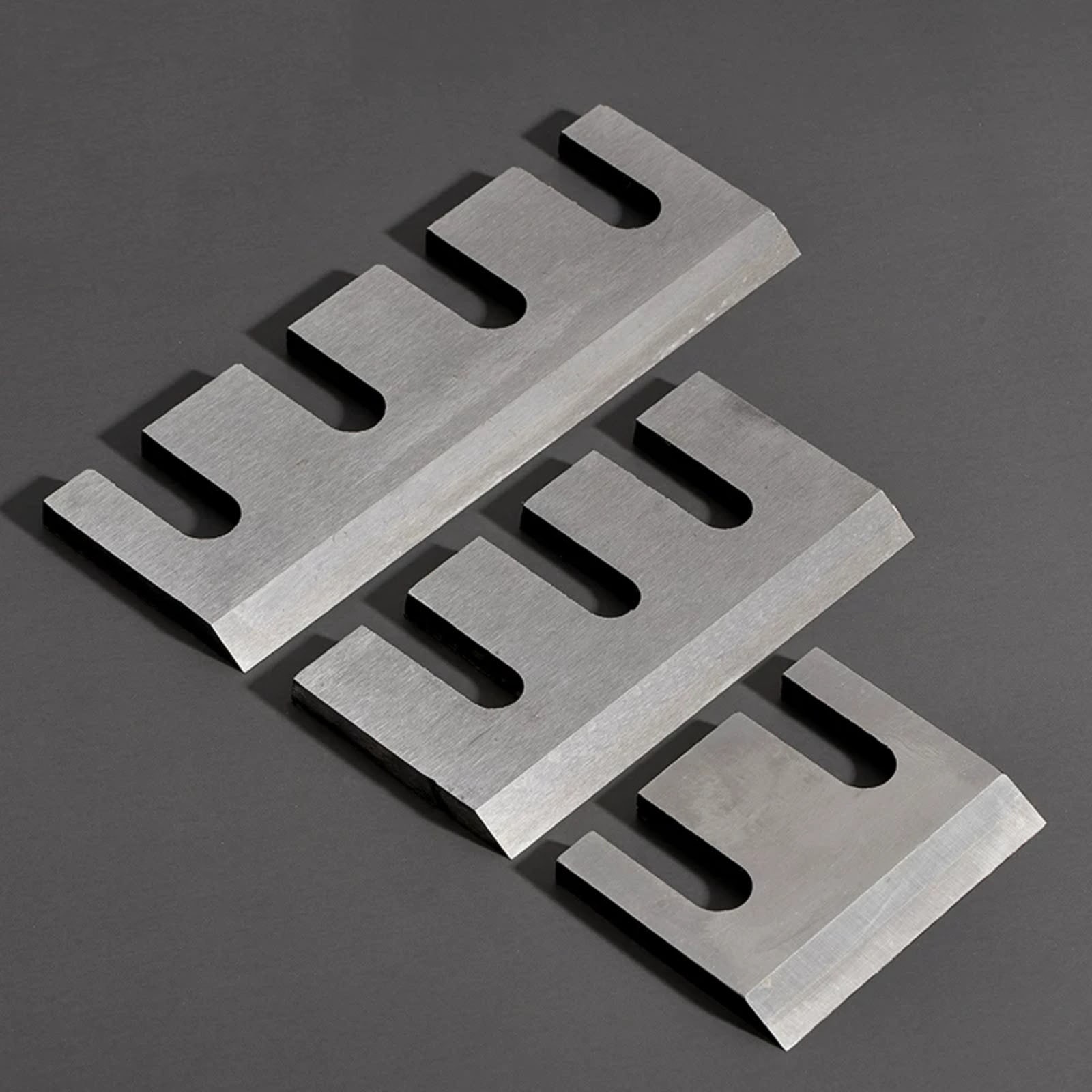
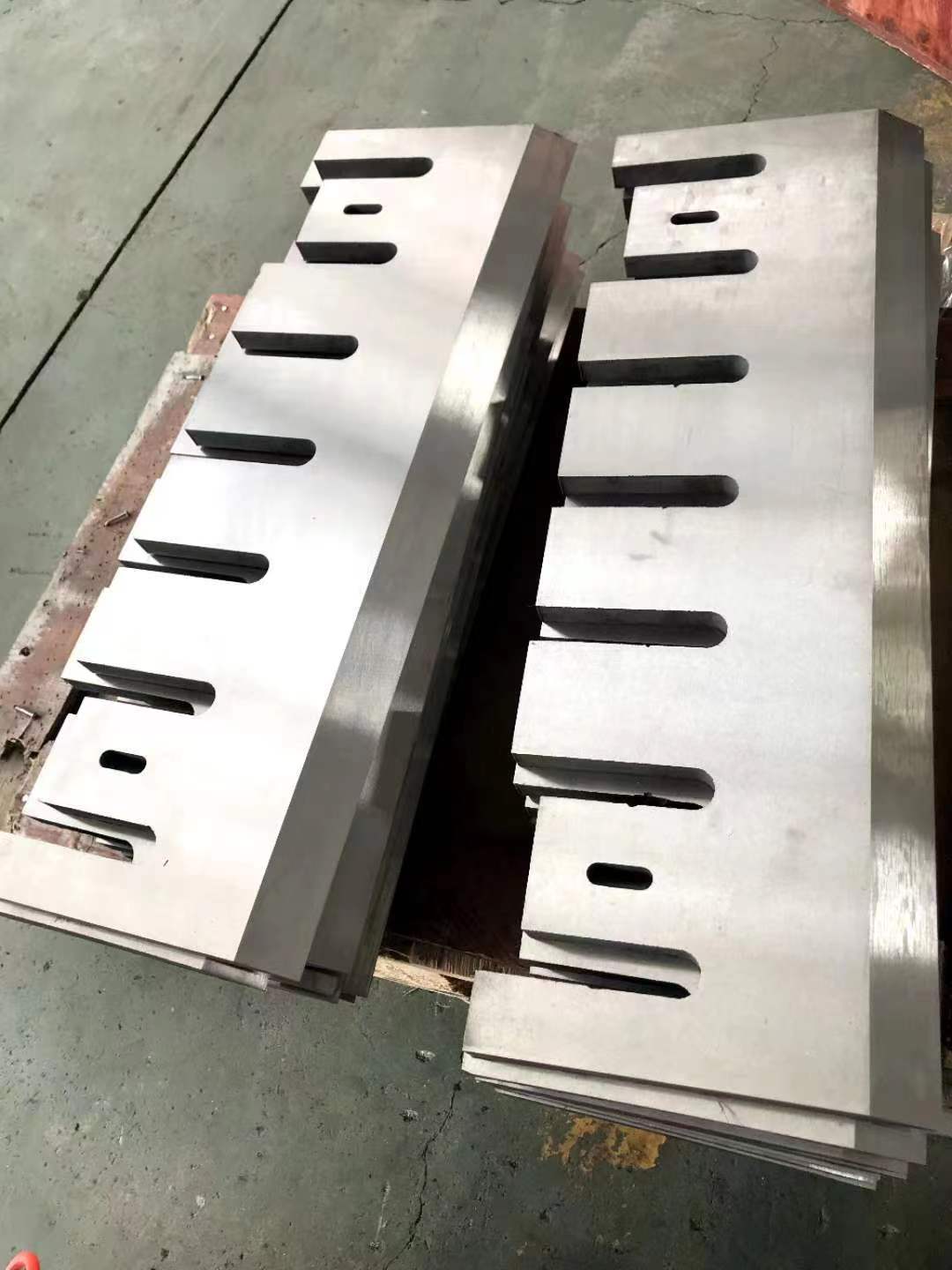
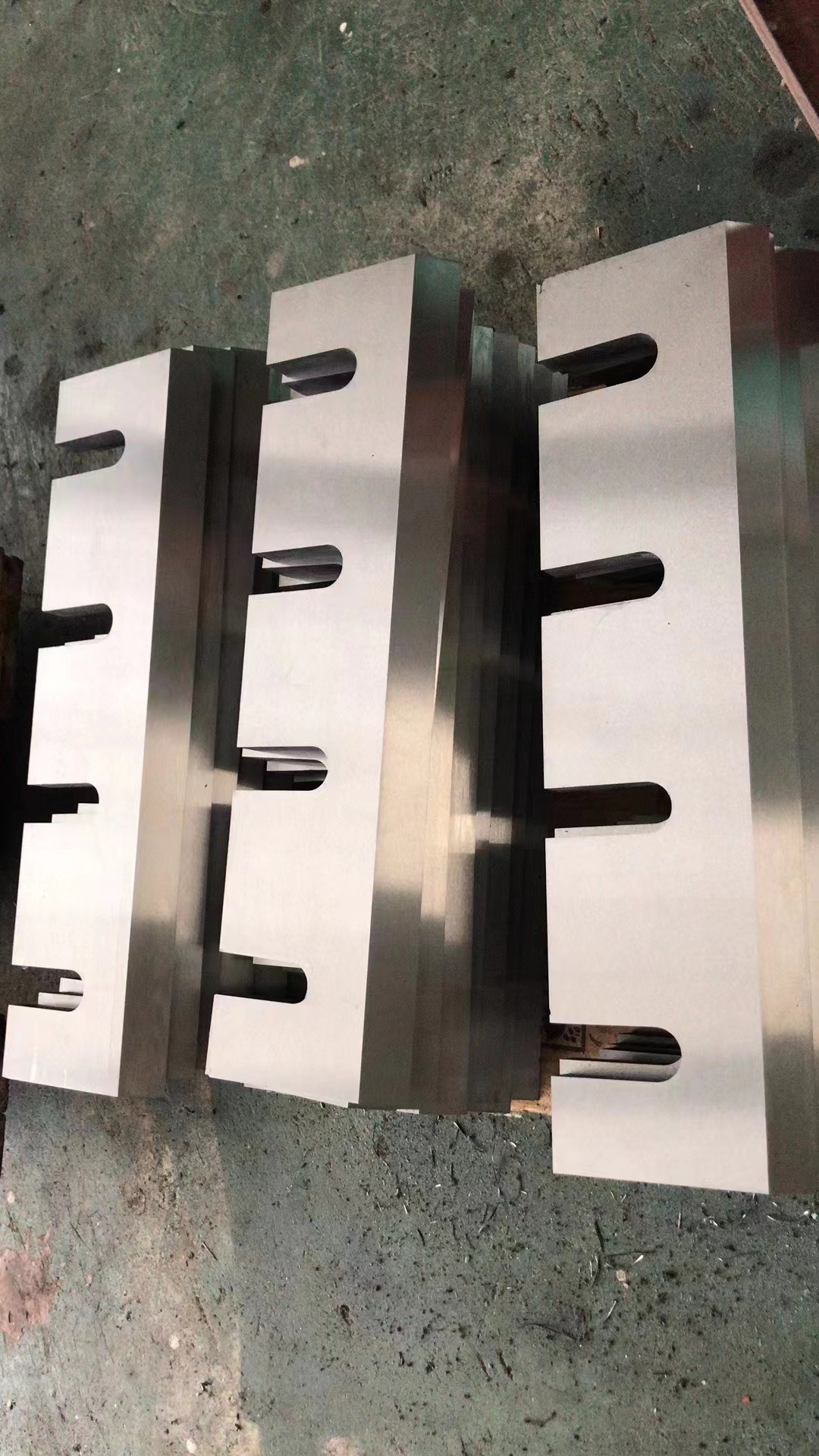
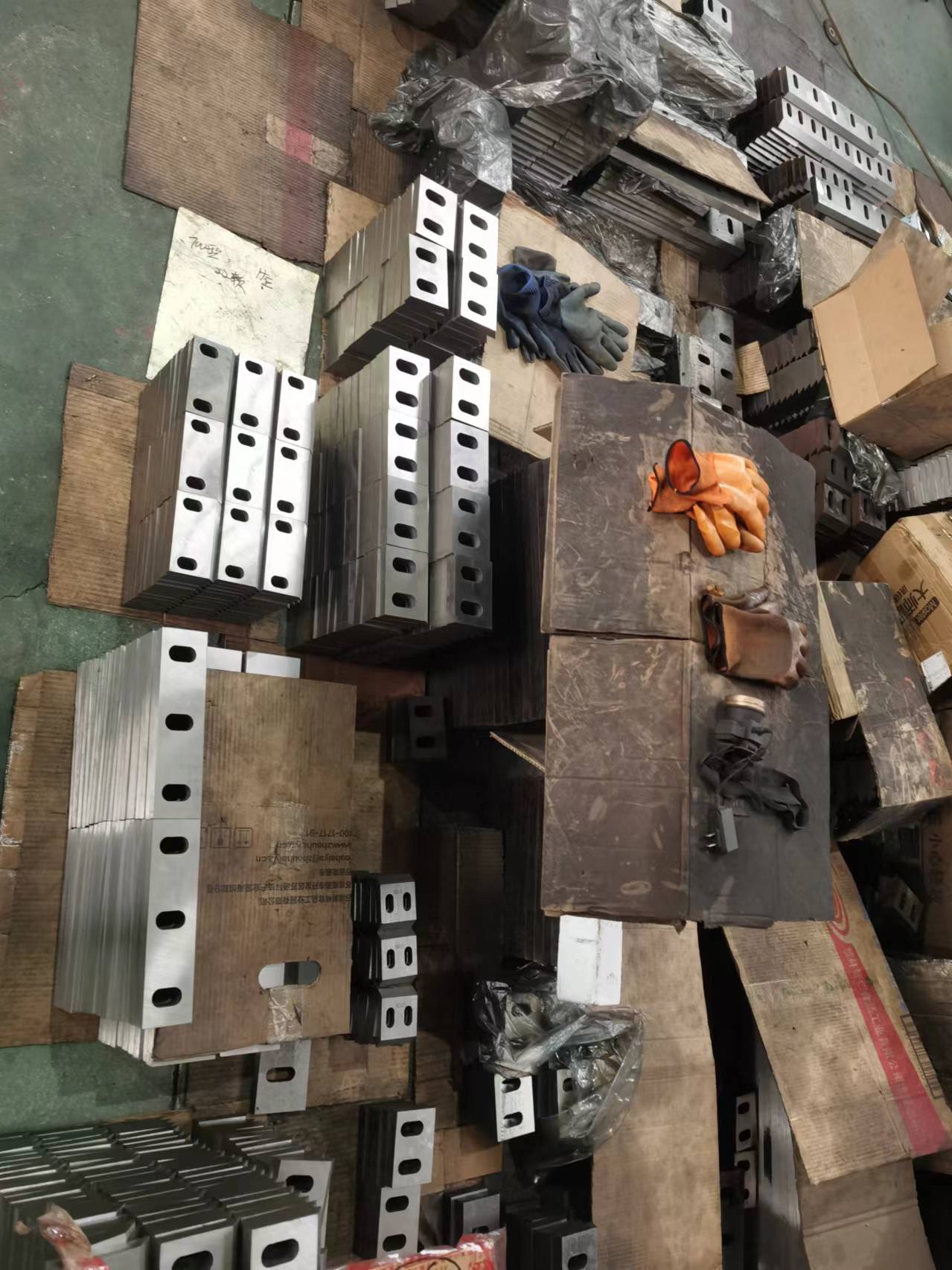
Global Supply: High-Performance Wood Chipper Blades & Shredder Knives
We manufacture premium Wood Chipper Blades (Material: A8, D2) engineered for maximum impact resistance. Our knives ensure clean cuts and extended service life for professional forestry, brush chipping, and landscaping equipment.
Core Market Sourcing Index:
English: Wood Chipper Blades | Chipper Knives
French (Français): Lames de déchiqueteuse | Couteaux à bois
Portuguese (Português): Lâminas para picador | Facas para madeira
Polish (Polski): Noże do rębaka | Noże do drewna
Turkish (Türkçe): Yonga Bıçakları | Odun Parçalayıcı Bıçakları
Vietnamese (Tiếng Việt): Lưỡi dao máy băm gỗ | Dao băm dăm gỗ
Thai (ภาษาไทย): ใบมีดเครื่องสับไม้ | ใบมีดเครื่องย่อยกิ่งไม้
Filipino: Mga Blade ng Chipper | Kutsilyo pang-wood chipper
Arabic (العربية): شفرات آلة تقطيع الخشب | سكاكين مفارم الأخشاب
Hindi (हिन्दी): चिपर ब्लेด | लकड़ी काटने वाले चाकू
Indonesian (Bahasa Indonesia): Pisau Mesin Chipper | Bilah Pencacah Kayu
Malay (Bahasa Melayu): Bilah Mesin Pencarik | Pisau Chipper Kayu
Dutch (Nederlands): Versnippermessen | Houtversnipperaar messen
Swedish (Svenska): Flishuggsknivar | Knivar för träflisning
Hungarian (Magyar): Aprítókések | Faaprító gép pengék
Greek (Ελληνικά): Λεπίδες θρυμματιστή | Μαχαίρια για ξύλο
Czech (Čeština): Nože do štěpkovače | Noże na dřevo
Romanian (Română): Cuțite de tocător | Lame tocătoare lemn
Ukrainian (Українська): Ножі для подрібнювача | Подрібнювальні ножі
Azerbaijani (Azərbaycan dili): Doğrayıcı bıçaqlar | Odun doğrayan bıçaqlar
Hebrew (עברית): להבים למגרסה | סכינים לעיבוד עץ


