


Phone:
86-15852949220


 |


L/C, T/T, Paypal, Money Gram
10
| Quantity: | |
|---|---|
Watch our high-performance single shaft shredder blades and square rotor knives in action, processing industrial plastic scrap and mixed synthetic waste. This operational video demonstrates the aggressive cutting efficiency, uniform sizing, and smooth throughput achieved by our precision-ground D2/DC53 alloy knives. Engineered with an optimized 4-sided cutting edge design, ALAS shredder cutters ensure clean shearing against the counter knives, significantly reducing heat generation and preventing material melting or jamming during continuous, high-tonnage recycling factory operations.
NANJING ALAS INTERNATIONAL CO., LTD. makes industrial-grade single-shaft shredder blades for heavy-duty cutting, tearing, and recycling. We hold tight OEM tolerances. Our square rotor knives give you high throughput and consistent particle size across a range of waste materials — thick plastics, solid wood, rubber, waste cables, and paper fibers.
To survive extreme friction and high-impact shredding, all ALAS single-shaft shredder blades are forged from premium alloy steels. We mainly use D2 (SKD11) for wear resistance and DC53 for double the impact toughness — that helps prevent chipping on the blade edge. Every blade goes through our vacuum heat treatment and multiple tempering processes, reaching 58–62 HRC. The result: fewer blade changes, less downtime, and a lower Total Cost of Ownership (TCO).
We stock everything from small precision blades to heavy-duty large-scale recycling cutters. If your machine uses standard sizes, check our dedicated page for 40×40 mm Single-Shaft Shredder Blades. Need help picking the right steel grade? See our guide: High-Quality Shredder Blades for Industrial Applications.
They cut, tear, and reduce waste to the size you need.
Common uses: plastics, wood, rubber, cables, light metals, paper fibers.
They directly affect throughput and output consistency.
Made from hard, wear-resistant alloy steel for long life and stable cutting.
| Property | D2 Alloy | DC53 Alloy |
|---|---|---|
| Hardness (HRC) | 58–60 | 62–63 |
| Wear Resistance | Very high | High |
| Toughness | Moderate, brittle, can chip | About 2x tougher than D2, excellent impact resistance |
| Stability | Good under constant friction | Good with mixed or impure materials |
| Chipping Risk | Higher if feed has impurities | Very low |
| Best For | Hard, coarse plastics (minor chipping okay) | Mixed waste, PVC, rubber, tires, thick plastics, light metals |
| Recommended For | Single-material lines, budget-conscious | Continuous heavy shredding, impure material |
For most recycling operations, DC53 lasts longer and causes less unplanned downtime — lower total cost in the long run.
How they work
Blades mount onto the rotating main shaft through center holes. They work against stationary counter blades fixed to the machine. This gives you a firm grip on the material, fast cutting, and easy daily maintenance.
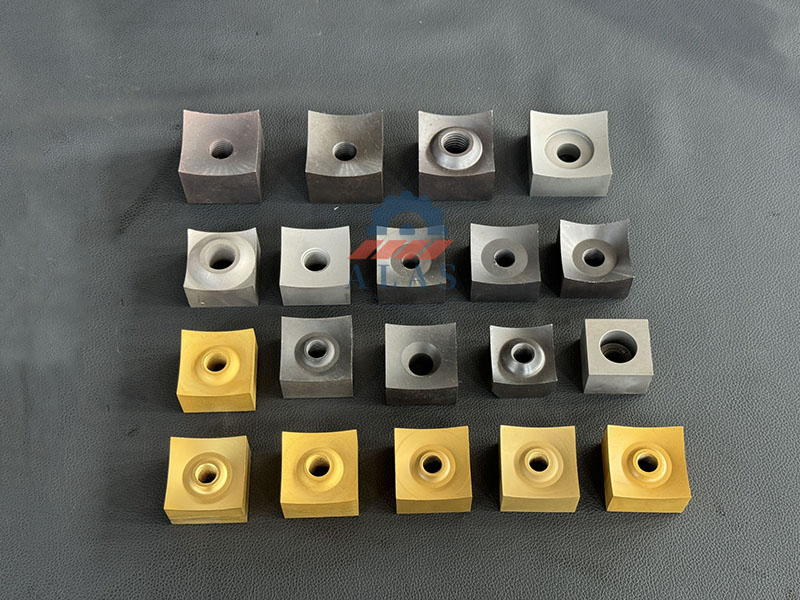
| Size (mm) | Material Type | Output Size | Best For |
|---|---|---|---|
| 35×35×25 | Soft materials | 20–25 mm | Plastic film, woven bags, small/medium precision shredders |
| 40×40×25 / 60×60 | Solid blocks, cartons, bottles, rubber | 25–40 mm | General use, most standard single-shaft shredders |
| 80×80×30 | Large, hard materials | 50+ mm | Wood, tires, thick plastics, metal cans — needs a high-power shredder |
Mounting hole: convex or flat for stable high-speed running.
Cutting edge: some blades have inward-cutting edges for better precision.
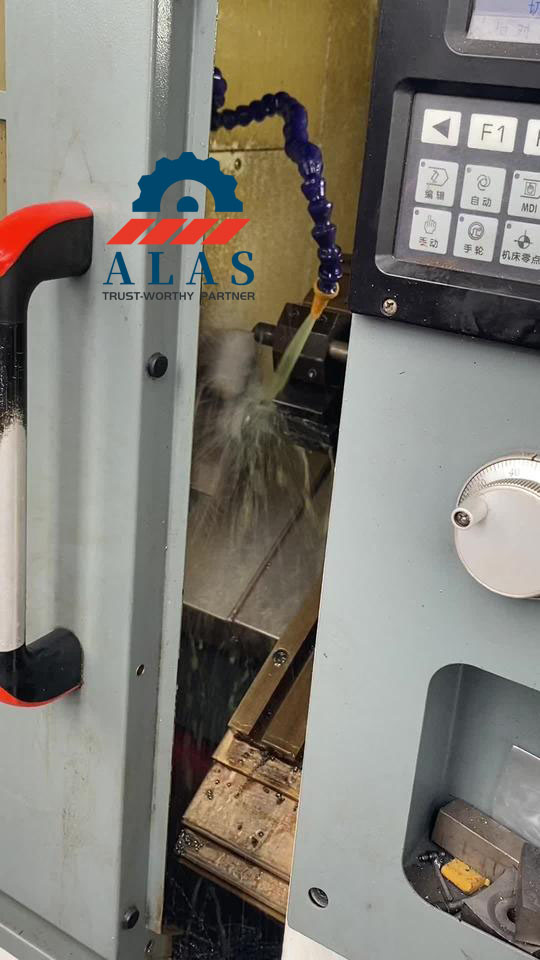
Blanking and forging – We cut and forge premium alloy steel to boost strength and prevent breakage.
Heat treatment
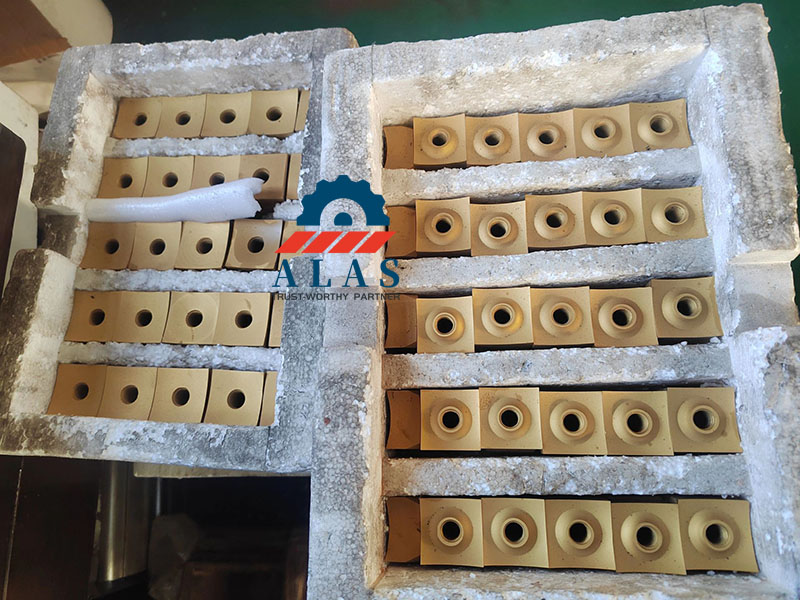
DC53: quenched to 62–63 HRC
D2: multi-step treatment to 58–60 HRC
Internal stress removed to stop edge chipping
Precision machining – CNC, wire cutting, and grinding to hit tight tolerances.
Quality control – Every batch gets tested for hardness, dimensions, and surface defects.
Clean blades after each shift to remove leftover material.
Visually check for wear, chips, or cracks on a regular basis.
Get blades professionally resharpened with precision grinding to bring back the original concave shape and cutting edge.
Replace blades in full sets to keep the rotor balanced.
Built for performance
Concave and flat blade types — fit most major shredder brands
Precision CNC machining cuts vibration and saves energy
Works well for heavy recycling of plastics, rubber, and wood
Material advantage
High-grade D2 (Cr12Mo1V1) and DC53
Wear-resistant and tough — fewer blade changes, less downtime
Sustainability and cost benefits
Longer blade life means less waste
Stable cutting gives you higher-quality recyclable material
Lower overall cost makes your recycling operation more profitable
There’s no single best — it depends on your waste.
| Material | Key Property | Best For |
|---|---|---|
| D2 / SKD11 | High wear resistance, medium toughness | Plastics, rubber, paper, wood — best value |
| DC53 | Twice as tough as D2, harder | Hard engineering plastics, wood with small metal bits — resists chipping |
For general recycling, D2 or DC53 give you a good balance of wear resistance and toughness. If you’re shredding highly abrasive stuff like glass-filled plastics, we also offer tungsten carbide-tipped blades.
Chipping usually comes from too much hardness or poor heat treatment. Our fix: vacuum heat treatment (58–62 HRC) plus multiple tempering cycles to release internal stress. The result — sharp edges that don’t chip easily.
Yes. Our replacement blades match OEM dimensions exactly. They fit major brands including Vecoplan, WEIMA, Lindner, UNTHA, and Genox.
Yes. After long use, have them professionally ground. That keeps the concave shape and cutting performance.
Look at three things:
Your machine model – check OEM dimensions
Your waste type – pick the steel grade accordingly
Your desired output size – choose the right tooth profile
We also make custom blades for special conditions.
Nanjing Alas International Co., Ltd. is a professional industrial tooling manufacturer focused on shear blades, bending dies, shredder blades, and custom wear parts. We offer full application engineering, material selection, setup guidance, and after-sales support to global customers.
Tell us your requirements, and our engineering team will provide professional solutions for blade specification, tool life optimization, and cost-effective production.