86-15852949220      mt@alasmachinery.com
NANJING ALAS INTERNATIONAL CO., LTD
You are here: Home » Products » Rebar Blade » Rebar Cutter Blades for Grade 60 & 500W High-Strength Steel Bars

Product Category

Contact Us

loading

Share to:
sharethis sharing button

Rebar Cutter Blades for Grade 60 & 500W High-Strength Steel Bars

Our premium Rebar Cutter Blades are specifically engineered to shear high-hardness Grade 60 and 500W steel bars without edge damage. Featuring a dual bolt hole configuration and an anti-slip V-notch design, these industrial knives eliminate cutting vibrations. Manufactured from vacuum heat-treated H13 alloy steel (50-62 HRC), they offer maximum impact toughness to ensure zero brittle fractures and 4x extended service life during heavy-duty operations.
  • ALAS

  • Nanjing, China

  • L/C, T/T, Paypal, Money Gram

  • Wooden Crate Packaging

Availability:
Quantity:

ALAS Universal High-Strength Rebar Cutting Blades | For Grade 60 & 500W Rebar

ALAS universal replacement blades are purpose-built for cutting Grade 60 and 500W high-strength TMT rebars. They fit perfectly with widely used GQ40, GQ50 and GQ60 hydraulic rebar cutters. With standard unified dimensions, practical 4-way rotatable edge design and reliable heavy-duty cutting performance, our blades are a cost-effective direct replacement for original factory blades for both construction sites and professional rebar processing yards.

A group of five square H13 steel rebar cutter blades featuring a 4-hole bolt design for heavy-duty steel shearing applications

1. Product Overview

Original cutter blades wear out quickly during daily operation, causing edge chipping, jamming, inaccurate cuts and delayed construction progress. ALAS replacement blades are manufactured with precise standard thickness, mounting hole positions and edge profiles, ensuring full compatibility with most mainstream hydraulic rebar cutting machines on the market.
One single blade model fits multiple machine types, greatly simplifying spare parts inventory and lowering overall costs for purchasing, warehousing and machine maintenance. We offer tailored blade selection services based on your machine model, rebar specifications and actual working conditions.

2. Key Product Benefits

  • Standard Size & Direct Replacement: Fully matches the standard parameters of mainstream rebar cutters. No on-site drilling, grinding or modification required. Users can replace old blades and start working immediately.

  • Wide Machine Compatibility: Works perfectly with GQ40, GQ50, GQ60 and equivalent rebar cutting equipment, covering most conventional rebar processing machines used in the construction industry.

  • 4-Way Rotatable Edges, 4x Longer Service Life: Each square blade block features four usable cutting edges. When one edge dulls, simply rotate the blade 90 degrees for a brand-new sharp edge. It lasts four times longer than traditional single-edge blades and greatly reduces replacement frequency.

  • Lower Operating Costs & Higher Efficiency: Fewer blade changes reduce spending on spare parts, logistics and inventory, while minimizing machine downtime and improving overall construction efficiency.

  • Rigorous Quality Control & Stable Performance: We specialize in manufacturing high-strength rebar cutting blades for harsh construction environments. Every piece is precision processed and strictly inspected to ensure consistent, reliable field performance.

3. Two Professional Blade Material Grades

Blade material directly determines cutting stability, wear resistance and service life. ALAS provides two mature high-grade steel materials to suit light, medium and heavy-duty cutting tasks and different rebar grades.

3.1 ALAS H13 (For Heavy-Duty Cutting & Anti-Chipping)

Hardness: HRC 50–55
vacuum heat treatment, H13 blades deliver excellent strength, heat resistance and impact resistance. They resist bending, cracking and edge chipping under continuous heavy loads. This grade is ideal for cutting Grade 60 and 500W high-strength TMT rebars, maintaining stable performance even under full hydraulic pressure during long-term large-scale construction.

3.2 ALAS Cr12MoV (For High Wear Resistance & Mass Production)

Hardness: HRC 55–64 (cutting edge: 58–62 HRC)
Cr12MoV steel features ultra-high hardness and superior wear resistance. It works best for hard cold-rolled rebars and high-strength deformed rebars. Suitable for non-stop mass production in rebar processing factories, it maintains precise cuts with minimal edge wear over long working hours.

4. Equipment & Application Matching Guide

4.1 Blade Shape Selection

Square 4-Edge Blade Block: Equipped with four independent cutting edges for extended service life. Ideal for medium and large cutters and high-volume, frequent rebar cutting work.
Rectangular 1–2 Edge Blade Block: Lightweight design for small hydraulic cutters, suitable for small construction sites and sporadic low-volume cutting tasks.

4.2 Standard Dimensions by Machine Model

All ALAS blades are precision manufactured with standard sizes and mounting holes for direct installation without field modification. Standard dimensions for common models are shown below:
  • GQ40 Cutter: 78×78×17mm, 80×80×25mm

  • GQ50 Cutter: 90×90×20mm, 110×110×28mm

  • GQ60 Cutter: 100×100×20mm, 100×100×30mm

User Tip: Always adjust the blade gap according to your machine’s official manual after installation to ensure clean, flat cuts and prolong the service life of both blades and equipment.

4.3 Material Selection by Rebar Type

Plain Round Rebar: Cr12MoV is the preferred option, offering stable wear resistance and excellent cost performance.

High-Strength Deformed Rebar (Grade 60 / 500W / HRB500 / HRB600): Choose H13 for heavy-duty cutting where impact resistance and anti-chipping performance are prioritized. Choose high-hardness Cr12MoV for high-frequency mass production requiring maximum wear resistance.

5. Quality Assurance

Every ALAS blade is finished with precision grinding and professional vacuum heat treatment. We enforce full-process standardized quality control and strict pre-delivery testing to guarantee stable and reliable quality:
  • Uniform overall hardness with consistent performance across all blades

  • Long-lasting sharp cutting edges with strong wear and chipping resistance

  • Effectively prevents common defects such as premature wear, cracking and edge breakage

  • Each blade undergoes mandatory hardness testing before shipment

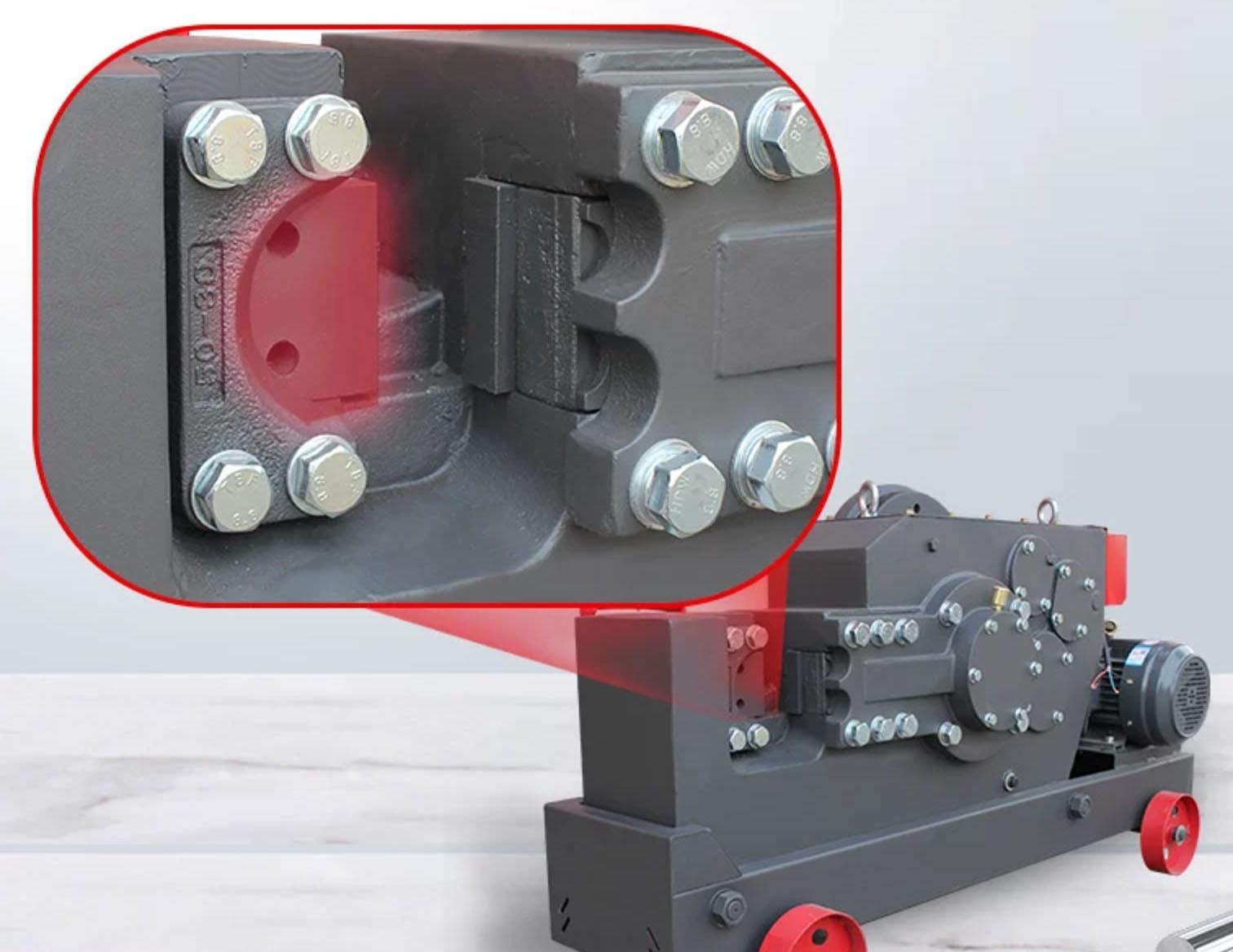
rebar-cutting-machine-blade-installation-area

6. Global Compatibility with International Rebar Standards

ALAS blades support high-strength TMT rebars compliant with various international standards and are widely used in infrastructure, bridge and building projects across many countries. We fully match local rebar specifications:
  • Pakistan: Grade 60 (ASTM A615)

  • Bangladesh: 500W / 500 TMT (BS 4449 Grade 500)

  • Philippines: Grade 40 / Grade 60 (ASTM)

  • Egypt: 400B / 500B (Egyptian Standard / BS 4449)

  • South Africa: 500W (SANS 500W)

  • Vietnam: CB300-V / CB400-V / CB500-V (TCVN)

  • Thailand: SD40 / SD50 (TIS)

  • Australia: 500N (AS 4671)

  • New Zealand: 500E (NZS 4671)

Whether your project uses American, British, Australian or local national standard high-strength rebars, ALAS H13 and Cr12MoV blades deliver stable continuous cutting with flat finishes and no edge chipping or jamming.

7. How the 4-Way Rotatable Edge Design Works

Each ALAS four-edge blade block comes with four independent sharp cutting edges. Once one edge becomes dull, you do not need to replace the whole blade. Simply loosen the fixing bolts, rotate the blade 90 degrees and retighten it to use a new sharp edge. This practical design quadruples blade service life compared with traditional single or double-edge blades, cutting downtime and overall operating costs.

8. Technical Support & After-Sales Service

  • Solves frequent edge chipping and cracking issues during high-strength rebar cutting

  • Provides professional technical guidance for heavy-load and complex working conditions

  • Reduces unexpected equipment downtime and keeps projects on schedule

  • All products pass strict factory testing with traceable quality records

9. Advantages for Cutting Grade 60 & 500W High-Strength Rebar

Grade 60 and 500W TMT high-strength rebars are widely used in bridges, building foundations and residential projects across Pakistan, Bangladesh and other Southeast Asian and African markets. These high-hardness rebars produce strong cutting impact during processing. Ordinary low-quality blades wear fast, chip easily and crack under load, causing frequent replacements, machine downtime and project delays. ALAS blades are specially engineered for these tough local working conditions:
9.1 Superior Impact Resistance of H13 Steel
With precision vacuum heat treatment, H13 steel maintains stable hardness at HRC 50–55, balancing hardness and toughness perfectly. It withstands strong instantaneous impact when cutting high-strength rebars, without bending, cracking or chipping under full hydraulic pressure, making it ideal for continuous heavy-duty construction.
9.2 Significant Cost Savings from 4-Edge Reusable Structure
The reusable four-edge design greatly lowers blade replacement frequency, effectively reducing spending on spare parts procurement, logistics and inventory, bringing obvious long-term cost advantages for large-scale rebar processing.
9.3 Perfect Fit for GQ Series Cutters
Precision manufactured dimensions fit GQ40, GQ50 and GQ60 cutters perfectly with no extra on-site adjustment needed. Standard blade gaps ensure smooth cutting surfaces, prevent rebar jamming, reduce machine vibration, protect internal components and extend equipment lifespan.

10. Technical Performance Parameters

  • Applicable Rebar Size: Φ6–Φ50mm (plain round & deformed rebar)

  • Maximum Cutting Force: ≥5000 N

  • Blade Hardness: H13 (HRC 50–55); Cr12MoV (HRC 55–64, edge hardness 58–62 HRC)

  • Surface Hardened Layer Hardness: HR15N 80–90

  • Wear Rate: ≤0.01mm per 100 cuts

  • Dynamic Working Gap Tolerance: 0.02–0.05mm

  • Cutting Section Quality: Surface roughness Ra ≤1.6μm, verticality deviation ≤0.1°

11. Operation & Maintenance Instructions

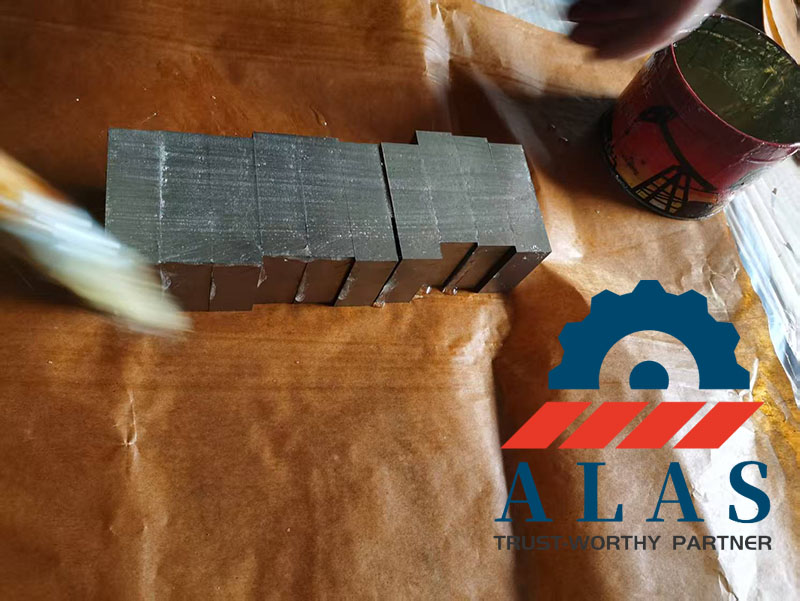
Workers applying anti-rust protective oil and wrapping finished industrial rebar cutter blades in professional moisture-proof kraft paper

  1. Gap Adjustment: Set the upper and lower blade gap to 0.02–0.05mm during installation. Too large a gap causes uneven cuts; too small a gap accelerates edge wear.

  2. Correct Cutting Posture: Place rebars vertically in the center of the cutting opening to avoid eccentric pressure and edge chipping.

  3. Daily Inspection: Check blade condition before and after each shift. Rotate for a new edge or replace the blade if obvious wear or micro chipping appears.

  4. Regular Maintenance: Keep blade mounting surfaces and bolts clean. Apply anti-rust oil regularly to prevent rust and jamming.

  5. Safe Operation: Always use machine safety guards and two-hand control buttons. Do not cut any hard materials other than standard rebars.

12. Application Scenarios

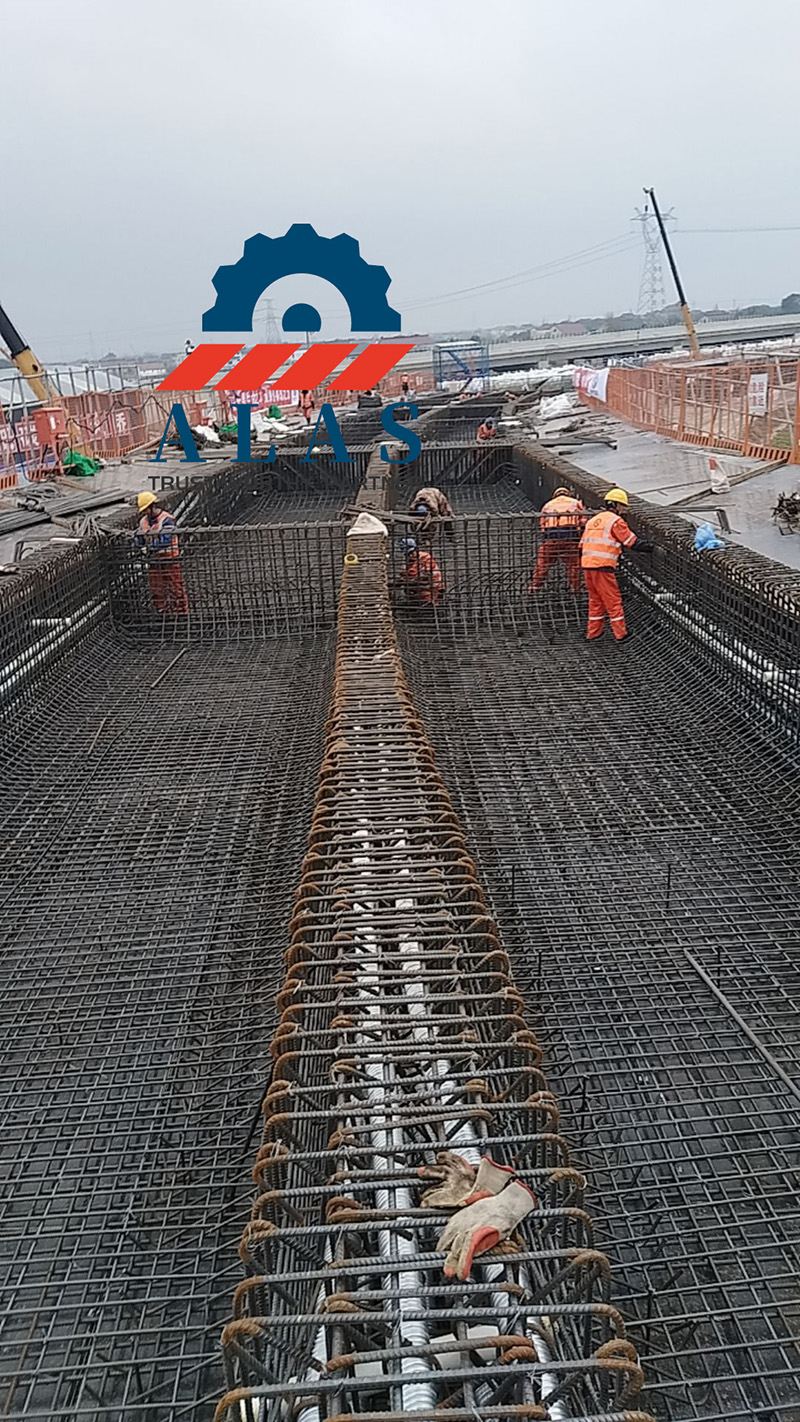
A large scale infrastructure bridge construction site with workers installing a massive high strength heavy duty rebar reinforcement skeleton layout

  • Bridge & Tunnel Engineering: Stable anti-chipping performance for continuous heavy-duty cutting in large-scale infrastructure projects.

  • Steel Structure & Prefab Processing Plants: Supports full-range rebar sizes from Φ6mm to Φ50mm for flexible batch production.

  • Power & Metallurgical Construction: Adapts to complex field environments and stably cuts Grade 60 high-strength rebars.

  • High-Rise Building Construction: Low wear rate for high-volume rebar processing, ensuring consistent cutting quality and construction progress.

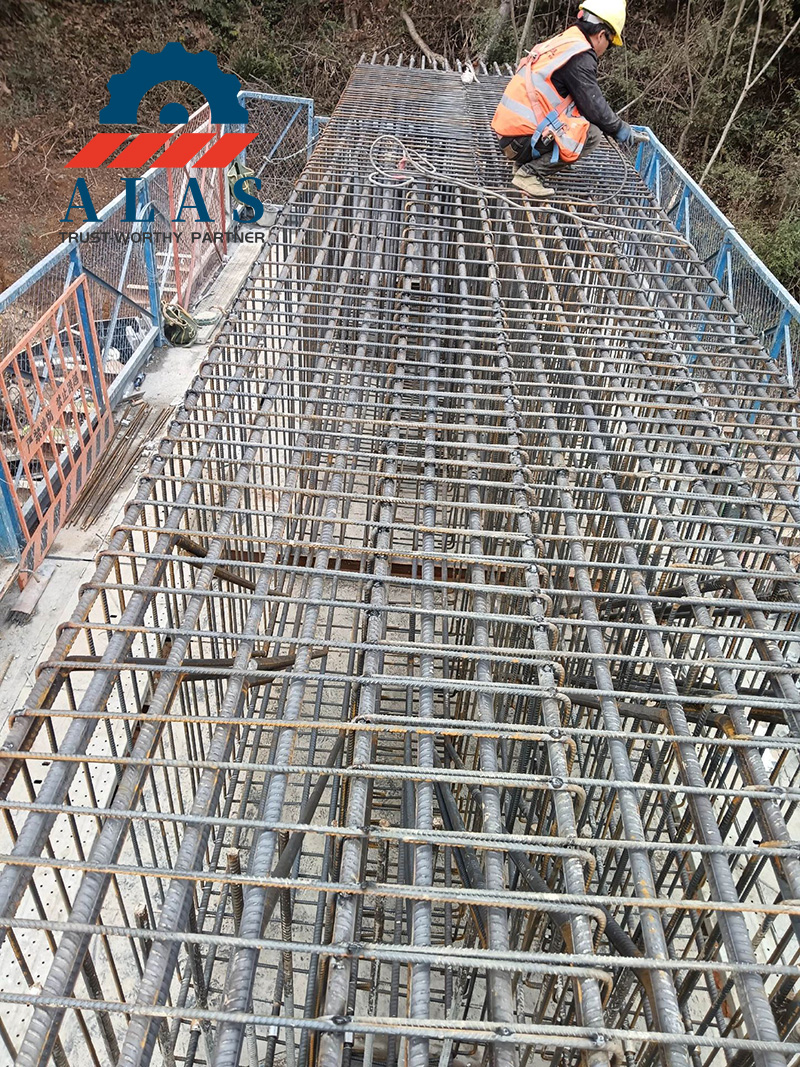
An industrial construction job site featuring a dense grid layout of high strength heavy duty ribbed rebar mesh for bridge reinforcement infrastructure

13. Why Choose ALAS Blades

  • Reliable & Tough Performance: Well-balanced hardness and toughness resist impact, wear and cracking in harsh construction conditions.

  • Cost & Efficiency Optimized: Universal compatibility and 4-way reusable edges lower unit cutting cost and machine maintenance expenses.

  • Machine Friendly: Precise fitting reduces vibration and jamming, protecting your cutting equipment and extending its service life.

  • Stable Batch Quality: Standardized manufacturing eliminates batch differences and ensures long-term consistent performance.

  • Direct Factory Supply: Factory direct sales avoid middleman markup and inferior spare part risks, preventing project delays caused by poor blade quality.

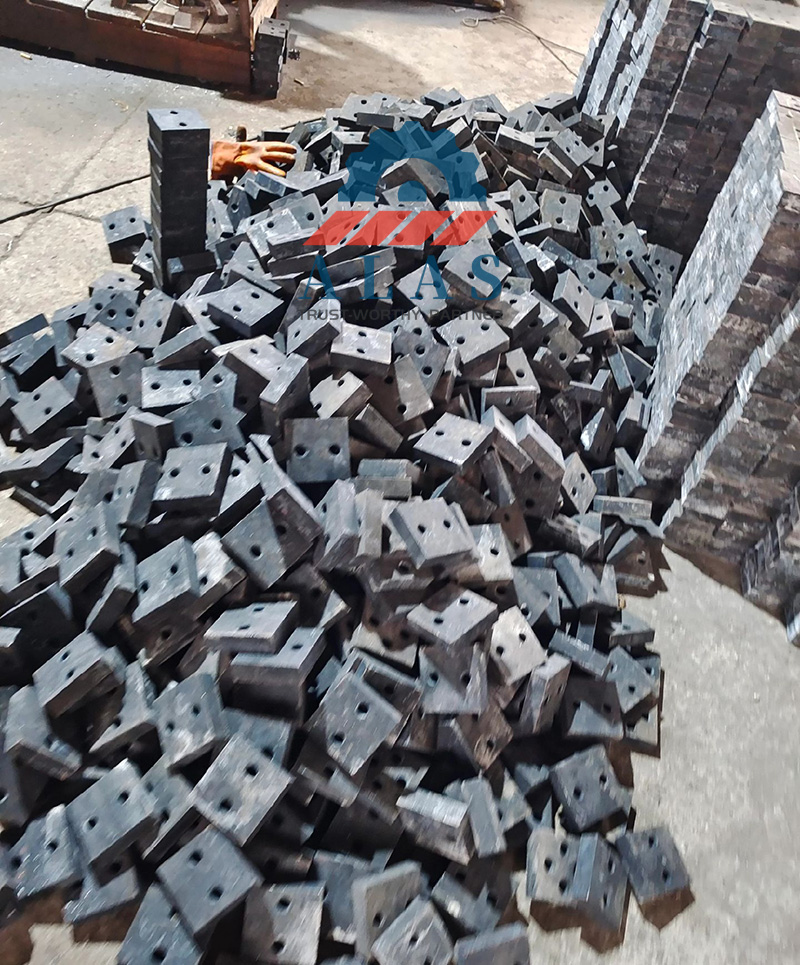
A large pile of bulk industrial rebar cutter blades and heavy duty steel shearing knives stacked on a factory floor ready for wholesale distribution

Rebar cutter blade specifications and dimensions

NO. Product Name Specification   Dimensions (length x width x height/thickness) ) Material Remarks
1

Rebar shear blade size

78*78*17   mm H13 Customization services are available; we can   manufacture according to your drawings, with a minimum order quantity of 2 piece.
2

80*80*17mm

3 80*80*30   mm
4 83*83*16   mm
5 83*83*26   mm
6 83*83*26  mm
7 90*90*20mm
8 90*90*26   mm
9

100*100*20mm

10 100*100*30   mm
11 110*110*20   mm
12 100*30*75 mm
13 85x65x30 mm


Blade Metal Materials Grade Correspondence Table

Base Grade

Steel Category

Chinese Standard GB/T 1299

American Standard ASTM

German Standard DIN (W-Nr.)

Japanese Standard JIS

H13

Hot Work Die Steel

4Cr5MoSiV1

H13

1.2344

SKD61

Cr12MoV

Cold Work Die Steel

Cr12MoV


1.2601

SKD11

9CrSi

Alloy Tool Steel (Cutting Tool Steel)

9CrSi


1.2108


Are high-hardness steel rebar cutting blades prone to chipping?


Rebar Cutter Blades FAQ

1. What rebar grades fit ALAS cutting blades?

Our blades are engineered for high-strength deformed rebar, covering Grade 60 (ASTM A615), 500W/500 TMT (BS 4449), 400B/500B, SD40/SD50, CB500-V, 500N, 500E with yield strength between 420–600 MPa. They also work well for mild plain round bars.

2. H13 or Cr12MoV, which material should I pick?

  • Choose H13 (HRC 50–55): For heavy continuous cutting of Grade 60 / 500W high-tensile rebar. Great impact toughness prevents edge chipping under frequent shock load.

  • Choose Cr12MoV (HRC 55–64, edge: 58–62 HRC): Ideal for hard cold-drawn rebar where superior wear resistance is prioritized under low-to-medium impact.

  • Cr12MoV is also a cost-effective option for general plain bar or mixed cutting jobs.

3. Will ALAS replacement blades suit my existing cutter?

Yes. All blades follow standard dimensions on thickness, mounting holes and cutting profile to fit GQ40, GQ50, GQ60 cutters directly. If your machine is outside the GQ series, share machine model or original blade dimensions, we can match existing stock or produce custom sizes.

4. What is 4-sided rotatable edge design and how does it extend service life?

Each square blade block features four usable sharp cutting edges. Once one edge wears dull, loosen bolts, rotate the block by 90° and refasten to use a fresh edge. One single block equals four conventional single-edge blades, cutting your spare part cost by extending usable lifespan 4x.

5. Do ALAS blades chip easily when cutting Grade 60 /500W rebar?

Proper installation eliminates chipping risk. H13 blades go through vacuum heat treatment at HRC 50–55, balanced in hardness and toughness to stand heavy impact from high-strength rebar cuts. Cr12MoV receives precision grinding to minimize cracking as well. Keep blade gap between 0.02–0.05 mm and center rebar straight during feeding for optimal results.

6. How long is the typical service life of ALAS blades?

Actual lifespan varies based on rebar grade, bar diameter, daily cutting volume and routine maintenance. Under correct operating conditions cutting Grade 60/500W rebar, our blades outperform standard generic blades by a large margin. Contact our technical team for customized lifespan estimate with your site data or request lab test reports.

7. Recommended blade clearance and its importance?

Set working gap at 0.02–0.05 mm between upper and lower blades. Too wide gap creates rough cuts with excessive burrs; too tight gap accelerates premature wear or sudden edge breakage. Always reset clearance after blade replacement or edge rotation.

8. How to handle dull cutting edges?

Rotate square four-edge block by 90° for unused sharp edge. Replace fully for rectangular single/double-edge blades. Running blunt blades lowers cutting efficiency and may damage cutter body.

9. Can you make custom-sized blades?

Custom fabrication available. Send original blade sample or engineering drawing for special dimension, hole layout or non-standard cutting edge per your working requirement.

10. Purchase terms & MOQ requirement?

Reach our sales team via contact info on page. Factory direct supply, small trial orders and bulk orders are both acceptable with no mandatory minimum order quantity.

11. Which countries do you export to?

Our blades are widely supplied to construction projects in Pakistan, Bangladesh, Philippines, Egypt, South Africa, Vietnam, Thailand, Australia, New Zealand matching local national TMT rebar specs. Worldwide orders are welcomed.

12. Key points for blade installation?

  1. Clear metal scraps and dirt on cutter seat and blade surface;

  2. Tighten fixing bolts evenly with consistent torque;

  3. Adjust blade clearance to 0.02–0.05 mm;

  4. Test-cut one bar to check neat and straight cutting surface.

13. Is every blade quality inspected before shipment?

All items go through vacuum heat treatment and precision grinding plus individual Rockwell hardness test. Random pre-shipment inspection covers dimensional tolerance, edge integrity and cutting finish.

14. Common reasons of blade chipping on high-strength rebar & fixes?

  • Wrong material selection for high-impact work → switch to H13 grade

  • Improper blade gap → readjust to 0.02–0.05 mm

  • Off-center rebar feeding → keep bar vertically centered into cutting slot

  • Over-worn cutting edge → rotate block or replace new blade

  • Unstable hydraulic/electrical cutter pressure → repair machine faults

15. Do you provide after-sale technical support?

Full technical service on blade selection, on-site installation guidance, gap adjustment and troubleshooting support for all clients.


Heavy-Duty Rebar Cutter Blades: Grade 60 & 500W TMT Bar Shearing Test


Watch our high-quality rebar cutter blades perform perfectly under heavy hydraulic pressure at a construction site with high-tensile steel. The cutting leaves no metal slugs at all.
This on-site test proves our universal TMT bar cutting blades cut Grade 60 and 500W deformed steel bars cleanly. The blade edges stay intact, with no chipping or tiny cracks.
We make these rebar shear blades from vacuum-quenched H13 tool steel, with a hardness of HRC 50–55 and steady internal toughness. Built to withstand strong sudden impact, the blades ease stress on your machine’s hydraulic cylinders and gear parts.
Check out our reliable performance. Get in touch with ALAS for factory wholesale prices and custom solutions for GQ40, GQ50 and GQ60 rebar cutters.


微信图片_20250104142221微信图片_20250104142224


Previous: 
Next: 
200
Phone:
86-15852949220
Address:
Jiangning District, Nanjing
About Us

Nanjing Alas International Co., Ltd. is a professional industrial tooling manufacturer focused on shear blades, bending dies, shredder blades, and custom wear parts. We offer full application engineering, material selection, setup guidance, and after-sales support to global customers.
Tell us your requirements, and our engineering team will provide professional solutions for blade specification, tool life optimization, and cost-effective production.

Subscribe
Sign up for our newsletter to receive the latest news.
​Copyright 2021 NANJING ALAS INTERNATIONAL CO., LTD            苏ICP备2021025144号