86-15852949220      mt@alasmachinery.com
NANJING ALAS INTERNATIONAL CO., LTD
You are here: Home » Products » Crusher Blade & Chipper blade & Shredder blade » Premium Plastic Recycling Shredder Blades & Straight Knives

Product Category

Contact Us

loading

Share to:
sharethis sharing button

Premium Plastic Recycling Shredder Blades & Straight Knives

Our plastic recycling shredder blades are engineered to handle the toughest waste processing challenges. Whether you are shredding PET bottles, heavy-duty HDPE pipes, or contaminated plastic films, our blades provide the shearing force needed for consistent throughput. Manufactured from top-grade tool steels like SKD-11 or DC53, each blade undergoes specialized vacuum heat treatment to achieve a hardness of HRC 58-62. This ensures a razor-sharp edge that resists chipping and wear, significantly reducing your operational downtime and cost-per-ton
  • L/C, T/T, Paypal, Money Gram

  • 10

Availability:
Quantity:

Precision Grinding Process for D2 Steel Plastic Shredder Blades

Take a tour of our production plant and check out our large-scale production strength for shredder blades sold worldwide.

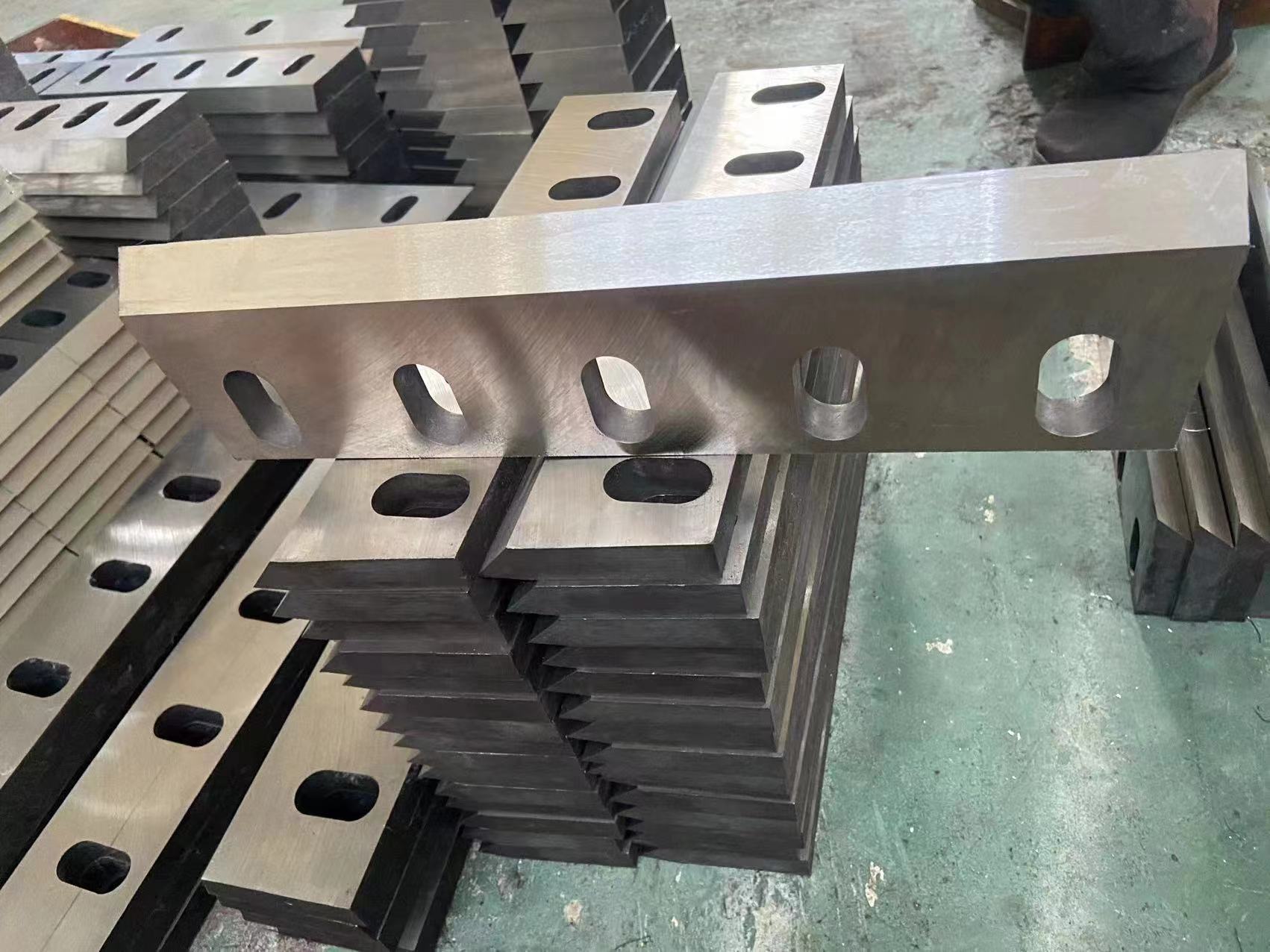
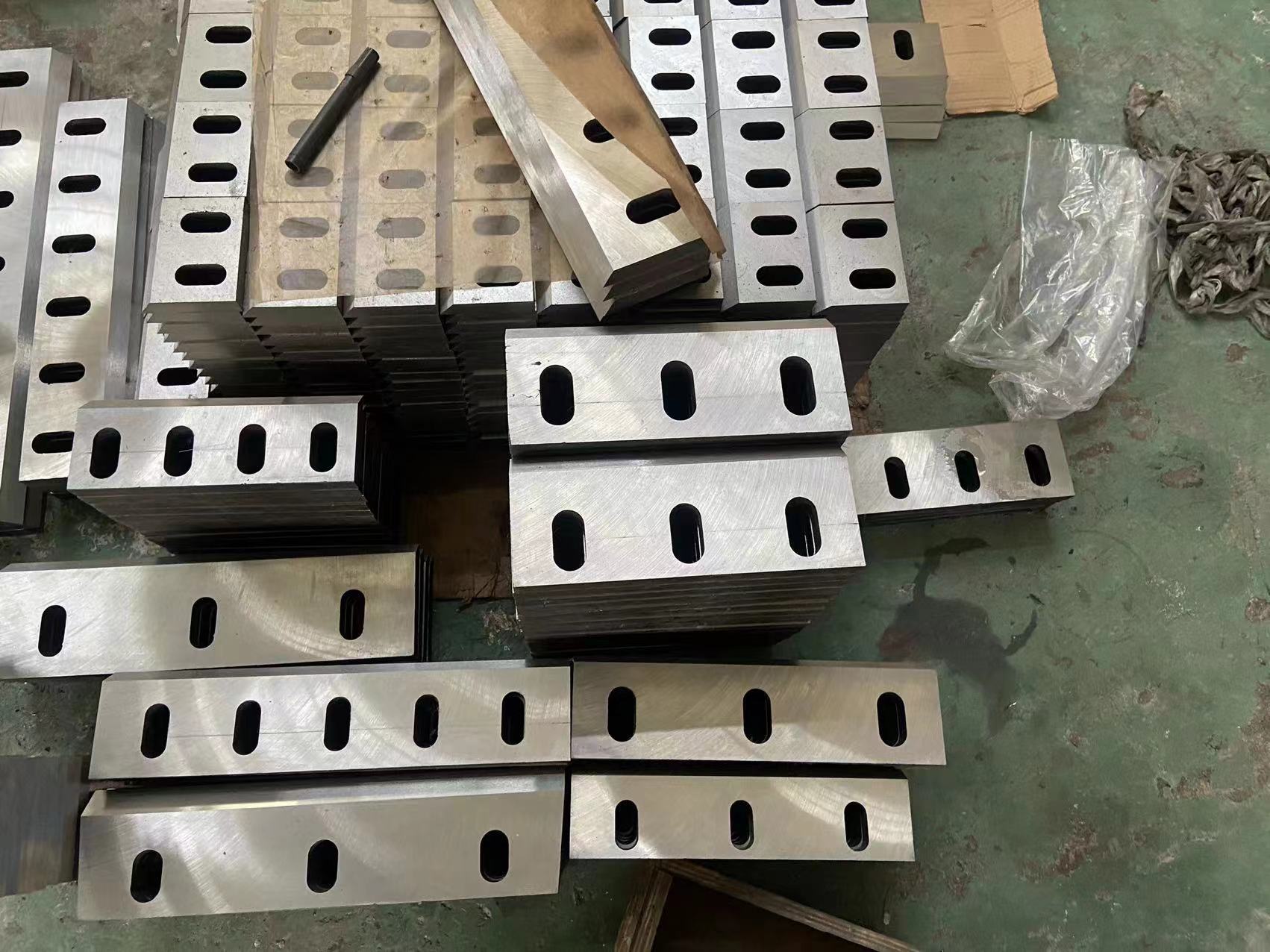
We turn out plenty of industrial recycling blades and square shredder block parts, all waiting for final finishing work.

Every blade is hardened via precise computer-controlled vacuum full heat treatment, hitting 55-62 HRC hardness. It delivers solid shock resistance and long-lasting sharp cutting edges.

We are an experienced professional manufacturer, able to handle big OEM orders and custom-made products, and deliver goods in a timely manner.

Plastic Recycling Shredder Blades FAQ

Q: How to choose the right plastic recycling shredder blade?

A: Start by identifying the plastic you’re recycling—soft plastics like PE/PP films, rigid ones like PVC/PET, or abrasive materials like fiber-reinforced plastics. Then select your blade material based on your needs:
  • 9CrSi: Great for general use and soft plastics. It’s affordable and easy to keep in good condition.

  • SKD-11/D2: A budget-friendly option for hard plastics. It has a hardness of HRC 60–64, making it ideal for high-volume plastic sorting and regular industrial operations.

  • DC53: More durable than SKD-11/D2. It’s twice as tough and more wear-resistant (HRC 62–65), so it works best for heavy-duty tasks, abrasive plastics, or fiber-reinforced materials—no more early chipping or wear.

Q: How do I choose the right shredder blades for my machine?

A: Follow two simple steps. First, get your machine’s details: model number, blade size, bolt-hole patterns, or keyway orientations. You can share the machine model, blade drawings, or a physical sample to get a custom-fit blade. Second, match the blade material to the plastic you’re processing—look at the "How to choose the right plastic recycling shredder blade" question for material advice. This way, the blades fit perfectly and work efficiently.

Q: What is the best steel grade for abrasive plastic recycling shredder blades?

A: For standard industrial plastic sorting, SKD-11/D2 is your best bet if you’re on a budget. It holds its edge well even during high-volume runs. If you’re dealing with highly abrasive post-consumer plastics—those with sand, dirt, or glass fiber—go with DC53. It’s tougher and more wear-resistant, so it won’t wear out quickly.

Q: What is the standard hardness of plastic recycling shredder blades?

A: All our straight knives and square cutting blocks are treated with computerized vacuum heat. They have a consistent hardness of 58–62 HRC from the surface to the core. Here’s the hardness for common materials: SKD-11/D2 (HRC 60–64) and DC53 (HRC 62–65, which is more wear-resistant).

Q: What’s the difference between SKD-11/D2 and DC53 plastic shredder blades?

A: The biggest differences are wear resistance and toughness. DC53 (HRC 62–65) is harder, more wear-resistant, and tougher than SKD-11/D2 (HRC 60–64). Use DC53 for abrasive or fiber-reinforced plastics. SKD-11/D2 is cheaper and works well for regular hard plastics and high-volume sorting.

Q: Can you make custom plastic shredder blades for existing shredders?

A: Yes, we make custom blades for any existing shredder. Just send us your shredder model, blade CAD drawings, or a physical sample. We’ll create precise replacement blades—including blocks, rotary inserts, and counter-knives—that fit your machine perfectly. We make sure bolt holes, counterbore depths, and keyways are exact.

Q: Are plastic shredder blades compatible with global brands like Erema and Lindner?

A: Yes, they are. Our blades work with major global shredder brands, including Erema, Lindner, Vecoplan, and others. We design them to match these brands’ exact specifications, so they install easily and perform well.

Q: How to prevent plastic from melting and wrapping on shredder blades?

A: Our blades have precise shearing angles and very small clearances (within ±0.01mm). This lets them cut like scissors instead of tearing the plastic. Less friction means less heat—so plastic won’t soften, melt, or wrap around the hex shafts. This is perfect for heat-sensitive materials like PP/PE films and PET bottles.

Q: How long do plastic recycling shredder blades last?

A: Blade life varies based on the plastic type, blade material, maintenance, and how you use the machine. Before needing sharpening, you can expect these typical lifespans:
  • Soft plastics (PE/PP/films): 50–200 hours (or 50–200 tons)

  • Rigid plastics (PVC/PET/ABS): 30–100 hours (or 30–100 tons)

  • Abrasive/reinforced plastics: 10–50 hours (or 10–50 tons)

Q: When should I sharpen or replace my plastic shredder blades?

A: Sharpen your blades if the edges are rounded (no cracks or chips), if the thickness is reduced by less than 30%, or if you notice uneven particles, lower output, or more noise/vibration. Replace the blades if there are cracks, chips, or missing pieces, if the thickness is down by 30% or more, if there’s frequent jamming or overheating, or if sharpening doesn’t fix the performance.

Q: Can worn plastic shredder blades be repaired?

A: Yes, most alloy steel blades—including SKD-11/D2—can be professionally sharpened 3–5 times. For chipped or cracked blades, laser cladding is a cheap fix—it costs about 40% of a new blade. If the blade thickness is reduced by 30% or more, replacing it is a better value.

Q: What causes premature wear of plastic shredder blades?

A: Blades wear out early for a few common reasons: metal in the plastic (like nails, screws, or wires), abrasive fillers (such as glass fiber, talc, or calcium carbonate), misaligned blades (uneven gaps cause more friction), overloading the machine (too much plastic or high RPM creates heat and stress), and poor maintenance (dirty blades, loose bolts, or no lubrication).

Q: What are the standard steps to install plastic shredder blades?

A: Follow these steps to install blades correctly:
  1. Turn off the power and lock the machine. Wear gloves and safety glasses for protection.

  2. Remove the cover and bolts, then clean the blade seat—make sure there’s no rust or debris.

  3. Align the blades evenly. Set the correct gap (check the next question for gap sizes).

  4. Tighten the bolts to the manufacturer’s specifications (usually 80–120 N·m).

  5. Spin the rotor by hand to check for excessive vibration.

  6. Run a 10-minute low-speed test with clean plastic before using the machine fully.

Q: What is the ideal blade gap for plastic shredding?

A: The ideal gap depends on the type of plastic you’re shredding:
  • Soft plastics (films, PE/PP): 0.2–0.5 mm

  • Rigid plastics (PVC, PET): 0.1–0.3 mm

  • Thick sheets/lumps: 0.5–1.0 mm

Note: Smaller gaps produce finer particles but wear blades faster. Larger gaps create coarser particles but help blades last longer.
A: The ideal gap depends on the type of plastic you’re shredding:
  • Soft plastics (films, PE/PP): 0.2–0.5 mm

  • Rigid plastics (PVC, PET): 0.1–0.3 mm

  • Thick sheets/lumps: 0.5–1.0 mm

Q: Why is my shredder vibrating abnormally after blade replacement?

A: Vibration after replacing blades usually comes from one of these issues: blades not aligned evenly, mismatched blade weights, loose bolts, a bent rotor shaft, damaged bearings, or uneven blade gaps (which cause unbalanced cutting). Check these issues and fix them to stop the vibration.

Q: Why do new plastic shredder blades perform poorly initially?

A: New blades might not work well at first for a few reasons: they’re installed incorrectly (misaligned or loose bolts), they need 1–2 hours of light use to break in, the gap is set wrong (too tight causes overheating; too loose leads to uneven cuts), or the blade material doesn’t match the plastic you’re processing.

Q: Can I mix different brands of plastic shredder blades?

A: No, you shouldn’t. Different brands have different hardness, tolerance, and shapes. Mixing them leads to uneven wear, early failure, rotor imbalance, vibration, poor particle quality, and lower output.

Q: How to maintain plastic shredder blades for longer life?

A: Here are simple maintenance tips to make your blades last longer:
  • Daily: Clean the blades after each shift. Check that bolts are tight.

  • Weekly: Inspect the blades for wear. Measure the gaps. Lubricate the bearings.

  • Monthly: Apply rust inhibitor. Check the rotor balance.

  • Operation: Use a magnetic separator to remove metal from the plastic. Don’t overload the machine. Run it at the recommended RPM. Flip double-edged blades to use both sides.

Q: What safety precautions should I take when replacing plastic shredder blades?

A: Follow these safety rules when replacing blades:
  • Always turn off the power and lock the machine (lockout/tagout).

  • Wear heavy-duty gloves, safety glasses, and protective clothing.

  • Use the right tools—like a torque wrench and non-sparking tools.

  • Never work alone—have someone with you.

  • Keep the work area clean and free of debris.

Q: How to extend the overall service life of plastic shredder blades?

A: To make your blades last longer, focus on three things: choose the right blade material for your plastic (avoid non-standard blades), keep the blade surfaces smooth, and follow the maintenance tips in the "How to maintain plastic shredder blades for longer life" question.


Plastic Shredder Blade Material Selection Guide & NANJING ALAS Solutions

With the global circular economy gaining momentum, plastic recycling efficiency relies heavily on the quality of plastic shredder blades. This guide explains how to select blade materials for different plastic types and details practical solutions from NANJING ALAS.

1. Plastic Types & Blade Selection Rules

Plastic hardness, toughness, and fiber content directly impact how easy it is to shred. Choosing the right plastic shredder blade helps cut costs and improve work efficiency.

1.1 Common Plastic Types & Shredding Features

  • Hard & brittle plastics (ABS, PS, hard PVC): These plastics generate high instant impact force, which often causes plastic shredder blades to chip.

  • Soft & tough plastics (PE, PP, PA, film): These plastics have high elasticity, so plastic shredder blades are easily wrapped or stuck during shredding.

  • Fiber-reinforced/thick/mixed plastics: Plastic shredder blades wear quickly when processing these materials, and the cutting stress is more complex.

1.2 Key Selection Rules

  • For hard plastics: Choose plastic shredder blades with high hardness, good wear resistance, and strong impact resistance.

  • For soft plastics: Choose plastic shredder blades with high toughness, strong cutting force, and a smooth surface.

  • For fiber-reinforced plastics: Choose plastic shredder blades with ultra-high wear resistance and anti-chipping performance.

2. Recommended Blade Materials & ALAS Advantages

NANJING ALAS uses high-quality tool steel and precise processing techniques to meet the harsh requirements of plastic recycling work.

2.1 For Hard & Brittle Plastics: SKD-11

  • Material specs: C(1.40–1.60%), Cr(11.00–13.00%), Mo(0.80–1.20%), V(0.20–0.50%); HRC 60–64

  • ALAS advantages: Our vacuum heat-treated plastic shredder blades stay sharp even after repeated use. They can resist impact from hard plastics, reduce the need for frequent replacements, and are widely used in mid-to-high-end shredders.

2.2 For Soft & Tough Plastics: 9CrSi

  • Material specs: C(0.85–0.95%), Cr(1.20–1.50%), Si(1.00–1.30%); HRC 58–62

  • ALAS advantages: These plastic shredder blades have CNC-ground smooth edges, which reduce plastic wrapping. They are cost-effective and ideal for small-batch soft plastic crushing.

2.3 For Fiber-Reinforced/Thick/Mixed Plastics: DC-53

  • Material specs: C(1.00–1.10%), Cr(7.50–8.50%), Mo(1.80–2.20%); HRC 62–65 (more wear-resistant than SKD-11)

  • ALAS advantages: These plastic shredder blades have good high-temperature stability and anti-chipping performance. They are suitable for long-term heavy-duty continuous work and can significantly extend service life.

3. ALAS Blade Design & Market Strengths

3.1 Advanced Blade Design

  • High-quality steel: We use D2/DC53 alloy steel with high chromium content, which provides excellent anti-abrasion performance. Vacuum heat treatment (HRC 58–62) allows the blades to be re-ground multiple times, reducing waste.

  • Optimal geometry: The balanced cutting angle and gap prevent plastic from melting and wrapping around the blades, lowering power consumption and reducing waste.

  • Precision machining: With a tolerance of ±0.01mm, our plastic shredder blades are easy to replace and can reduce equipment load by up to 25%.

3.2 ALAS Core Advantages

  • Impact resistance: Our special tempering process prevents plastic shredder blades from being damaged by metal impurities in waste plastics.

  • Compatibility: Our blades fit major global shredder brands, including Erema, Lindner, and Vecoplan.

  • Low operating cost: Longer service life of plastic shredder blades means fewer replacements and less equipment downtime.

  • Custom service: We can produce plastic shredder blades according to your drawings or samples.

4. Quick Selection Guide

  • Entry-level/general use: 9CrSi (low cost, suitable for most common plastics).

  • Professional/high-efficiency: SKD-11 (mainstream option with the best cost-performance).

  • Wear-resistant/heavy-duty: DC-53 (ideal for high-fiber and thick plastics, recommended for customers with sufficient budget).

5. Mistakes to Avoid

  • Don’t use high-end materials (SKD-11/DC-53) for soft plastics—it’s a waste of money.

  • Don’t use non-standard plastic shredder blade sizes, as this can damage your equipment.

  • Don’t ignore the smoothness of plastic shredder blades; rough edges will make soft plastic wrapping worse.

Conclusion

Quality plastic shredder blades are essential for efficient plastic recycling. NANJING ALAS offers high-quality materials, precise design, and custom solutions to help you increase throughput, cut costs, and achieve sustainable operations. Upload your drawings to get an instant factory quote.

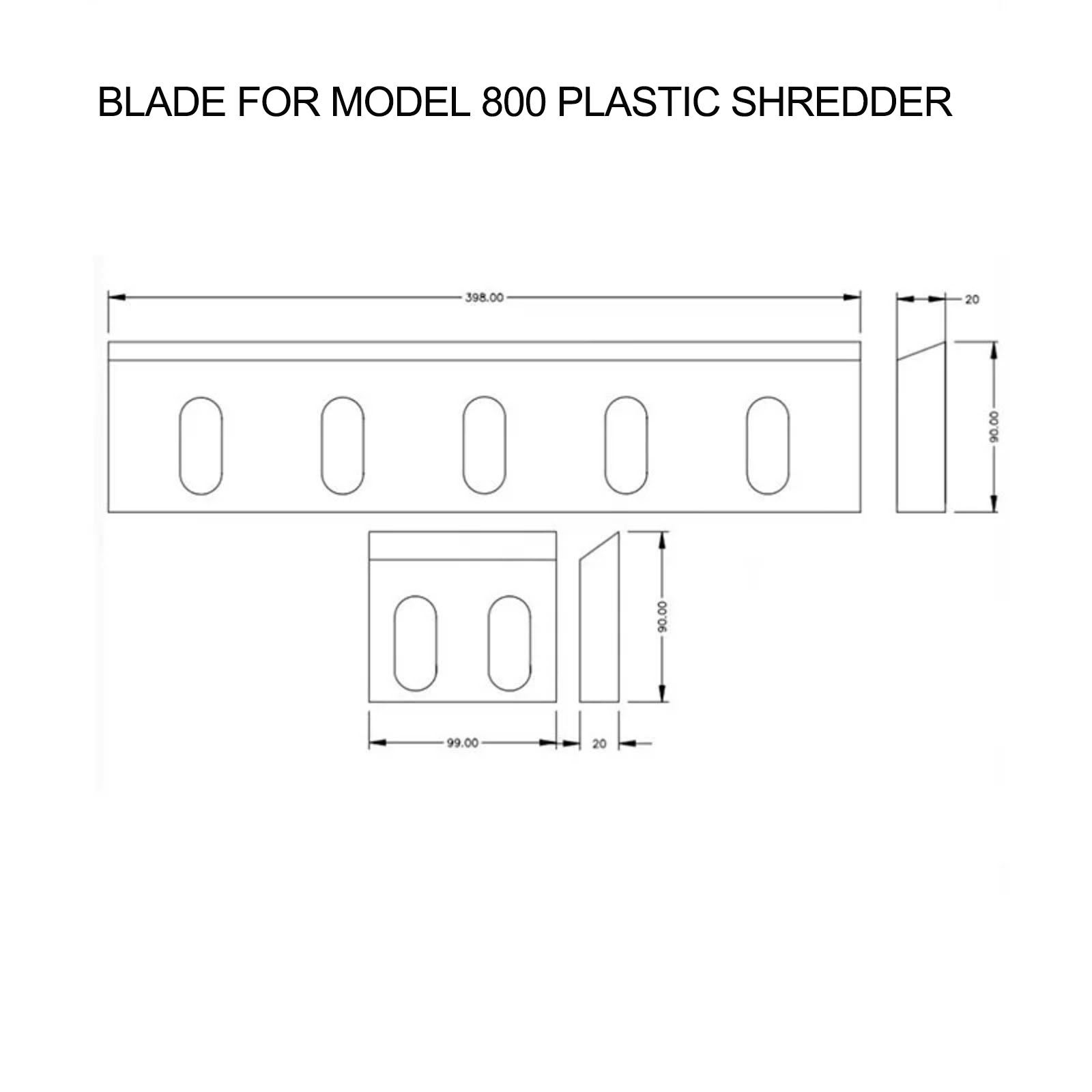
Drawings of the blades for a plastic shredder

Can manufacture based on your drawings or samples

500-plastic-shredder-blades-drawing600-plastic-shredder-blades-drawing800-plastic-shredder-blades-drawingindustrial-plastic-recycling-blades-02plastic-crusher-blades-manufacturer-05replacement-blades-for-plastic-shredder-03replacement-blades-for-plastic-shredder-01


包装微信图片_20250104142227微信图片_20250104142224微信图片_20250104142221

Previous: 
Next: 
200
Phone:
86-15852949220
Address:
Jiangning District, Nanjing
About Us

Nanjing Alas International Co., Ltd. is a professional industrial tooling manufacturer focused on shear blades, bending dies, shredder blades, and custom wear parts. We offer full application engineering, material selection, setup guidance, and after-sales support to global customers.
Tell us your requirements, and our engineering team will provide professional solutions for blade specification, tool life optimization, and cost-effective production.

Subscribe
Sign up for our newsletter to receive the latest news.
​Copyright 2021 NANJING ALAS INTERNATIONAL CO., LTD            苏ICP备2021025144号