High-Performance Plastic Granulator Blades & Replacement Crusher Knives
For high-volume plastic recycling, compounding and pelletizing production, wear on cutting edges will reduce your overall profit. The quality of regrind material and throughput of your granulation system largely rely on blade design and steel material performance. ALAS designs and produces industrial plastic granulator blades, crusher blades and pelletizer blades tailored to customer requirements. These blades deliver even particle size after cutting, cut down fine powder output, and help your equipment run longer with fewer stops.
Tool Steel Options: DC53, SKD11 and 9CrSi
No single steel grade works for all types of plastic scrap. Our technical team picks the most suitable material based on your actual raw materials, moisture content and fiber impurity levels on site.
DC53 Steel: Top Choice for Heavy Impact Working Conditions
DC53 is an upgraded version of conventional SKD11 steel, featuring better resistance to fracture and stable size change after heat treatment. After vacuum heat treatment to 62–64 HRC, this material works well for cutting thick rigid plastic pipes, plastic lumps and glass-filled engineering plastics, effectively preventing edge chipping and blade breakage.
SKD11 / Cr12MoV Steel: Cost-Effective General-Purpose Grade
This steel balances long service life against abrasion and good structural toughness at a reasonable cost. With hardness controlled at 58–62 HRC, it performs steadily in daily heavy-duty recycling of PET bottles, plastic turnover boxes and mixed light packaging waste.
9CrSi Steel: Budget Option for Light-Duty Use
This economical material fits small household or small commercial granulators that process soft, low-abrasion materials, including clean plastic film waste, small sprues and soft plastic regrind.
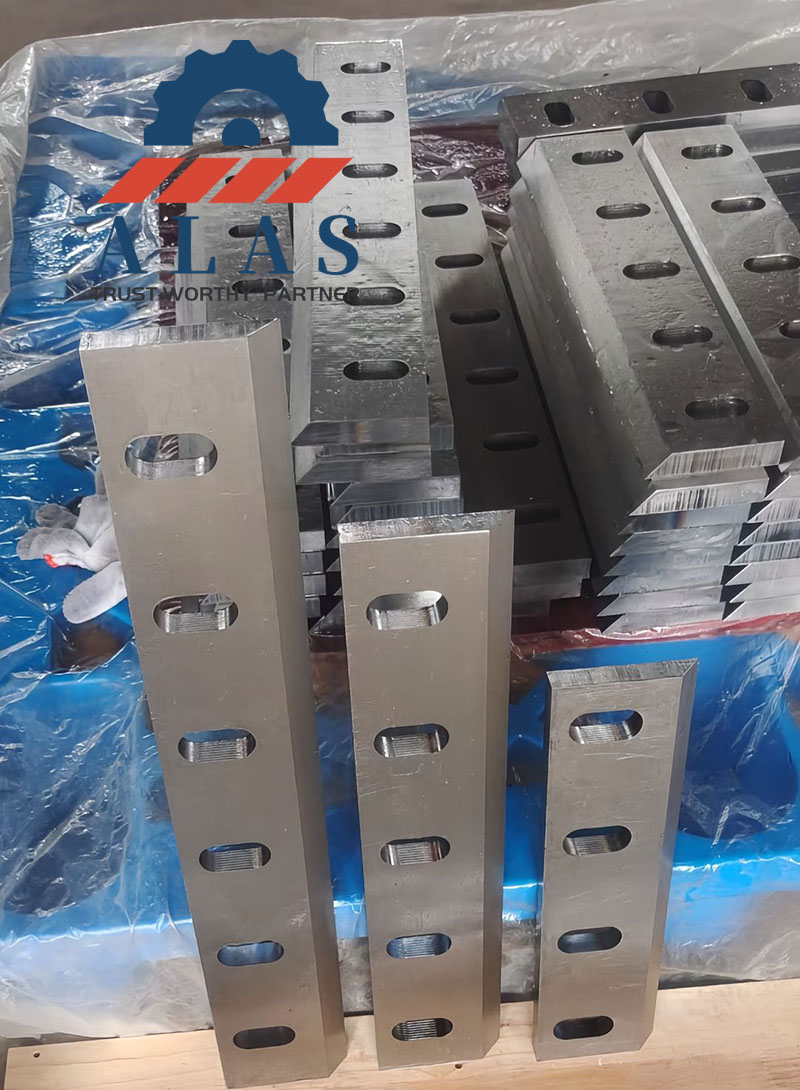
Figure: Heavy-duty DC53 and SKD11 plastic granulator blades in multiple standard lengths and customizable bolt-hole configurations, precision-manufactured and stocked at the ALAS factory for rapid global dispatch.
Custom Cutting Edge Design for Different Plastic Types
Hard, Brittle Materials (ABS, Polystyrene, Engineering Plastics)
Our blades stand up to sudden heavy impact from thick rigid plastics, keeping sharp cutting edges without cracking or chipping.
Soft, Flexible Materials (PE, PP, Nylon, Thin Plastic Films)
Precision ground cutting edges slice flexible films and plastic bags neatly, stopping material wrapping, sticking or melting around rotor shafts.
Fiber-Reinforced Plastics
With vanadium and molybdenum carbide inside the steel structure, these blades slow down fast wear caused by glass fiber and carbon fiber filled plastic.
Fully Compatible with OEM Blades & Custom Processing Available
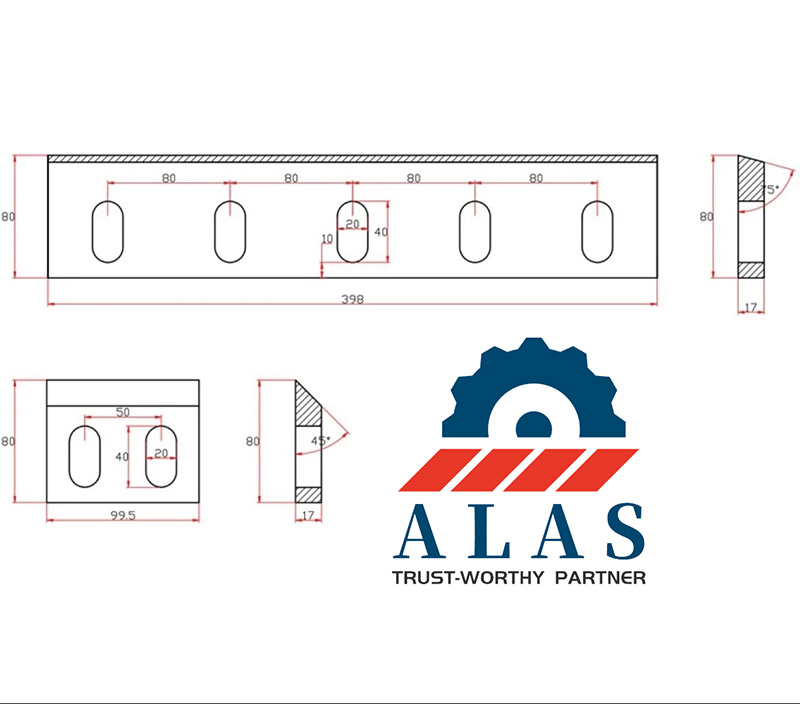
You no longer need to spend a lot of time looking for hard-to-find spare parts. ALAS produces direct replacement rotary fly knives and stationary bed knives for granulators, meeting or exceeding original standards for mainstream European, American and Asian granulator brands.
We accept full custom orders. Whether you need customized bolt hole spacing, specific double-bevel cutting angles or special multi-groove counter blades, our factory can produce parts strictly according to your engineering drawings or OEM part numbers.
Why Recycling Plants Around the World Choose ALAS Blades
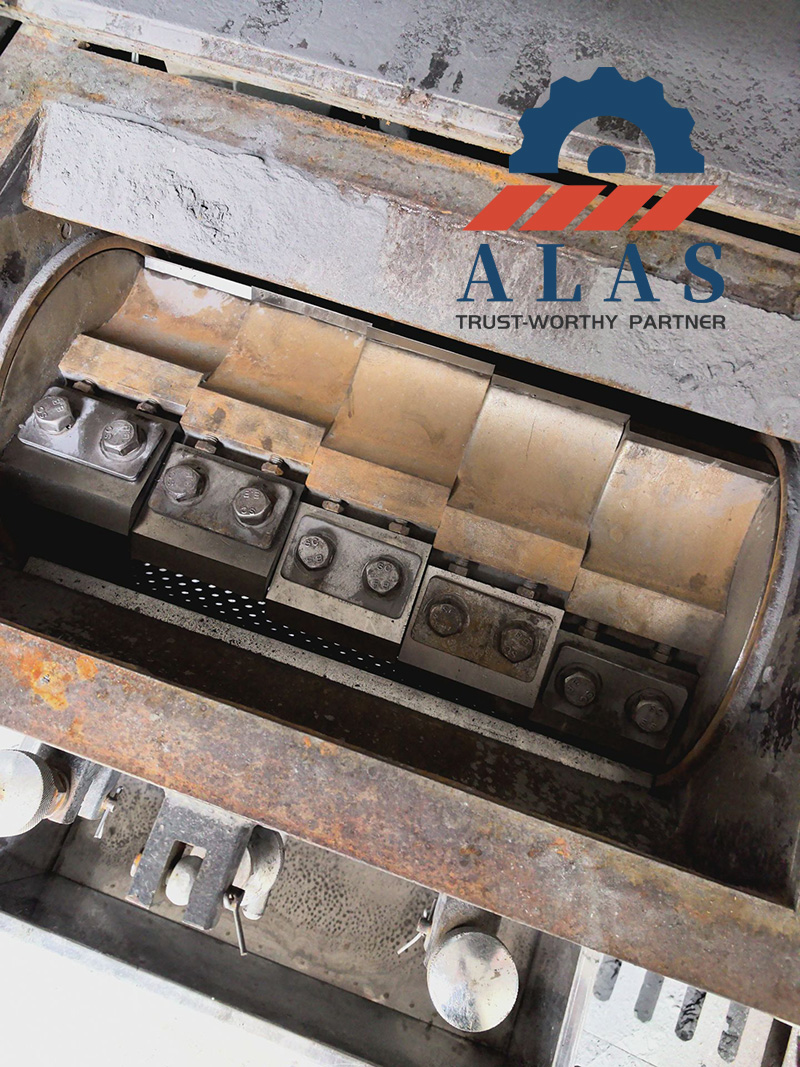
Dynamic Balancing for Rotary Blades
All rotary fly knives are dynamically balanced inside our factory. This cuts vibration during high-speed operation and prevents premature damage to the main shaft and bearings of your machine.
Adjustable Grinding Angles
We set cutting angles between 30° and 45° based on your machine configuration, striking a good balance between fast clean cutting and long edge service life.
In Action: Precision Grinding of DC53 Plastic Granulator Blades
Our heavy-duty CNC surface grinding machine precision-sharpens multi-slot plastic granulator blades to a flawless, razor-sharp edge. Every single recycling blade undergoes rigorous edge-geometry calibration and vacuum heat treatment to ensure 100% chipping resistance and zero micro-fractures under heavy industrial loads.
Lower Hidden Costs for Overseas Buyers
Our high-grade DC53 blades last two to three times longer than ordinary steel blades. International customers can place bulk orders less frequently each year, lowering international shipping fees, customs handling charges and import taxes.
Frequently Asked Questions
Q1: Which material works best for plastic granulator blades?
A: It depends on your plastic raw materials. If you process hard plastic blocks, thick pipes and glass-filled plastics, DC53 is ideal thanks to strong impact resistance to stop edge cracking. For common mixed recycling work such as PET bottle processing, SKD11 (Cr12MoV) brings the most cost-effective return.
Q2: What is the difference between fly knives and bed knives on a granulator?
A: Fly knives, also known as rotary blades, are installed on the rotating rotor to complete cutting movement. Bed knives, or stationary counter blades, are fixed on the granulator body. Plastic gets sheared when fly knives pass bed knives with a small, precise gap between them.
Q3: How often should plastic granulator blades be sharpened?
A: We suggest checking cutting edges every 8 to 12 working hours. If you notice excessive fine plastic powder, uneven particle sizes after cutting or a sharp rise in motor current, sharpen or adjust blade gaps right away.
Q4: Can ALAS make granulator blades from customer drawings?
A: Yes. We specialize in OEM matching and custom machining. We can produce multi-groove counter blades, customized hole spacing and special bevel angles fully according to your drawings or original OEM part numbers.


