86-15852949220      mt@alasmachinery.com
NANJING ALAS INTERNATIONAL CO., LTD
You are here: Home » Products » Press Brake Tooling & Bending Dies » Hemming Tools & Flattening Dies for Press Brake Machine

Product Category

Contact Us

loading

Share to:
sharethis sharing button

Hemming Tools & Flattening Dies for Press Brake Machine

ALAS Press Brake Hemming & Flattening Tools are high-efficiency forming solutions for sheet metal fabrication. Featuring an advanced two-in-one combination design, this tooling achieves both a 30° acute bend and flat hemming within a single stroke or setup. By eliminating tool changes and parts handling, it drastically boosts press brake productivity for manufacturing safety edges, reinforcements, and enclosures.
  • ALAS

  • Nanjing, China

  • L/C, T/T, Paypal, Money Gram

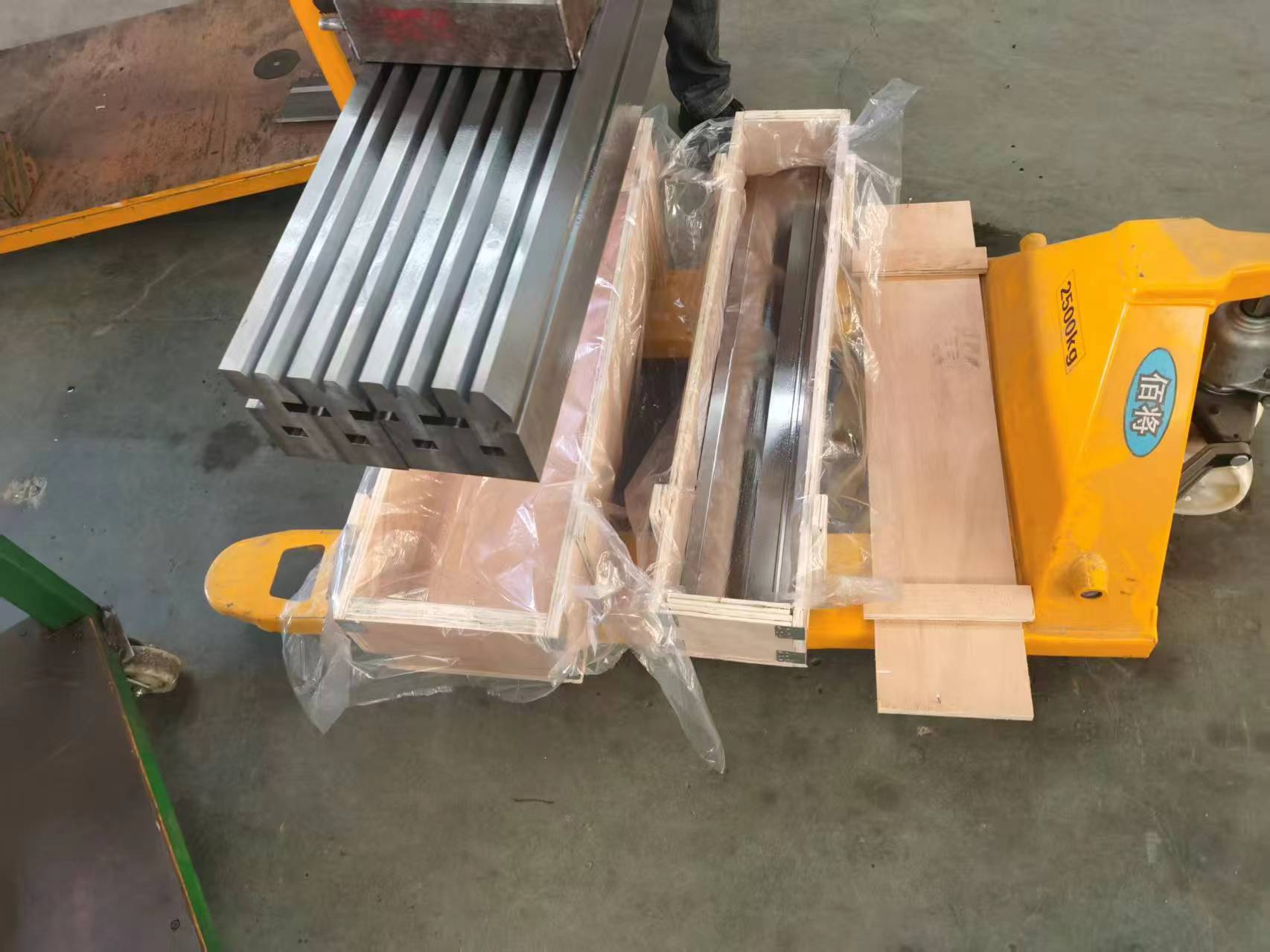
  • Wooden Crate Packaging

Availability:
Quantity:

High-Precision Compound Dies for Modern Sheet Metal Bending

Traditional single-V bending dies require frequent tool swaps during sheet metal fabrication, which slows down production and creates dimensional errors on finished parts. Press brake compound dies solve these common manufacturing issues perfectly. Also widely known as offset bending dies, these integrated tool sets offer greater flexibility, cut tool change downtime, and support fast, high-volume production with stable bending accuracy for both standard and complex sheet metal parts. As all-in-one press brake punch and die assemblies, they have become essential tooling for modern precision sheet metal forming operations.

1. Basic Structure & Working Principle

A complete press brake tool assembly consists of upper punches and lower dies. The two components work together closely to complete precise sheet metal bending and forming.

Upper Die

  • Installed on the moving beam of press brake machines

  • Delivers vertical downward pressure to deform sheet metal materials

  • Available in straight, sharp, gooseneck and arc profiles to produce different part geometries

Lower Die

  • Firmly fixed on the machine worktable

  • Features standard V-shaped grooves for accurate sheet positioning and consistent forming

  • V-groove width directly impacts bending force, bend radius and final part dimensions

Working Steps

  1. Place and align sheet metal materials on the lower die groove

  2. The upper punch descends and applies pressure for cold bending

  3. The sheet metal forms permanent deformation to create a stable bend angle

  4. The upper die resets automatically once the preset pressure and stroke are achieved

  5. Remove the fully finished bent part

2. Key Features of Press Brake Compound Dies & Custom Forming Tools

Strong & Long-Lasting

  • Built with industrial-grade 42CrMo compound punch and die alloy steel for heavy-duty production

  • Professionally heat-treated to reach HRC45–HRC50 hardness for reliable rigidity

  • Withstands continuous high pressure and surface friction, resisting wear and breakage for extended service life

Fully Customizable

  • Upper punches support straight, sharp, gooseneck, arc and custom shapes, including professional custom hemming tools for precise edge finishing

  • Lower dies come with standard V-groove sizes of 8mm, 16mm and 24mm to fit various material thicknesses and forming requirements

Good Compatibility & Standard Design

  • Standard tooling fits mainstream press brake models from Amada, Trumpf and Wila

  • Custom die solutions are available for special-shaped workpieces and unique production demands

  • Manufactured strictly according to machine specifications and part drawings to ensure precise forming results

3. Common Types of Bending Dies

Classified by Shape

  • Straight dies: General-purpose tooling for daily standard bending tasks, the most commonly used type in fabrication shops

  • Sharp-angle dies: Ideal for narrow angle bending and effective springback compensation

  • Gooseneck dies: Perfect for U-shaped and deep bend parts, avoiding collisions with formed edges

  • Arc dies: Designed for smooth, rounded bend forming

  • Special irregular dies: Custom manufactured for non-standard, complex-shaped components

Classified by Processing Material

  • Standard dies: Cost-effective option for bending mild steel and galvanized steel sheets

  • High-strength dies: Reinforced thick and hard structure for processing stainless steel and high-hardness alloy plates

  • Thin-material dies: Eliminates surface marks, scratches and deformation on thin metal sheets

Classified by Machine Interface

  • Amada / Promecam type: Matches all standard Amada press brake machines

  • Trumpf / Wila type: Fully compatible with Trumpf and Wila bending equipment

  • New Standard type: Suits most domestic press brake models

4. Simple Rules to Choose the Right Die

4.1 Match the Metal Material

  • Mild steel features minimal springback and excellent formability

  • Stainless steel and high-strength steel produce obvious springback after bending

  • Select matched die angles to offset springback and prevent sheet cracking

4.2 Follow the 8x V-Groove Rule (Core Standard)

  • Regular sheets: Follow the standard 8× material thickness rule for V-groove width

  • Thin sheets (under 3mm): Use 6× material thickness for V-groove setup

  • Thick plates (over 8mm): Apply 10× to 12× material thickness for stable forming

4.3 Control Machine Load

  • Calculate required bending tonnage before starting formal production

  • Never overload tools or machines to avoid tool fracture and equipment damage

  • Reserve a 10%–15% safety margin to ensure stable long-term operation

4.4 Select Suitable Punch Profile

  • Standard punch: For routine flat bending applications

  • Sharp punch: For precise small-angle bending work

  • Gooseneck punch: For deep forming of U-shaped structural parts

  • Arc / custom punch: For curved surfaces and special-shaped forming jobs

4.5 Match Bending Machine Specifications

  • Check the machine’s clamping structure and shank specifications

  • Confirm die height fits the machine’s stroke range perfectly

  • Avoid installation failures and low efficiency caused by mismatched tooling

5. ALAS Press Brake Compound Dies: Advantages & Complete Sheet Metal Forming Solutions

5.1 Simplify Complex Bending & Improve Efficiency

  • As high-performance offset bending dies, our tooling completes multi-angle bends, offset forming and edge hemming in one single press stroke

  • Reduces frequent tool changes and minimizes manual handling errors

  • Maintains consistent part tolerances, improves overall production output and boosts workshop profit margins

5.2 Premium Durable Material

  • Every set of our 42CrMo compound punch and die is forged from premium 42CrMo4 alloy steel with stable mechanical performance

  • Precision heat-treated to HRC45–50 hardness, offering balanced wear resistance and structural toughness

  • Delivers 3 to 5 times longer service life than ordinary carbon steel bending dies

5.3 Wide Compatibility & Custom Solutions

  • Compatible with mainstream bending machine brands including Amada, Trumpf, LVD and Bystronic, fitting all standard press brake punch and die mounting systems

  • CNC precision grinding guarantees tight assembly and stable machine operation

  • We provide custom die design, professional custom hemming tools and full-set sheet metal forming solutions

  • Lowers long-term tool replacement costs and reduces per-piece production expenses

6. Quick Selection Checklist

  • ✅ Adjust die angles appropriately to compensate sheet metal springback

  • ✅ Follow the 8x V-groove rule to prevent part cracking and tool damage

  • ✅ Match die specifications strictly to your press brake model

  • ✅ Reserve enough safety load margin for daily machine operation


42CrMo International Standard Comparison Table (Essential for Selection)

Country/Standard Organization

Standard Code

Corresponding Grade

China (GB)

GB/T 3077

42CrMo or 42CrMo4

USA (AISI/ASTM)

ASTM A29

4140

International Organization for Standardization (ISO)

ISO 683-1

42CrMo4

Germany (DIN)

DIN EN 10083

1.7225 (or 42CrMo4)

Japan (JIS)

JIS G4105

SCM440

UK (BS)

BS 970

708M40 (EN19)

bending-machine-die-export-wooden-packaging-02bending-machine-die-export-wooden-packaging-01

press-brake-tooling-export-wooden-packaging-02


Global Supply Ability: Precision Press Brake Compound Dies
We specialize in manufacturing Precision Press Brake Compound Dies, supporting high-accuracy metal forming lines worldwide with localized expertise:
  • English: Precision Press Brake Compound Dies | Multi-V Bending Tools

  • French (Français): Matrices composées pour presse-plieuse | Outillage de précision

  • Italian (Italiano): Stampi composti per pressa piegatrice | Utensili di piegatura

  • Portuguese (Português): Matrizes compostas para dobradeira | Ferramentas de alta precisão

  • Polish (Polski): Precyzyjne matryce składane do pras krawędziowych

  • Turkish (Türkçe): Hassas Abkant Pres Kompoze Kalıpları | Bükme Kalıpları

  • Vietnamese (Tiếng Việt): Khuôn chấn tôn chính xác | Bộ khuôn dập uốn kim loại

  • Thai (ภาษาไทย): แม่พิมพ์พับเหล็กแผ่นความแม่นยำสูง | อุปกรณ์เครื่องพับโลหะ

  • Filipino: Precision na Press Brake Compound Die | Hulmahan sa Pag-bend ng Metal

  • Arabic (العربية): قوالب ثني مكبس دقيقة | أدوات تشكيل المعادن عالية الدقة

  • Hindi (हिन्दी): सटीक प्रेस ब्रेक कंपाउंड डाई | हाई-एक्यूरेसी फॉर्मिंग टूल्स

  • Indonesian (Bahasa Indonesia): Matras Tekuk Plat Presisi | Cetakan Komposit Press Brake

  • Malay (Bahasa Melayu): Acuan Kompaun Tekan Brek Tepat | Peralatan Pembentukan Logam

  • Dutch (Nederlands): Precisie kantpers compound matrijzen | Buiggereedschap

  • Swedish (Svenska): Precisionskantpressverktyg | Sammansatta bockverktyg

  • Hungarian (Magyar): Precíziós élhajlító összetett szerszámok | Hajlító szerszámkészletek

Precision Press Brake Compound Dies in Action: Advanced Offset Bending


Watch our press brake compound dies run high-precision bending on a CNC hydraulic press brake. Built to cut down repeated tool swaps and simplify complex sheet metal work, this set pairs quality punches with multi-V die blocks for even bending force across parts.
Made from premium 42CrMo (AISI 4140) alloy steel and heat treated to HRC 45–50, our rigid offset bending dies hold tight tolerances and stand up to heavy, continuous use with great wear resistance.
See our tooling perform on the production line. Get in touch for factory direct prices on standard and custom bending tools.

Press Brake Dies FAQ

Q1: What are the core advantages of compound press brake dies compared with standard single-V dies?

Compound press brake dies work far more efficiently than regular single-V dies. The main benefits are as below:
  • Less machine downtime: Single-V dies need repeated tool changes for multi-angle bending. Compound dies combine multiple forming shapes in one single tool, completing step bends, double bends and pre-hemming in one press stroke.

  • Save labor work: Fewer tool changes and setup steps cut down manual operation time.

  • More accurate bending: Eliminates positioning errors caused by frequent tool adjustments.

  • Lower production cost: Faster processing speeds boost output and improve profit per finished part.

Q2: How to choose the right tool steel for heavy-duty offset bending dies?

Heavy-load offset bending creates strong friction and pressure on die edges. Low-grade carbon steel wears out and cracks easily, so we only use high-quality alloy steel for our heavy-duty dies.
  • Genuine alloy steel: All ALAS heavy-duty offset dies are made of authentic 42CrMo / 42CrMo4 steel, equivalent to AISI 4140 grade.

  • Reliable hardness treatment: With professional induction hardening to HRC 45–50, the die surface is hard and wear-resistant, while the inner core stays tough to resist fatigue.

  • Long service life: The dies hold shape well under continuous high-tonnage work and do not deform or break easily.

Q3: What is the optimal calculation rule for multi-V die blocks to prevent sheet metal cracking?

The industry’s practical8x Rule effectively avoids sheet metal cracking. You can follow this simple standard for different materials:
  • For mild steel: Set the V-notch opening width to 8 times the sheet thickness (V = 8T).

  • For high-strength steel & thick plates: Widen the V opening to 10–12 times the material thickness.

  • Key benefits: Evenly spreads bending pressure, prevents scratches on stainless steel surfaces, and protects die edges from chipping.

Q4: Can your custom hemming dies fit European-style Amada clamping systems?

Yes. Our custom hemming dies fit all mainstream global clamping systems perfectly, with no modification required.
  • Full compatibility: Works with European Promecam (Amada type), Trumpf & Wila standard systems, and American tenon-type bolsters.

  • Standard global sizing: All dies and tool shanks are machined strictly to international dimensional standards.

  • Quick installation: Just share your machine’s hydraulic stroke and load parameters, and we will supply fully matched dies for direct fitting.

Q5: Do you offer segmented dies for complex multi-sided tray and box bending?

Yes. Custom segmented dies are one of our key strengths for complex box and tray bending jobs.
  • Flexible assembly: Segments range from 10mm to 400mm, which can be freely combined to match your required bending length.

  • Wide application: Ideal for multi-sided boxes, trays, and other irregular bent parts.

  • No processing interference: Avoids wall collision when bending reverse flanges.

  • Stable bending quality: Delivers even force across the entire workpiece for consistent bending results.

Q6: What maintenance is required for press brake tooling to ensure longevity?

Basic regular maintenance can greatly extend die life and keep stable bending precision. Follow these daily and routine steps:
  • Clean daily: Wipe off metal chips and dust from die surfaces to reduce friction and wear.

  • Check regularly: Inspect for edge chipping, scratches and deformation, and replace or repair damaged dies in time.

  • Apply lubrication: Use professional lubricant before bending, especially for stainless steel and high-strength steel.

  • Store properly: Keep dies in a dry, flat and shockproof area when not in use.

  • Recover precision regularly: Re-grind die surfaces and check hardness periodically to restore original accuracy.

Q7: What are the main types of press brake dies and their uses?

We supply all common press brake die types to cover different bending needs. The main categories and uses are as follows:
  • Single-V Dies: General-purpose basic dies for simple single-angle bending on regular sheet metal.

  • Multi-V Die Blocks: Equipped with multiple V sizes, suitable for various sheet thicknesses and helps prevent material cracking.

  • Compound & Segmented Dies: Used for complex work including step bending, double bending, hemming and multi-sided box forming.

  • Hemming Dies: Special tools for flat closing and dead-edge bending to achieve smooth sheet edges.

  • Heavy-duty Offset Dies: Built for high-pressure bending of thick plates and high-strength steel, with great wear and deformation resistance.


Previous: 
Next: 
ALAS - Trust-Worthy Industrial Machinery Tooling Partner Logo
Phone:
86-15852949220
Address:
Jiangning District, Nanjing
About Us

Nanjing Alas International Co., Ltd. is a professional industrial tooling manufacturer focused on shear blades, bending dies, shredder blades, and custom wear parts. We offer full application engineering, material selection, setup guidance, and after-sales support to global customers.
Tell us your requirements, and our engineering team will provide professional solutions for blade specification, tool life optimization, and cost-effective production.

Subscribe
Sign up for our newsletter to receive the latest news.
Copyright © 2021-2026 NANJING ALAS INTERNATIONAL CO., LTD 苏ICP备2021025144