Bar Bender Spare Parts & Custom Bending Machine Pins
Machine Compatibility & Company Overview
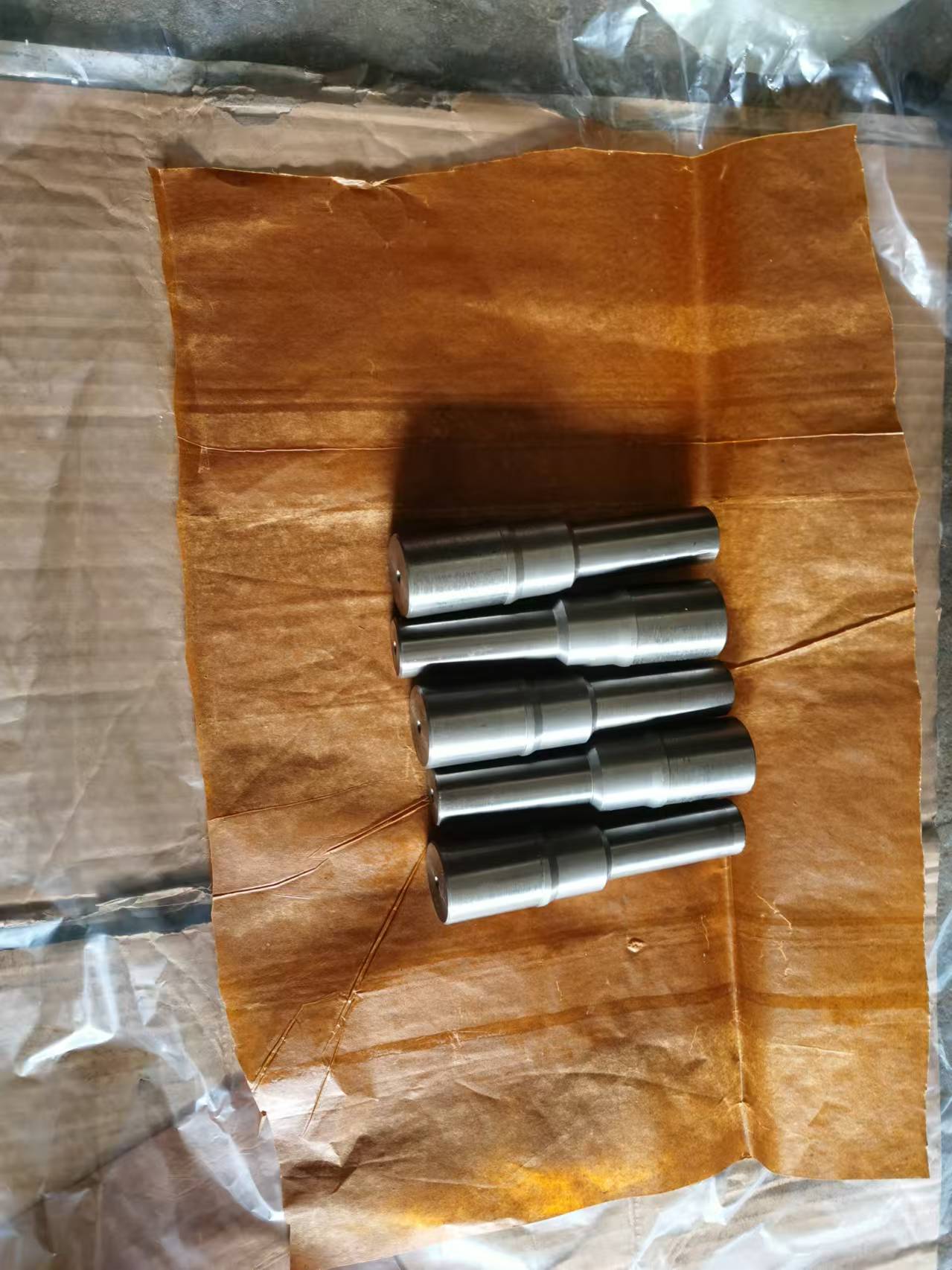
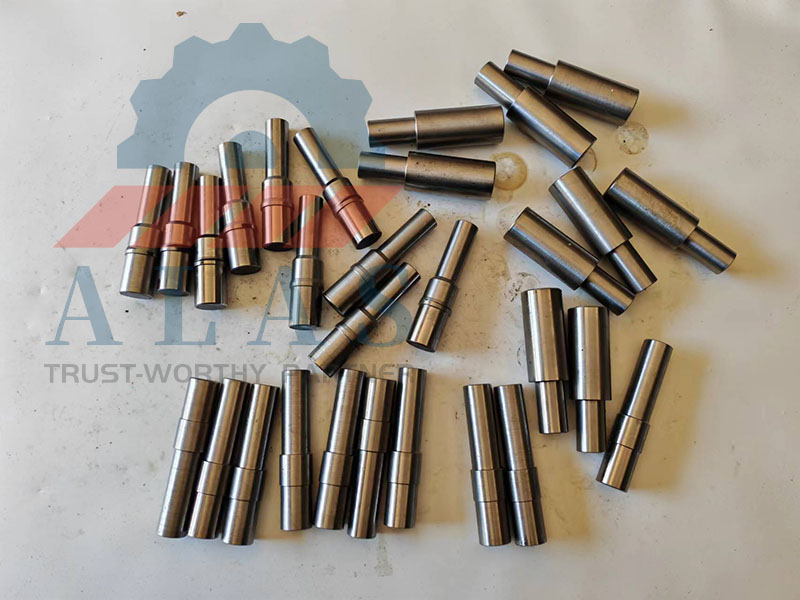
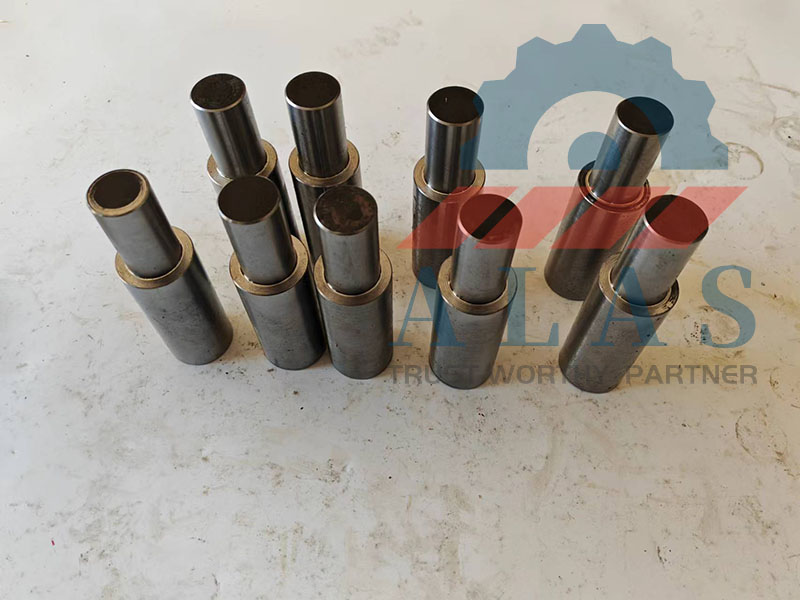
We can customize rebar bending machine pins to meet your specific machine requirements.
Our company focuses on the R&D, production, and sales of core cutting tools and accessories for the rebar processing industry. We professionally manufacture rebar cutting blades, bending blades, and a full line of rebar machinery accessories.
Our products are widely compatible with most rebar processing machines, including rebar cutters, rebar benders, and integrated rebar straightening & cutting machines. They serve construction engineering, bridges and tunnels, rebar processing plants, and precast component production lines.
Core Cutting Tool Production
In manufacturing core cutting tools, we use high-quality materials and precision processes to guarantee stable performance.
Rebar Cutting Blades
Undergo overall quenching and low-temperature tempering
Provide high wear resistance and impact resistance
Finely ground and polished cutting edges for smooth, efficient cutting without jamming
Easily handle batch cutting of all rebar types
Square modular design allows 4‑sided usage, greatly lowering replacement and maintenance costs
Rebar Bending pin
Customizable to your bending machine model and required bending radius
Precision heat treatment delivers excellent fatigue resistance and dimensional stability
Precise bending angle with no springback
Support multi-angle rebar bending for various rebar sizes
Prevent chipping and deformation during forming
Full Range of Rebar Machinery Accessories
We supply a complete set of rebar machine spare parts, all made to original equipment standards with high dimensional accuracy and perfect main-machine compatibility for easy installation.
For Cutting Machines
Fixed blade holders, connecting rods, sliders, gear shafts
For Bending Machines
Center shafts, bending discs, clamps, positioning baffles
For Straightening Machines
Straightening wheels, traction wheels, cutter assemblies
Surface treatments include carburizing, quenching, galvanizing, and passivation. These improve rust and wear resistance and effectively extend the service life of the entire machine.
Quality & Customization Capabilities
Our factory is equipped with advanced CNC machining centers and professional testing equipment for hardness and precision. Every step, from raw material purchasing to finished product delivery, undergoes strict quality inspection.
We also provide non-standard customization services. According to your equipment model, working conditions, and specific needs, we design and manufacture specialized tools and accessories. Our reliable quality helps improve rebar processing efficiency and reduce production costs.
Common Bar Bender Spare Parts
Center Pin
Positioning Pin
Fixed Pin
Why Rebar Bending Machines Need Forming Shafts of Different Diameters
Rebars of different diameters require different bending radii.
By changing the forming shaft, you ensure accurate bending angles and avoid damaging the rebar.
Both 45# steel and 40Cr steel require proper heat treatment. Without it, they cannot reach their designed mechanical properties.
I. Why Heat Treatment Hardness (HRC) Is Critical for Bending Machine Pins
The bending machine pin is a core load-bearing part during rebar bending. It withstands radial compression, torsional shear, and repeated friction.
Heat treatment hardness directly determines its service life, working stability, and operational safety. Pins without proper hardness will fail rapidly, causing equipment breakdowns and even processing accidents.
Key Functions of Proper Hardness
Ensures Wear Resistance & Prevents Quick Wear or Deformation
The pin directly contacts the rebar and the bending disc / forming shaft. Rebar is hard, and relative sliding occurs during bending.
If pin hardness is too low, the surface quickly develops wear marks, dents, or deformation. This increases clearance and reduces bending accuracy, making it impossible to meet processing standards.
A qualified pin reaches HRC45–55 overall, with key load-bearing surfaces surface-hardened up to HRC58–62 to resist wear and maintain dimensional stability.
Improves Compressive & Torsional Strength to Avoid Breakage
During bending, the pin bears strong radial pressure and minor torsion.
Pins processed with quenching and high-temperature tempering, at HRC45–55, balance strength and toughness. They resist compression without deforming and endure repeated loads without breaking, preventing jams or flying rebar hazards.
Reduces Maintenance Costs & Ensures Continuous Operation
Pins with qualified hardness wear slowly and rarely fail, so they do not need frequent replacement.
Low-hardness pins wear out quickly, increasing parts costs and delaying projects due to machine downtime.
In short: Heat treatment hardness is the core guarantee for wear resistance, deformation resistance, and fracture resistance of the pin. It is an essential process standard for rebar bending applications. Pins without proper hardness cannot meet working requirements.
II. Complete Drawing Parameters for Custom Special-Shaped Bending Machine Pins
Custom special-shaped pins require clear drawings so the manufacturer can match your installation, load, and dimension needs. Drawings must include basic dimensions, process requirements, and material specifications.
1. Basic External Dimensions (With Tolerances)
Diameter of each pin section + tolerance (e.g., h6/h7 for fitting surfaces, f8 for non-fitting areas)
Length of each section + tolerance
Special structure dimensions: keyway width/depth, taper angle/length, transition radii or sharp corners
End shape: flat head, round head, countersunk head; include spherical radius or countersink depth/diameter
2. Process & Heat Treatment Requirements
Clearly state heat treatment type: overall quenching and tempering, surface hardening + tempering
Specify hardness value: e.g., overall HRC45–50, surface HRC58–62
Mark hardness testing positions
3. Material Requirements
Base material grade
Recommended materials: 45# carbon steel, 40Cr alloy steel
40Cr is preferred for heavy-duty and special-shaped bending machine pins
45# steel, 40Cr, International Material Comparison Table
Chinese GB standards | American AISI/SAE standards | Japanese JIS standards | German DIN standards | Russian GOST standardss |
45#steel | 1045 | S45C | C45(1.1191) | 45 |
40Cr | 5140 | SCr440、SCr440H | 41Cr4(1.7035) |
40X |
Rebar Bending Pins – Technical Specs Description
Technical Specs
Material Grade: 40Cr / 45# Carbon Steel
Hardness Level: 45–50 HRC (Induction Hardened)
Compatible Machines: GW40, GW42, GW50, GW60, CNC Stirrup Benders
Diameter: 20mm, 25mm, 30mm, 40mm, 45mm, 50mm (Customizable)
Surface Treatment: Precision Ground, Anti-rust Oiling, Blackening
Material Analysis
45# Carbon Steel: Good toughness and machinability, cost-effective for light‑to‑medium rebar bending.
40Cr Alloy Steel: Higher strength and fatigue resistance than 45#, widely used for general industrial bending.
Why Our Bending Pins Don’t Snap?
Unlike standard pins, our 40Cr bending pins undergo deep induction quenching, balancing surface hardness with core toughness to prevent snapping under high-torque loads.
How to Choose the Right Pin Diameter?
To meet the 4D/5D bending radius standard, selecting the correct center mandrel diameter is crucial. Our kit includes multiple sizes to ensure the structural integrity of the rebar.
FAQ
Q: What is the best material for rebar bending pins?
A: 45# Carbon Steel is general use. 40cr delivers better wear resistance and longer life for heavy‑duty industrial or CNC operations.
Q: Can these pins fit different brands of rebar benders?
A: Yes. They follow universal OEM standards for GW series machines. Custom machining is also available based on your center plate dimensions.
Q: Why do common bending pins break easily?
A: Poor heat treatment, low-quality material, or unmatched hardness cause snapping. Our pins use controlled induction hardening for stable hardness and toughness.
Q: How long do your bending pins typically last?
A: Service life depends on workload. 40Cr pins last 2–3 times longer than standard 45# pins;